Dragon-Blooded Sovereign Portrait
Transform a reference-photo subject into a photorealistic dark-fantasy portrait of an ancient dragon-blooded sovereign, preserving their identity while giving them draconic skin, integrated horns, and ceremonial clothing.
Example outputs
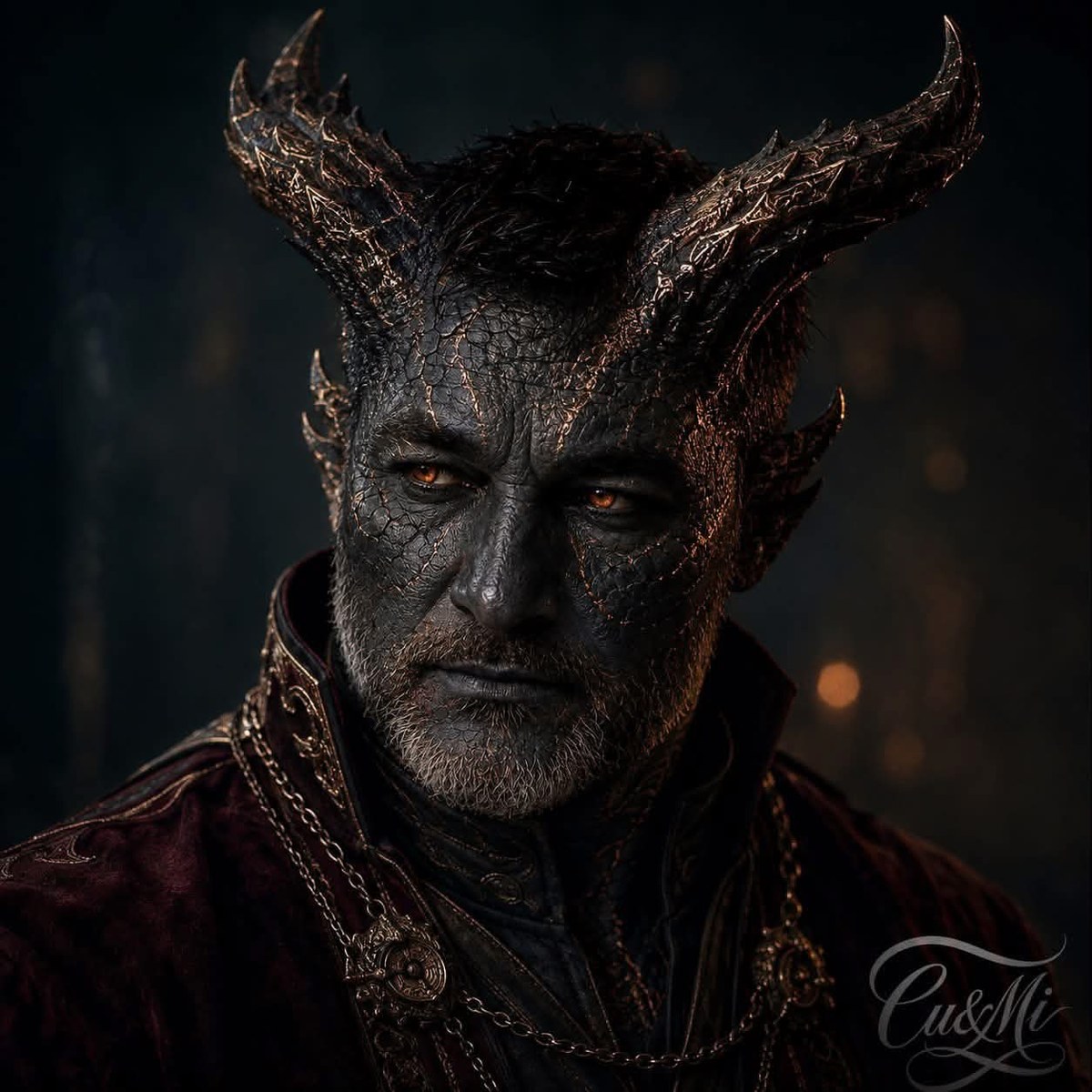
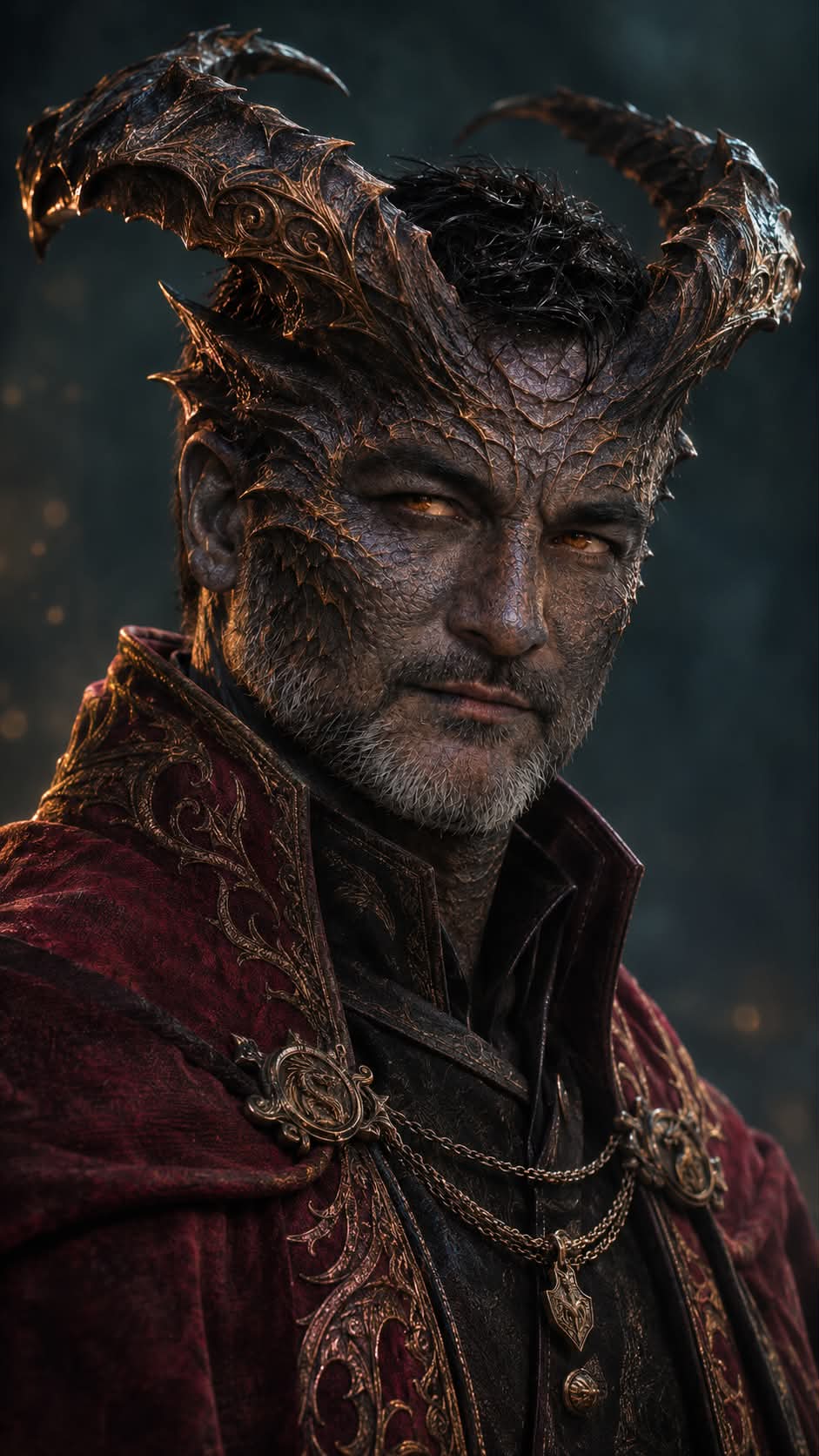
Prompt template
- Format
- Text
- Inputs
- Referencephotograph (image) · Required
- Outputs
- Portrait (image)
Use the uploaded photograph as the sole identity and appearance reference for the one adult subject. The reference may depict a man or a woman. Preserve the subject’s exact gender and adapt all styling naturally to that person.

STRICT IDENTITY PRESERVATION WITH INTENTIONAL SKIN TRANSFORMATION:

Preserve the subject’s exact facial identity, apparent age, facial structure, head shape, eye shape and spacing, nose, lips, jawline, cheekbones, hairstyle, hair length, natural hair color, hairline, physique, proportions, and distinctive features from the reference image.

The subject must remain clearly and immediately recognizable beneath the transformation. Do not beautify, rejuvenate, reshape, slim, enlarge, over-muscularize, feminize, masculinize, or replace their features. Do not lengthen, shorten, curl, straighten, thicken, or otherwise redesign their hair.

Do NOT preserve the subject’s original skin tone. Transform the visible skin of the face, ears, and neck into dark, ancient dragon-like skin in layered shades of charcoal black, obsidian, gunmetal, and deep blue-black, with subtle antique-bronze and muted-gold accents. This is transformed living skin—not a helmet, removable mask, face paint, makeup, prosthetic appliance, or piece of armor.

Create an ultra-detailed dark-fantasy character portrait showing the subject transformed into an ancient dragon-blooded sovereign. Frame the subject from the upper chest upward in a square 1:1 composition.

POSE AND EXPRESSION:

Place the subject in a strong three-quarter angle with the shoulders turned slightly away from the camera and the face rotated enough to remain clearly visible. The head is held upright with a subtle regal tilt.

Their gaze is directed slightly past the camera rather than into the lens—focused on something just outside the frame. Preserve a readable three-quarter view of both eyes whenever possible. Do not create a strict side profile.

The expression is calm, commanding, intelligent, and quietly dangerous. The mouth remains naturally closed or very slightly parted. No smile, snarl, screaming, exaggerated aggression, visible fangs, or theatrical grimace.

FACIAL TRANSFORMATION:

The subject’s facial anatomy must remain human and identity-accurate beneath an intricate layer of naturally evolved draconic skin.

Cover the face with extremely detailed organic scales and interlocking keratinous plates. Use finer, smaller scales around the eyelids, lips, nostrils, and other flexible facial areas. Use broader, stronger plates across the forehead, temples, cheekbones, bridge of the nose, jawline, and neck. The plates must follow the subject’s underlying bone structure and facial muscle movement rather than obscuring or replacing it.

Create subtle gold-bronze mineral veining within the grooves between selected scales. Add delicate ancient ornamental patterns that appear to have grown naturally into the surface of the skin and horns. These markings must follow the biological structures like mineral deposits or inherited draconic patterning—not painted decoration, jewelry, embossed metal, or a manufactured mask.

Preserve realistic eyelids, tear ducts, individual eyelashes, lip anatomy, nostrils, pores within softer skin areas, fine facial hair where naturally present, and subtle asymmetry. The transformed lips are dark charcoal with a slight natural moisture sheen. Do not create a muzzle, beak, animal snout, or fully reptilian head.

EYES:

Transform the irises into deep molten amber, copper, or ember-orange with complex radial detail and realistic wet reflections. Preserve the subject’s exact eye shape and placement. Keep the sclera and eyelid anatomy physically believable.

The eyes should feel ancient and intense without glowing like lamps. No laser eyes, empty black sockets, oversized fantasy eyes, slit pupils unless extremely subtle, or artificial neon illumination.

HORNS—ANATOMICALLY INTEGRATED AND NON-GENERIC:

Two large primary horns grow directly and visibly from the subject’s frontal bone, emerging through the upper forehead above and slightly outside the inner brow line. Each horn must have a broad, load-bearing root that merges seamlessly into the forehead’s bone structure beneath the skin.

Show a gradual anatomical transition around each root: the fine forehead scales become thicker, denser, and more heavily ridged as they approach the horn base. The skin forms realistic raised collars and tension folds around the emergence points. There must be no gaps, straps, seams, sockets, glue lines, headbands, or floating intersections.

The horns initially grow upward and slightly forward from the forehead, then sweep outward and backward in elegant asymmetrical arcs. They should resemble ancient draconic crown-horns shaped by centuries of growth—not generic devil horns, goat horns, ram horns, antlers, bull horns, costume horns, or identical smooth cones.

Give each horn a complex individual silhouette with layered blade-like ridges, irregular longitudinal grooves, overlapping keratin plates, naturally chipped edges, hairline fractures, worn tips, and subtle asymmetry. The bases are broad, dark, and heavily textured; the horns gradually narrow toward weathered points.

The horn surfaces contain intricate organic patterns resembling fossilized veins, ancient runic geometry, and eroded filigree, but all patterns are embedded naturally within the keratin. Muted bronze-gold deposits catch along selected ridges and recessed carvings. Every crack, ridge, groove, and growth ring must be sharply resolved.

Add smaller swept-back horned ridges extending naturally from the temples toward the ears, integrated into the skull and facial plates. These secondary structures remain subordinate to the two large forehead horns and must not become separate antlers, wings, ears, or decorative attachments.

The hair grows naturally around and behind the horn roots according to the subject’s real hairline. Horns must not emerge from the hair, temples, crown of the head, or an invisible helmet. Do not hide the anatomical bases beneath hair or shadow.

WARDROBE:

Dress the subject in luxurious dark-fantasy ceremonial clothing tailored appropriately to their gender, natural physique, proportions, and established presentation in the reference image.

Use a deep burgundy, oxblood, or dark crimson outer garment layered over a high-collared black undergarment. Incorporate rich but restrained details such as aged fabric, dark leather edging, antique-bronze fasteners, fine embroidery, and several delicate metal chains or small ceremonial pendants across the chest.

For a male subject, use a masculine tailored ceremonial coat, robe, or structured tunic appropriate to his physique. For a female subject, use an elegant, gender-appropriate ceremonial coat, gown bodice, robe, or structured tunic appropriate to her physique. Do not force the same cut onto every gender. Keep the wardrobe regal, ancient, and practical rather than sexualized.

No crown, helmet, hood, hat, mask, modern clothing, exposed cleavage, exaggerated armor, oversized shoulder pieces, or generic medieval costume.

LIGHTING AND BACKGROUND:

Place the subject against a dark, softly blurred atmospheric background in deep teal-black, charcoal, and muted blue-gray. Add a small number of distant warm amber particles or defocused points of light, subtle enough that they do not compete with the face or horns.

Use cinematic low-key lighting with a soft cool key light shaping the face from one side and a restrained warm rim light catching selected horn ridges, hair strands, cheek plates, and garment edges. Maintain deep shadows without losing critical facial or horn detail.

The focus must be exceptionally sharp across the nearest eye, facial scales, forehead, and both horn roots. Preserve enough depth of field for the primary horn surfaces to remain richly detailed while the background falls into smooth, cinematic blur.

STYLE AND QUALITY:

Ultra-photorealistic dark-fantasy portrait photography, premium large-format cinema camera, 85mm portrait lens, natural optical depth of field, physically accurate lighting, HDR, realistic global illumination, controlled contrast, museum-quality material detail, and sophisticated cinematic color grading.

Render extraordinary microdetail in the face and horns: individual scale edges, microscopic surface cracks, layered keratin fibers, growth rings, mineral deposits, worn ridges, subtle scratches, realistic eye moisture, eyelashes, individual hair strands, fabric weave, metal patina, and natural imperfections.

The final image must feel like a real person who has biologically transformed into an ancient draconic being—not someone wearing a costume.

No generic horns, no smooth horns, no symmetrical copy-pasted horns, no devil horns, no ram horns, no goat horns, no antlers, no horned helmet, no floating horns, no horns emerging from hair, no hidden horn roots, no removable mask, no face paint, no prosthetic makeup, no loss of identity, no redesigned face, no altered hairstyle, no strict side profile, no direct eye contact with the camera, no CGI appearance, no video-game render, no plastic skin, no waxy texture, no illustration, no anime, no extra eyes, no duplicate facial features, no malformed ears, and no blurred facial or horn detail.
What you'll create
A recognizable adult appears in a commanding three-quarter view with draconic skin following their natural facial structure. Fine scales, larger keratinous plates and gold-bronze veining create a biological transformation rather than a mask.
Frequently asked questions
Does the face become a separate dragon head?
No. Human anatomy and recognizable identity remain beneath the scales.
What is the expression?
Calm and quietly dangerous, without snarling, screaming or visible fangs.




Comments
Tried this prompt? Share what you made, compare results, or ask a question