Hooded Mage Controlling Volcanic Energy
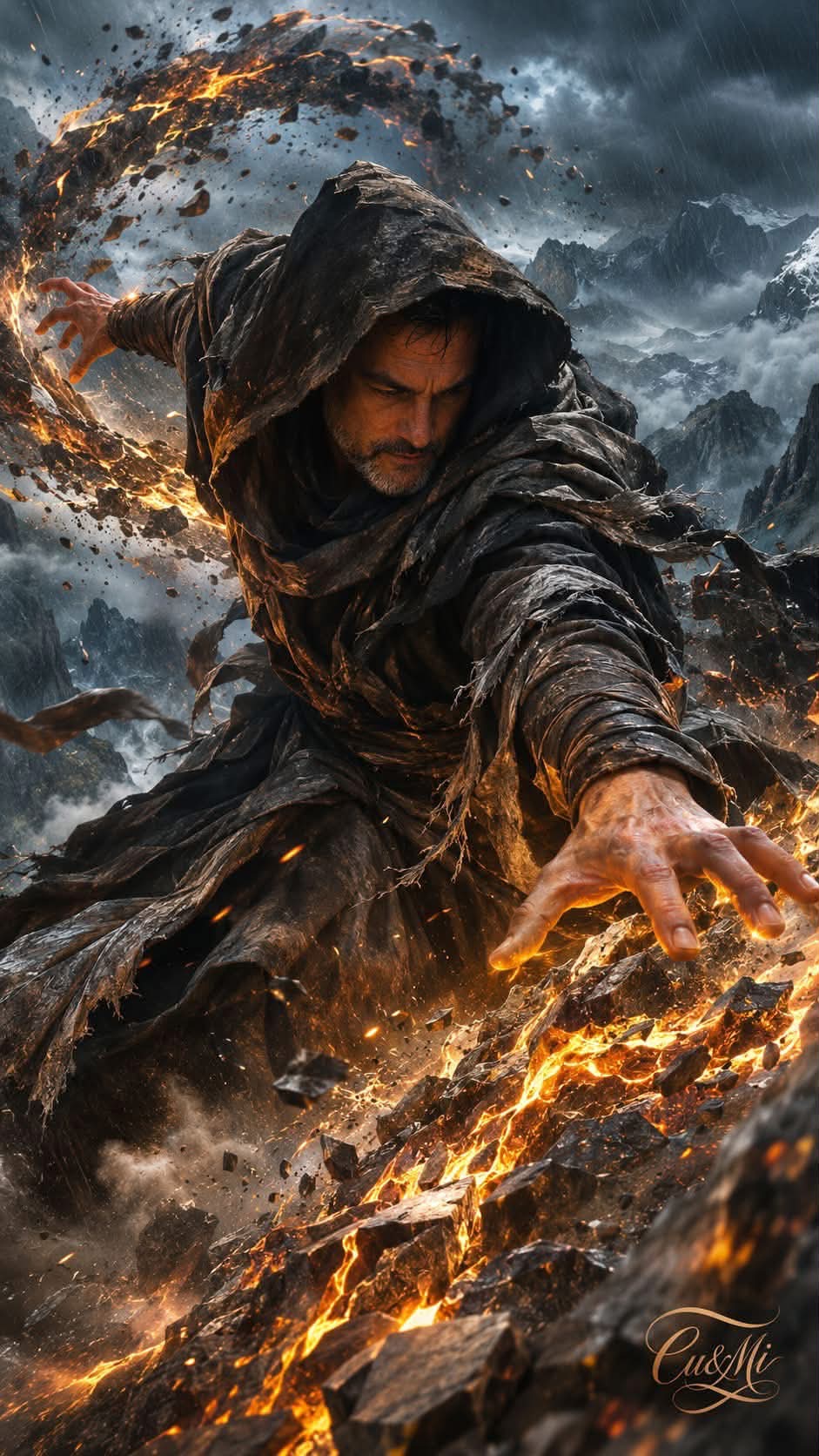
Create a photorealistic dark-fantasy action scene of a hooded mage directing a violent spiral of volcanic rock and molten energy above a stormy mountain range.
Example outputs
Prompt template
- Format
- Text
- Inputs
- Reference_image (image) · Required
- Outputs
- Generated_image (image)
Create an ultra-photorealistic dark-fantasy action image in a vertical 9:16 composition. Use the first uploaded image as the sole identity and appearance reference for one adult subject. The subject may be a man or a woman; preserve the subject’s gender exactly as shown in the reference image.

REALISM AND DETAIL:

Render the scene with ultra-photorealistic cinematic dark-fantasy realism, 8K–16K master quality, HDR, physically accurate global illumination, volumetric fog, realistic atmospheric scattering, natural optical depth of field, ray-traced reflections and light interaction, fine fabric weave, individual hair strands, visible skin pores on illuminated areas, natural wrinkles, realistic eye and lip moisture, detailed fingernails, ash embedded in garment fibers, microscopic rock texture, glowing mineral fractures, individual sparks, and authentic motion-frozen particles.

The finished image must appear captured from a live-action prestige dark-fantasy film, with real performers, practical wardrobe, physically present rock debris, and sophisticated visual effects seamlessly integrated into the scene.

Do not depict an illustration, painting, anime, cartoon, CGI appearance, or video-game render. Avoid plastic or waxy skin, a generic wizard pose, an upright static stance, a clean studio portrait, direct eye contact with the camera, a fully illuminated face, loss of identity, altered physique, redesigned hairstyle, a perfect energy ring, smooth neon magic, a fireball, portal, or elemental creature. Include no extra people, duplicated body parts, extra fingers, fused hands, malformed anatomy, or floating disconnected debris. Avoid oversaturated orange, artificial sharpening, low-resolution textures, and AI artifacts.

STRICT IDENTITY AND APPEARANCE PRESERVATION:

Preserve the subject’s exact facial identity, apparent age, facial structure, hairstyle, hair length, natural hair color, hairline, skin tone, natural physique, body proportions, and distinctive features from the reference image. Do not beautify, rejuvenate, slim, enlarge, over-muscularize, feminize, masculinize, or otherwise reshape the subject. Do not invent or redesign their hair.

The face must remain recognizably that of the reference person, but it must not be presented as a clean portrait. Keep most of the face beneath the deep hood and in dramatic shadow. Preserve enough illuminated facial information—especially the eye shape, nose, cheekbones, mouth, jawline, facial hair where naturally present, and distinctive asymmetry—for the identity to be recognizable on inspection. Do not brighten the entire face or make facial recognition the main visual focus. The dynamic pose, elemental force, and atmosphere must dominate the image.

Include exactly one adult subject and no additional people.

SCENE AND DYNAMIC POSE:

Show the subject as a powerful hooded elemental mage struggling to control an enormous spiraling current of volcanic rock, ash, smoke, and molten golden energy high in a storm-covered mountain range.

The subject is suspended or driving forward diagonally above a steep, shattered mountainside. Their body forms a strong forward-moving diagonal from the lower center toward the upper-left portion of the frame.

The torso leans forcefully forward at approximately 35–45 degrees, as though resisting the pull of a violent supernatural current. Rotate the shoulders slightly rather than holding them square to the camera. Lower the head beneath the hood, with the chin angled down, while keeping the face partially visible in a shadowed three-quarter view.

The arm on the LEFT side of the image reaches backward and outward at approximately shoulder height. Its elbow is softly bent, the wrist curves downward, and the hand is open with tense, claw-like fingers, as though pulling the elemental current from behind the body.

The arm on the RIGHT side of the image thrusts forward and downward toward the camera. This hand is closer to the lens and therefore appears slightly larger through natural perspective. Angle the palm toward the ground; spread the fingers apart with visible tension, keeping every finger anatomically correct and individually readable.

Twist the chest naturally between the opposing arms. One shoulder pulls backward while the other drives forward, creating powerful rotational tension through the torso. The robe streams downward and backward into the storm, revealing the direction and force of movement. Keep the lower body present beneath the garment, partially obscured by mist, ash, and the swirling elemental ribbon.

Catch the subject at the peak of a violent forward surge while they actively direct and control the surrounding force. Do not show them standing upright, calmly floating, kneeling, sitting, falling helplessly, or posing for the camera.

ANATOMICAL AND PHYSICAL LOGIC:

Maintain a believable human skeleton and weight distribution beneath the robe. The shoulders, elbows, wrists, hands, torso, hips, and legs must connect naturally. Both arms emerge from the correct shoulders. Each hand has exactly five naturally formed fingers. Avoid broken wrists, reversed hands, fused fingers, extra limbs, duplicate hands, dislocated shoulders, disconnected joints, or impossible torso twisting.

Make the force of the magic visibly affect the body and clothing: the robe pulls backward, loose fabric snaps in the wind, the hood presses and folds around the head, and small particles trail in the direction opposite the subject’s movement.

WARDROBE:

Dress the subject in one gender-neutral, floor-length hooded mage’s robe that works naturally for either a male or female subject without requiring a different design.

Construct the robe from multiple layers of heavy charcoal-black and soot-gray fabric. Give it a deep, structured hood, wrapped scarf-like layers around the neck and upper chest, fitted wrapped sleeves, reinforced forearms, a weathered textured torso, and a long divided lower robe that moves freely around the legs.

Make the garment practical, ancient, severe, and battle-worn rather than decorative. Include realistic coarse fabric weave, frayed hems, stitched repairs, ash stains, rain-darkened folds, scorched edges, dust, and subtle leather reinforcement. The robe follows the subject’s natural body without exaggerating or unnaturally concealing their physique.

Keep the hood up, casting a deep shadow across the upper face, but do not let it completely erase the eyes, nose, mouth, jawline, or identity. Preserve the subject’s actual hair wherever it would naturally remain visible around the hood opening. Do not replace the subject’s hairstyle with long fantasy hair.

Include no armor, crown, hat, mask, helmet, cape, exposed skin for glamour, sexualized tailoring, bright ornamentation, modern clothing, visible logos, oversized shoulder pieces, weapons, or jewelry.

ELEMENTAL FORCE:

Create a colossal ribbon of broken volcanic earth and molten energy spiraling dynamically around the subject in one continuous, physically coherent helix.

The ribbon enters the composition from the lower-right foreground as a massive turbulent stream of dark rock, compacted ash, and glowing internal fractures. It sweeps diagonally upward across the front of the subject’s lower torso and waist without severing, replacing, or merging with the body. It then curves behind the subject’s left shoulder and rises into a large open arc in the upper-left background.

Keep the arc visibly continuous even where sections pass behind the body. Make its depth order logical: part of the ribbon passes clearly in front of the lower robe, while another section curves behind the torso and extended rear arm.

Build the elemental ribbon from thousands of jagged stone fragments, dense black ash, granular soil, sparks, embers, and branching veins of molten amber-gold light. The glowing fractures run through the rock like magma under pressure. They are irregular, branching, and physically embedded within the material—not decorative neon lines.

Let the outer edge break apart into fine ash and illuminated dust. Small pieces of stone are torn loose and suspended around the main current. Orange sparks trail naturally through the air. The force feels dense, heavy, dangerous, and barely controlled.

Do not make the magic resemble a smooth glowing hoop, portal, perfect circle, rope, dragon, snake, fabric, fire wings, or decorative halo. It is a violent rotating stream of earth and internal molten energy.

ENVIRONMENT:

Set the scene high among enormous jagged mountain peaks during a severe approaching storm. Dark, sharply rising cliffs surround a deep abyss filled with moving fog. Layered mountain silhouettes recede into the distance through rain, mist, and atmospheric haze.

The sky is heavy with blue-gray storm clouds. Wind drives vapor horizontally between the peaks. Loose stones tumble from the steep mountainside beneath the subject. The environment feels remote, ancient, hostile, and impossibly vast.

Include no buildings, castles, cities, ruins, crowds, animals, modern objects, or visible source casting the magic.

LIGHTING:

Use cold, dim storm light as the environmental illumination and the molten elemental ribbon as the primary warm light source.

The golden-orange energy casts physically believable upward light across the underside of the subject’s hood, nose, cheekbones, lips, jaw, hands, sleeves, and lower robe. Cool blue-gray skylight shapes the upper surfaces, while deep shadows preserve the mysterious hooded appearance.

Create strong but natural contrast between the cold mountain storm and the warm internal glow of the volcanic current. Keep the face partially obscured, with only selected planes illuminated by flickering amber light. The eyes may catch a restrained natural reflection from the energy but must not glow supernaturally.

MOOD AND VIBE:

Convey ancient elemental power, barely controlled violence, isolation, sacrifice, relentless forward momentum, and apocalyptic grandeur. The subject appears powerful but strained—as if forcing an unstable natural catastrophe into submission through concentration and physical effort.

Make the moment feel dangerous and immediate rather than triumphant or heroic. This is not a calm magic demonstration, superhero landing, ceremonial pose, or fantasy fashion portrait. It is the frozen instant when control could either be achieved or catastrophically lost.

CAMERA AND COMPOSITION:

Use a vertical 9:16 cinematic frame with no black bars, borders, text, or decorative frame. Choose a dramatic, slightly elevated three-quarter camera position looking across the mountainside, with the subject occupying the central and upper-middle portion of the composition.

Use a premium large-format cinema camera with a 28–35mm anamorphic lens. Place the forward hand and lower-right elemental ribbon closer to the lens, producing controlled natural perspective and strong depth without deforming the body.

Keep the subject’s shadowed face, both hands, upper torso, and the nearest molten rock sharply detailed. Use atmospheric perspective through the distant mountains and fog rather than excessive artificial blur. Preserve a clear silhouette between the subject, elemental current, and background.
What you'll create
A solitary mage drives diagonally forward above a shattered mountainside, fighting a spiraling current of ash, rock and golden molten force. The face remains partly shadowed beneath the hood while hands and nearby stone stay sharply detailed.
Frequently asked questions
What dominates the composition?
The dynamic pose, elemental force and atmosphere take precedence over a clean facial portrait.
Are additional people included?
No. The source specifies exactly one adult subject.




Comments
Tried this prompt? Share what you made, compare results, or ask a question