Photorealistic Boxer Cat Smartphone Wallpaper
Create a photorealistic portrait wallpaper that preserves a boxer cat’s pose and bedroom setting while accurately adopting the appearance of a target cat, with careful feline anatomy and a dramatic low-angle perspective.
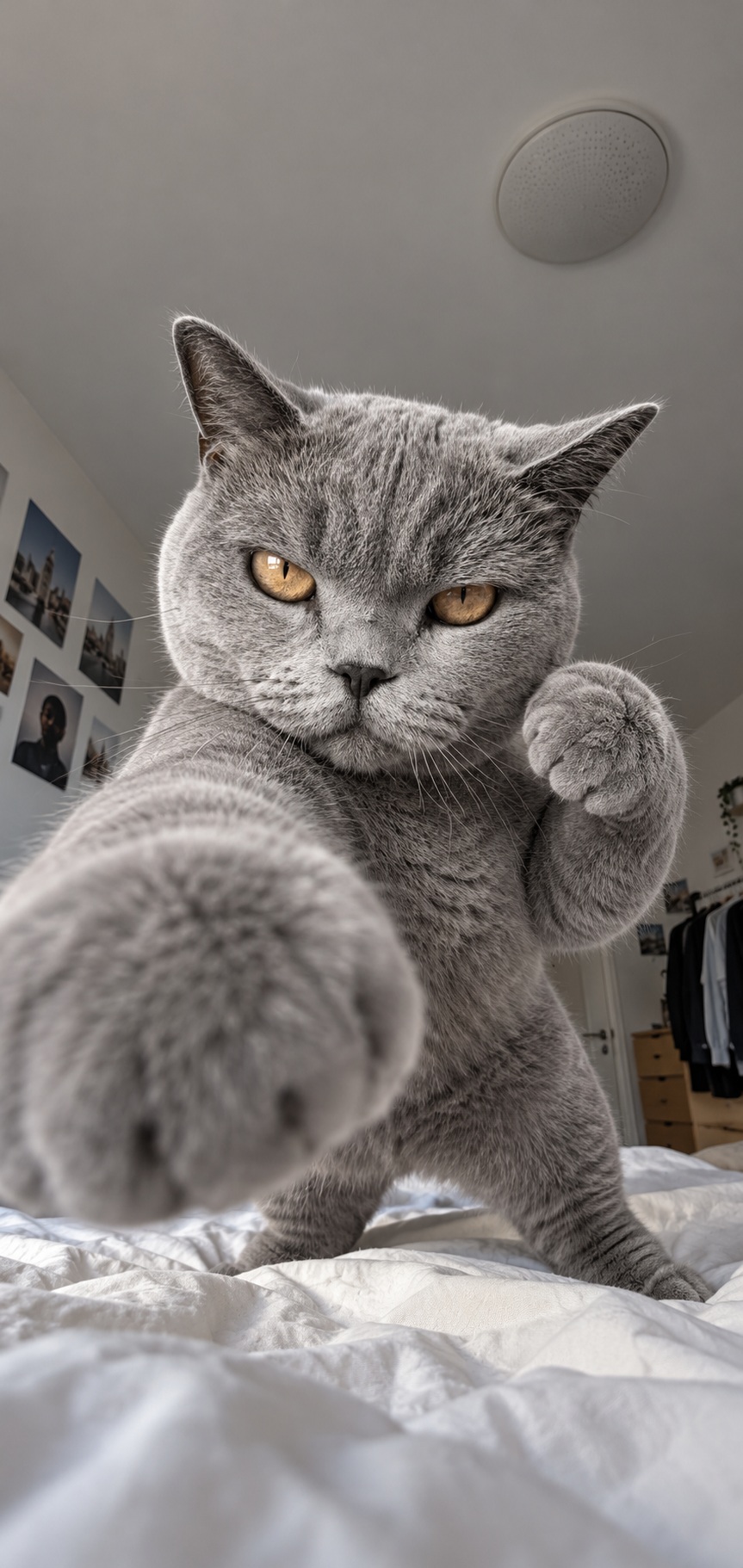
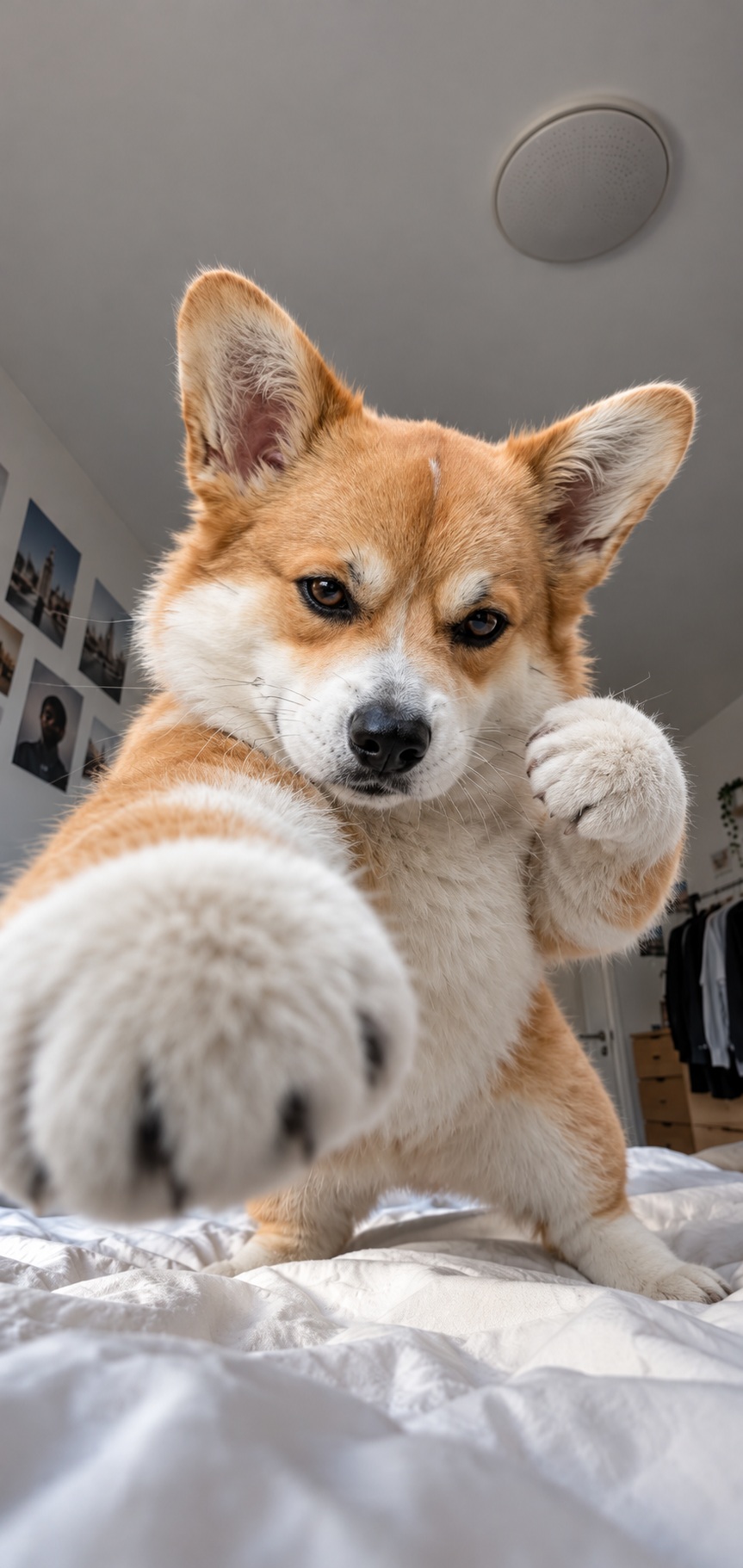
Example outputs
Prompt template
- Format
- Markdown
- Inputs
- Original_boxer_cat_image (image) · Required Target_cat_photo (image) · Required
- Outputs
- Smartphone_wallpaper (image)
Create an ultra-photorealistic smartphone wallpaper featuring a boxer cat. Use the original boxer-cat image to preserve the boxing pose, facial expression, camera angle, bedroom background, and overall composition. Use the target-cat photo to accurately reproduce the cat’s facial structure, eyes, ears, coat color, markings, and breed characteristics.

The cat should look like a tiny, angry boxer, ready to throw a couple of punches directly at the camera.

### Facial expression and posture
The cat leans forward, bringing its muzzle closer to the camera. Its eyes are slightly narrowed, its brow ridges naturally lowered, and its gaze directed straight into the lens. The expression is serious, unflappable, slightly confrontational, and intimidating, while maintaining a delightful contrast.

One front paw is naturally clenched into a small, fluffy fist and raised high above the head. The other front paw points toward the bottom of the camera, as if striking directly at the viewer.

Strictly maintain the original boxing pose. Do not turn the gesture into waving, high-fiving, or scratching. Do not clench the paws like human fists.

### Chest and forelimb anatomy
Keep the original direction of movement, but do not mechanically copy overlapping fur structures between the chest and front paws from the original image.

Restore the anatomical connections between the neck, chest, shoulders, and outstretched forepaw in accordance with the target cat’s natural body proportions. The extended forepaw should start naturally from the shoulder at the front of the body, not appear to grow from under the neck or from the center of the chest.

Keep a clear, natural contour of the chest visible beneath the neck. Position the rib cage behind the outstretched foreleg to create clear, realistic depth between the two structures.

Slightly reduce excess hair under the neck, on the upper chest, and where the shoulder transitions to the front paws. In these areas, the coat should be relatively short, dense, and close to the body, consistent with the target cat’s natural coat length.

Use subtle natural shadows, anatomical contours, and changes in coat direction to distinguish the chest from the outstretched foreleg. Do not merge them into one continuous fluffy mass.

Allow a slight adjustment to the shoulder attachment point and the angle of the front paw at its base. Prioritize realistic feline anatomy and natural transitions without creating artificial dividing lines.

### Camera angle and perspective
Use an extremely low viewing angle, a close-up, and an ultra-wide-angle perspective, with the camera positioned below the cat and pointing upward. The cat’s muzzle should occupy the upper part of the middle of the frame.

Slightly enlarge the foreground paw closest to the camera to strengthen the impact, while keeping it anatomically proportional to the rest of the front paw. Achieve the enlarged appearance through realistic perspective distortion, not by making the entire front paw unnaturally thick.

### Background and visual style
Strictly preserve the original bedroom background, including the gray ceiling, the round ceiling chandelier, the photographs on the left wall, the furniture and hanging clothes on the right, and the naturally rumpled white linens below.

Use natural indoor lighting, realistic shadows, detailed fur, clear facial features, and authentic ultra-realistic photography. Avoid cartoons, illustrations, computer graphics, and artificial textures.

### Smartphone wallpaper requirements
Use portrait orientation, a 9:19 aspect ratio, and a target resolution of 1320 × 2868 pixels. Fill the frame without cropping in a way that compromises the cat’s boxing pose. Leave enough natural space at the top for the watch on the iPhone lock screen. Include no text, frames, logos, or watermarks.

Preserve the cat’s original boxing expression, dynamic striking posture, and strong visual impact while accurately reproducing the target cat’s unique appearance. Most importantly, ensure that the neck, chest, shoulders, and outstretched forelegs have anatomically correct, natural joints, well-defined depth, and realistic separation, without matted fur, excessive fluffiness, or distorted body structures.
What you'll create
A cat leans toward the camera in a tiny boxer stance within a reference-based bedroom composition. Target-cat markings and realistic shoulder and foreleg joints maintain recognizable feline anatomy.
Usage instructions
Use the original image to guide the boxing pose, composition, and bedroom, and the target-cat photo to guide the cat’s appearance. The most important adjustable visual controls in this prompt are the shoulder and foreleg anatomy and the low camera angle; preserve the specified wallpaper framing while refining those details.
Frequently asked questions
Should the fur be rendered as a formless fluffy mass?
No. The neck, chest and limbs need clear depth and separation.
What expression is requested?
Serious, slightly confrontational and unflappable.





Comments
Tried this prompt? Share what you made, compare results, or ask a question