Turn a Reference Photo into a Springfield Resident
Transform a person in a reference photo into an original, full-length background resident of Springfield, using the animated series’ simplified character design without copying recognizable characters.
Example outputs
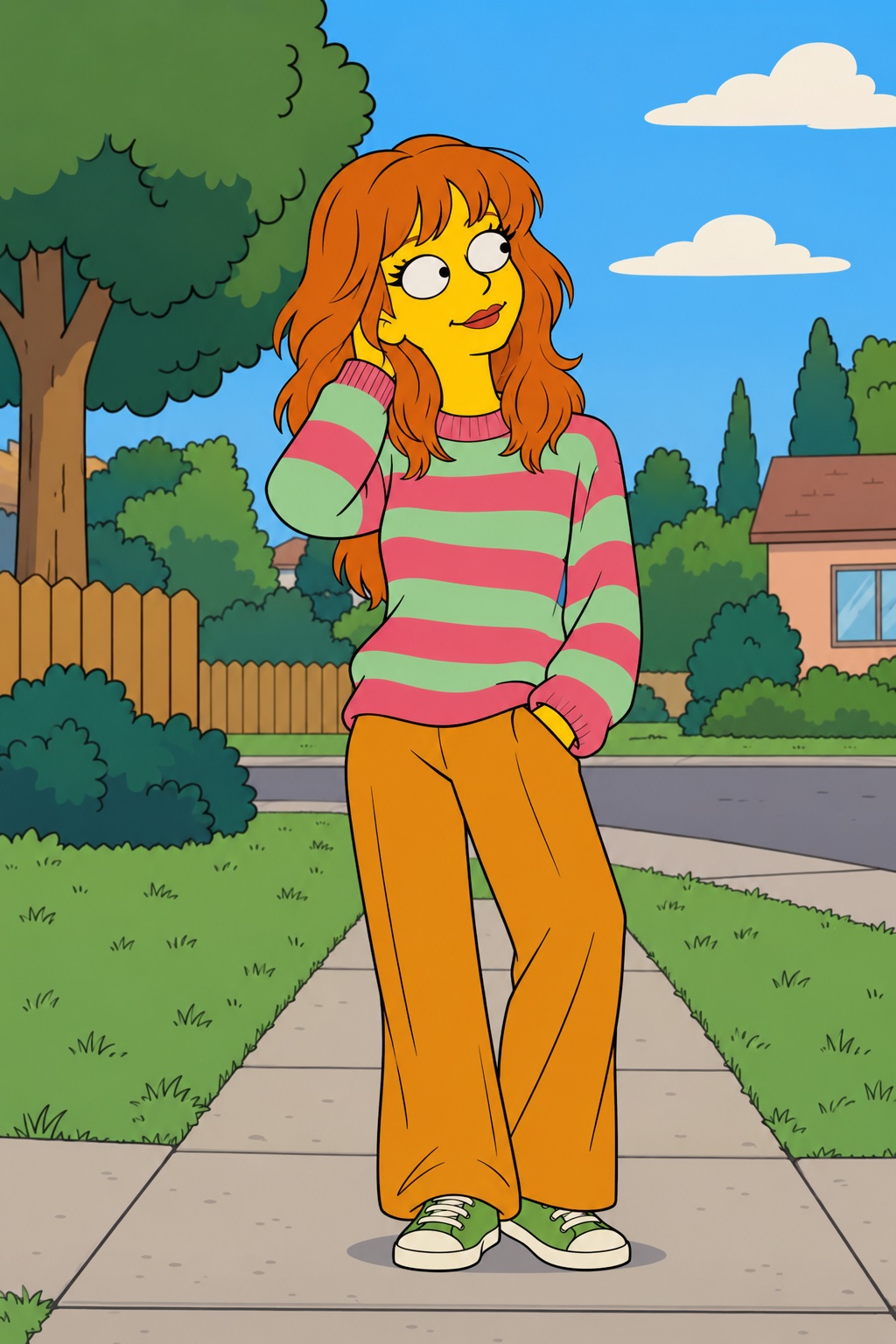
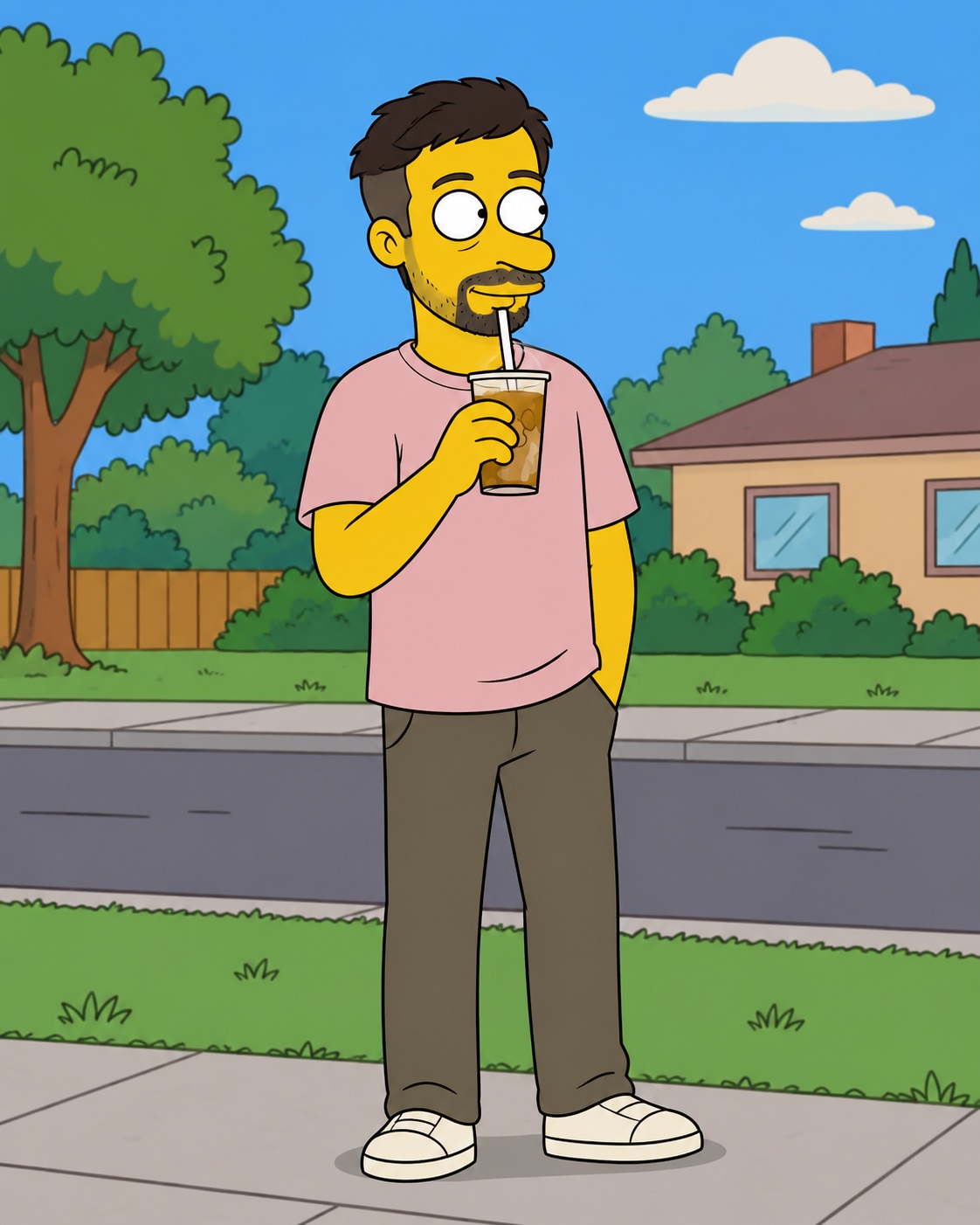
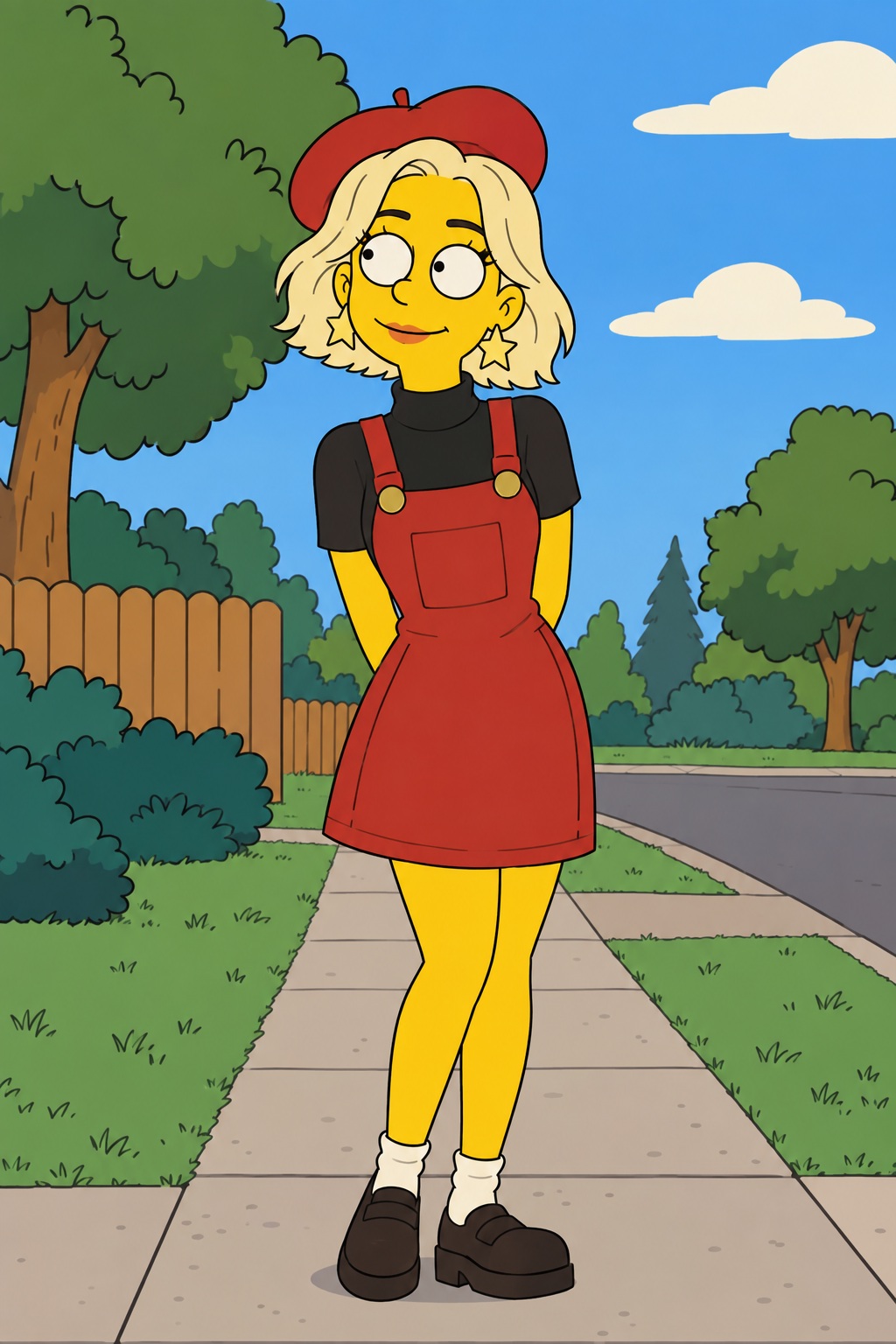
Prompt template
- Format
- Text
- Inputs
- ReferencePhoto (image) · Required
- Outputs
- Illustration (image)
Use the supplied photo of a person only as a reference for gender, approximate age, build, character, pose, hairstyle, general silhouette, and clothing color scheme. Transform the person into a fully original character who looks like an ordinary background resident of Springfield from the animated series The Simpsons. Do not copy or resemble any main or recognizable character from the series; create a new, unnamed city resident.

The character must look like a resident of Springfield, not like a realistic person treated with a cartoon filter. Do not transfer realistic facial features, head proportions, nose shape, skin texture, or anatomy. Portrait likeness is not necessary: convey the reference only through hairstyle, build, clothing, and character.

Redesign the person’s appearance to match the series’ character anatomy. Give the character a simple geometric head shape—rounded, elongated, pear-shaped, or with a distinctive ledge. Make the eyes very large, perfectly round, white, and almost touching, with small black pupils. Give the character a long, rounded nose that protrudes forward. Keep the mouth simple, with a pronounced lower face; male characters may have noticeable stubble in a different shade around the mouth and chin. Make the ears simple and C-shaped, the hands four-fingered, and the body simplified, with no neck or only a thin neck and simple legs. Make the shapes slightly ridiculous and asymmetrical.

Use skin colors consistent with the series: depict light-skinned people in yellow and dark-skinned people in warm brown shades. Do not use gradients or skin texture.

Keep the hairstyle’s type, length, and color from the photo, but simplify it into the graphic form typical of the series: a solid hair silhouette with minimal detail, a jagged edge, protruding strands, or a voluminous cap. You may slightly exaggerate its shape for expressiveness.

Use the photo to determine the person’s overall build. Translate a thin person into a thin, angular character; a large person into a rounded character with a simple soft belly; a tall person into an elongated character; and a short person into a compact character. Do not draw muscles, ribs, collarbones, or other anatomical details. Convey the person’s build through the overall silhouette.

Do not copy the clothing literally. Use the photo to determine the clothing category, degree of formality, and main colors, then reinvent the outfit in the style of clothing worn by the series’ background residents: for example, a monochrome short-sleeve shirt, simple T-shirt, straight trousers, uncomplicated dress, or jacket with minimal lines. Keep clothing flat and plain, with no more than one or two crease lines. Preserve the wardrobe’s meaning: a dress remains a dress, trousers remain trousers, a skirt remains a skirt, and shorts remain shorts. Use the photo’s color scheme as a guide, not an exact copy. Do not include realistic fabric, prints, logos, seams, or textures. Accessories such as glasses, a hat, or a bag are acceptable, but keep them simplified.

Read the person’s mood and character from the photo and express them through exaggerated cartoon facial expressions: eyelid position on the round eyes, mouth shape, eyebrows, head tilt, hand position, and pose. A light, ironic absurdity characteristic of the series is welcome.

Set the character on a simple suburban street in the style of the animated series, without recognizable buildings or locations from the series. Include a green lawn, gray sidewalk, light-blue sky with a few flat white clouds, and a couple of simple trees or bushes. Keep the background minimal, slightly faded, and spacious.

Use the series’ classic palette: rich yellow for the character against calmer colors such as sky blue, grass green, light gray, and warm beige. Use moderate saturation; avoid neon or acidic colors.

Use simple 2D animated graphics with clear, smooth, dark outlines, flat fills, and minimal detail. Avoid volumetric lighting and shadows. The character should look at home beside the background residents of Springfield.

Show one full-length character, completely visible in the frame, standing on the sidewalk. Use a character-level viewpoint, a clearly readable silhouette, and plenty of open space around the character.

Top priority: the photo determines gender, approximate age, character, build, hairstyle, and clothing color ideas, but not actual facial features. At first glance, the result should read as a completely new Springfield background resident, not as a photo processed with a filter.

Avoid: realistic faces or facial features, realistic noses or eyes, realistic skin or skin texture, realistic anatomy, five fingers, realistic portraiture, detailed hair strands, photorealism, 3D rendering, realistic clothing, detailed fabric, logos, cinematic lighting, shading, gradients, recognizable Springfield buildings, existing characters from The Simpsons, and neon colors.
What you'll create
The subject becomes a new unnamed cartoon city resident, using general pose, build, hair and clothing colors from the reference. Simplified animated anatomy replaces realistic portrait detail.
Frequently asked questions
Should it resemble an existing main character?
No. The source explicitly requires a new original background resident.
Is this a cartoon filter on a realistic face?
No. The person is fully redesigned within the cartoon’s visual language.




Comments
Tried this prompt? Share what you made, compare results, or ask a question