Rogue Opening a Mimic-Infested Dungeon Chest
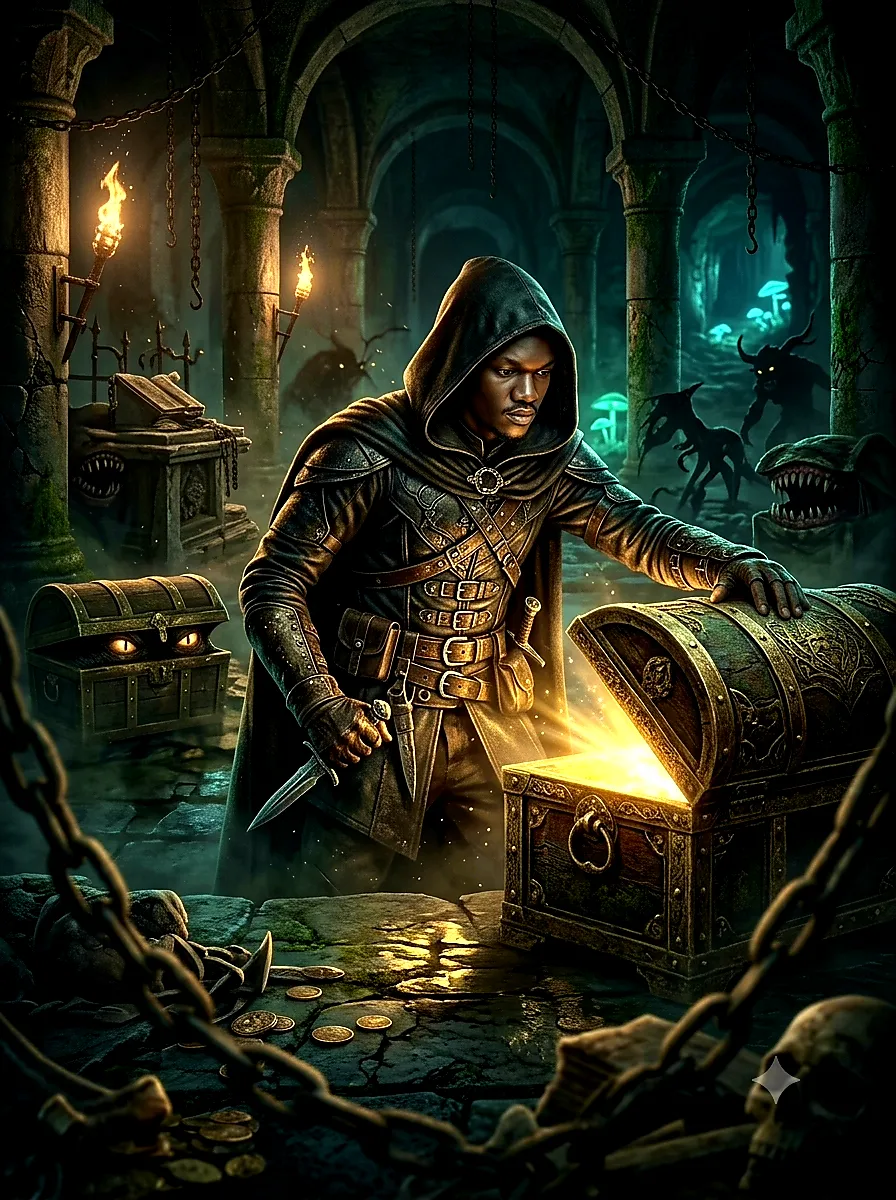
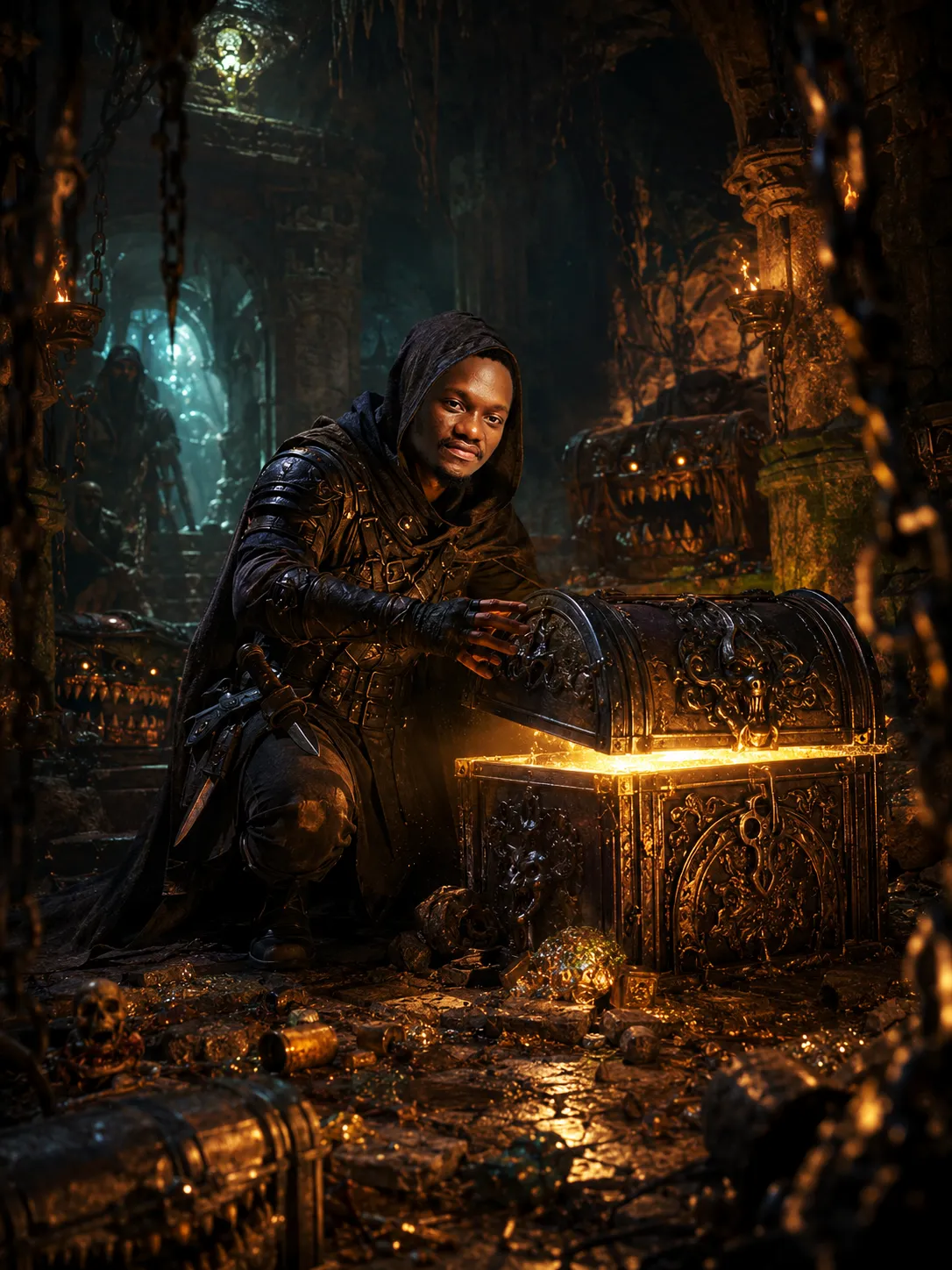
Create a hyper-realistic cinematic dark-fantasy scene of a rogue opening a magically glowing chest in an ancient dungeon watched by hidden mimics.
Example outputs
Prompt template
- Format
- Text
- Inputs
- Uploaded_reference_photo (image) · Required
- Outputs
- Generated_scene (image)
Use the face from the uploaded photo as the rogue's face. Create a vertical scene in a 3:4 aspect ratio, hyper-realistic and cinematic, with exceptional visual quality and rich detail, like a frame from a high-budget fantasy film. Depict a rogue in an ancient dark-fantasy dungeon. Convey tension, discovery, and imminent danger as the character opens an ancient, ornate chest. Place the rogue off-center to create visual dynamism and narrative depth.

Show the rogue as agile and stealthy, wearing a hooded cloak, light dark leather armor, belts, buckles, worn gloves, daggers secured to the body, utility pouches, and small accessories appropriate to the character. Give the rogue a focused, cautious, intelligent expression, partially lit by the chest's glow. Make the chest the scene's central source of tension: robust, ancient, and valuable-looking, with intense magical golden light spilling from between its half-open lid. Let the light reflect on the rogue's face and hands, the metallic parts of the costume, and the damp stone floor.

Hide several mimics around the scene in clever, coherent ways, as if silently watching the moment of the theft. Some should be camouflaged as other chests; others should be suggested in the shadows by faintly glowing eyes, partially visible teeth, or mouths formed among ironwork, wood, stone, and organic matter. Keep them threatening and sophisticated, without cartoonish exaggeration.

Build the composition with four clearly defined depth planes:
- Foreground: blurred, textured elements such as chains, coins, broken stones, skulls, dust, ironwork, dried roots, fungi, and debris.
- Second plane: the rogue and chest as the main focus.
- Third plane: worn columns, stone arches, hanging chains, broken altars, treasure piles, torches or secondary light sources, and other dungeon architecture.
- Deep background: a dark, atmospheric space where other mimics, monstrous silhouettes, and underground passages appear subtly to build mystery.

Give every surface rich texture: cracked, damp stone; subtle moss; airborne dust; aged wood; oxidized metal; worn leather; heavy fabric; aged gold; rust; cracks and carvings; residue; fine cobwebs; and suspended luminous particles. Use elaborate lighting that combines warm golden light from inside the chest with cold greenish and bluish backlighting from cracks, bioluminescent fungi, or distant dungeon passages. Create rim lighting, atmospheric glow, dense shadows, and an almost magical yet realistic appearance.

Use intentional, cinematic framing with genuine depth, selective focus, refined contrast, volumetric light, excellent shading, and polished post-production. Apply dramatic color grading, appropriate sharpness, rich texture, and an immersive atmosphere. Ensure correct anatomy, well-resolved hands with five fingers, natural proportions, and physical coherence between the character and environment. Maintain clear visual readability and create an impactful, compelling result like a piece of hyper-realistic fantasy art.
What you'll create
A reference rogue appears off-center in worn leather armor, a hood and utility gear. Cinematic light and detailed ancient surroundings emphasize discovery and imminent danger.
Frequently asked questions
Is the character dressed in heavy plate armor?
No. The brief specifies light dark leather armor and stealth gear.
Are the daggers being used in a fight?
They are described as secured to the body.




Comments
Tried this prompt? Share what you made, compare results, or ask a question