Vitraux Couture: The Light Is the Dress
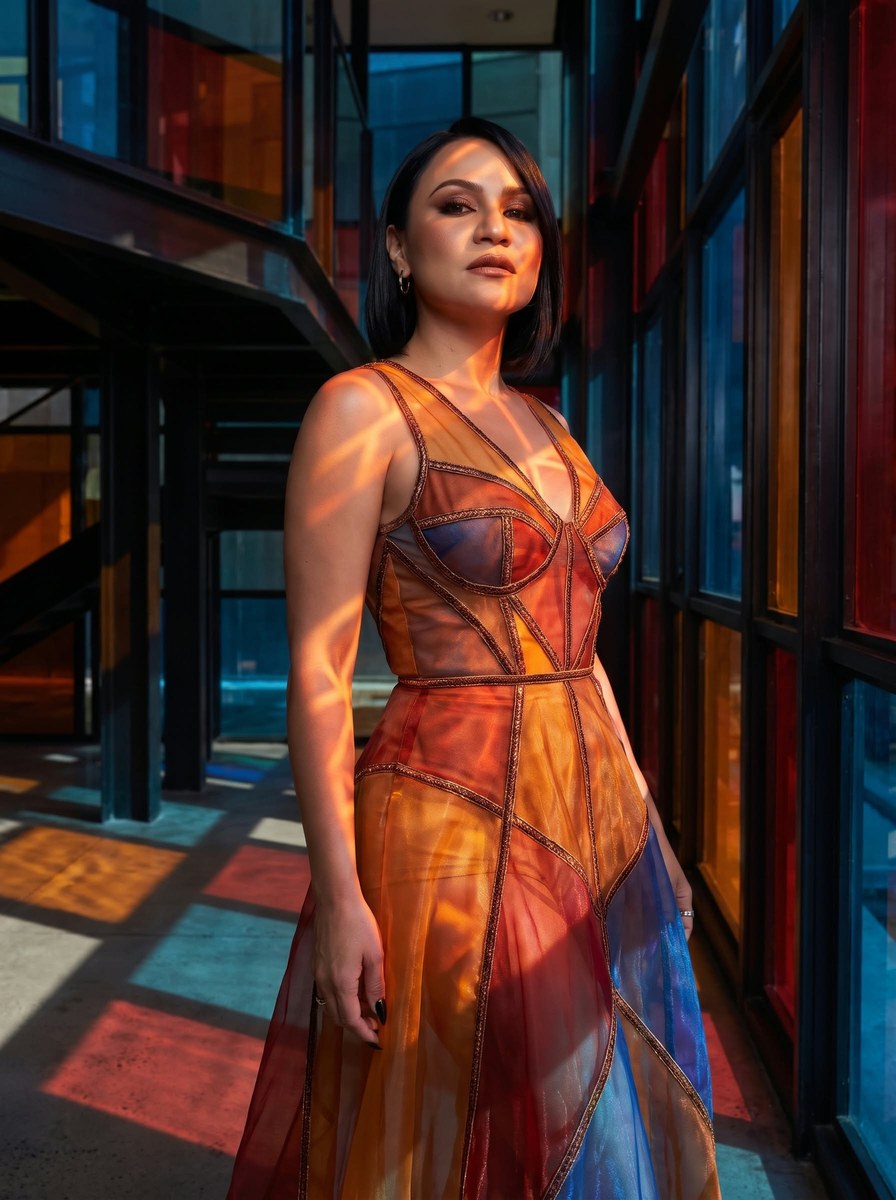
Create a photorealistic high-fashion editorial portrait of the woman in a supplied reference photo wearing a sculptural, stained-glass-inspired couture dress in a contemporary light installation. Preserve her identity and natural features while using vivid orange, jewel tones, and physically plausible colored light.
Example outputs
Prompt template
- Format
- Text
- Inputs
- reference_photo (image) · Required
- Outputs
- fashion_editorial_image (image)
Create a vertical 4:5 photorealistic high-fashion editorial photograph titled “VITRAUX COUTURE · THE LIGHT IS THE DRESS.”

1. TOTAL IDENTITY PRESERVATION

Use the supplied photograph as the definitive identity reference for the woman depicted. Strictly preserve her real face, bone structure, eye shape, nose, mouth, eyebrows, facial proportions, apparent age, skin tone and texture, natural asymmetries, and individual features.

Do not modify, idealize, rejuvenate, or replace her identity with a generic model’s face. Preserve her natural hair color, length, and texture, adapting only the hairstyle in a way that suits the editorial styling.

The transformation takes place in the clothing, lighting, and setting. The protagonist must remain unmistakably the same woman as in the original image.

2. ARTISTIC CONCEPT

Create a conceptual haute-couture photograph inspired by the beauty of stained glass, reinterpreting its geometry, colors, and relationship with light through contemporary fashion design.

The protagonist wears an architectural dress whose translucent panels evoke fragments of colored glass, joined by delicate structural lines and artisanal finishes.

Light passes through parts of the outfit and casts chromatic patterns across the body, floor, and architecture. The dress appears to change as the light falls on it, while retaining the material presence of a physical garment.

The image should look like an international artistic fashion campaign: sophisticated and bold, photographed in a real space conceived as a light installation.

The central concept is not a woman standing in front of a stained-glass window. It is a woman wearing the light.

3. OUTFIT · VITRAUX COUTURE

Create a sculptural haute-couture dress with an elongated silhouette, architectural structure, and physically plausible construction.

The bodice features asymmetrical geometric panels of colored organza, translucent silk, and semi-rigid textile materials. Fine structural embroidery, precise seams, and delicate metallic applications define the divisions between colors, inspired by the lines separating the fragments of a stained-glass window.

The skirt combines translucent layers, angular cutouts, and controlled volume, creating a dynamic composition of opaque and transparent areas. Some layers extend gently beyond the silhouette, catching the light and revealing overlapping colors.

The outfit should look like a real experimental haute-couture piece made by skilled professionals. Every panel must have plausible thickness, drape, weight, and joins.

Do not create rigid glass plates attached to the body. The stained-glass reference should come through geometry, transparency, color, and the passage of light.

4. COLOR PALETTE · ORANGE SIGNATURE

Orange must have a strong, intentional visual presence as one of the dress’s principal colors, not merely as a subtle reflection.

Use a gemstone palette consisting of:

- Intense orange and golden amber in large translucent panels, concentrated on the bodice and parts of the skirt.
- Luminous copper and warm gold on structural outlines and metallic embroidery.
- Ruby red in selected panels, adding depth and drama.
- Cobalt blue and violet in contrasting areas, creating sophisticated color opposition.
- Emerald green in smaller details, balancing the composition without competing with the orange.

Orange must be clearly recognizable in the image, with areas large enough to establish the visual signature of Fada Laranja.

The colors should look as though they are transmitted through real translucent materials, with variations in intensity caused by fabric thickness, overlapping layers, and the direction of the light.

Avoid a rigid, uniform division of colors. The composition should feel designed by a fashion stylist, balancing luminous areas, colored shadows, and transparency.

5. EDITORIAL BEAUTY · HAIR AND MAKEUP

Create professional beauty styling that enhances the protagonist’s original identity.

Give the skin a natural satin finish, preserving pores and microtexture. Use refined makeup with defined eyes and subtle depth, in warm copper, bronze, and brown tones that do not compete with the colors projected by the setting.

Keep the eyebrows natural, define the lashes, and use warm nude or dusty-rose lipstick.

Preserve the hair’s real characteristics, styling it with an elegant editorial finish and controlled movement. Do not obscure the eyes or let the hairstyle dominate the composition.

The beauty styling should be sophisticated, human, and photographic, without a doll-like effect or excessive retouching.

6. SETTING · THE CONTEMPORARY CATHEDRAL OF LIGHT

Place the protagonist in a large-scale architectural installation with colored translucent panels, dark structures, and mineral surfaces.

The environment combines the feeling of a contemporary art gallery with the geometric grandeur of architecture inspired by stained glass.

Large colored surfaces filter natural light and cast projections across the floor and walls. The structures should have convincing scale, thickness, and materials, such as dark metal, stone, and translucent panels.

The space should have depth and allow the protagonist to stand out without looking digitally cut out from the setting.

Do not reproduce a traditional church literally. Create an original, sophisticated, visually memorable architectural environment.

7. LIGHTING · COLOR PASSES THROUGH THE BODY

Lighting is the central narrative element of the photograph.

Use intense, directional light passing through colored panels, creating geometric projections of orange, amber, ruby, blue, and violet across the dress, floor, and selected parts of the skin.

Orange should appear especially expressive in areas near the bodice, skirt, and outline of the silhouette.

The projections must respect the direction of the light and the geometry of the panels. Colors should interact with the materials, revealing transparency, overlapping shadows, and differences in intensity.

Keep the face perfectly legible, with soft fill light that preserves detail in the eyes and the skin’s natural texture.

Create warm reflections on copper and gold embroidery without turning the dress into a metallic surface.

The light should feel physically present in the space, not digitally added after the photograph was taken.

8. POSE AND EXPRESSION

Show the protagonist in a high-fashion editorial pose, with firm posture, an elongated neck, and relaxed shoulders.

Turn her body slightly relative to the camera to reveal the dress’s geometry and the layering of its translucent panels.

One hand may rest gently against the side of the skirt, while the other arm follows the silhouette naturally.

Her gaze is direct, confident, and expressive. She conveys presence, autonomy, and serenity.

Avoid excessively theatrical poses. The drama should arise from the relationship between the outfit, architecture, and light.

9. COMPOSITION AND FRAMING

Use vertical 4:5 framing, showing three-quarters of the body, with the face, bodice, and a substantial portion of the skirt visible.

Position the protagonist slightly off-center, balancing her silhouette against the colored architectural panels.

Create geometric lines that lead the viewer’s eye toward her face, then guide it along the construction of the dress.

Orange should be immediately apparent at first glance without eliminating contrast with the other colors.

Keep the eyes as the primary point of focus and the dress sufficiently sharp to reveal its materials and construction.

The composition should convey scale, depth, and elegance, like a campaign photograph made in a real art installation.

10. CAMERA AND PHOTOGRAPHIC QUALITY

Create an ultrarealistic editorial photograph captured with a Sony A7R V and an 85 mm lens.

Use an approximate aperture of f/4, with enough depth of field to preserve important outfit details while separating the protagonist from the background.

Use critical focus on the eyes, natural portrait perspective, sophisticated tonal grading, and excellent texture resolution.

Faithfully reproduce the weave of the fabrics, seams, embroidery, transparency, and light projections.

Colors should have richness and depth without artificial saturation. The skin should retain a natural tone even when colored reflections fall on it.

The result should look like a real photograph from a high-budget fashion production, without the appearance of digital rendering.

11. ATMOSPHERE AND ARTISTIC RESULT

Create an image that combines the architectural grandeur of stained glass with the creative freedom of contemporary haute couture.

The protagonist is the emotional center of the photograph. The dress transforms color into structure, transparency into movement, and light into an integral part of the garment.

Orange provides warmth and identity. Blue, ruby, violet, and green create contrast and visual richness.

The image should be luminous, intense, sophisticated, and unforgettable, without relying on fantastical effects.

12. NEGATIVE PROMPT

Do not alter the protagonist’s facial identity, apparent age, bone structure, eyes, nose, mouth, skin tone, or proportions.

Do not create plastic-looking skin, excessive retouching, a generic face, incorrect anatomy, deformed hands, or extra fingers.

Do not create a dress made of rigid glass plates, sharp fragments, impossible materials, or unsupported structures.

Do not create the appearance of CGI, 3D rendering, illustration, digital painting, a video game, or artificial fantasy.

Do not exaggerate saturation, reflections, metallic shine, or light projections.

Do not obscure the face with intense colored shadows. Do not let the architecture or panels hide the dress.
What you'll create
A reference-guided woman wears architectural organza and silk, with fine seams separating jewel tones. Light passes through layered fabric onto the body and surrounding space, making the garment itself the installation.
Usage instructions
Provide a reference photo of the woman whose identity should be preserved; the prompt uses it as the definitive guide for her face, skin, and hair. The transformation is limited to styling, lighting, and setting, so review those elements while checking that her recognizable features remain intact. To shift the visual emphasis, adjust the requested prominence of orange while retaining the other jewel tones for contrast.
Frequently asked questions
Is the dress built from rigid glass plates?
No. Its panels must remain physically plausible textile construction.
Is a stained-glass window merely behind the model?
No. The central concept is wearing the light through the garment.


Comments
Tried this prompt? Share what you made, compare results, or ask a question