Y2K Glamour in a Chaotic Dressing Room
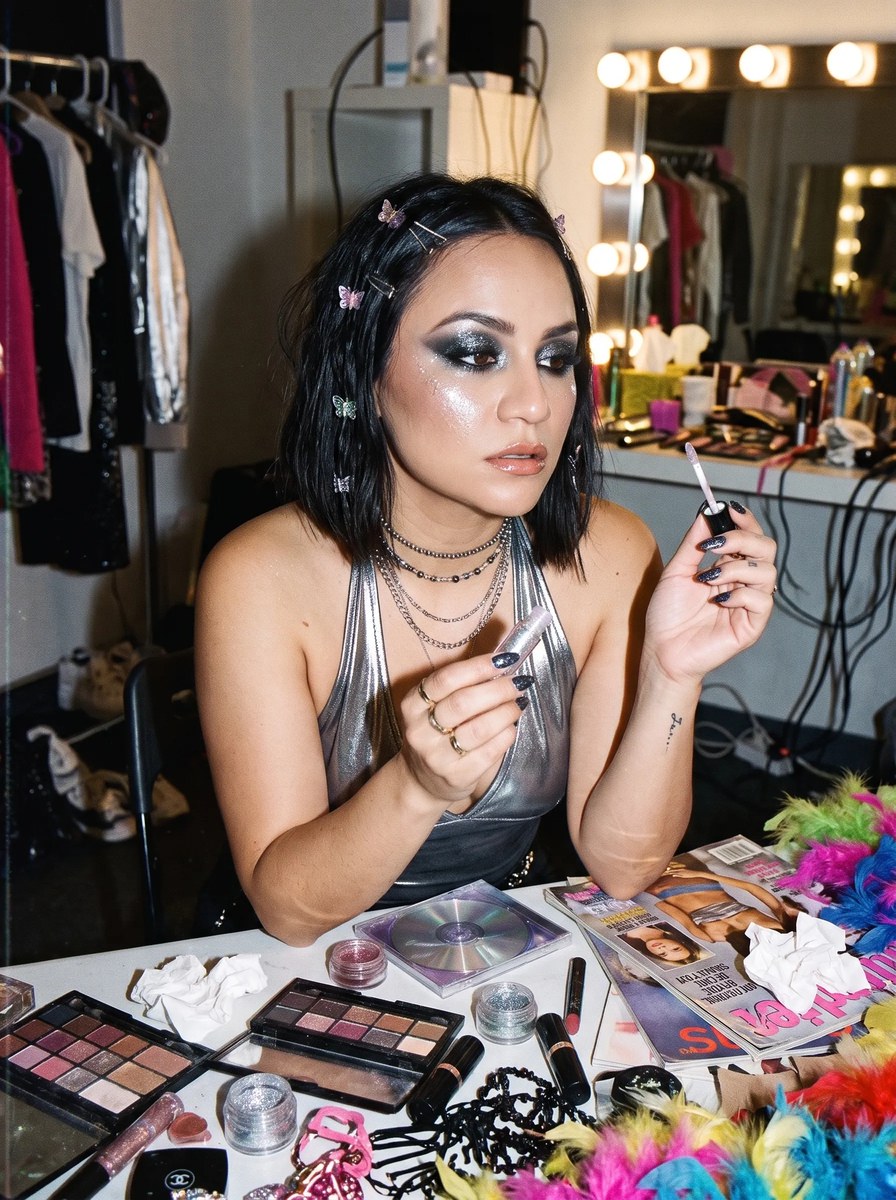
Create a realistic editorial portrait of the person in a supplied reference photo, styled as a dramatically glamorous Y2K dressing-room moment with a subtle analog VHS look.
Example outputs
Prompt template
- Format
- Text
- Inputs
- Reference_photo (image) · Required
- Outputs
- Editorial_portrait (image)
Create a realistic editorial photograph inspired by an alternative pop music video from 2001.

Use the supplied reference photograph as the primary and required source for the depicted person’s identity. Preserve the person’s recognizable individual identity and facial features as faithfully as possible, including the original face shape and structure; eye spacing, shape, and placement; eyebrows, nose, lips, and facial contours; bone structure, cheekbones, jaw, and chin; natural skin tone, undertone, and texture; apparent age and individual characteristics; original body proportions and physical structure; and natural hair characteristics, except where a change is expressly requested below.

Identity preservation does not limit the requested creative transformation. Freely change clothing, makeup, hairstyle, accessories, facial expression, pose, gestures, framing, lighting, setting, composition, and art direction, provided these changes do not erase the person’s identity. Carry out all expressly requested features even when they differ from the reference photo. Adapt facial expression, posture, and body language to the scene. Prioritize, in order: preserving facial identity and individual characteristics; carrying out expressly requested physical and aesthetic changes; adapting clothing, makeup, pose, and expression to the creative direction; and following the scene’s setting, lighting, and visual treatment. Do not replace the reference person with a generic lookalike. Do not artificially beautify, slim the face, change proportions, or excessively smooth the skin unless expressly requested. The result must be recognizably the same person, convincingly placed in the new visual setting.

Depict an adult woman standing before a dressing-room mirror, surrounded by scattered makeup, glitter, old magazines, CDs, and colorful accessories. She wears a metallic top, a Y2K-style miniskirt, and intensely sparkling makeup. She holds lip gloss and looks dramatically contemplative, as though facing the greatest tragedy in human history. Use direct flash, saturated colors, spontaneous framing, a chaotic dressing-room atmosphere, and deliberately exaggerated glamour.

Apply an analog MTV/VHS filter: VHS tape noise, subtle horizontal tracking distortions, chromatic aberration, color bleeding, soft interlaced-video texture, natural magnetic-tape degradation, electronic grain, slight signal fluctuations, saturated colors, and the characteristic contrast of television from the 1990s and early 2000s. The image should look like a frame captured directly from an old television broadcast.

Visual constraints: Do not turn the image into a drawing or illustration. Do not exaggerate tape defects so much that they obscure the face. Do not add real MTV logos or random text. Do not add watermarks, captions, or illegible television interface elements. Keep anatomy, hands, expressions, and proportions realistic. Keep analog noise concentrated in the image without destroying important details.
What you'll create
A reference-based person appears in a chaotic dressing-room scene inspired by a 2001 music video. Period fashion and controlled analogue noise add nostalgic energy while facial detail remains recognizable.
Usage instructions
Provide the reference photo whose identity should be preserved; the prompt allows changes to styling and expression while keeping the person recognizable. The strongest creative controls are the Y2K wardrobe and the degree of VHS distortion, which should remain subtle enough to preserve facial detail.
Frequently asked questions
Should VHS effects obscure the face?
No. Distortion stays subtle enough to preserve important details.
Can styling change while identity stays?
Yes. Wardrobe and expression may change within the source’s identity constraints.


Comments
Tried this prompt? Share what you made, compare results, or ask a question