Split-Panel Photo and Folk-Print Illustration
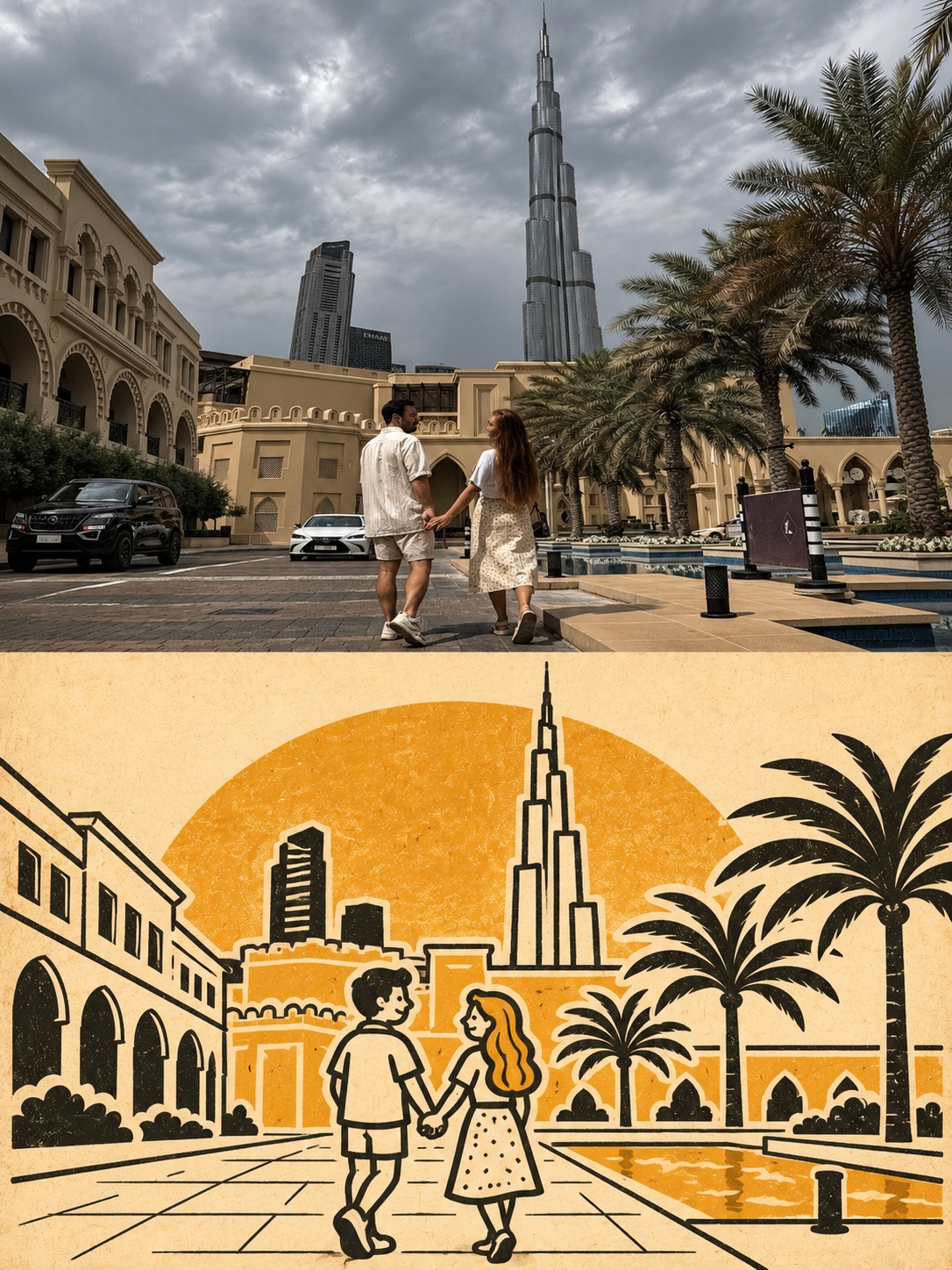
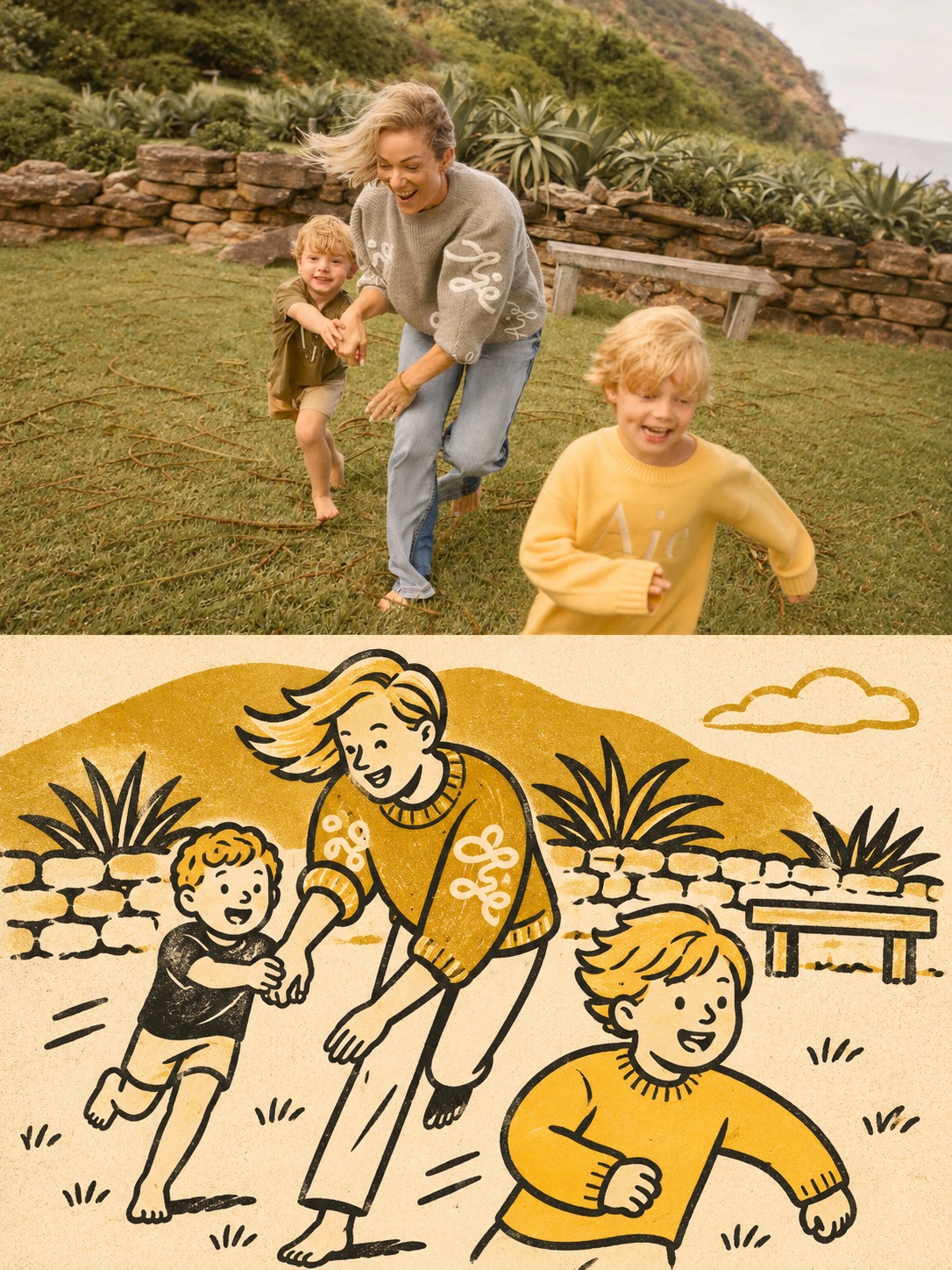
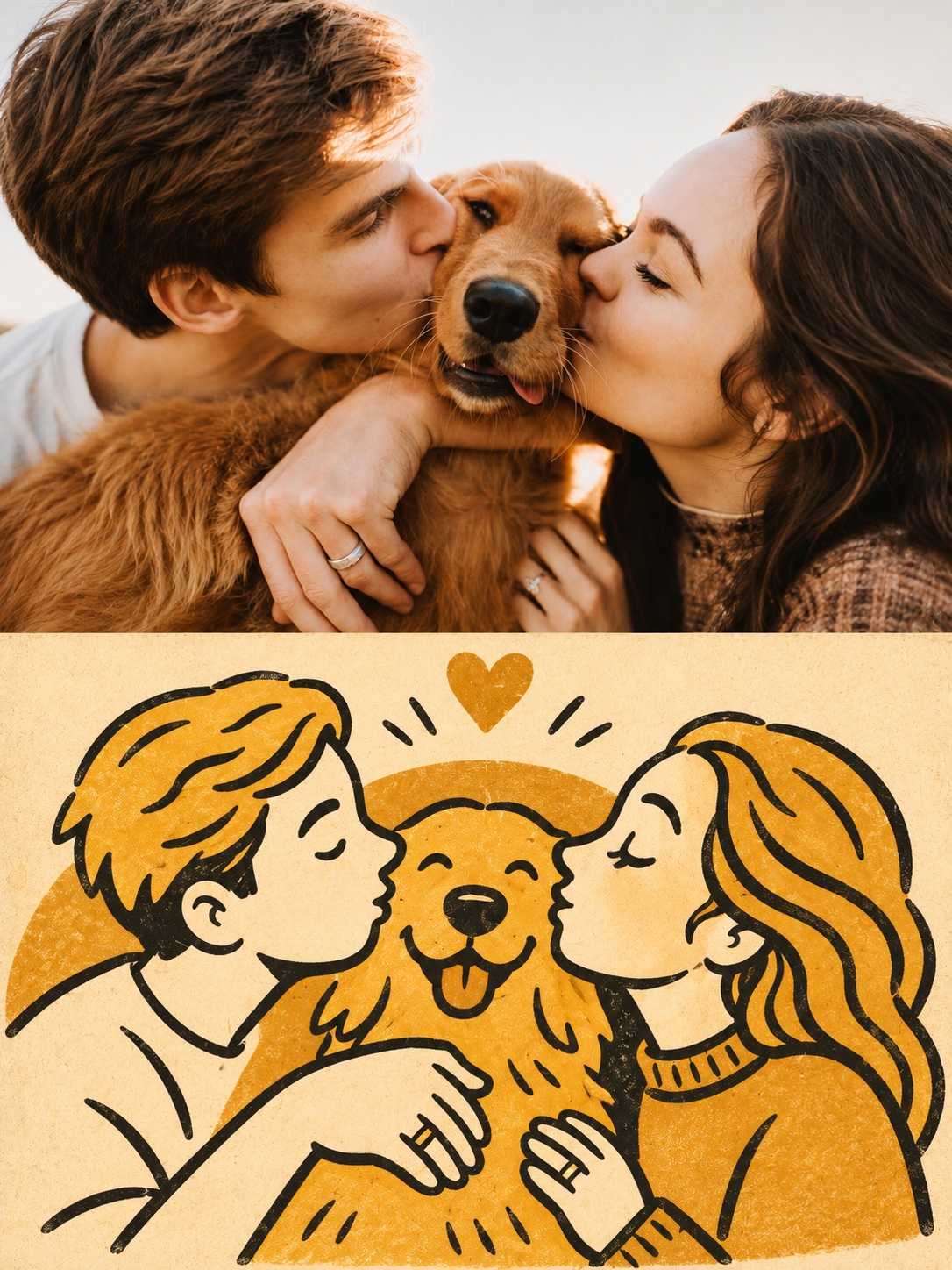
Create a separate vertical 3:4 layout for each reference photo, preserving the photo in the top half and reinterpreting its central subject as a simplified retro folk-print illustration in the bottom half.
Example outputs
Prompt template
- Format
- Text
- Inputs
- Reference_photo (image) · Required
- Outputs
- Split_photo_and_illustration_layout (image)
Create a separate, high-quality design layout for each photograph. Do not combine multiple photographs into one image; print each photograph separately.

Use a vertical 3:4 format divided into two equal zones, each occupying 50% of the image. In the upper zone, preserve the original image, including its composition, structure, pose, texture, natural lighting, and color atmosphere. Apply only minimal, high-quality color grading to give it the character of an art magazine, independent publication, or exhibition material. To fit the image format, you may add a background element, but do not distort or stretch the image or alter its main composition.

In the lower zone, identify the most recognizable element, shape, structure, and relationship in the source image, then reinterpret it as a retro folk-commercial illustration using a schematic drawing and two-color print technique. Do not copy the entire image. Instead, simplify complex forms into a small number of clear geometric shapes, functional outlines, and essential structures.

Give the illustration the feel of an old instruction sheet, advertising leaflet, technical diagram, or folk print. Keep it immediately recognizable, but more direct, humorous, and symbolic than the real object. Use economical linework: if a structure can be expressed with one line, do not add unnecessary strokes. Depict objects with simple black outlines, rectangles, circles, diamonds, straight lines, and other basic shapes. Characters, animals, and objects may be slightly exaggerated; simplify machines and buildings into clear rectangles, openings, panels, and outlines.

Use flat, schematic perspective rather than realistic lighting or strict spatial accuracy, preserving the distinctive quality between illustration and technical diagram. Rebuild the composition around the most important narrative relationships in the original image, keeping a clear focal point. Use only a few supporting objects, guide lines, relationships, or structural symbols to strengthen the story. Emphasize the visual center, geometric order, contrast of scale, and negative space through the use of white space. The result may be slightly rough and folk-like, but must not be chaotic. Every element should help explain the subject, not serve as decoration.
What you'll create
Each source photograph retains its natural composition in the upper half. The lower half condenses its key structure or relationship into restrained retro linework, simple symbols and deliberate negative space.
Usage instructions
Provide the photograph or photographs you want transformed; the prompt produces a separate layout for each one. The upper half preserves the source composition while the lower half turns its most recognizable element into a concise schematic illustration. Keep the 3:4 format and equal panel split, or adjust those proportions if your intended layout calls for a different balance.
Frequently asked questions
Are multiple photographs merged into one layout?
No. Each receives its own separate design.
Should every element be decorative?
No. Each lower-half element should help explain the subject.

Comments
Tried this prompt? Share what you made, compare results, or ask a question