Photorealistic Dark-Fashion Triptych Portrait
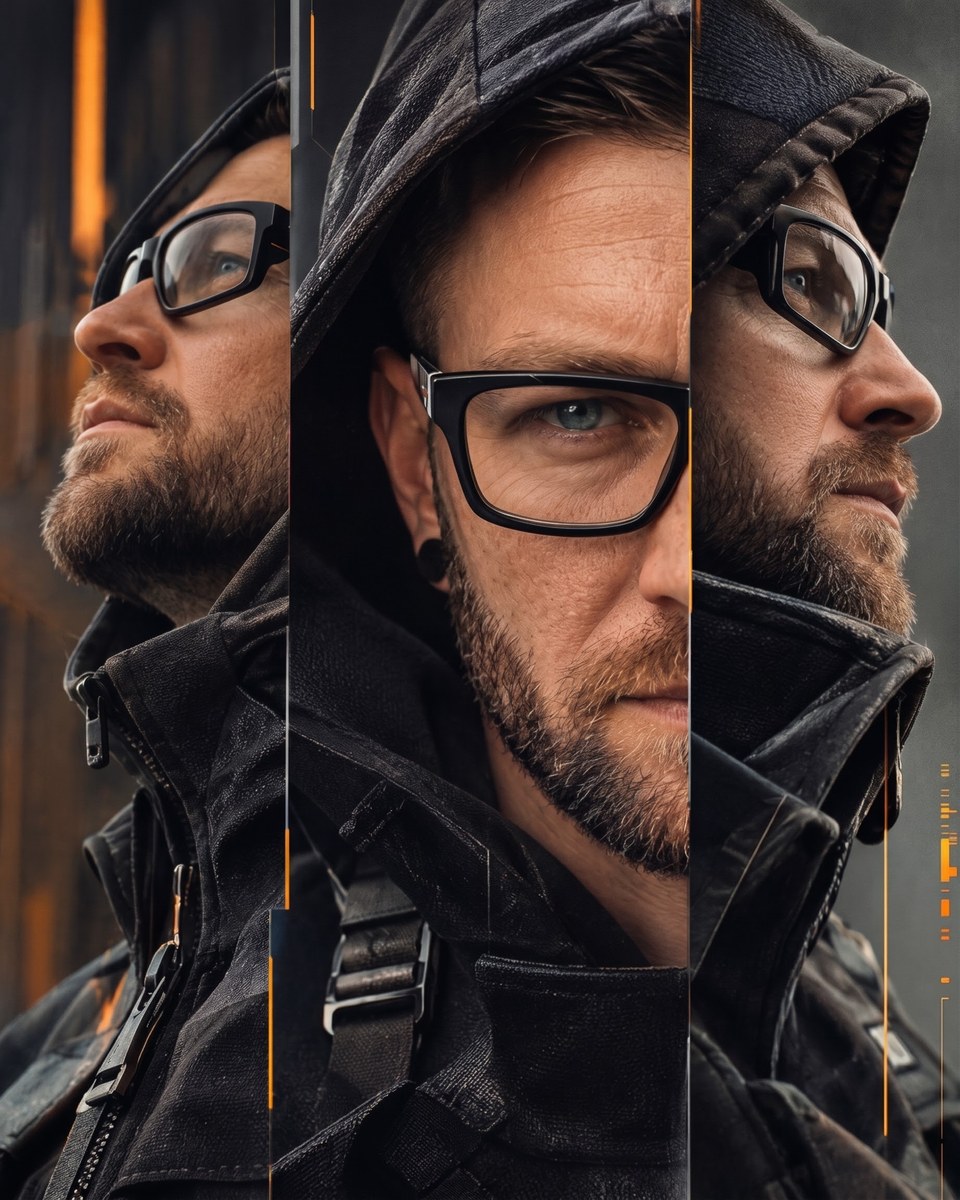
Create a cinematic fashion-editorial triptych that depicts the same person in three tightly cropped views, with dark technical clothing, subtle amber graphics, and realistic photographic detail.
Example outputs
Prompt template
- Format
- Markdown
- Inputs
- Reference_photographs (image) · Required
- Outputs
- Editorial_triptych (image)
Create a single ultra-photorealistic avant-garde dark-fashion editorial: an experimental Swiss photographic triptych with a cinematic black techwear aesthetic and subtle cybernetic graphic design. Use a vertical 4:5 composition.

## Identity and facial consistency
Use the uploaded reference photographs as the primary identity source. Recreate the exact same person across all three photographic fragments.

Preserve authentic facial anatomy: eye shape and color, nose bridge and tip, cheekbones, jawline, lips, natural facial asymmetry, hairstyle, hairline, beard shape and density where applicable, skin texture, age, and all distinctive individual features.

Maintain consistent identity across all viewing angles. The three fragments must look like photographs of one real person captured during the same editorial session.

Preserve realistic skin pores, fine wrinkles, individual facial hairs, and subtle natural imperfections. Do not beautify, create artificial symmetry, reconstruct the face, or allow identity drift.

## Triptych composition
Create one seamless conceptual portrait divided into three sharply cropped, full-height vertical photographic fragments.

Use precise straight vertical cuts, subtle staggered alignment, geometric rhythm, and controlled asymmetry.

The central fragment is visually dominant, occupying approximately 40–45% of the composition. The left and right fragments occupy the remaining space in balanced proportions.

**Left fragment:** Extreme close-up of a left-facing side profile, head slightly raised and gaze directed upward into the distance. Give the person a serious, contemplative expression. A black hood naturally frames the head. Show a strong, realistic silhouette of the forehead, nose, lips, jawline, and beard.

**Center fragment:** Dominant extreme frontal facial close-up with a serious, confident expression and direct, intense eye contact.

Crop the portrait vertically through the face, showing approximately one half to two-thirds of the frontal face. One complete eye must remain clearly visible behind black rectangular glasses. Preserve the recognizable forehead, eyebrow, cheekbone, nose, lips, jawline, and beard.

Let the vertical cut intersect the nose and mouth area to create a bold architectural facial fragment. Keep the face large, recognizable, and anatomically accurate; never reduce the central portrait to a thin strip.

**Right fragment:** Tight right-facing side profile, chin slightly raised and looking toward the distance. Surround the head with a black hood and raised architectural collar. Show a realistic silhouette of the nose, jawline, lips, and natural facial hair.

All fragments must share the same camera character, facial proportions, wardrobe, color grading, and environmental lighting. Do not use separate photo cards, visible frames, or panel shadows.

## Dark futuristic wardrobe
Use premium contemporary cyberpunk-inspired luxury techwear.

The subject wears the same oversized charcoal-black technical outerwear throughout all three fragments. Include an architectural high collar, naturally draped black hood, heavy matte waterproof fabrics, sophisticated ripstop textures, multilayer textile construction, engineered seams, precision stitching, reinforced fabric panels, diagonal tactical webbing straps, metallic adjustment buckles, and industrial-grade zippers.

Use subtle combinations of matte nylon, textured technical cotton, brushed metal, and dark woven straps. The hood must fit naturally around the head, following realistic fabric weight and gravity.

Use a slightly oversized silhouette, strong shoulders, structured layering, and a sophisticated masculine streetwear attitude where appropriate to the reference subject. The aesthetic should suggest wearable technology rather than science-fiction armor.

Do not include exaggerated shoulder plates, robotic body parts, cybernetic implants, or bulky futuristic helmets.

## Eyeglasses
Use identical bold black rectangular optical frames in all three fragments. The optical lenses must be completely transparent so the natural eyes remain clearly visible.

Subtle cinematic amber reflections from distant vertical lights may appear across the lens surfaces in the side profiles. Keep reflections physically realistic and partially transparent; do not make the glasses opaque orange sunglasses.

The central portrait must have a clearly visible, naturally colored eye with minimal lens glare. Keep frame thickness, shape, bridge geometry, and temple positioning consistent across all viewing angles.

## Cinematic environment
Use a minimalist dark architectural studio atmosphere with subtle futuristic industrial character. The background is deep charcoal and muted graphite, with softly blurred vertical structures, delicate atmospheric depth, and restrained warm amber light sources.

Place a narrow vertical orange light beam, softly defocused, in the far-left background. It should create visual rhythm without distracting from the portrait. Transition the right background toward a smooth neutral slate-gray gradient.

Use subtle atmospheric haze, deep controlled shadows, and natural environmental separation. Do not include a recognizable cityscape, neon streets, advertisements, or distracting objects.

## Cybernetic graphic details
Integrate extremely subtle experimental Swiss-style technical infographic elements directly into the unified composition.

Use thin vertical amber calibration lines along selected fragment boundaries, delicate geometric alignment marks, precision measurement ticks, miniature data indicators, understated crosshairs, short technical line segments, and occasional orange micro-accents. A few fragmented vertical graphic lines may extend beyond the faces into the surrounding negative space.

The graphics should feel like precision-engineered editorial design rather than a futuristic gaming interface. Keep visual density minimal, with disciplined spacing, exact geometry, and sophisticated graphic hierarchy. Use restrained orange accents against matte black and charcoal.

Do not include large circular HUD graphics, oversized holograms, glowing interface panels, prominent typography, or decorative symbols.

## Color grading
Use a unified cinematic palette of deep charcoal, carbon black, graphite gray, muted slate, natural warm skin tones, and restrained amber-orange highlights.

Create subtle warm-cool contrast between illuminated skin and dark technical clothing. Use rich blacks while preserving textile detail, naturally graduated shadows, controlled highlights, and refined tonal separation.

Keep white balance, contrast, shadow temperature, saturation, and film grain identical across all three photographic fragments.

## Camera and professional lighting
Use a premium Hasselblad medium-format editorial photography aesthetic, a natural 85mm portrait perspective, f/4, and ISO 100–400.

Position a large diffused directional key light approximately 45 degrees from the subject. It should softly illuminate facial structure while maintaining dramatic shadow depth. Use subtle cool-gray ambient fill to preserve details in the black jacket and hood.

Use narrow warm amber rim lighting to define selected facial contours, fabric edges, and metallic components. Soft reflected light should gently reveal the eyes beneath the hood. Keep reflections on eyeglasses and metal hardware controlled.

Use physically plausible shadows, natural optical perspective, realistic depth of field, exceptional facial focus, and sophisticated cinematic contrast. The lighting should resemble a professional luxury fashion campaign, never artificial HDR.

## Microdetail and photographic realism
Render exceptionally realistic human skin texture, visible pores, subtle fine lines, authentic beard growth, individual facial hairs, natural eyebrows, realistic eyelashes, and eye moisture.

Show highly detailed black technical fabrics, visible woven fibers, stitching, nylon grain, reinforced seams, matte textile surfaces, precise zipper teeth, and brushed metallic buckles.

Use realistic material response to directional light, accurate optical reflections, subtle organic film grain, and naturally controlled microcontrast. Preserve human authenticity rather than exaggerated computer-generated perfection.

Do not use excessive sharpening, artificial clarity, plastic skin, or overprocessed textures.

## Final art direction
Create a sophisticated fusion of premium avant-garde fashion photography, experimental Swiss editorial collage, dark futuristic streetwear, and precision cybernetic graphic design.

Show three dramatically fragmented views of one recognizable human identity. Use strong architectural composition, intimate photographic framing, natural facial realism, tactile black materials, cinematic amber lighting, and restrained technical graphics.

Aim for museum-quality editorial art direction, refined dark minimalism, a premium luxury fashion campaign aesthetic, and exceptional photographic detail.

## Strict negative constraints
Do not include different faces, altered facial proportions, identity drift, inconsistent glasses, opaque lenses, exaggerated amber sunglasses, pointed hoods, cone-shaped silhouettes, mismatched clothing, helmets, robots, mechanical faces, cybernetic implants, science-fiction armor, excessive neon, a bright cyberpunk city, heavy fog, rain, snowfall, grunge, dirty textures, crowded HUD elements, artificial HDR, oversharpening, plastic skin, beauty retouching, painterly effects, illustration, obvious CGI, separate photographic cards, collage borders, large typography, logos, or watermarks.

Output a single ultra-photorealistic editorial artwork in a 4:5 aspect ratio.
What you'll create
Three tightly cropped views of one person form a seamless dark-fashion editorial, with the direct frontal fragment taking visual priority. Black technical fabrics and hoods catch soft directional light and narrow amber accents, while subtle calibration marks organize the charcoal surroundings.
Usage instructions
Frequently asked questions
Can the amber reflections turn the glasses into orange sunglasses?
No. Reflections may appear subtly in the side views, but the lenses stay transparent. The central eye must remain visible with minimal glare.
Should the hood form a pointed futuristic silhouette?
No. It should drape around the head with realistic fabric weight and gravity; pointed or cone-shaped hoods are explicitly excluded.
Should rain or snow be added to the dark scene?
No. This variation's negative constraints exclude both rain and snowfall, retaining the controlled architectural-studio atmosphere.




Comments
Tried this prompt? Share what you made, compare results, or ask a question