- Category
- Photography
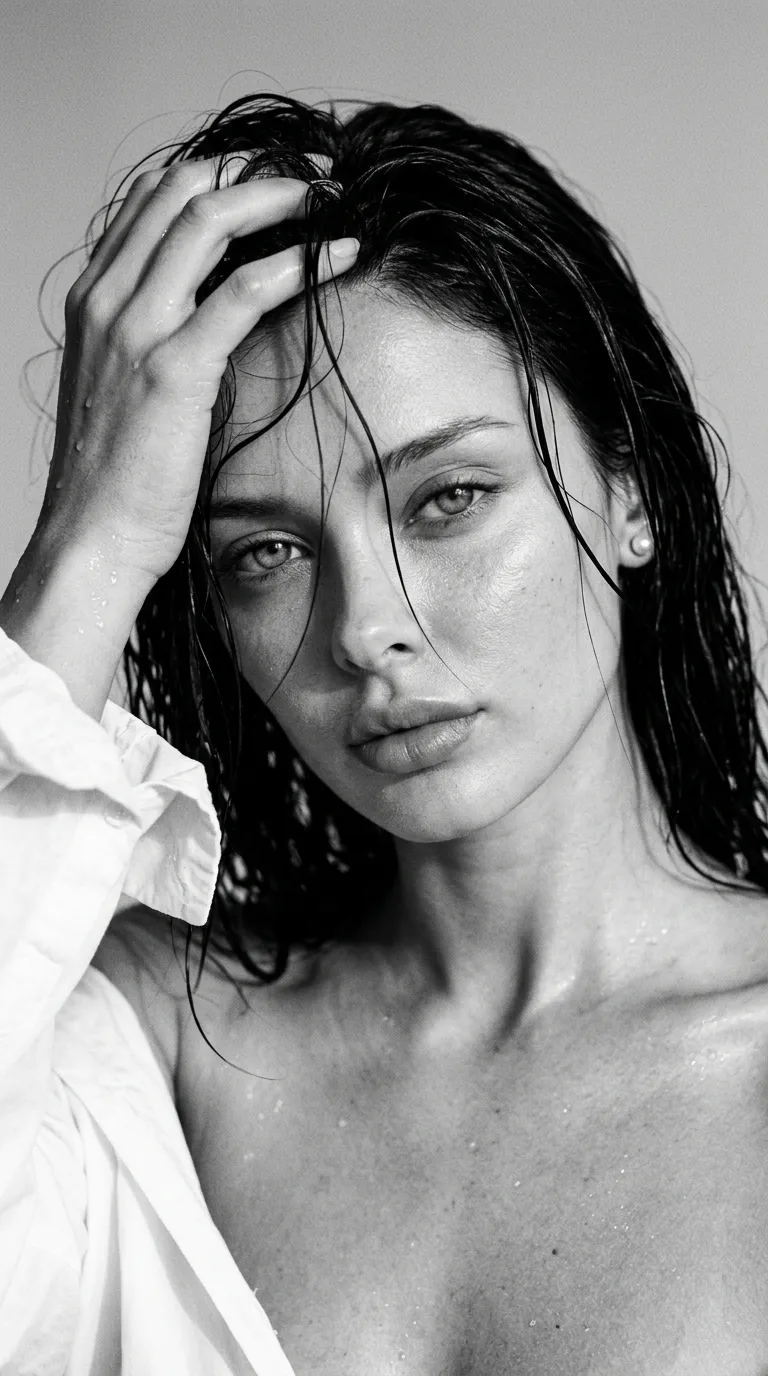
Cinematic Nighttime City Portrait with Golden Glasses
Create an intimate, photorealistic close-up portrait of the uploaded reference person looking toward a glowing city at night, with delicate gold glasses, cinematic blue-and-amber lighting, and realistic city reflections in the lenses.
By Threads — Published on — Modified on
Example images


Prompt template
- Format
- Text
- Inputs
- Reference_photo (image) · Required
- Outputs
- Generated_portrait (image)
Using the uploaded photo as a reference, preserve 100% of the person’s features and characteristics. Use the reference image as the visual identity, faithfully preserving the person’s facial features, face shape, eyes, nose, mouth, hair color, and individual characteristics. Do not alter their identity, change their facial structure, or transform them into someone else.

Makeup, hairstyle, clothing, and lighting may be adapted to the concept, but the person must remain recognizable as the same woman in the original photograph.

Create an extremely realistic photographic portrait with the cinematic quality of a film production. Show an adult person in a tight three-quarter side close-up, wearing delicate gold metal-frame glasses and silently contemplating a city illuminated at night. The image should convey introspection, mystery, sensitivity, urban sophistication, and the poetic feeling of someone watching thousands of stories unfold beyond their lenses.

## Composition and framing

Use a vertical portrait in a 2:3 aspect ratio, with an extremely tight crop and cinematic editorial composition. The face occupies approximately 75% of the image and dominates the foreground. Position the camera slightly above lip level and close to the face. Capture the person at a three-quarter angle, with the head gently tilted toward the right side of the composition.

The face points to the right and leans slightly forward, partially revealing the side of the nose, the curve of the cheekbones, the lips, and the jawline. One eye is more prominent behind the glasses lens, while the other remains partially visible, creating depth and an intimate sense of observation.

The hair occupies part of the upper-left area of the image, with strands naturally crossing the forehead and framing the face. The night city appears in the background, mainly on the right and in the lower part of the composition. Integrate the face, glasses, and urban landscape harmoniously, without artificially dividing the image.

Use a shallow depth of field: keep the eyes, glasses frame, and parts of the skin detailed, while giving the distant landscape a soft cinematic blur.

## Hair: natural strands and movement

Give the hair a natural shine and distinct strand texture, with a slightly damp appearance, as if the person were on a balcony on a cool night.

If the person is a woman, include a few fine, loose strands crossing the forehead, falling over the eyebrows, and framing the temples for a spontaneous, delicate look. Give the strands realistic variations in thickness, transparency, and direction. Catch some strands in cool blue highlights and others in small golden reflections from the city.

## Glasses: central compositional element

Use prescription glasses with an extremely thin, champagne-gold metal frame, a slightly rounded oval shape, and a contemporary vintage influence. The lenses are transparent and large enough to frame the eyes without hiding the expression. The delicate metal bridge follows the natural anatomy of the nose. Thin temples are visible along the sides of the face, with realistic small details at the hinges.

Give the frame pinpoint amber and golden reflections. Add physically plausible optical reflections of the urban landscape to the lenses, including small illuminated buildings, golden windows, white points of light, and subtle blue reflections.

The lens closest to the camera reflects a landscape of tall buildings, small illuminated windows, and warm-toned city lights. Make the reflections follow the curvature of the lenses and respect perspective, glass transparency, and the position of the eyes. They must not look like images artificially pasted onto the glasses. Integrate them optically into the lenses while keeping the eyes visible behind them.

Give the farther lens blue reflections and small golden points of light, balancing the two sides of the composition.

## Eyes and expression

Render extremely realistic eyes with detailed irises, natural pupils, small luminous reflections, and subtle moisture along the waterline. Direct the gaze toward the camera, conveying contemplation, serenity, and slight poetic melancholy. Show individual eyelashes subtly, natural brows with defined hairs, and soft shadows around the eyes.

If the person is a woman, keep the makeup minimal: very subtle dark eyeliner, neutral eyeshadow, and a natural finish. Avoid heavy makeup or exaggerated eyelashes. If the person is a man, keep their appearance natural.

Reflected light in the lenses may create small luminous points near the eyes, but must not obscure the expression or distort the eye anatomy.

## Skin

Render human skin with high-definition natural texture and a slight dewy sheen, especially on the tip of the nose, cheekbones, under-eye area, and Cupid’s bow. The sheen should look like the effect of cinematic lighting on skin, not an artificial layer of oil.

Warm city lights create small amber reflections on the skin, while cool ambient blue light shapes shadows along the sides of the face.

## Nose, lips, and facial details

Keep the nose anatomically natural, with soft light on the tip and delicate shadows along the sides. Small points of reflected city light should not blow out its details.

The lips are slightly parted or gently closed, with contours faithful to the reference. Show fine, realistic texture, including the lips’ natural lines. The mouth should convey calm, without a forced smile, exaggerated sensual posing, or changes to its volume.

Give the chin and jaw a soft transition between the warm frontal light and the cool blue ambient shadow.

## Setting: realistic futuristic city at night

Place a contemporary metropolis in the background, viewed from an elevated spot such as an apartment balcony or urban rooftop. Tall buildings have thousands of illuminated windows in gold, amber, warm white, and cool blue. In the lower area, a distant avenue forms blurred lines of light, with small points from vehicles and urban lighting. A taller building with illuminated vertical windows is subtly visible in the lower right.

Give the landscape a deep nighttime atmosphere, with navy-blue shadows, architectural structures partly obscured by distance, and slight atmospheric haze between buildings. A dark metal balcony railing may appear subtly along the bottom edge, suggesting that the woman is on an elevated terrace.

The background must not compete with the face. Treat the city as an extension of the woman’s expression and as the source of the reflections in the glasses. Do not include legible signs, brands, text, logos, or exaggerated science-fiction elements.

## Lighting: nighttime blue and urban gold

Use a cinematic lighting setup with contrasting color temperatures. The soft, warm amber key light comes from the city and falls laterally across the cheek, nose, lips, and glasses frame, creating small golden highlights and a sense of human warmth. Cool, deep-blue fill light from the nighttime surroundings wraps around the opposite side of the face, the hair strands, and the head’s outline. Add a subtle blue rim light on the edge of the hair to separate the dark silhouette from the background.

Add small white, gold, and blue specular highlights to the lenses, metal frame, eyes, and naturally reflective areas of the skin. Shadows should preserve facial detail. Keep the contrast dramatic but controlled, with soft transitions and no excessively blown-out areas.

Use a palette dominated by teal blue, navy blue, deep black, aged gold, amber, and warm white.

## Atmosphere and art direction

Make the image look like a frame from a contemporary dramatic film set in a major Asian city or a cosmopolitan metropolis. The visual mood is intimate, quiet, sophisticated, and slightly melancholic. The woman appears to be alone, watching the city through her lenses as thousands of lights reflect in her glasses.

Convey a blend of introspection, mystery, natural beauty, and urban contemplation. Combine editorial beauty photography, intimate cinematic portraiture, and long-exposure night photography while preserving the look of a real photograph.

## Camera and technical quality

Make it look like a professional photograph captured with a high-resolution full-frame camera and an 85 mm or 100 mm portrait lens. Use an approximate aperture of f/1.8 to f/2.8, with shallow depth of field and precise focus on the eyes and metal structures of the glasses.

Use extremely high-resolution image texture, fine hair details, physically coherent reflections, and cinematic color grading. Apply selective sharpness, refined contrast, deep shadows that retain information, controlled highlights, and soft background blur. Aim for fashion-magazine editorial quality, professional finishing, extreme photorealism, 8K resolution, natural HDR, and subtle volumetric lighting.

The image must look as if it were photographed on a real night, without the appearance of 3D rendering, illustration, or a synthetic image. Make the photograph emotionally engaging, sophisticated, natural, and cinematic, with rich detail and an atmosphere that makes the viewer feel they are seeing a genuine moment quietly captured at night.

Generate the image according to this description. Do not change my face or my characteristics.




Comments — 0