- Category
- Photography
Dark Cinematic Editorial Portrait of a Young Man
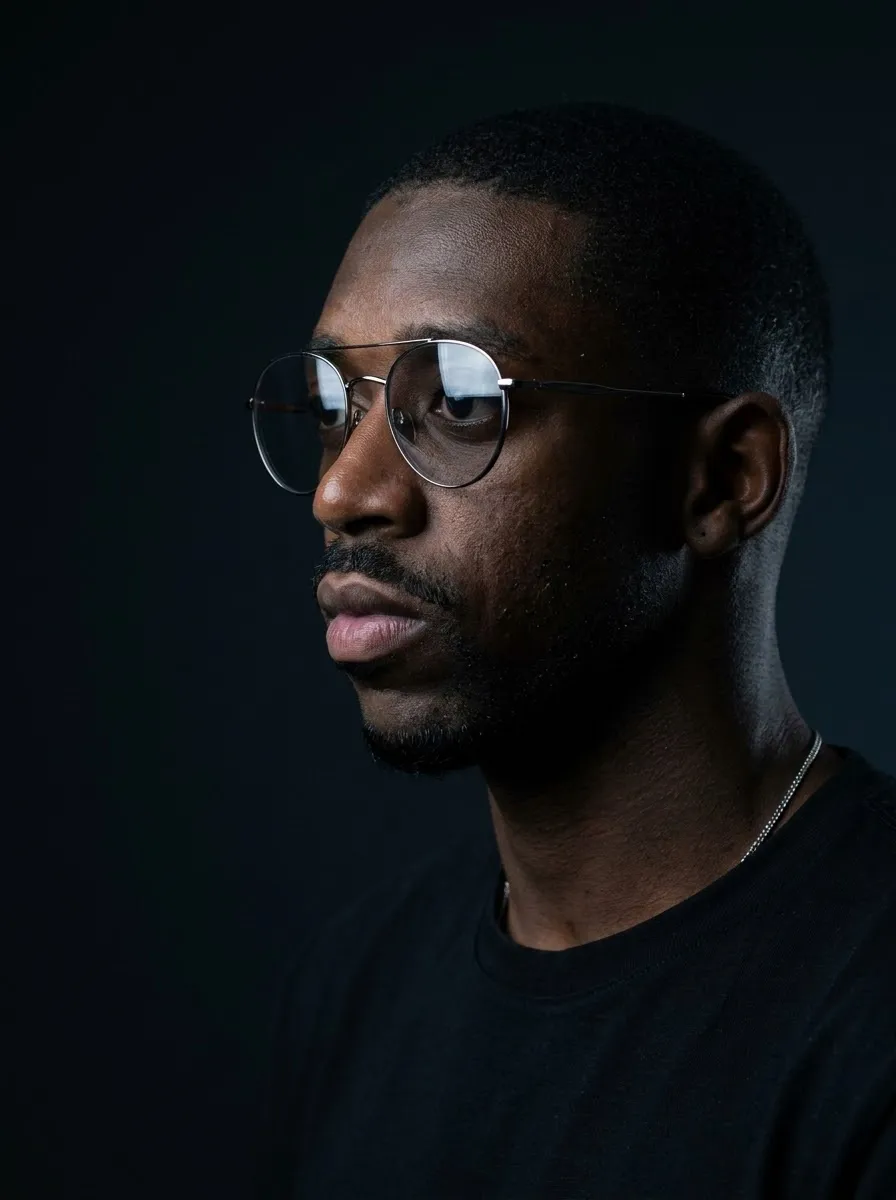
Create a photorealistic, cinematic close-up fashion portrait of a young adult man with dramatic amber-and-blue lighting and a dark, atmospheric studio background.
By Threads — Published on — Modified on
Example images


Prompt template
0 copies
- Format
- Text
- Inputs
- personal_reference_photo (image) · Optional
- Outputs
- portrait_image (image)
Create an ultra-photorealistic cinematic close-up portrait of a young adult man, photographed straight-on and centered perfectly in the frame. Use a symmetrical, intimate composition showing the subject from approximately the upper chest to the top of the head.

The man has a very short platinum-blond or ash-blond buzz cut, with extremely fine, realistic individual hair strands and a clean, slightly textured finish. Make the shape of his head clearly visible, with natural proportions and subtle imperfections.

Give him a strong masculine facial structure: a broad forehead, defined cheekbones, pronounced jawline, slightly angular face shape, straight nose, naturally shaped lips, and realistic ears. Include a small, simple silver hoop earring on one ear.

His expression is calm, serious, emotionless, and confident. He looks directly into the camera with an intense but restrained gaze. Keep his eyes natural and slightly shadowed to create a mysterious, cinematic feeling. No smile.

IDENTITY PRESERVATION:
If a personal reference photo is provided, use it as the ONLY identity reference for the main subject. Preserve the exact recognizable identity and natural facial anatomy from the reference: face shape, head proportions, forehead, hairline, eyebrows, eye shape and placement, nose structure, lips, cheekbones, jawline, chin, ears, skin tone, natural asymmetry, pores, and small facial imperfections. Do not redesign or beautify the face. Do not create a generic model or a face-swap appearance. Keep the original person recognizable and anatomically consistent.

The subject wears a simple oversized black hoodie, its large, soft, dark silhouette occupying the lower portion of the frame. Give the hoodie a realistic heavy cotton or fleece texture, natural folds, and subtle fabric detail, while keeping it mostly submerged in shadow.

LIGHTING

Use dramatic cinematic two-tone lighting. A strong warm amber-orange key light comes from camera-left, illuminating the left side of the face and creating a soft warm glow across the cheek, temple, ear, and jawline. Let the opposite side of the face fall into deep, cool blue-black shadow, creating strong but natural contrast. Add a subtle cool blue rim or fill light from behind and camera-right to separate the head and shoulders from the dark background.

The lighting should feel like a premium fashion editorial or cinematic film still rather than a conventional studio portrait. Preserve realistic skin response to light: visible pores, subtle texture, tiny imperfections, natural tonal transitions, realistic highlights, and soft shadows. No plastic skin, excessive retouching, or artificial HDR.

BACKGROUND

Make the background extremely dark, almost black, with a deep navy-blue atmospheric tone. Behind the subject, add a subtle layer of cool blue haze or atmospheric fog concentrated around the lower and side areas of the frame. The haze should create depth without appearing as obvious smoke. Keep the background minimal and uncluttered, with no visible objects, furniture, or distracting elements.

CAMERA & COMPOSITION

Use a straight-on frontal camera angle and perfectly centered composition. Position the subject’s eyes slightly above the vertical center of the frame. Use tight portrait framing, with the head occupying most of the image. Use a slightly low camera perspective while keeping the view predominantly frontal and symmetrical.

Create the look of a professional full-frame digital cinema camera with an 85mm portrait lens aesthetic and a wide aperture around f/1.8–f/2.2. Use very shallow depth of field while keeping both eyes, the nose, and the main facial features sharply resolved. Include natural optical falloff toward the background and subtle cinematic lens characteristics rather than an artificial digital look.

COLOR GRADING

Use deep navy and near-black shadows, warm amber-orange skin highlights, and a cool blue atmospheric background. Keep the contrast high while preserving shadow detail. Use a muted, sophisticated color palette and subtle cinematic filmic color grading with slightly desaturated tones. Preserve natural skin color despite the dramatic lighting. Add extremely subtle 35mm film grain, delicate highlight halation, and very restrained optical softness.

PHOTOGRAPHIC REALISM

Make the image look like a real photograph taken by a professional fashion photographer using a high-end full-frame camera. Include extremely detailed, realistic skin texture; visible individual hair strands; natural pores and micro-details; realistic eye reflections; physically accurate shadows and light falloff; natural lens depth; and authentic photographic grain.

No CGI appearance, 3D rendering, illustration, overly perfect skin, beauty filter, artificial facial symmetry, or excessive sharpening.

The final image should resemble a frame from a dark contemporary fashion film or luxury editorial campaign: raw, sophisticated, atmospheric, masculine, and cinematic. The mood is mysterious, cold, powerful, restrained, introspective, luxurious, and nocturnal. The visual style is cinematic fashion editorial, dark luxury campaign, contemporary masculine portrait photography, premium film still, and photorealistic documentary texture.

Use a 4:5 vertical aspect ratio. Aim for ultra-detailed, ultra-photorealistic quality, high dynamic range, realistic skin, cinematic depth, professional color grading, and natural optical rendering.


Comments — 0