- Category
- Photography
Seven-Person Cinematic Action Poster
Create a photorealistic, full-body action scene inspired by a specified film, featuring seven distinct people from their individual reference images.
By Threads — Published on — Modified on
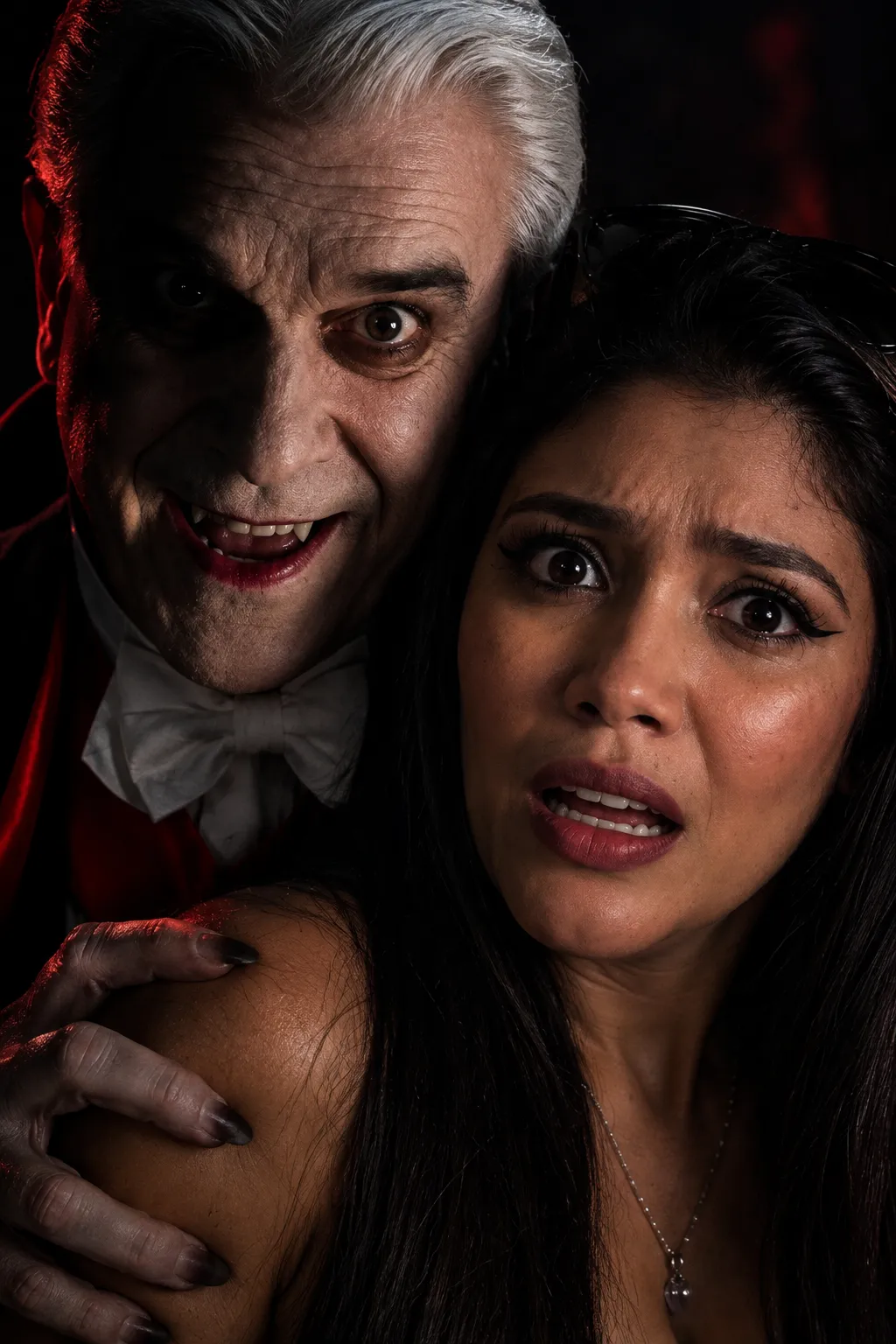
Example images

Prompt template
0 copies
- Format
- Text Parameterized
- Inputs
- film_title (text) · Required reference_images (image) · Required
- Outputs
- cinematic_action_image (image)
Replace the ${…} placeholders with your values
before using this prompt. See parameters
and defaults below.
PHOTOREALISTIC CINEMATIC POSTER
SEVEN FACIAL REFERENCES • FULL BODY • INTENSE ACTION • FAITHFUL TO THE FILM

SINGLE PARAMETER

FILM TITLE: ${film-title}

1. PRIMARY MISSION

Create a single vertical image in a 2:3 aspect ratio, with the aesthetic of a live-action Hollywood blockbuster, extreme photorealism, intense action, and high-budget cinematic direction.

Depict an epic, visually striking action sequence that is coherent with the original universe of the specified film. Analyze the film title and determine its setting, era, location, characters, costumes, equipment, weapons, vehicles, architecture, color palette, and characteristic conflict. Transform these elements into one continuous cinematic scene, as if the seven people in the reference images were acting together in a real sequence from a major production.

Non-negotiable priorities, in this order:
1. Preserve the individual facial identity of all seven references.
2. Show all seven people full-length, from head to toe.
3. Show every person performing a distinct, intense action.
4. Integrate all seven physically into the same scene, with interaction and spatial continuity.
5. Reproduce the film’s visual universe faithfully.
6. Achieve high-budget cinematic photographic quality.
7. Include absolutely no text in the image.

Do not ask for additional information. Use only the film title as a variable.

2. ABSOLUTE RULE — SEVEN PEOPLE, SEVEN IDENTITIES

Use all seven supplied images as individual references:
- IMAGE 1: the main protagonist, visual center, and action leader.
- IMAGE 2: the second person, with facial identity preserved.
- IMAGE 3: the third person, with facial identity preserved.
- IMAGE 4: the fourth person, with facial identity preserved.
- IMAGE 5: the fifth person, with facial identity preserved.
- IMAGE 6: the sixth person, with facial identity preserved.
- IMAGE 7: the seventh person, with facial identity preserved.

Each image corresponds exclusively to one person. Preserve this correspondence throughout generation. Show all seven people simultaneously in the same scene and narrative moment, sharing the environment, lighting, perspective, and conflict.

Do not omit, duplicate, replace, or merge any identity. Do not turn the people into generic characters or substitute the original actors’ faces for the reference faces.

Achieve cinematic characterization primarily through costumes, hairstyles that can be adapted without erasing identity, posture, expression, equipment, lighting, and setting.

3. FACIAL PRESERVATION — IDENTITY IS THE HIGHEST PRIORITY

Use each reference as the primary visual source for its corresponding face. Preserve, as much as possible:
- The original bone structure and face shape.
- Eye spacing, eye shape, and eyebrows.
- Nose, mouth, lips, chin, jaw, and ears.
- Beard, mustache, hairline, and individual hair characteristics.
- Skin tone, natural texture, wrinkles, marks, and apparent age.
- Natural asymmetries and other details that make each person recognizable.

Do not apply artificial beautification, rejuvenation, aging, excessive skin smoothing, structural facial changes, or blend features between references.

Expressions may vary to convey exertion, concentration, courage, tension, and determination, but each person must remain recognizable. Keep all seven faces visible, large enough, and well lit for individual recognition.

Do not let helmets, masks, deep shadows, hair, weapons, hands, smoke, particles, or other characters cover essential parts of the faces. If a visual effect, pose, or accessory threatens facial legibility, simplify that element rather than sacrificing identity.

4. FULL BODY — REQUIRED FRAMING

Show all seven people full-length, from head to toe, within the image boundaries. Give every person a complete, naturally proportioned body, with correctly represented head, neck, torso, arms, hands, legs, and feet. Include footwear and contact between feet and the ground whenever the scene allows.

Do not crop heads, hands, elbows, knees, legs, feet, weapons, or essential equipment. Do not use a bust shot, close-up, group portrait, medium shot, or composition dominated by oversized faces.

Use a wide cinematic long shot, with enough camera distance to fit all seven full bodies while keeping facial details recognizable. Use a virtual cinematic lens equivalent to approximately 28–35 mm, with natural perspective that avoids wide-angle distortion on people near the camera.

Maintain a visual safety margin around every person, especially above heads and below feet. The seven people should occupy a substantial portion of the frame without being so distant that their faces become unrecognizable.

Arrange the scene across different depth planes, but avoid extreme differences in scale. No person should appear gigantic, tiny, or artificially cut out. If needed, reduce debris, effects, or decorative elements to ensure all seven bodies remain fully visible.

5. PROTAGONIST — IMAGE 1

Place the person from IMAGE 1 near the center of the composition, preferably in the foreground, with a commanding physical presence and direct involvement in the main event.

Show this person in motion, performing a decisive action appropriate to the film, such as advancing against a threat, jumping over an obstacle, defending an ally, confronting an opponent, or using characteristic equipment. The pose should communicate strength, intent, balance, and urgency.

Use a dynamic posture with plausible weight distribution, bent legs where appropriate, functional arm positions, and convincing interaction with scene objects. The face should convey an expression appropriate to the dramatic moment without losing its resemblance to the reference.

Dress the protagonist in the most representative costume suited to the protagonist or the role they serve in that cinematic universe. Make the protagonist the first visual element noticed, but do not let their position obscure the other six people or compromise full-body framing.

6. INTENSE ACTION — A SCENE IN PROGRESS

Capture the moment of greatest tension in an ongoing cinematic sequence. Do not show characters lined up, posing for a photograph, passively looking at the camera, or merely holding decorative objects.

All seven people must perform distinct individual actions connected by a shared narrative goal. Distribute actions automatically according to the film:
- IMAGE 1 leads the main action or confronts the central threat.
- IMAGE 2 performs an offensive, defensive, or forward-moving maneuver.
- IMAGE 3 reacts to an immediate danger or confronts a secondary threat.
- IMAGE 4 uses a characteristic tool, weapon, ability, or piece of equipment.
- IMAGE 5 protects an ally, crosses an obstacle, or takes part in a coordinated maneuver.
- IMAGE 6 advances, dodges, fights, escapes, or performs a strategic action.
- IMAGE 7 completes the group dynamic by facing another danger or contributing to the shared goal.

These roles are flexible compositional guides. Determine the final actions from the film’s universe, without assigning behavior that conflicts with its narrative.

Give each person a different body silhouette, a legible action, and a clear purpose in the scene. Use movements such as running, jumping, dodging, turning, landing, climbing, defending, confronting, fictional gunfire, using equipment, tactical advances, and interacting with obstacles, as appropriate.

Movements must respect anatomy, gravity, balance, inertia, and body mechanics. If there is combat, depict distance, movement direction, reactions to impacts, and opponent positions in a physically plausible way.

If the film is an adventure, science-fiction, fantasy, espionage, horror, war, or historical action film, adapt the intensity to its style. If its universe does not involve combat, depict a chase, escape, rescue, disaster, exploration, or another dramatic event that fits.

The final image should feel like motion frozen at the decisive instant: bodies in action, clothing responding to speed, particles suspended in the air, and the environment physically reacting to events.

7. REAL INTERACTION AMONG ALL SEVEN PEOPLE

Give the seven characters a convincing shared spatial and narrative situation. Create visual relationships between their actions: one person clears a path for another, someone protects an ally, another reacts to the same threat, while the others advance toward the central goal.

Where appropriate, show plausible physical contact with the setting, obstacles, equipment, vehicles, or opponents. Make gazes and body orientations follow the action; not everyone needs to look at the camera.

Avoid seven independent actions that look artificially assembled into one image. Avoid unsupported characters, incompatible shadows, contradictory scales, equipment that does not touch the hands, and interactions that violate perspective. The composition should convey a team acting in coordination during an extreme situation.

8. FAITHFULNESS TO THE FILM’S UNIVERSE

Reconstruct the setting that is most recognizable and dramatically suitable for the specified film. Where relevant, use characteristic locations, buildings, and landscapes; architecture, vehicles, and technologies from that universe; compatible weapons, tools, accessories, and equipment; creatures, antagonists, or threats that fit the film; materials, clothing, and objects appropriate to its era; and characteristic weather, atmosphere, lighting, and color palette. Use visual elements that make the film recognizable without relying on text.

Do not mix franchises. Do not introduce modern elements into a historical narrative without justification. Do not replace the setting with a generic landscape when an appropriate iconic setting exists. The scene should feel organically part of the film, not like a generic fantasy or action composition with vaguely similar costumes.

9. COSTUMES AND EQUIPMENT

Dress all seven people in individualized costumes that fit the film, considering their roles, the era, the environment, and the action. Preserve facial identity while adapting clothing, armor, uniforms, accessories, and equipment.

Use physically convincing materials: fabric, leather, metal, rubber, plastic, technical fibers, stone, or other materials appropriate to the universe. Include folds, seams, wear, dirt, marks of use, and damage that fit the sequence.

Costumes must follow body movements without intersecting arms, legs, weapons, or other objects. Hands must grip equipment correctly. Accessories must have plausible scale, weight, orientation, and placement.

Do not indiscriminately give everyone the same costume. Create coherent visual variety within a unified cinematic aesthetic.

10. CINEMATIC COMPOSITION

Use a visually striking diagonal or triangular composition arranged across three depth levels:
- Foreground: the protagonist from IMAGE 1 and essential action elements, with the full body visible.
- Midground: people directly involved in the conflict, with distinct silhouettes, legible faces, and complete bodies.
- Background: the remaining people, an iconic setting, and elements that establish scale and heighten the sense of danger and grandeur, while keeping every body inside the frame.

The arrangement may be asymmetrical, provided it remains balanced. Do not line the people up as a team posing for a photograph. Maintain enough visual separation between arms, legs, weapons, and silhouettes to identify each person and understand their action.

Use coherent perspective, consistent scale, motion lines, and environmental depth. The camera should seem positioned within the event, capturing the action from a carefully planned cinematic viewpoint. Do not sacrifice full-body framing of all seven people to enlarge explosions, buildings, or decorative elements.

11. LIGHTING AND PHOTOREALISM

Create an image with the finish of high-budget cinematic photography, inspired by large-format capture systems and professional cinema cameras. Use:
- Key, fill, and rim lighting that fit the environment.
- Physically plausible shadows and shared lighting across all seven people.
- Realistic textures for skin, hair, fabric, metal, and environmental surfaces.
- Reflections and particles integrated with the lighting.
- Professional color grading compatible with the film’s visual identity.
- Controlled contrast, detailed blacks, and highlights without excessive information loss.
- Sufficient depth of field to keep all seven people legible.
- Priority facial sharpness for every participant.
- Selective motion blur only on elements that are actually moving.
- Volumetric atmosphere, dust, rain, smoke, sparks, or debris only when appropriate.

The result should look like a live-action photograph captured during a real production, without the appearance of a painting, illustration, or artificial render. Avoid plastic skin, unnaturally excessive sharpness, halos, repeated textures, stiff anatomy, and lighting that makes characters look cut out from the setting.

12. ABSOLUTE RESTRICTIONS
- Exactly seven identifiable people from the references.
- Seven distinct, preserved facial identities.
- Seven complete bodies, from head to toe.
- All visible simultaneously in the same image.
- All actively participating in the action.
- The person from IMAGE 1 centrally positioned and prominent.
- Costumes and setting coherent with the film.
- Plausible anatomy, hands, feet, weapons, and equipment.
- Consistent perspective, scale, shadows, and lighting.
- No essential face obscured.
- No person duplicated, omitted, merged, or replaced.
- No collage, grid, mosaic, or portrait montage.
- No character reduced to a floating head or bust.
- No cropped head, hands, legs, or feet.
- No passive character posing without participating in the scene.
- No elements from incompatible universes.
- No visual effect that harms the people’s recognizability.

13. ABSOLUTE PROHIBITION ON TEXT

The image must be exclusively visual. Do not insert a title, letters, words, numbers, captions, credits, subtitles, logos, watermarks, signatures, typography, or symbols that resemble characters. Do not reserve space for inscriptions. Do not create banners, panels, or text areas.

Communicate the film’s cinematic identity entirely through characters, costumes, setting, lighting, action, and art direction.

14. NEGATIVE PROMPT

cropped body, cropped feet, cropped head, cut-off limbs, missing feet, incomplete body, headshot, bust portrait, waist-up shot, medium shot, extreme close-up, oversized faces, tiny characters, distant people, seven static poses, passive characters, characters looking at camera, lineup, team photo, portrait collage, face grid, floating heads, disconnected characters, hidden person, missing reference, duplicated person, duplicate face, merged identities, face swap, identity swap, generic faces, altered facial structure, beautified faces, plastic skin, waxy skin, excessive skin smoothing, blurry faces, obscured faces, covered eyes, excessive shadows on faces, incorrect facial proportions, distorted anatomy, extra limbs, extra fingers, missing fingers, malformed hands, malformed feet, broken joints, impossible poses, floating weapons, incorrect grip, inconsistent scale, inconsistent perspective, mismatched lighting, disconnected shadows, artificial CGI, obvious 3D render, cartoon, anime, illustration, painting, wrong costume, unrelated weapons, wrong franchise, mixed universes, random characters, excessive explosions, smoke covering faces, excessive motion blur, blurred faces, extreme wide-angle distortion, oversaturated colors, low resolution, pixelation, visual artifacts, bad composition, frame, border, collage, watermark, logo, title, text, letters, numbers, typography, captions, subtitles, credits, signature.

FINAL RESULT

Generate one vertical, photorealistic cinematic image in a 2:3 aspect ratio, inspired exclusively by the specified film. Show exactly the seven people from the references, all recognizable, dressed in a manner suited to the film, and actively participating in one intense action scene.

FULL BODY FOR EVERYONE. HEAD TO TOE. SEVEN PEOPLE IN THE SAME SCENE. DYNAMIC, COLLECTIVE ACTION. FACIAL IDENTITIES PRESERVED. FAITHFUL TO THE FILM. ZERO TEXT.

The final image should feel like an official frame from a live-action blockbuster, captured at the height of an epic sequence, with refined art direction, physically convincing action, and seamless cinematic integration of all seven people.
Parameters
Replace each placeholder with your own value, or use its default when one is provided.
${film-title}
film-title
Required



Comments — 0