- Category
- Photography
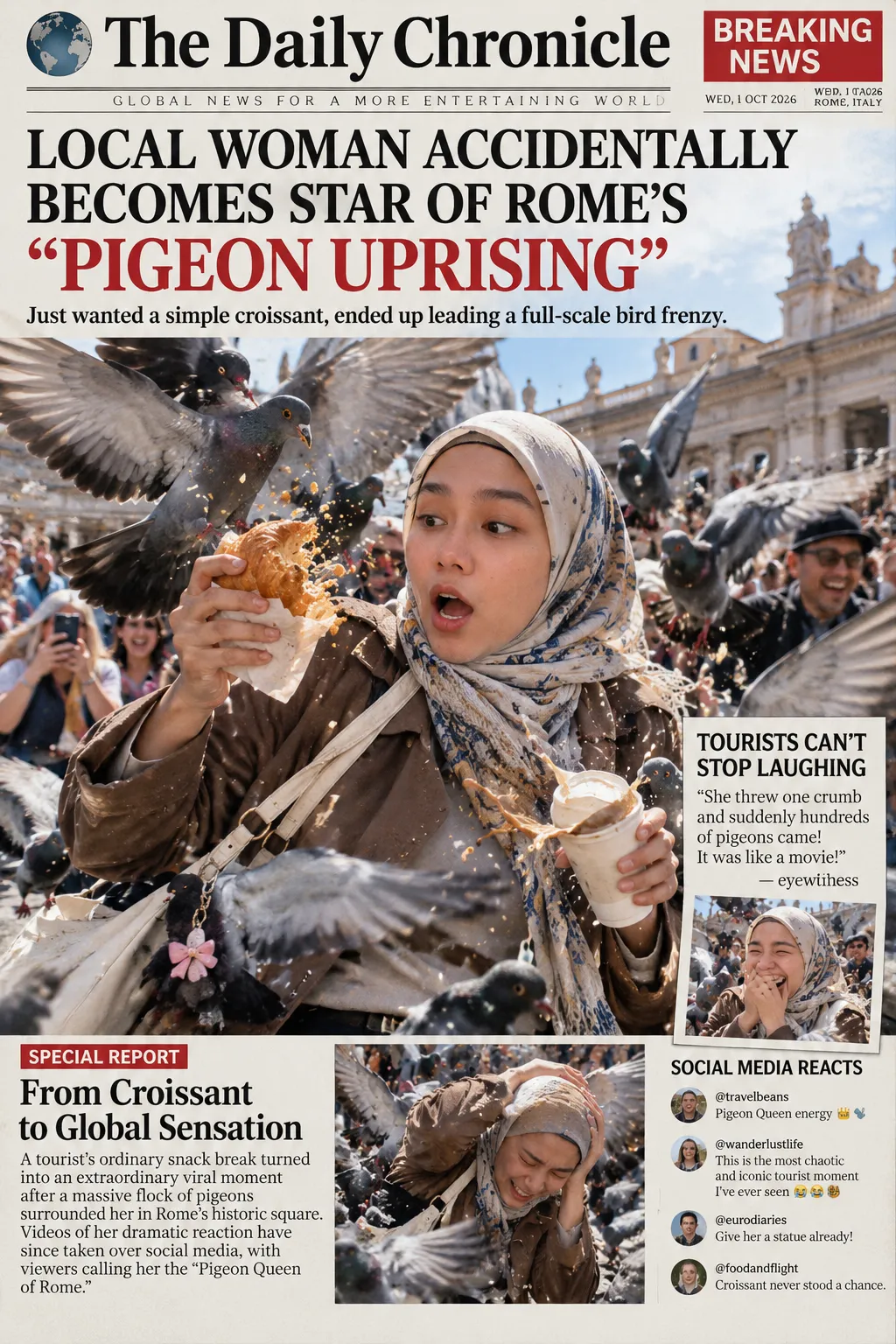
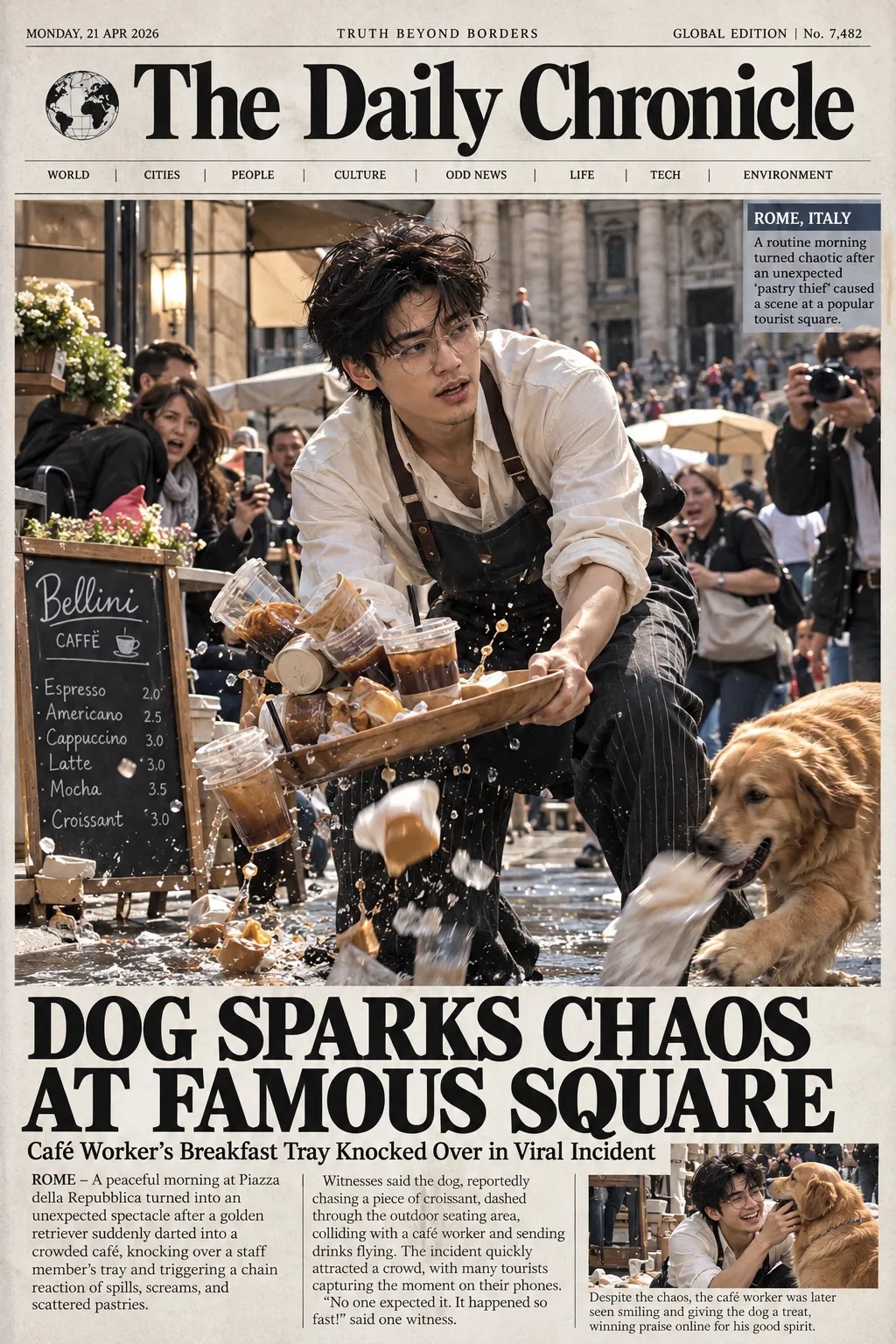
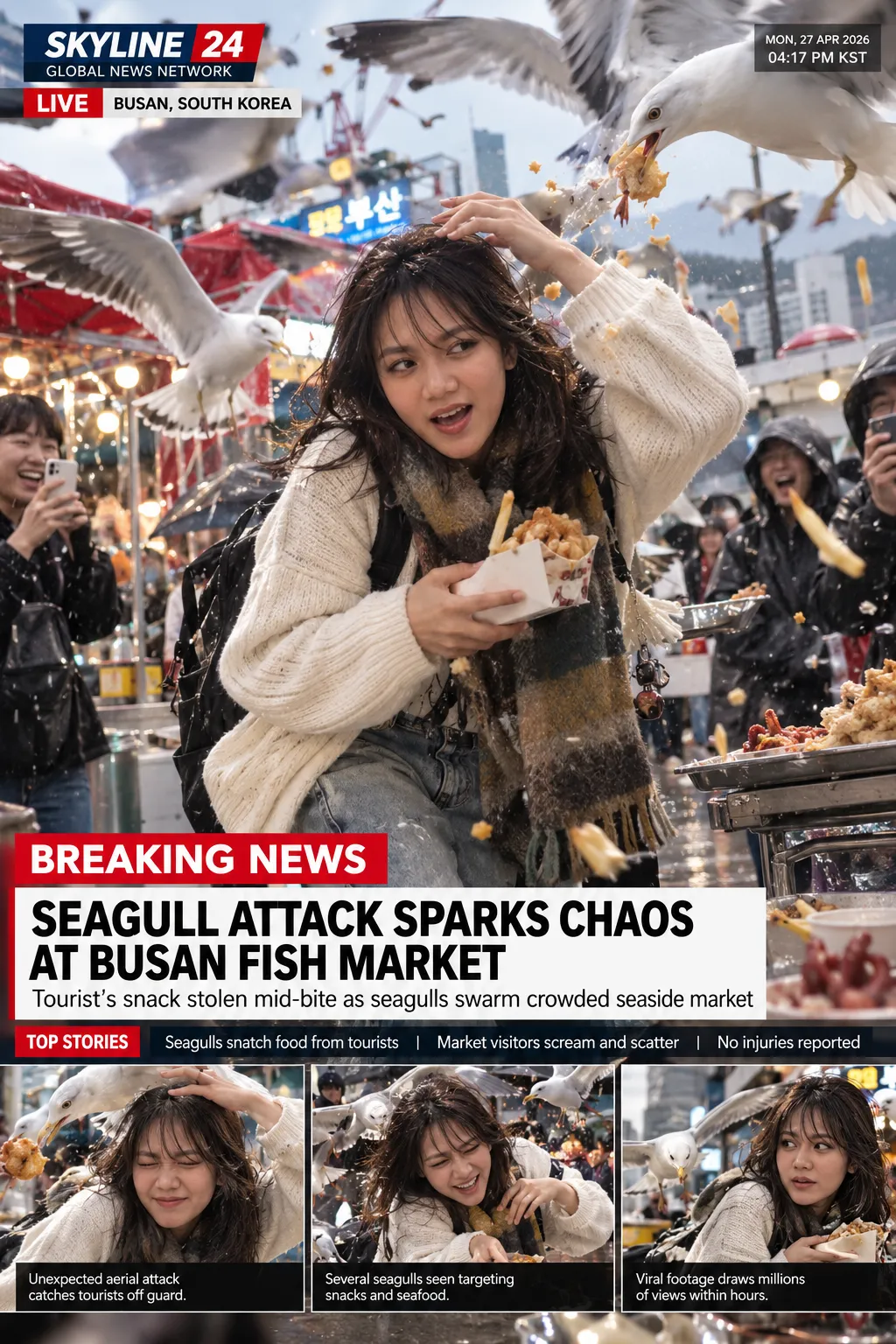
The World Rolls for Me: Fictional Breaking News
Create a photorealistic, chaotic fictional news image featuring the person in a reference photo while preserving their face and identity.
By Threads — Published on
Example images
Prompt template
- Format
- Markdown
- Inputs
- Reference_image (image) · Required
- Outputs
- Generated_image (image)
Create ONE ultra-photorealistic image featuring the person in the uploaded reference as the main subject of a completely fictional, absurd, chaotic breaking-news story.

## Face and identity lock — highest priority
Use the reference ONLY for the person’s face and identity. Preserve their exact recognizable likeness, facial structure and proportions, features, natural skin tone, apparent age, distinctive details, and natural asymmetry. Do not beautify, redesign, reconstruct, reinterpret, reshape, stylize, age, de-age, or replace the face. Do not create a similar or new AI face. A natural change of expression is allowed, but must not alter the underlying identity or facial structure.

Everything except the face may change. Do not carry over the reference’s hair, hijab, outfit, accessories, body styling, pose, or setting.

## Character and styling
Use realistic, tall, elongated, naturally leggy proportions and believable anatomy; show the full body whenever possible. Completely change the outfit from the reference, varying its silhouette, colors, materials, footwear, accessories, layers, cultural influence, and styling.

Redesign the hairstyle each generation. For a woman without a hijab, vary length, texture, volume, parting, and style across options such as loose hair, buns, ponytails, braids, bobs, layers, pixie-inspired cuts, wet-look, windswept, retro, modern, practical, cultural, and unexpected styles. For a man, vary length, texture, parting, and style across options such as textured, messy, slicked-back, curly, wavy, buzz or crew cuts, layers, fringe, undercut-inspired, windswept, wet-look, retro, modern, professional, street, and cultural styles. If a hijab is appropriate, use a new color, fabric or texture, and draping style each generation; it must cover the hair, neck, and chest, differ in color from the outfit, and not copy the reference hijab.

## Unpredictable story and extreme chaos
Invent one completely fictional news event. Independently vary the country, city, location, time, weather, occupation, outfit, hairstyle or hijab, activity, people, animals, vehicles, props, chaos event, expression, movement, camera, news format, fictional media organization, and headline. Avoid predictable combinations and repetition.

The subject MUST be physically doing something—not stiffly posing, standing like a mannequin, or using a generic fashion pose. Possible actions include running, walking, jumping, turning, twisting, ducking, reaching, carrying, pulling, pushing, balancing, crouching, bending, stumbling, dodging, or reacting while moving.

Set chaos to 10/10 and show a believable chain reaction: the subject is active when something unexpected happens, while several events unfold at once. People may react, run, film, laugh, or panic; objects may move; animals or vehicles may be involved; and background activity should continue naturally. Make the scene absurd, unpredictable, funny, fast, visually busy, and realistic. Chaos must have believable cause and effect—do not simply scatter random objects. Capture the exact split second when everything becomes chaotic.

## Expression, body language, and camera
Randomize the expression independently from the activity and camera, and make it naturally fit the event. Use a wide range of spontaneous reactions, such as explosive or restrained laughter, shock, screaming, panic, confused disbelief, a mischievous grin, startled reactions, intense concentration, playful anger, excitement, awkward expressions, widened or squinting eyes, raised or furrowed brows, and varied mouth shapes and emotional intensity. Never default to a neutral expression, generic smile, or looking at the camera. Vary the combinations of eyes, eyebrows, mouth, and head position.

Avoid a default front-facing pose or eye contact. Explore the full 360-degree visual space: front, side, three-quarter, rear three-quarter, back, over-the-shoulder, low or high angle, tilted, elevated, ground-level, distant, through crowds, partially obstructed, or moving-camera perspectives. Vary camera height, distance, direction, and perspective.

Vary head direction, gaze, body orientation, movement, and left/right asymmetry independently. The head, eyes, body, and camera need not face the same direction. The subject may look toward another person or object, the foreground or background, above or below, outside the frame, or toward the sky or ground. Vary which hand, leg, or shoulder leads each movement.

## Fictional news presentation
Choose ONE recognizable format and vary it between generations: newspaper front page, tabloid, serious broadsheet, weekly news magazine, breaking-news TV broadcast, live news screenshot, fictional news website, mobile news alert, evening bulletin, photojournalism magazine, international news digest, local newspaper, or emergency bulletin. Do not reuse the same layout every time.

Invent a NEW fictional media organization for every generation. Never use real media or publication brands, including CNN, BBC, Reuters, AP, Vogue, TIME, National Geographic, The New York Times, The Guardian, Al Jazeera, Forbes, or any other real-world media name.

Include fictional news text in a recognizable hierarchy:
- Fictional media name
- “BREAKING,” “LIVE,” or “SPECIAL REPORT”
- A chaotic fictional headline
- A short subheadline

Optionally include a date, fictional location, reporter name, photo caption, live ticker, “developing story,” or “exclusive.” All news content must be fictional.

## Variation and photorealism
Every generation must be substantially and fundamentally different—not merely a one-variable change. Avoid repeating or closely imitating the country, city, location, weather, time, occupation, outfit, silhouette, palette, hairstyle, hair texture or length, hijab, activity, pose, gesture, movement, expression, gaze, head direction, characters, animals, vehicles, props, chaos event, interactions, camera angle, distance or height, framing, composition, lighting, news format, fictional media name, typography, headline structure, or overall story.

Render as ultra-photorealistic real-world photography with natural pores and fine skin detail, realistic hair, authentic fabric, believable motion, and convincing light, shadows, and reflections. Avoid plastic or waxy skin, CGI, beauty filters, generic AI faces, facial reconstruction, and distorted anatomy.

Final directive: The face never changes; everything else can change. Create ONE unpredictable fictional news event that looks like a genuine photograph captured at the exact moment the story became news. Use one locked face, infinite worlds, wide-ranging hair, extreme expressions, 360-degree camera and body variation, extreme chaos, fictional news, and zero repetition.




Comments — 0