Expressive Black-and-Lime Ink Portrait
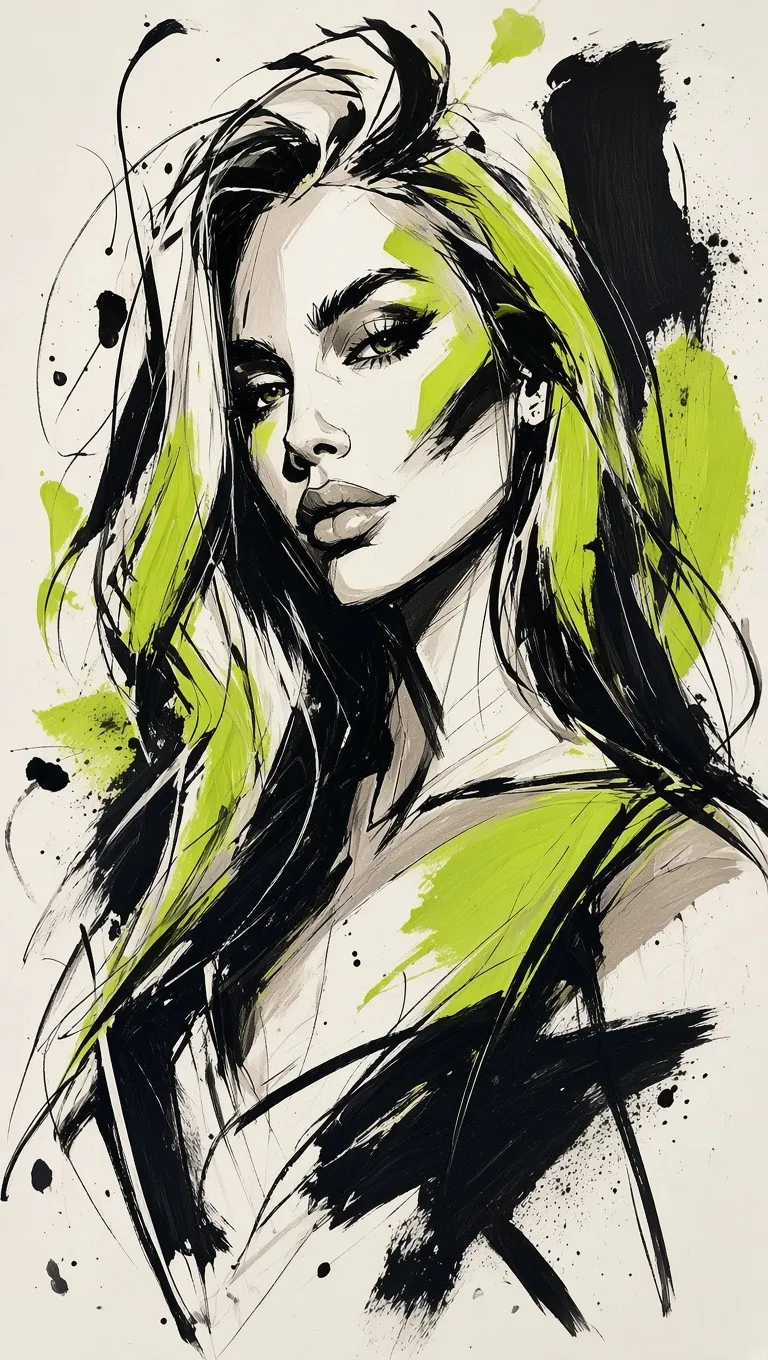
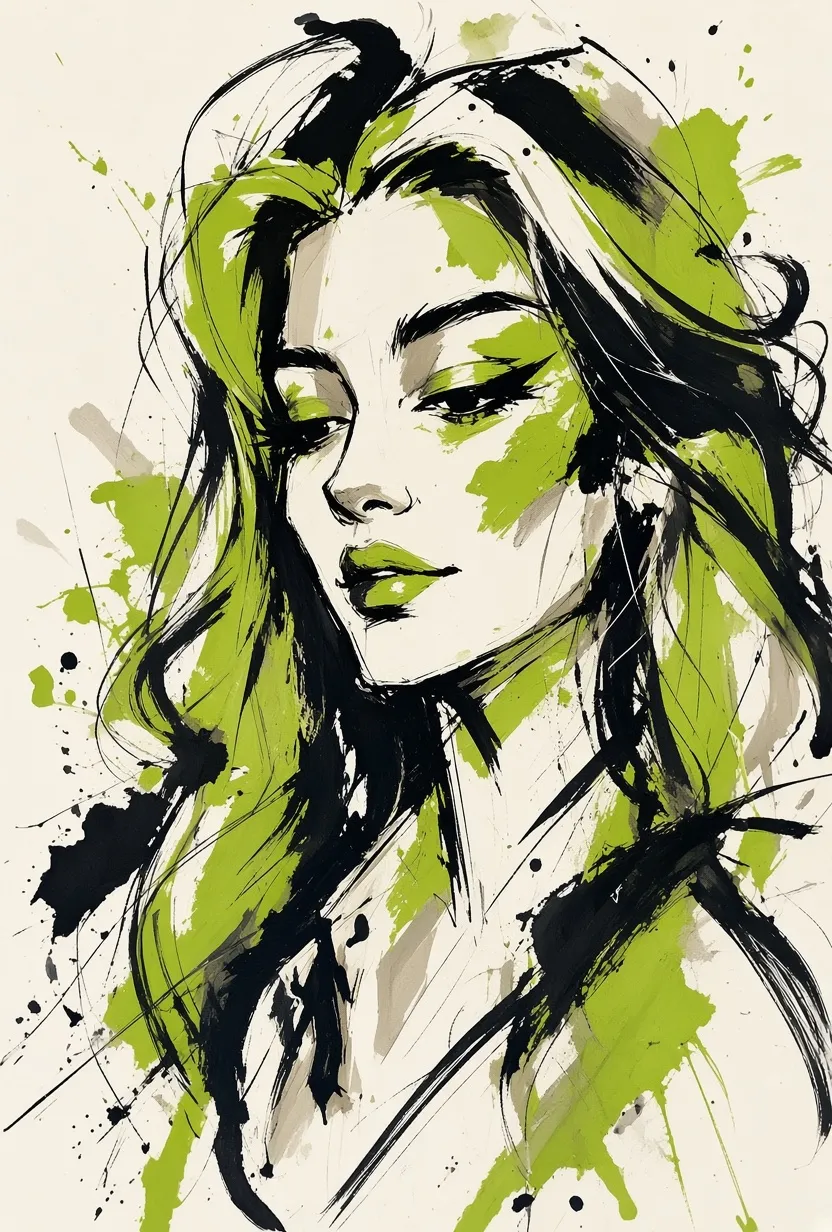
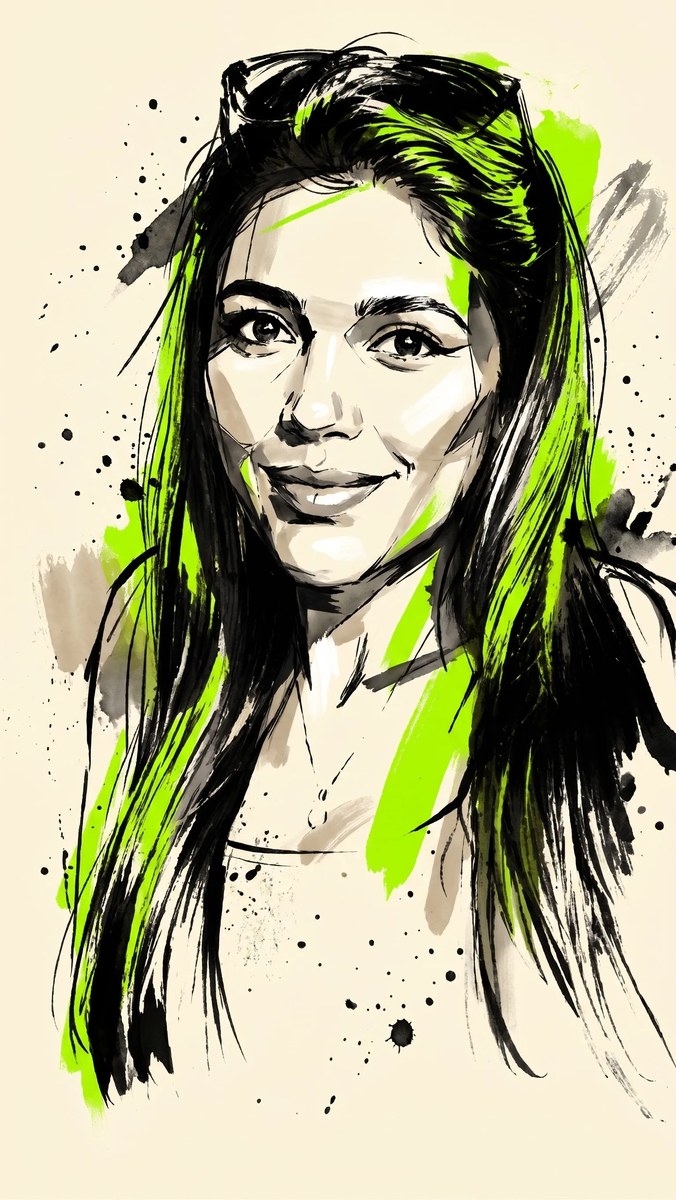
Transform a reference photo into a bold, experimental editorial portrait in expressive black ink and acid lime green.
Example outputs
Prompt template
- Format
- Markdown
- Inputs
- reference_photo (image) · Required
- Outputs
- illustrated_portrait (image)
Use the attached photograph as the primary identity reference and transform it into a visually striking expressionist illustration inspired by gestural black-ink drawing, contemporary abstract painting, and experimental editorial portraiture.

The result must look like an original illustration drawn and painted by hand, not a photograph with filters or a photorealistic image.

## 1. Preserve the person’s identity

Keep the person’s essential features recognizable: the general shape of the face, eyes and their spacing, eyebrows, nose, lips, facial structure, apparent age, skin tone, and characteristic expression.

The person should remain recognizable, but secondary details may be freely reinterpreted to fit the graphic language of the illustration. It is not necessary to reproduce every photographic detail.

## 2. Artistic style and technique

Reconstruct the face using a combination of:

- Intense, irregular, rapid, expressive black-ink strokes.
- Fragmented contours, gestural lines, and long brushstrokes that partially cross the composition.
- Black paint marks with rough edges, splatters, scrapes, and small imperfections.
- Simplified color planes, angular shadows, and areas of the face suggested only partly through lines.
- White and warm-gray brushstrokes to create highlights, volume, and separation between forms.
- Deliberately unfinished areas, with loose lines extending beyond the face.

Avoid contours that are too clean or uniform. The illustration should convey spontaneity, energy, movement, and confident artistic execution.

## 3. Color palette

Use a restricted, forceful palette:

- Deep black as the dominant color for lines, shadows, and marks.
- Acid lime green as the main accent color, including some broad, irregular areas.
- Ivory white or warm cream for the background and negative space.
- Smoke gray and small touches of olive green to connect light and dark areas.

Distribute the green asymmetrically across selected areas of the face, around the eyes, in the hair, and behind the silhouette. Let some green brushstrokes cross the composition visually without indiscriminately covering essential facial features.

## 4. Face and hair

Give the eyes strong graphic emphasis with black outlines, expressive shadows, and small light contrasts.

Simplify the nose, lips, cheeks, and jaw using selective strokes, marks, and planes of shadow. Preserve the person’s distinctive structure even as the forms become more abstract.

Reinterpret the hair with fluid lines, locks rendered in black brushstrokes, and fine strokes that blend into the paint marks. The hair may be distorted, fragmented, and artistically extended to add dynamism.

## 5. Composition and creative freedom

Prioritize a close-up portrait, with the face as the focal point in an asymmetrical editorial composition. Adjust the framing to suit the original photograph and achieve the most expressive result.

You may freely alter the lighting, distribution of shadows, visual orientation, background, contours, and secondary details. Simplify or remove clothing and distracting elements.

Combine detailed areas around the eyes and facial features with abstract, open, unfinished areas in the hair, cheeks, and edges of the composition.

Keep the background light ivory and nearly empty, with splatters and isolated strokes that complement the portrait without turning it into a poster.

## 6. Final finish

Aim for an original, expressionist, experimental, contemporary illustration, like an editorial portrait made with ink, dry brush, and acrylic paint.

Use strong contrast, visible brushstrokes, spontaneous lines, selective color, and abundant negative space.

Make the artistic transformation evident: visually reconstruct the photograph rather than merely applying a texture over it.

## Restrictions

Do not create photorealism, a photographic finish, a filter effect, plastic-looking skin, a 3D render, geometric vector illustration, conventional anime, soft watercolor, or an excessively polished digital finish. Avoid excessive colors, busy backgrounds, and artificial symmetry.

Desired result: an expressionist portrait in black ink and lime green, with forceful gestural lines, abstract marks, recognizable essential features, and a spontaneous, raw, sophisticated artistic appearance.
What you'll create
The reference face becomes a hand-painted expressionist illustration. Forceful dark lines and vivid lime marks simplify secondary detail while retaining the subject’s essential identity.
Frequently asked questions
Is this a filter over a photograph?
No. It should look drawn and painted by hand.
What accent color is specified?
Lime green.




Comments
Tried this prompt? Share what you made, compare results, or ask a question