Horse in Spreading Ink Wash
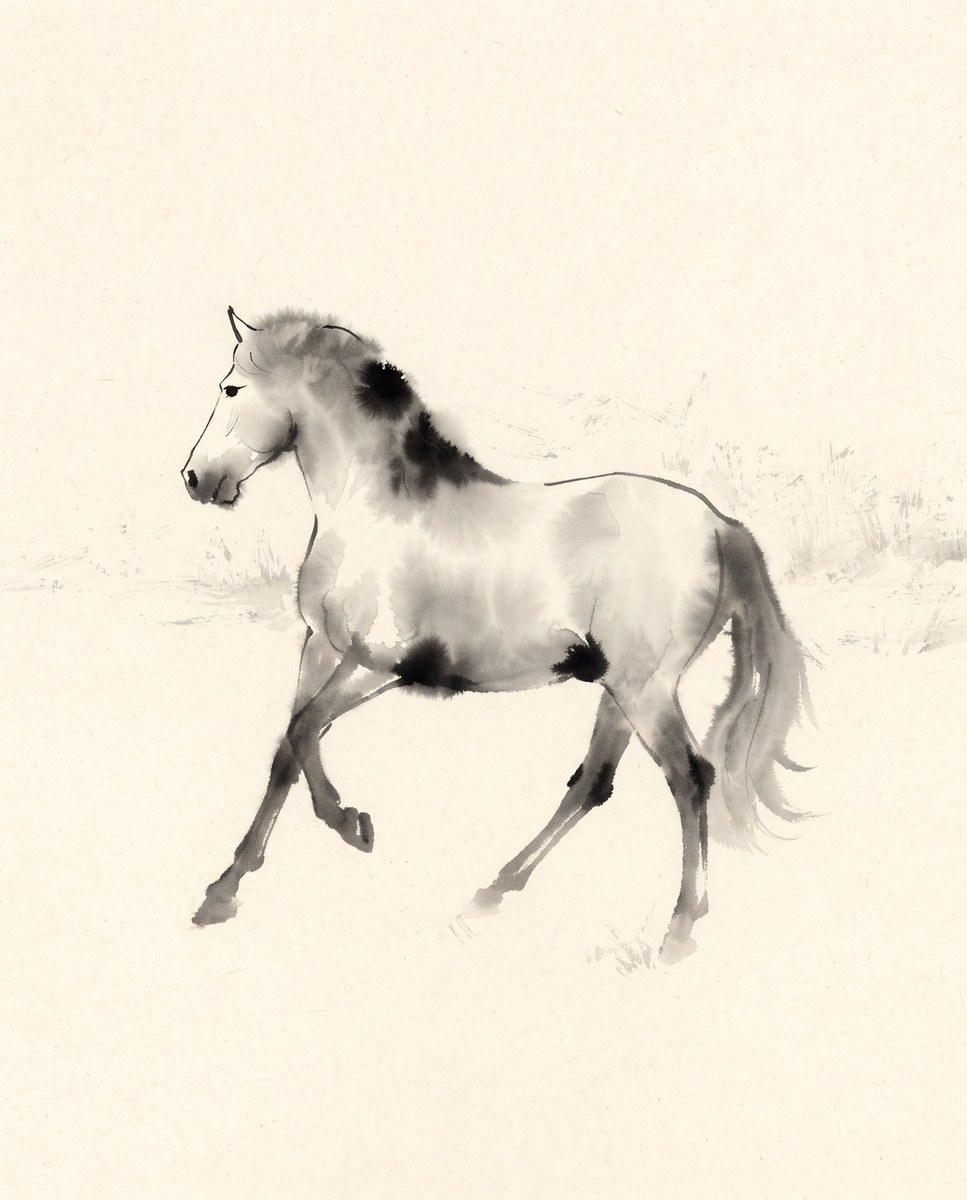
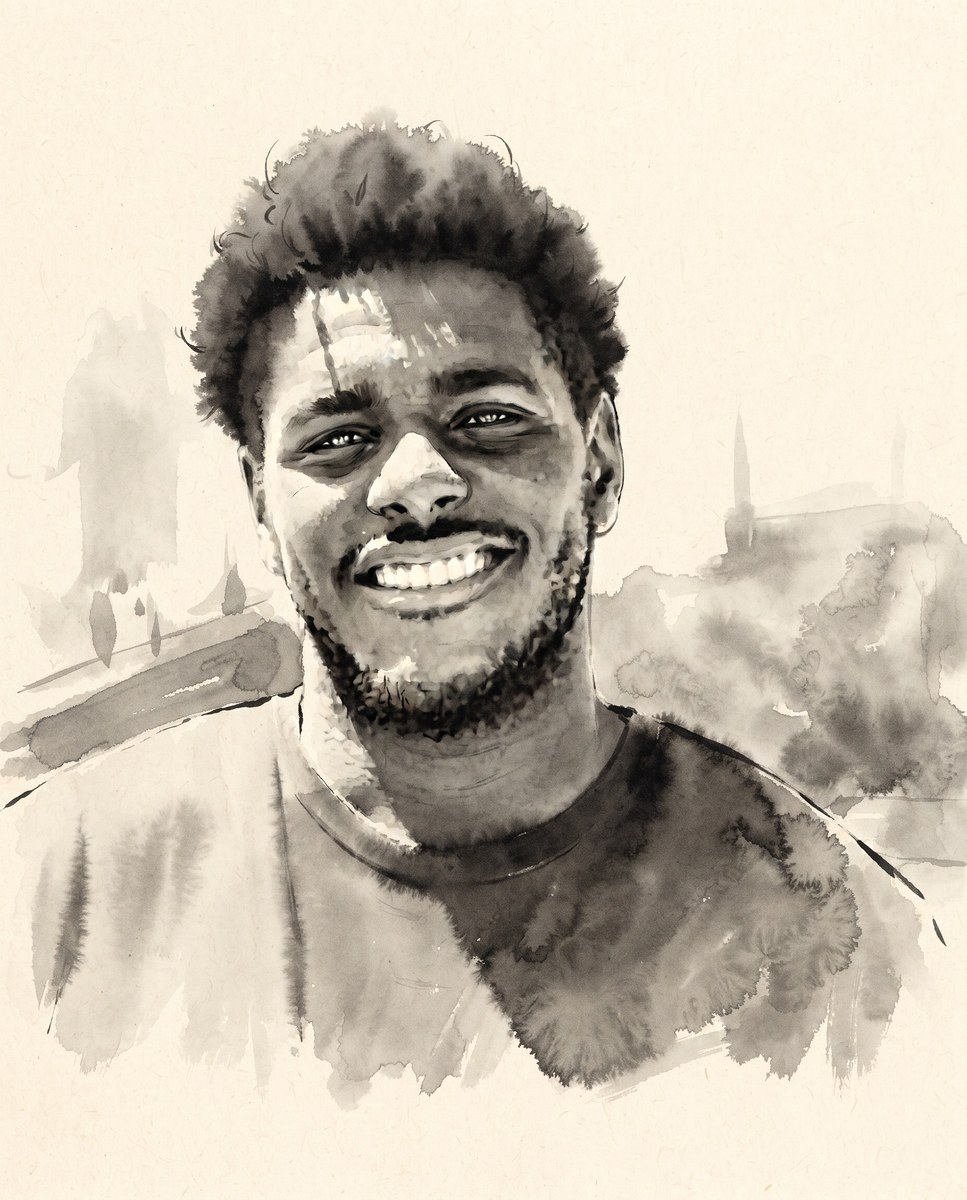
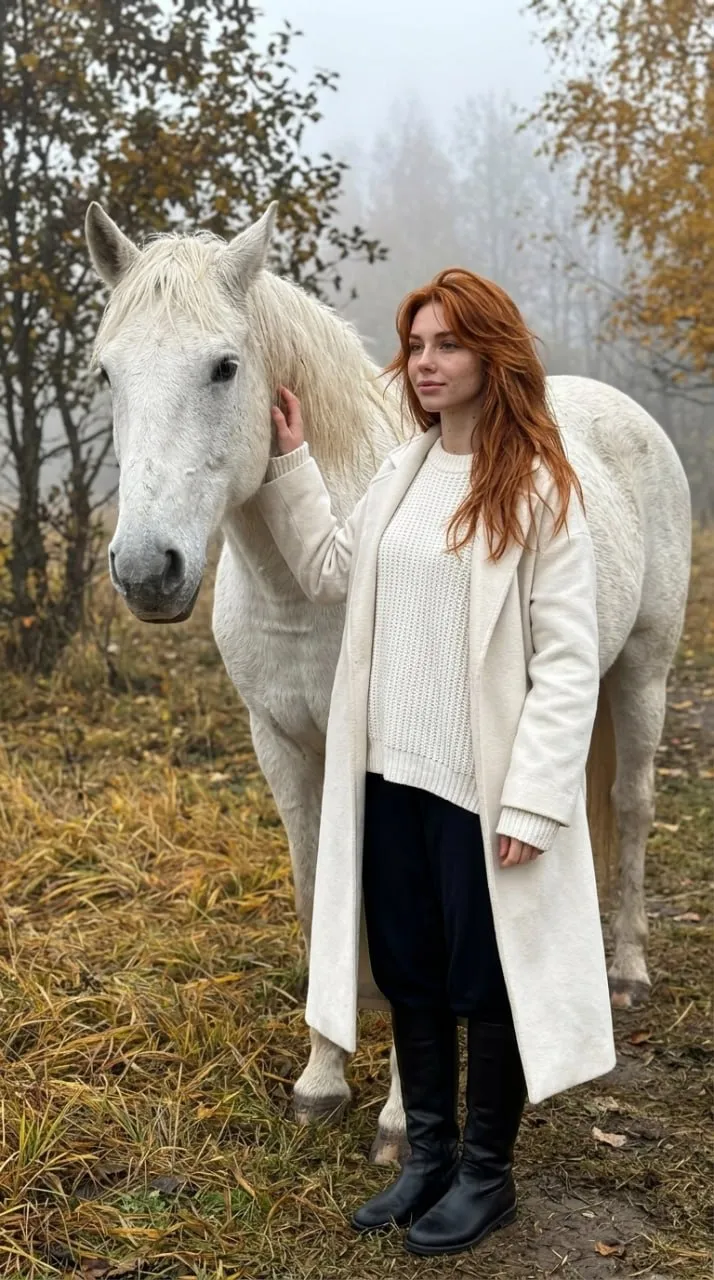
Transform a reference photo into a single portrait-format ink-wash painting, preserving its main subject and composition while using spreading ink, warm ivory paper, and generous blank space.
Example outputs
Prompt template
- Format
- Text
- Inputs
- Uploaded_photo (image) · Required
- Outputs
- Ink_wash_painting (image)
Transform the uploaded photo into a single ink-wash painting. The subject is a cream-colored horse, with dark ink pooled in its mane and belly. Behind the horse, show only faint traces of grass.

Create one image in a vertical 4:5 aspect ratio. Do not divide the image horizontally or vertically, or create a grid or before-and-after layout.

[Main subject]
Draw only the one subject that is most prominent in the photo. If it is a person, preserve their facial features, hairstyle, glasses or hat, and clothing shape. If it is an animal, preserve the locations of its fur markings, ear shape, and pose. If it is an object, preserve its identifying features, such as a handle or spout. Do not add any people, animals, or objects that are absent from the photo. If the photo contains more than one, draw no more than the number present in the photo. For objects being held or worn, draw only the number shown in the photo.

[Painting method]
Do not apply a filter to the photo or trace its outlines. On paper dampened with water, let drops of ink spread on their own to form the shapes. The edges of each shape must be where the ink stopped, not lines drawn with a brush. Where the ink stopped, leave irregular edges that spread along the paper fibers, with a dark band where the water pushed the ink.

Create all broad areas through spreading ink. Use brush-drawn lines only for small details such as eyes, whiskers, or ear tips. Count one uninterrupted brush line as one stroke; use no more than five strokes.

[Tonal range]
Use only one ink color. Show at least four tones together in the image: the darkest ink, mid-tone ink, diluted ink, ink that is almost water, and untouched paper. Concentrate the darkest ink in only a small part of the image.

[Paper and negative space]
Use one sheet of warm ivory paper as the background. Let the paper grain show through, and leave all four edges unpainted. Place the subject slightly off-center and leave at least one-third of the paper completely empty. Keep the ink from reaching the edges of the paper.

[Text]
Do not include any text, numbers, seals, artist's marks, signatures, logos, or watermarks in the image.

[Failure conditions]
The result fails if even one piece of text, number, seal, artist's mark, or signature is visible.
The result fails if all ink edges are smooth curves and there is not a single irregular area showing spread along the paper fibers.
The result fails if brush-drawn lines enclose the subject all the way around.
The result fails if two or more colors besides the ink and paper color are visible.
The result fails if the tonal range has only three levels or fewer, or if the ink spreads uniformly like an airbrush.
The result fails if the main subject in the uploaded photo is unrecognizable.
The result fails if any person or animal absent from the photo is added.
The result fails if a frame, border line, mat, background pattern, or grid is visible.
The result fails if ink covers so much of the paper that less than one-third remains empty.
The result fails if the image is divided into two or more panels.
What you'll create
A cream-colored horse emerges from spreading ink with darker mane and belly. Only faint grass traces remain behind it, preserving generous blank space in one continuous image.
Frequently asked questions
Should the image have before-and-after panels?
No. The work is one undivided painting.
How much paper should stay empty?
At least one third.




Comments
Tried this prompt? Share what you made, compare results, or ask a question