Photograph a Hand-Drawn Shrink-Plastic Keychain
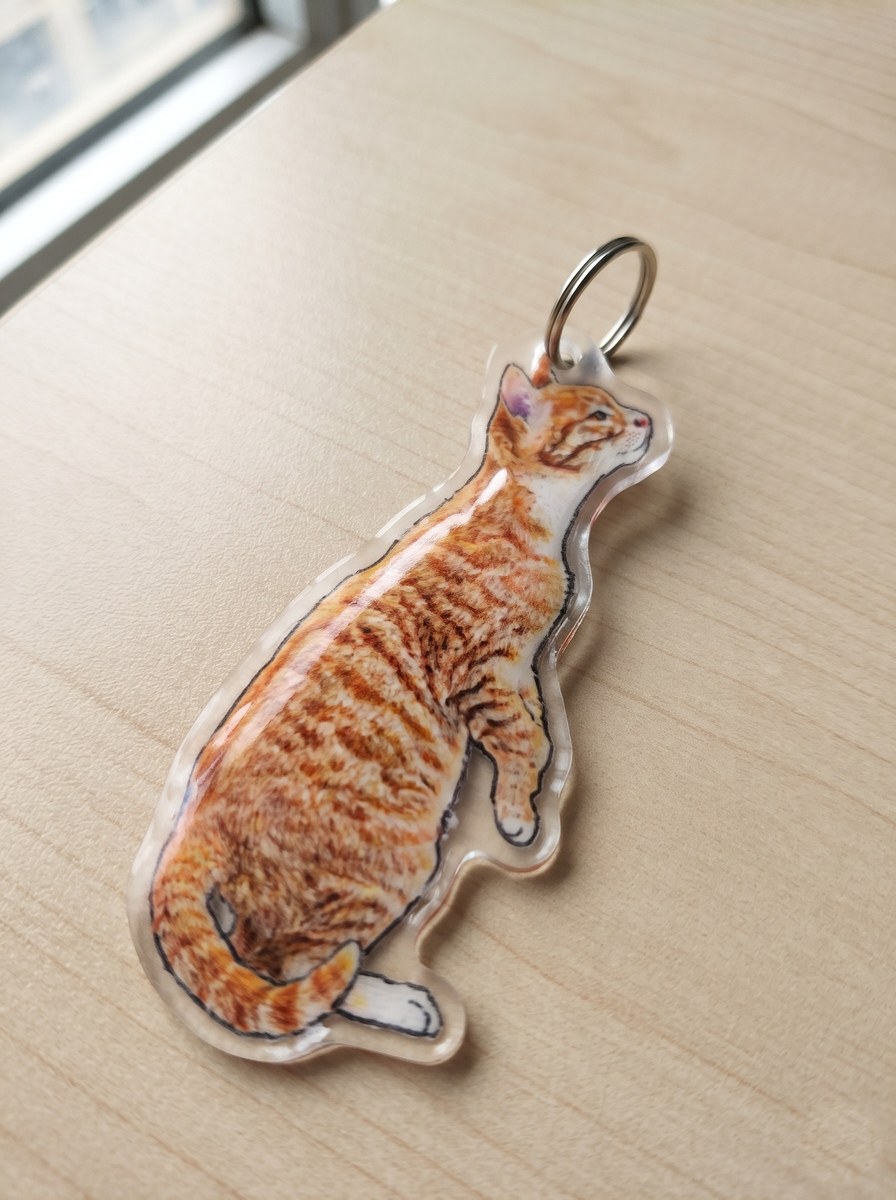
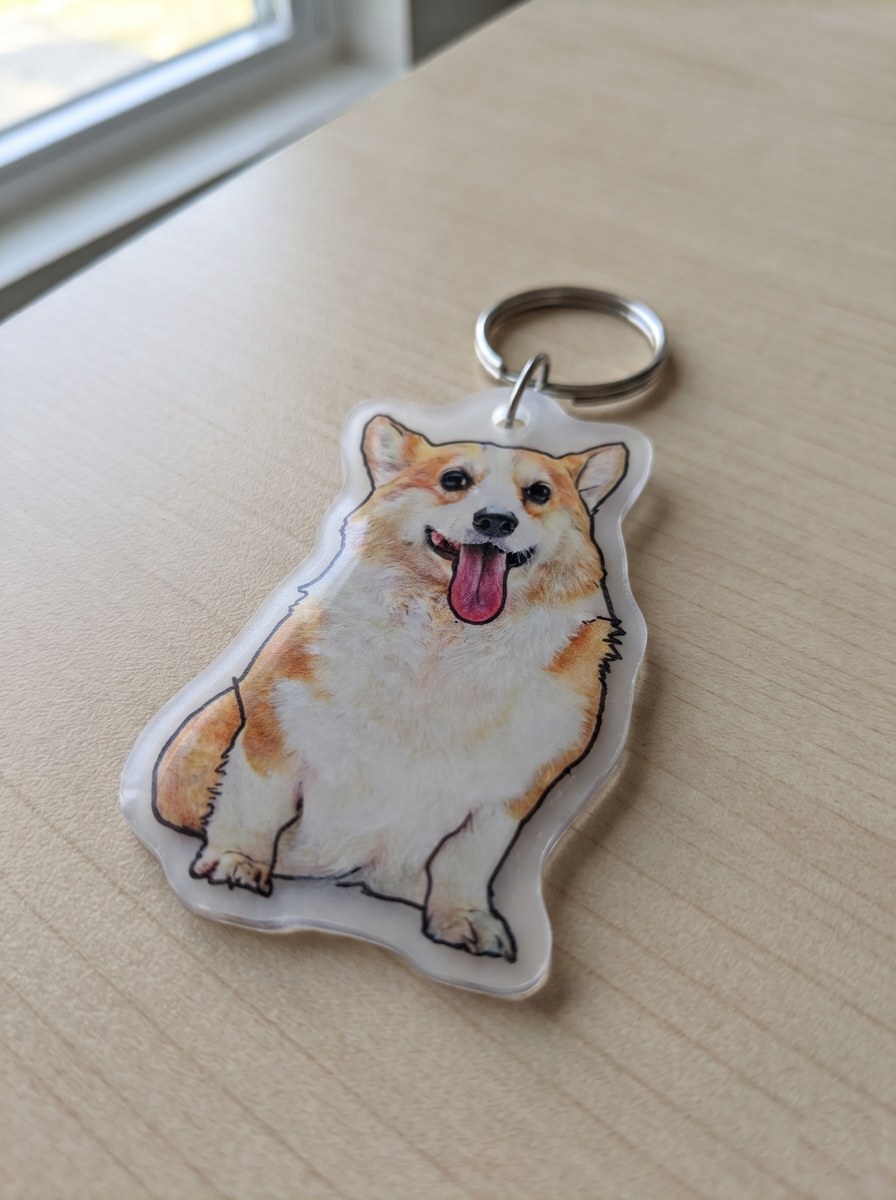
Create a realistic tabletop photograph of a single thick, translucent shrink-plastic keychain bearing a hand-drawn copy of the reference-photo subject.
Example outputs
Prompt template
- Format
- Markdown
- Inputs
- Reference_photo (image) · Required
- Outputs
- Keychain_photo (image)
## What to create
Create a photograph of one baked shrink-plastic keychain on a desk, bearing a hand-traced drawing of the subject in the attached photo. The result must look like a photograph of a small physical plastic object, not a drawing file or a photo print.

## Plastic sheet and size
- Use one sheet of polystyrene that has been baked and fully shrunk. It is about 5–6 cm across and approximately 1.5 mm thick.
- The sheet is translucent with a very slight milky cast. The desk’s wood grain should show faintly through areas that have not been colored.
- Cut the sheet along the subject’s outline with scissors, leaving rounded edges. Show the thickness along the cut edge, with a white glint of light on it.
- The sheet is not perfectly flat. It has a shallow curve from curling and flattening during baking, and window light stretches into a long highlight along the curved surface.
- Make one 4 mm-diameter hole near the top and attach a silver key ring through it. A small connector ring may sit between the sheet and the key ring.

## Drawing
- The drawing is copied by hand using colored pencils and permanent marker. It is not a print of the photo.
- Draw the outline and the eyes, nose, and mouth with bold, dark lines. The sheet shrinks to one-third of its original size during baking, so the lines are compressed along with it. Colored-pencil strokes used to fill areas may be finer than the outlines.
- Colors are also intensified by the shrinking. The compressed colored-pencil strokes fill the areas densely but are not perfectly uniform; retain visible stroke direction and texture.
- Use only two or three levels of shading. Do not use continuous, photographic gradients.
- Copy the subject’s pose, body direction, placement of markings, and number of markings exactly from the photo. Do not draw props or decorations that are absent from it.
- Do not draw a background. Leave the sheet uncolored and transparent outside the subject.

## Scene
- Place only one keychain on a bright wooden desk, viewed from slightly above at an oblique angle.
- Use natural light entering from a window at the upper left. Add a short, soft shadow beneath the sheet and a darker point shadow beneath the metal ring.
- Leave the surrounding area empty. Include no other stationery or hands.
- Use a vertical 3:4 composition.

## Failure conditions
- No letters, numbers, brands, or signatures may be visible anywhere, on the sheet or on the desk.
- Show only one plastic sheet.
- Do not attach a chain, cord, or other decoration to the ring. The key ring is the only item attached to the sheet.
- The subject’s outline must be clearly bolder and darker than the colored-pencil strokes used to fill it; do not make them look equally thick.
- Do not color the area outside the subject.
- Do not make the drawing look like a photo print with continuous tonal gradation.
- Do not add any animal, person, or object that is absent from the reference photo.
- Do not make the sheet look completely transparent like glass or so thin that it has no visible thickness.
What you'll create
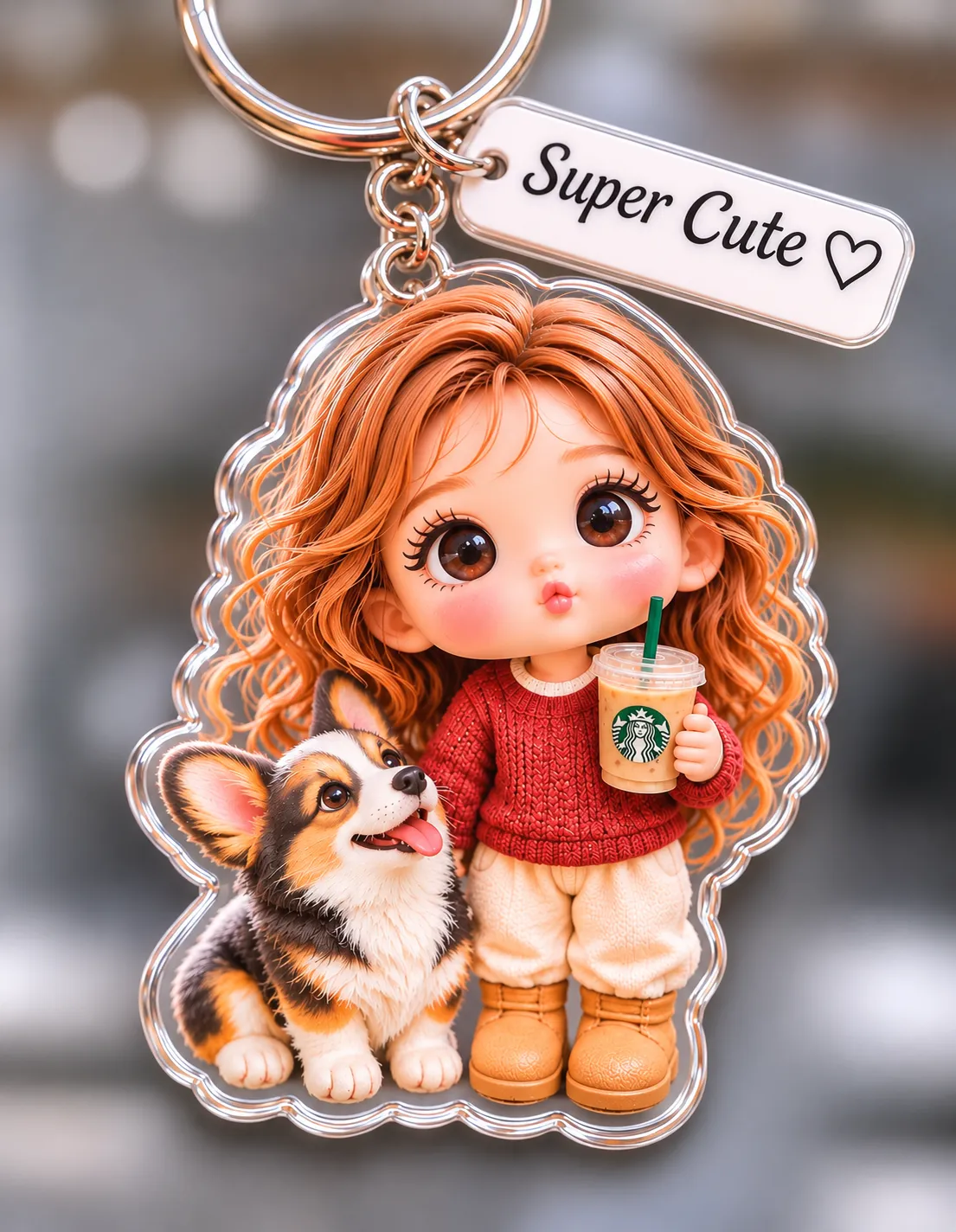
A small milky translucent plastic piece lies on a desk, showing scissor-cut edges and slight baking curvature. Dark outlines, colored-pencil fill and a long window reflection make it look handmade.
Usage instructions
Provide a reference photo with the full subject visible, since its pose, orientation, and markings must be copied faithfully. The prompt turns that subject into a photographed physical keychain; adjust the reference photo if you need a different subject or composition.
Frequently asked questions
Should it resemble a flat digital drawing file?
No. It must look like a photograph of a small physical object.
Is the material completely clear like glass?
No. It has a slight milky cast and visible thickness.



Comments
Tried this prompt? Share what you made, compare results, or ask a question