Japanese Topographic Contour Narrative Comic
Transform a single photo into a 3:4 vertical composition that pairs the unchanged original photo with a Japanese-inspired topographic contour-line comic. The design uses a precise half-and-half layout, carefully drawn figures, and a restrained palette.
Example outputs
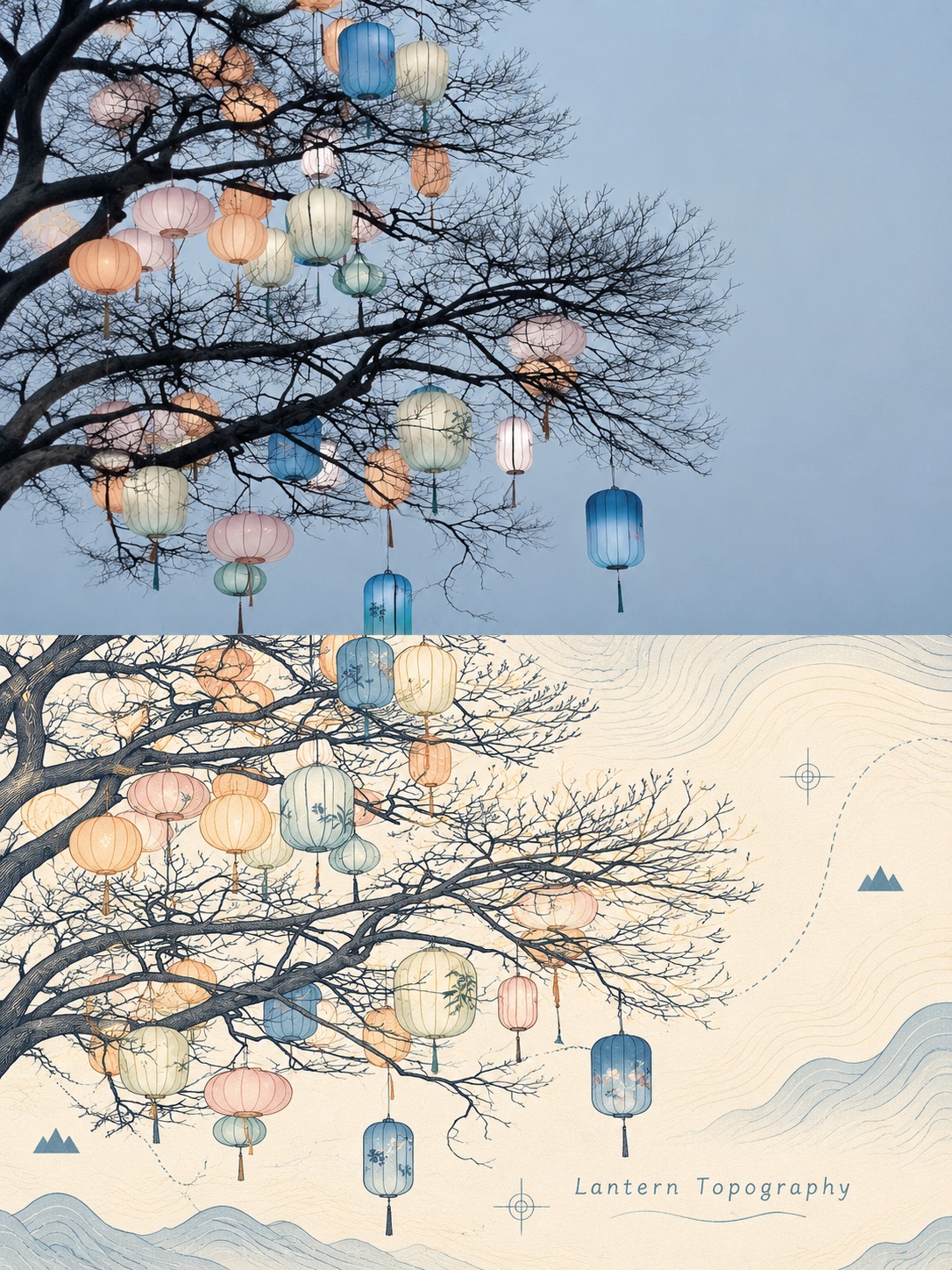
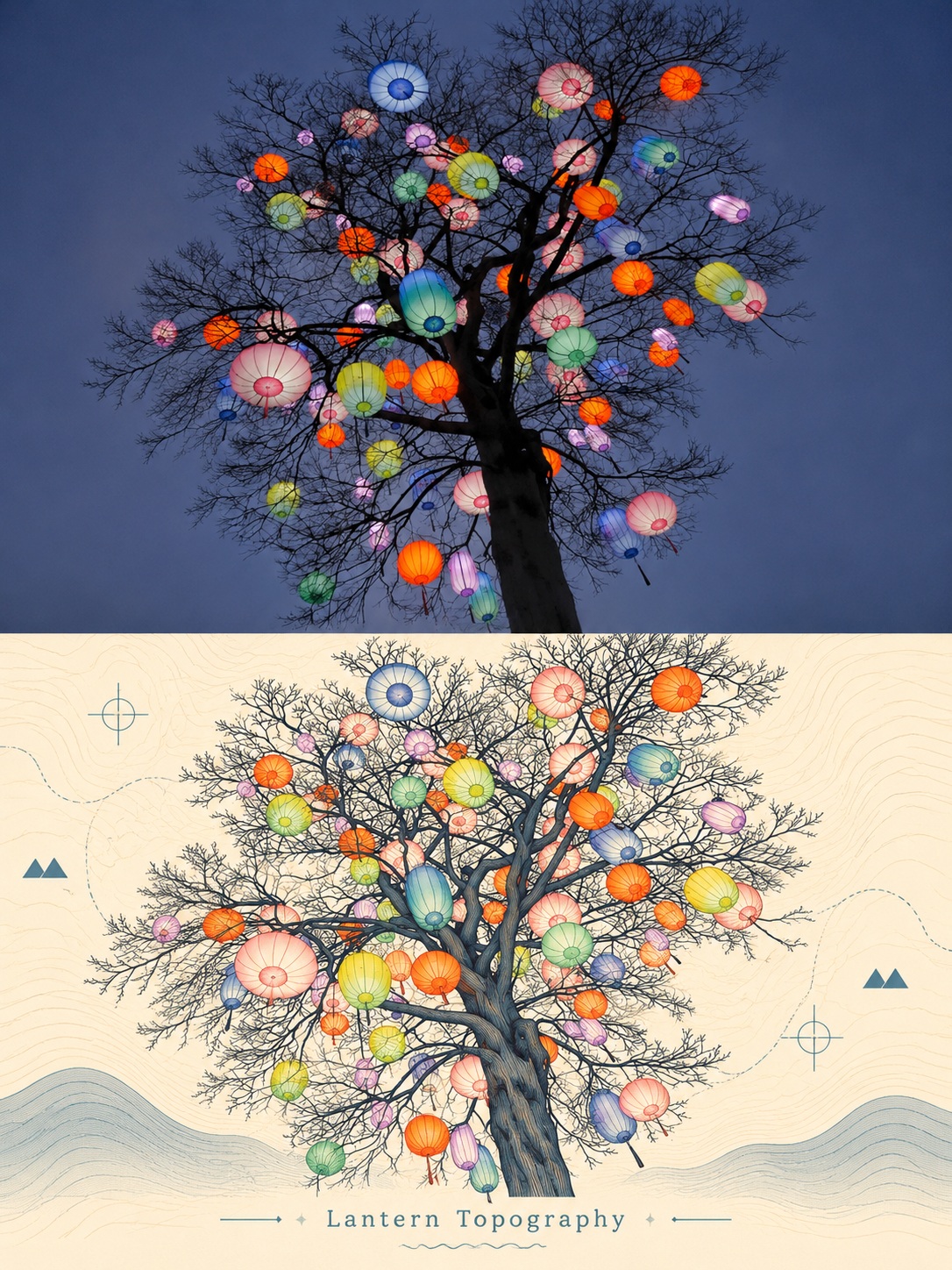
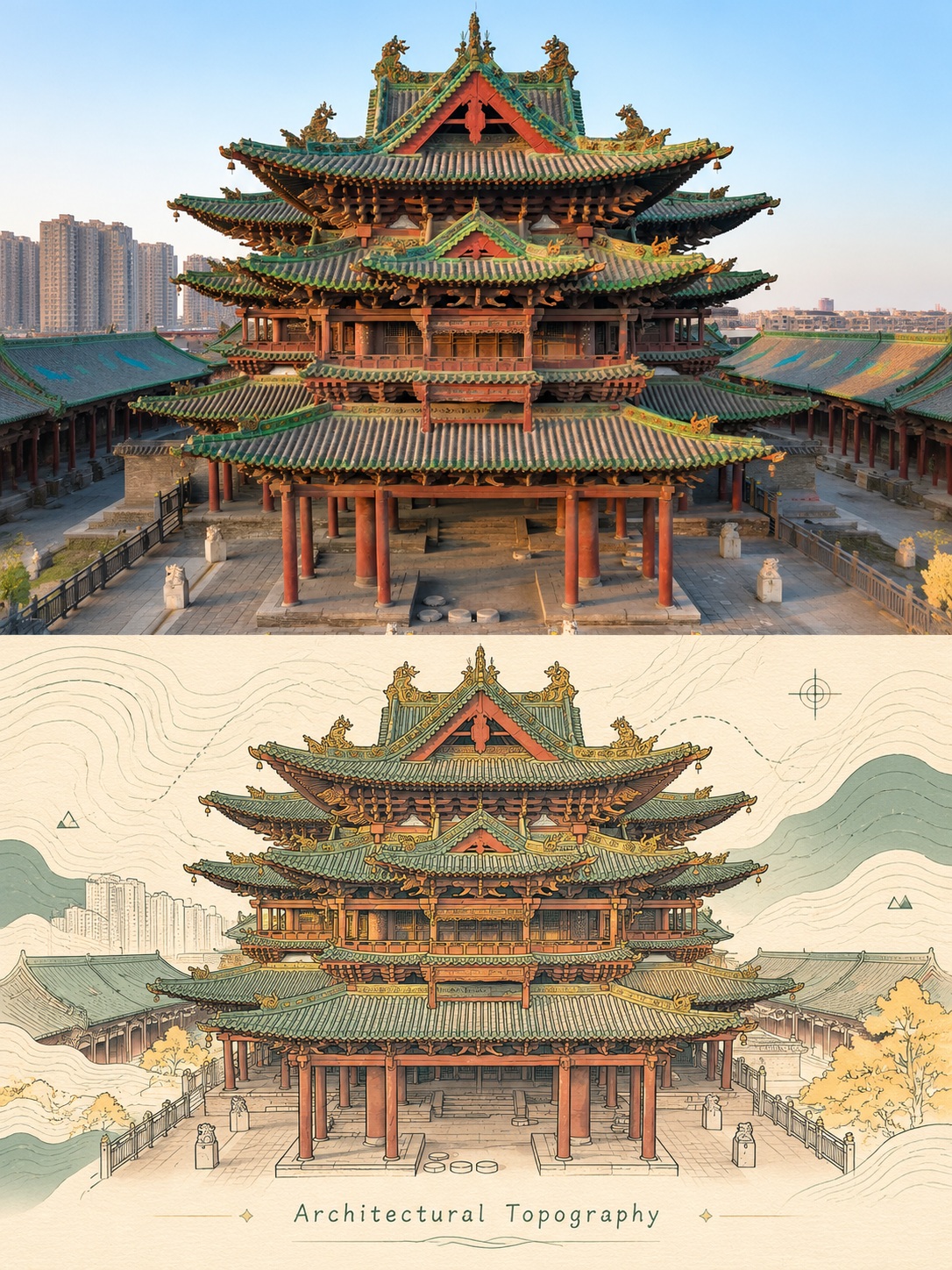
Prompt template
- Format
- Markdown
- Inputs
- Photo (image) · Required
- Outputs
- Photo_and_comic_composition (image)
Using only the single uploaded photo, create one 3:4 vertical photo-and-comic image. Do not create a collage, combine multiple images, or produce multiple outputs.

## Fixed layout
Divide the canvas into two equal-height halves, each occupying exactly 50% of the canvas. They must be the same width and meet seamlessly, with no border, gap, dividing line, overlap, or content crossing the midpoint.

## Upper half: original photo
Use the original photo directly. Fully preserve the subject’s identity, facial features, face shape, hairstyle, expression, body proportions, pose, clothing, objects, setting, natural lighting, and original colors. Do not redraw, retouch the face, recolor, desaturate, mirror, stretch, distort, add, or remove subjects. Only proportional scaling and cropping of noncritical details at the outer edges are allowed.

## Lower half: comic illustration
Re-render the same photo as a 2D narrative comic combining Japanese-style topographic contour lines with modern linear illustration. Accurately preserve the subject’s identity, facial features, body proportions, actions, objects, and original spatial relationships.

Base the illustration on the photo’s actual structure. Extract the contours of the subject, architecture, ground, and natural surroundings, and weave flowing topographic-style curves into the background and depiction of space. Let the lines extend naturally around the subject, creating an orderly, map-drawing-like composition.

Render the person with clear, complete pen linework; do not turn the face or body into abstract contour lines. Draw the person’s outline, hands, facial structure, and clothing folds accurately. In the background, use continuous curves of varying density, localized areas of color, and fine hatching to convey spatial depth and changes in light and shade.

## Color and texture
Use deep sea blue, sandstone beige, gray-green, and orange-red as the main colors. Control the area occupied by each color to create a gentle but distinctive contrast. Use the clean texture of art paper and fine printed linework. Avoid coarse grain, dirt, and watercolor bleeding.

## Composition and whitespace
The comic’s meaningful visual content should occupy approximately two-thirds of the lower half, with balanced whitespace around it. Let the curves complement the subject without becoming too dense or overpowering. Add very small map-style markers, coordinate symbols, and auxiliary fine lines where appropriate, but do not add unrelated text.

Add one small English title in a cute, rounded, refined typeface with the character of a contemporary independent art publication.

## Quality requirements
The image must read as a 2D line-drawn comic, with clear lines, varied density, and accurate light and shade. Keep the person natural and undistorted, preserve clear spatial relationships in the background, and give the overall image the polished feel of a contemporary art publication. Keep noise low and avoid a smeared, AI-painted appearance.

Keep the entire comic, title, and all decorative elements fully within the lower 50% of the canvas.
What you'll create
The prompt creates a 3:4 vertical composition with the original photo in its top half and a 2D Japanese-inspired topographic contour-line comic depicting the same scene below. The comic uses precise pen linework, a controlled blue, beige, gray-green, and orange-red palette, and balanced whitespace.
Usage instructions
Frequently asked questions
Should the person’s face and body use the contour-line effect?
No. Keep the person clearly rendered with accurate pen lines; use the flowing contour lines in the background and spatial details, not as abstract lines across the face or body.
Can the top half be reworked to match the illustration?
No. Preserve the original photo in the top half, including its colors and natural lighting, with only proportional scaling and noncritical cropping at the edges.




Comments
Tried this prompt? Share what you made, compare results, or ask a question