Photo and Botanical Engraving Comic Split Composition
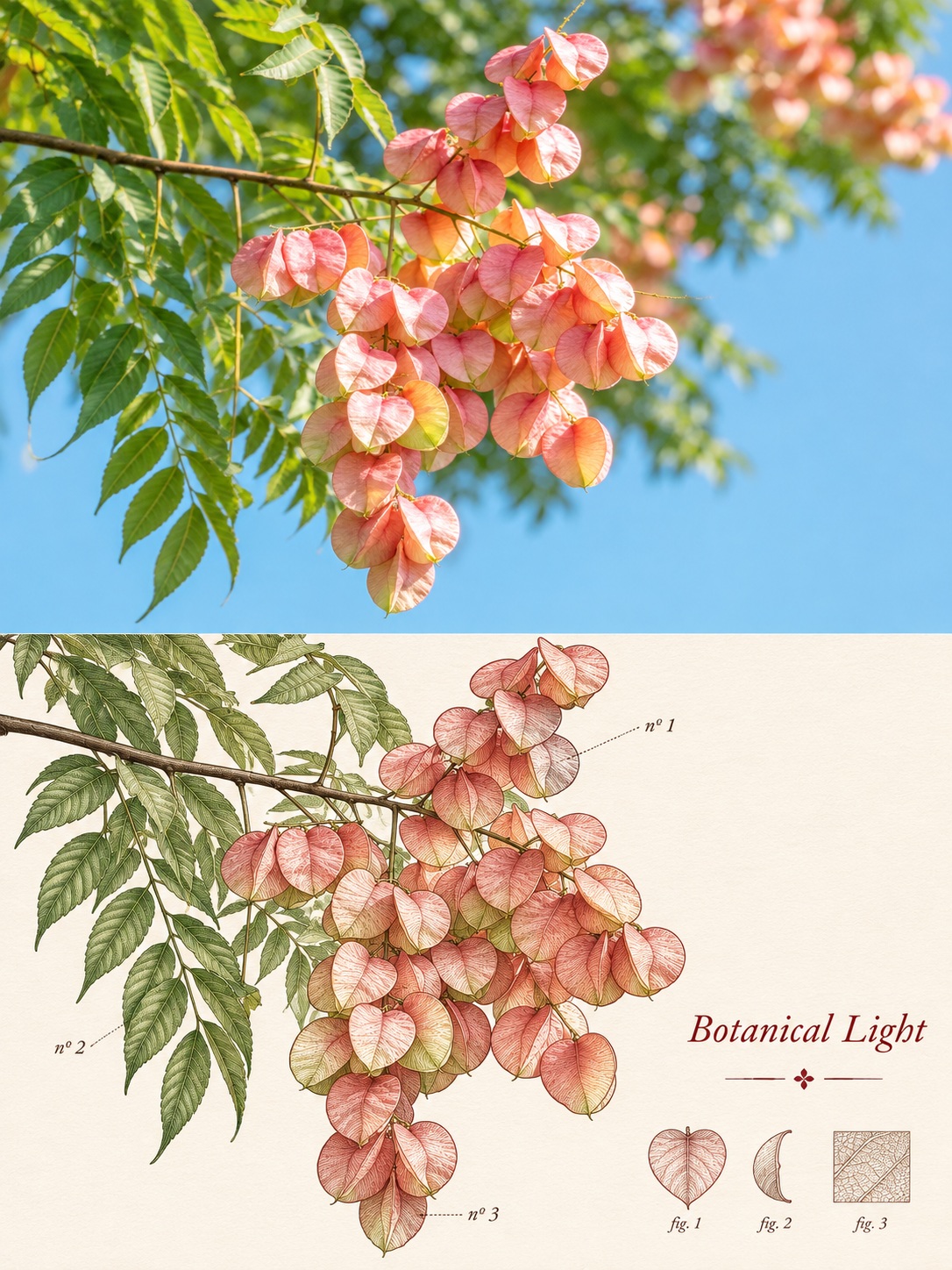
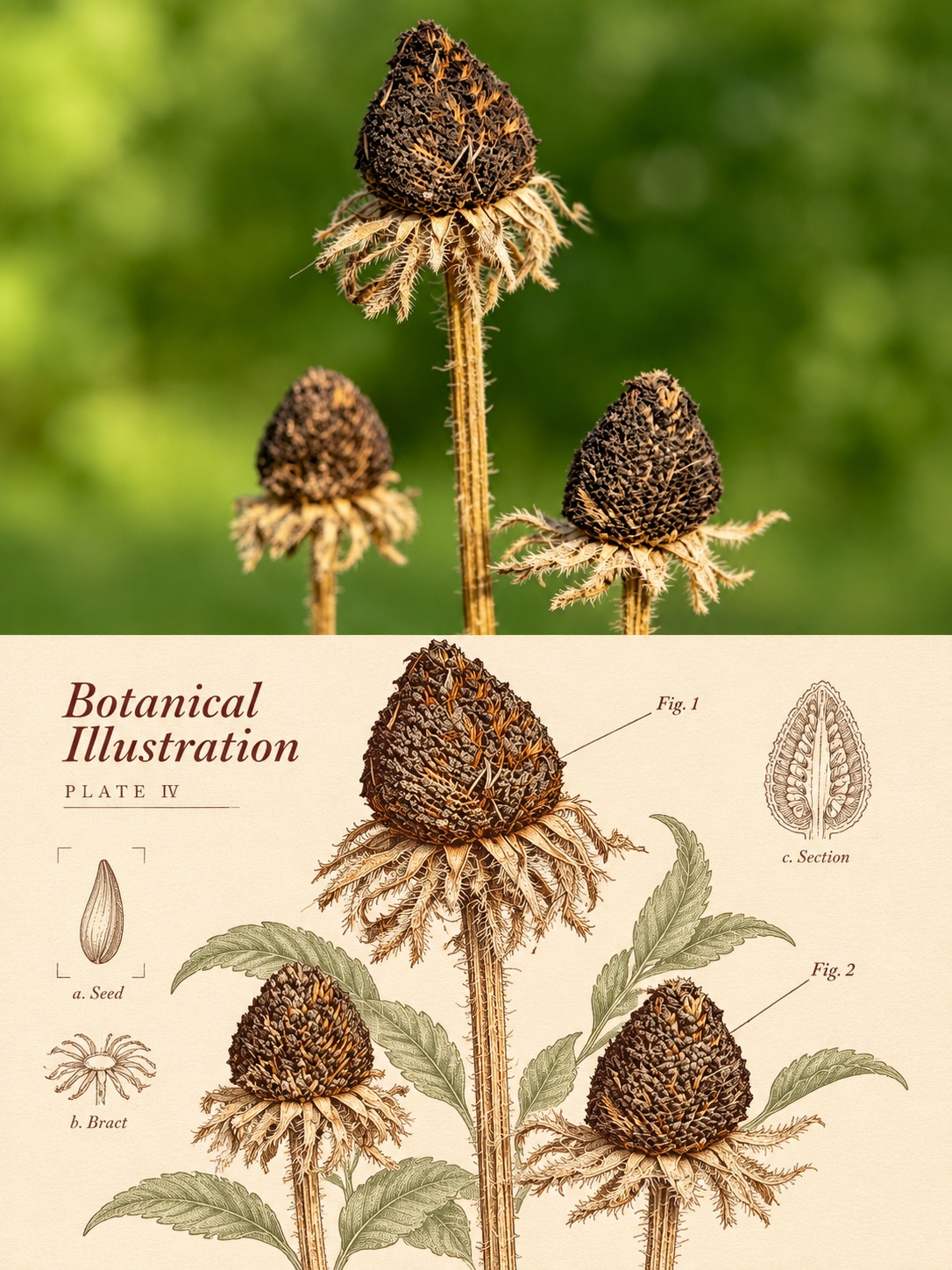
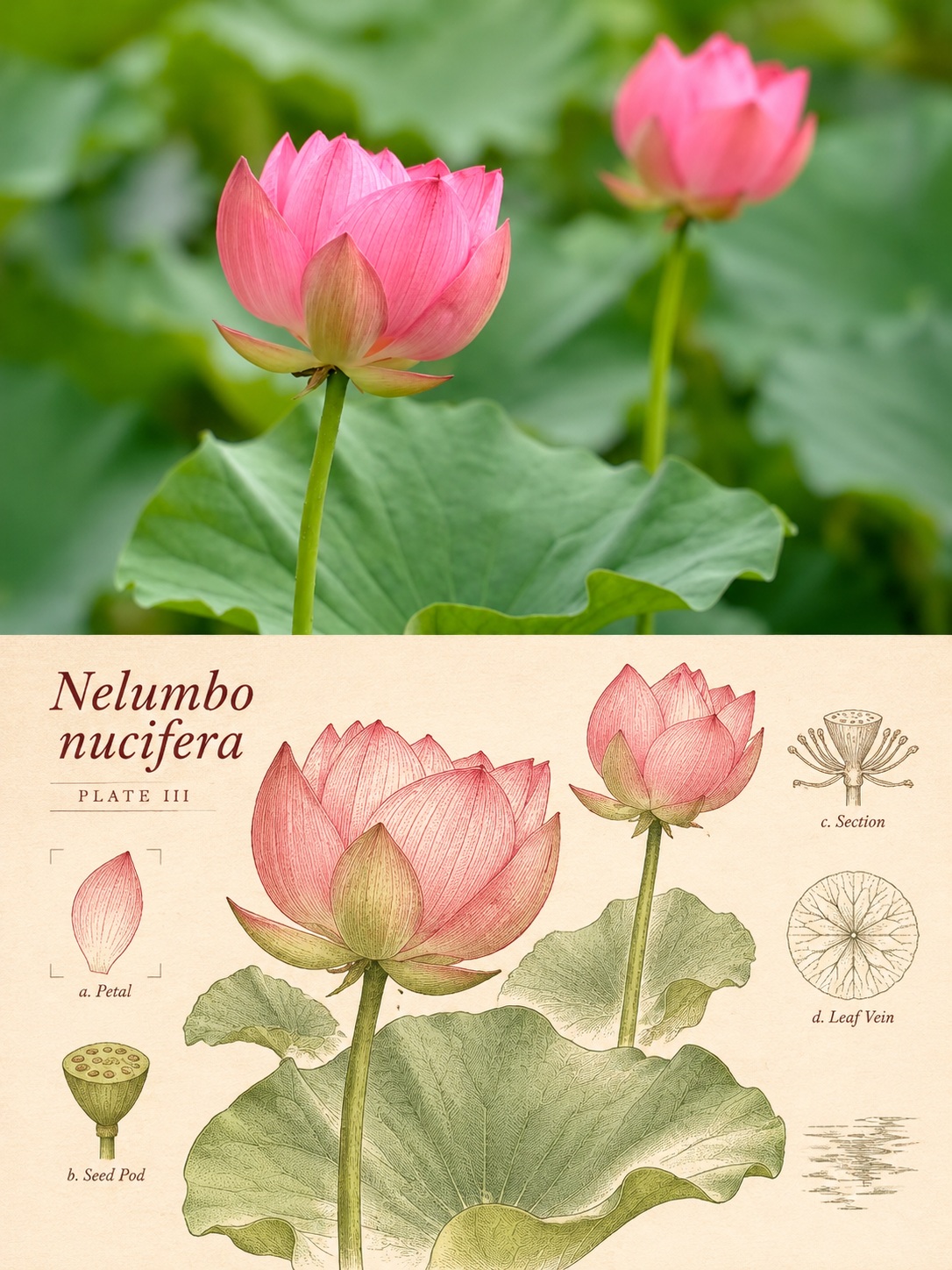
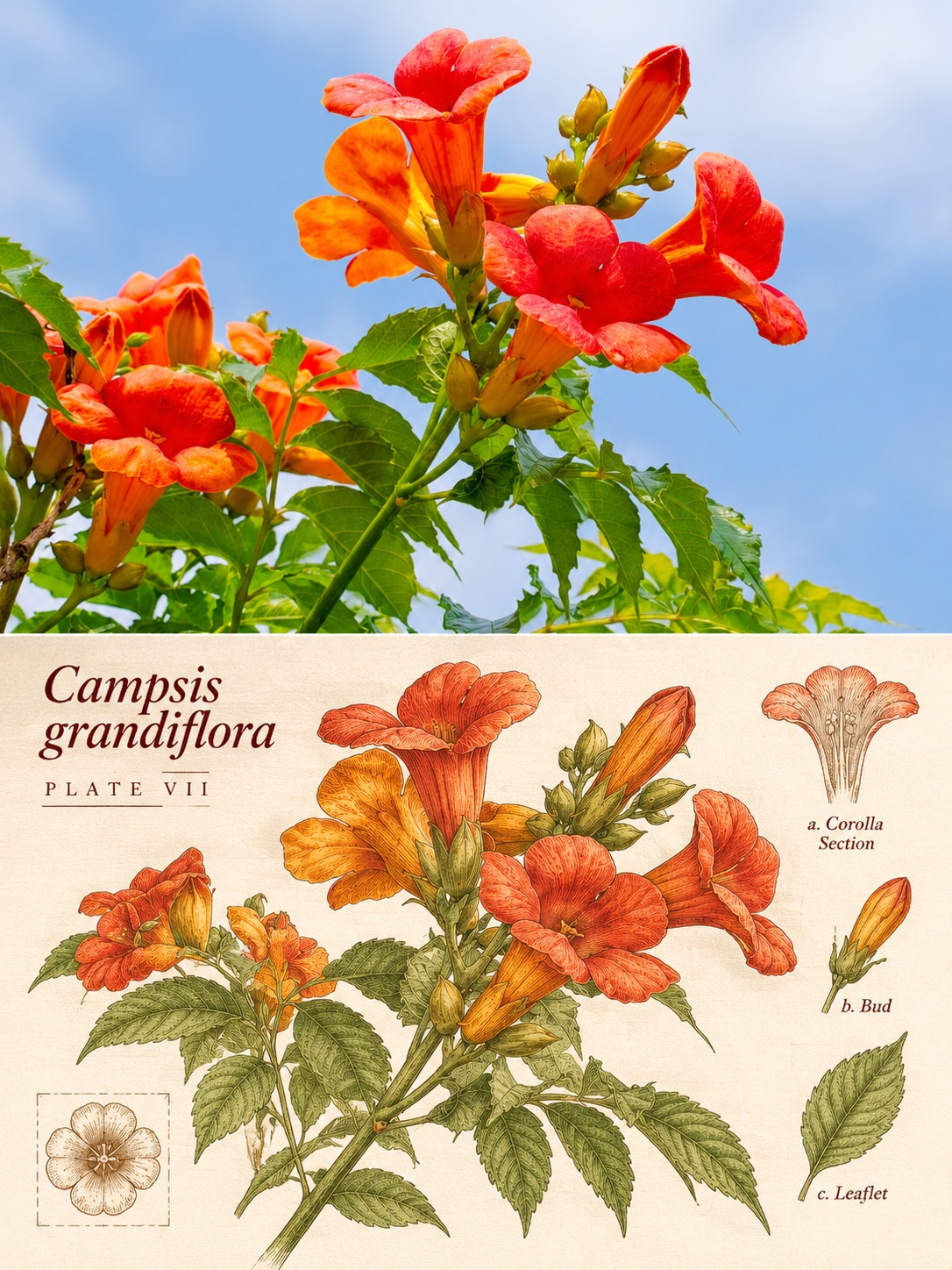
Turn one photo into a 3:4 composition that preserves the original in the top half and reinterprets the same scene as a botanical-inspired engraving comic in the bottom half.
Example outputs
Prompt template
- Format
- Text
- Inputs
- Photo (image) · Required
- Outputs
- Composite (image)
Using the visual language of modern botanical field guides, copperplate engraving, and independent art publications, transform the people, plants, objects, and setting in the photo into a finely detailed engraved comic.

Use only the single uploaded photo to create one 3:4 portrait-format “original photo + modern botanical engraved comic” composite. Create one image only: do not create a collage or combine multiple photos.

**Fixed layout**
Divide the canvas into two equal-height halves, each exactly 50% of the canvas height and the same width, joined seamlessly. Use no border, gap, divider line, overlap, or content crossing the midpoint.

**Upper half: original photo**
Use the original photo directly. Fully preserve the subjects’ identities, facial features, face shapes, hairstyles, expressions, body proportions, poses, clothing, objects, setting, natural lighting, and original colors. Do not redraw, retouch faces, recolor, desaturate, mirror, stretch, distort, add, or remove subjects. Only proportional scaling and cropping of nonessential outer areas are allowed.

**Lower half: comic illustration**
Redraw the same photo as a two-dimensional editorial comic combining the look of a modern botanical field guide with copperplate line engraving. Accurately preserve the people, objects, actions, and spatial relationships in the original photo. Do not add flowers, people, or objects that are not in the photo.

Use fine pen hatching, precise engraved contour lines, selective stippling, and rhythmic line density to depict light and shadow. Keep facial features, hands, and body structure natural and accurate; avoid excessive hatching that obscures facial features.

Based on the actual contents of the photo, selectively study and depict the structure of plants, buildings, clothing, and objects using the observational approach of a botanical field guide, and reorganize the scene as a refined engraved comic. If the photo contains no plants, do not force botanical elements into the illustration.

**Color and paper**
Use moss green, gray-purple, warm beige, and dark burgundy as the main colors. Use a limited-color screen-print effect and retain black or dark-brown engraved lines. Set the illustration on clean, warm-white art paper, with at most a very subtle paper texture. Do not use dirt, a distressed or aged appearance, or heavy noise.

**Composition and negative space**
The illustration’s effective visual content should occupy about two-thirds of the lower half, with balanced, comfortable negative space around it. Small botanical-style numbers, fine-line markers, and miniature field-guide symbols may be added locally, but must not obscure the person. Add a small title in an English-language vintage editorial font; keep it refined and restrained, and do not add a separate title bar.

**Quality requirements**
Aim for the finish of professional engraving and contemporary art publishing. Keep the hatching clear, the light and shadow accurate, the figure’s structure natural, and the colors restrained. Avoid ordinary watercolor effects, children’s drawing styles, exaggerated manga faces, and an AI-smudged appearance.

Keep all illustration, title, and decorative elements entirely within the lower 50% of the canvas.
What you'll create
The original photo remains unchanged above a finely hatched illustrated interpretation. Engraved linework and restrained colors reinterpret actual subjects within the lower half, leaving the photographic upper half intact.
Usage instructions
Provide one photo containing the scene to transform. The composition preserves it in the upper half and reinterprets it in the lower half; the lower illustration should reflect the photo’s actual contents, so it will include botanical elements only when appropriate. For a different mood, adjust the specified palette while retaining the clear linework and balanced negative space.
Frequently asked questions
Must every source image acquire invented plants?
No. Botanical elements appear only when appropriate to the actual photo.
May title elements cross the midpoint?
No. All illustration and decorative content stays within the lower half.




Comments
Tried this prompt? Share what you made, compare results, or ask a question