Four Poses in a Vintage Ink Poster
Create a cohesive illustrated poster showing the same subject in four distinct poses, using expressive caricature, bold inkwork, and distressed vintage-print textures.
Example outputs
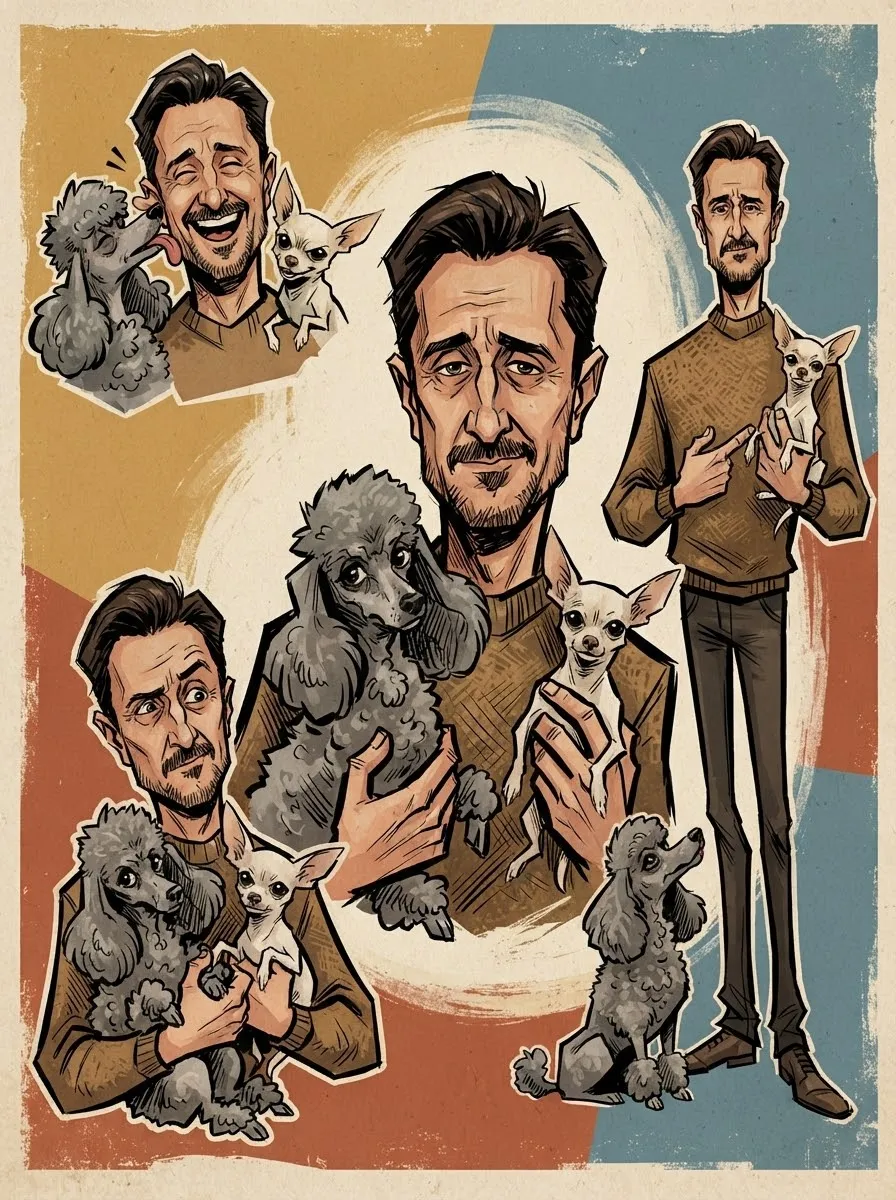
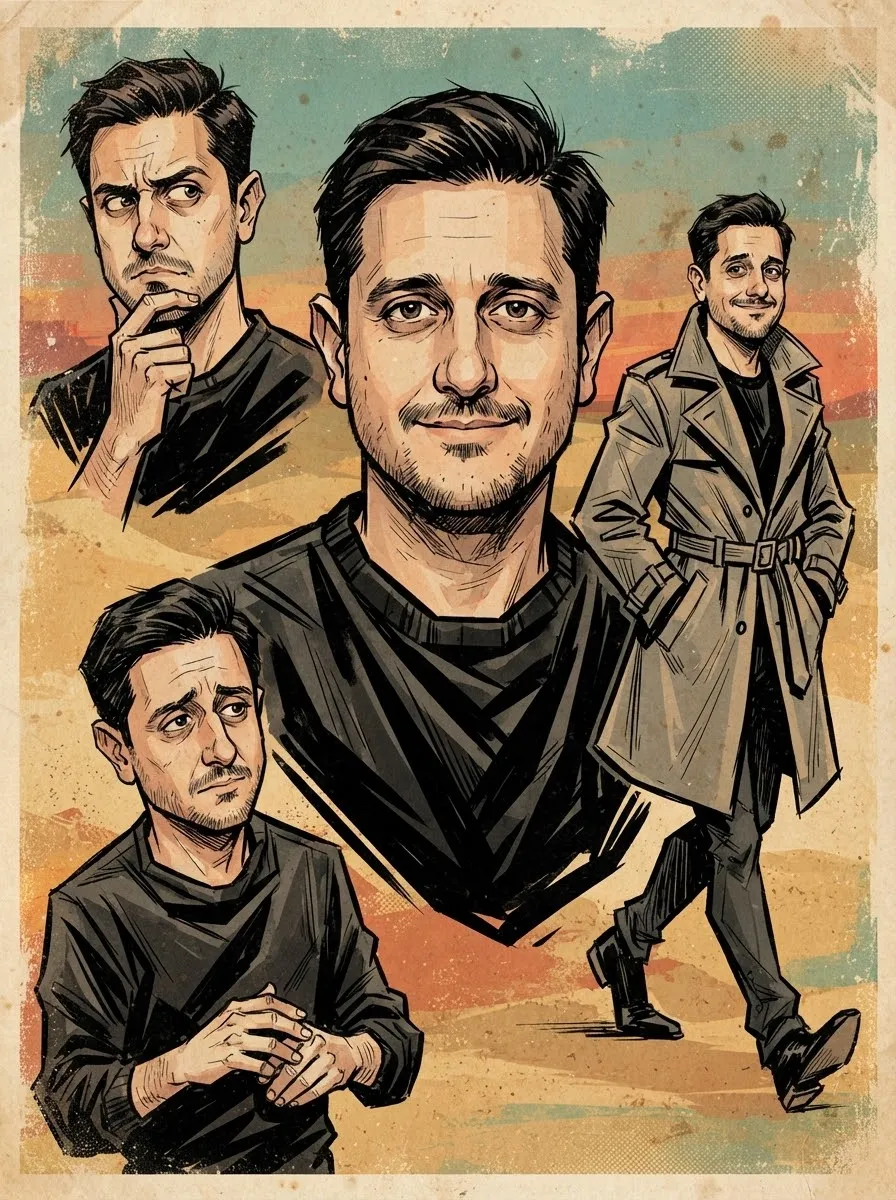
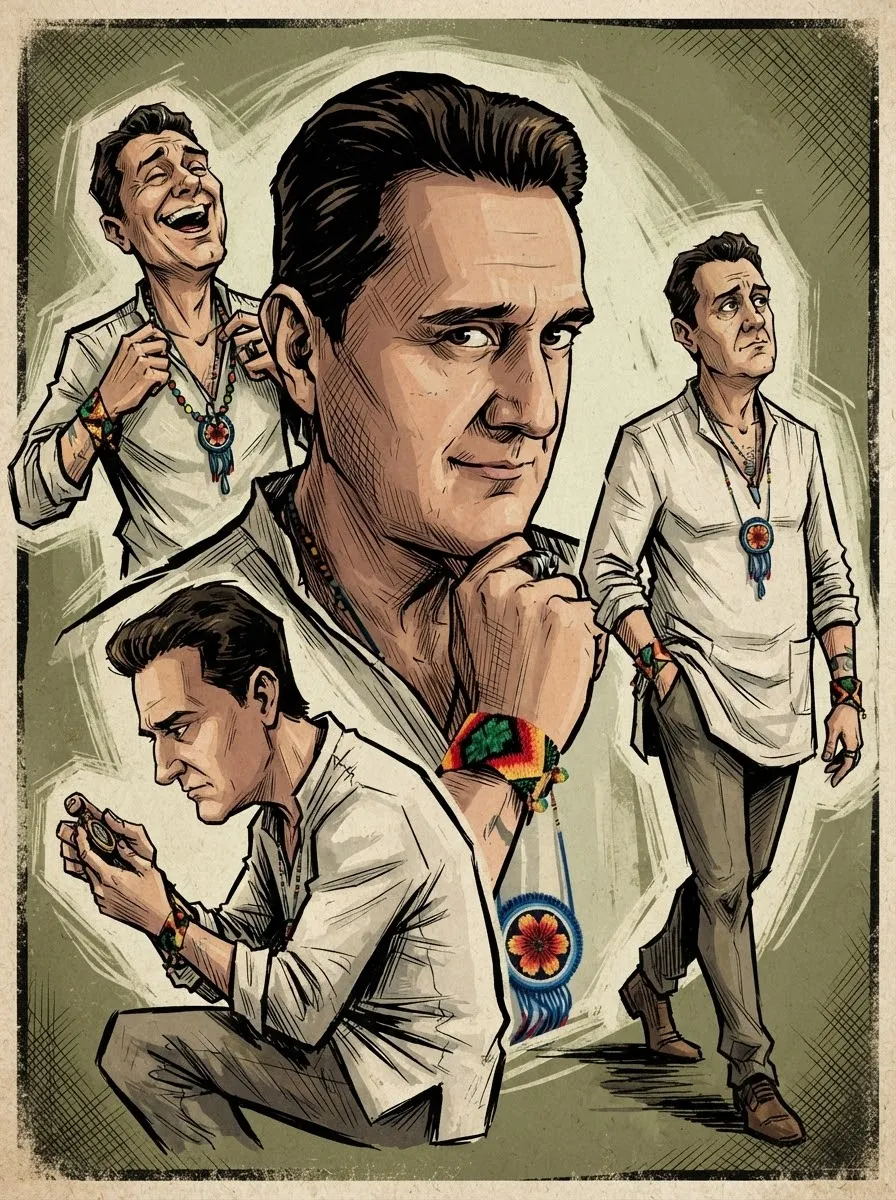
Prompt template
- Format
- Text
- Inputs
- Reference (image, text) · Required
- Outputs
- IllustratedCharacterPoster (image)
Use an uploaded image or written subject description as the identity and content reference. Create one illustrated character showcase containing exactly four different depictions of the same subject, arranged together in a cohesive poster composition. Combine exaggerated angular cartoon anatomy, expressive fashion caricature, bold black brush-ink drawing, scratchy hatching, flat muted colours, and distressed vintage print textures. No additional style reference is required.

Identity Lock—Absolute: Preserve the subject’s recognizable age, distinctive facial proportions, eye shape and spacing, eyebrows, nose, lips, cheekbones, jaw, hairstyle silhouette, facial hair, and characteristic build across all four depictions. Establish likeness through individual facial construction before exaggerating. All four must unmistakably represent the same individual. Keep masculine subjects distinctly masculine and everyone age appropriate. For animals or creatures, preserve species, markings, characteristic anatomy, and identifying features.

Four-Image Composition—Absolute: Show exactly four versions of the subject: one large dominant depiction in the centre foreground, one smaller upper-left depiction, one smaller lower-left depiction, and one smaller full-body depiction on the right. Give each a clearly different pose, expression, and head angle. Combine a dominant waist-up or thigh-up view with smaller three-quarter and full-body views. Balance the silhouettes and leave enough space for each pose to remain readable. Do not create four different people, extra faces, additional figures, panel borders, or a rigid four-square grid.

For an uploaded reference, preserve its pose, expression, gaze, head angle, and hand placement in the dominant central depiction. Invent three additional poses that suit the same subject’s personality. For a written subject description, invent all four poses. Maintain consistent clothing, accessories, colours, hairstyle, and physical identity throughout unless variations are specifically requested. Keep props logically held with correct grips and natural anatomy.

Character Construction: Use oversized angular heads, sharply tapered cheeks and chins, strong expressive eyebrows, graphic almond-shaped eyes when appropriate to the subject, long slender necks, compact torsos, and elongated limbs. Build poses with pronounced bends, asymmetrical shoulders, angular elbows, and confident silhouette curves. Adapt the exaggeration to the individual rather than giving everyone the same face or body. Simplify hands into clear, anatomically correct shapes with five fingers on each visible human hand.

Ink Treatment: Draw thick, irregular black outer contours with thinner, broken interior lines. Use sweeping tapered brushstrokes, dry-brush scratches, short directional hatch marks, and large solid-black shadow shapes. Construct hair from bold dark masses with a few sharp muted highlights. Describe clothing folds with angular ink slashes and economical crease lines. Keep facial features clearly illustrated, using flat colour planes and decisive graphic shadows. Avoid photorealistic skin, glossy 3D rendering, smooth airbrushing, and photographic lighting.

Colour and Background: Randomly choose one dominant background hue for each generation that harmonizes with the subject’s clothing, hair, skin tones, or markings while maintaining strong silhouette contrast. Vary the choice between generations rather than defaulting to orange. Build the background from two or three related shades of the selected hue, with a lighter loosely brushed halo behind the central figure and darker distressed edges. Add coarse crosshatching, scuffed ink, scattered speckles, and uneven paper grain. Keep the background abstract and uncluttered, with no detailed scenery.

Finish: Make all four depictions equally hand-drawn and stylistically consistent. Preserve the reference’s bold silhouette design, angular elegance, expressive attitude, limited palette, and rough printed character. Use a portrait poster format, keeping all four heads and the smaller full-body figure’s feet inside the frame. No text, labels, logos, signatures, or watermarks.
What you'll create
Four depictions of the same subject share one distressed poster. Angular caricature, scratchy hatching and bold brushwork preserve recognizable facial construction beneath expressive exaggeration.
Frequently asked questions
Does this need a separate style reference?
No, the written style direction is sufficient.




Comments
Tried this prompt? Share what you made, compare results, or ask a question