Vertical Folded-World Architectural Image
Transform an uploaded urban or architectural photo into a surreal vertical cityscape, with a folded perspective and a prominent English city or landmark title.
Example outputs
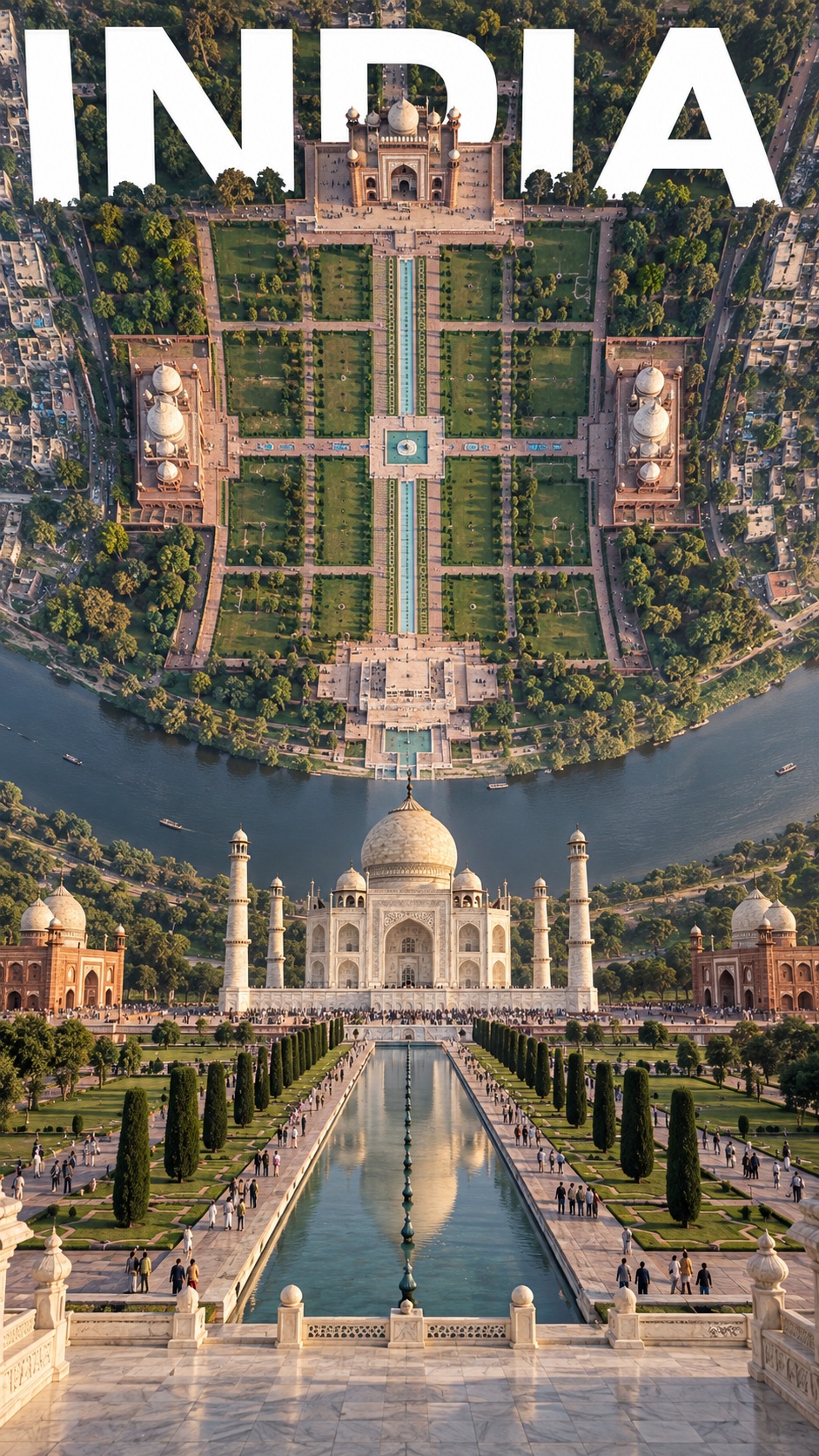
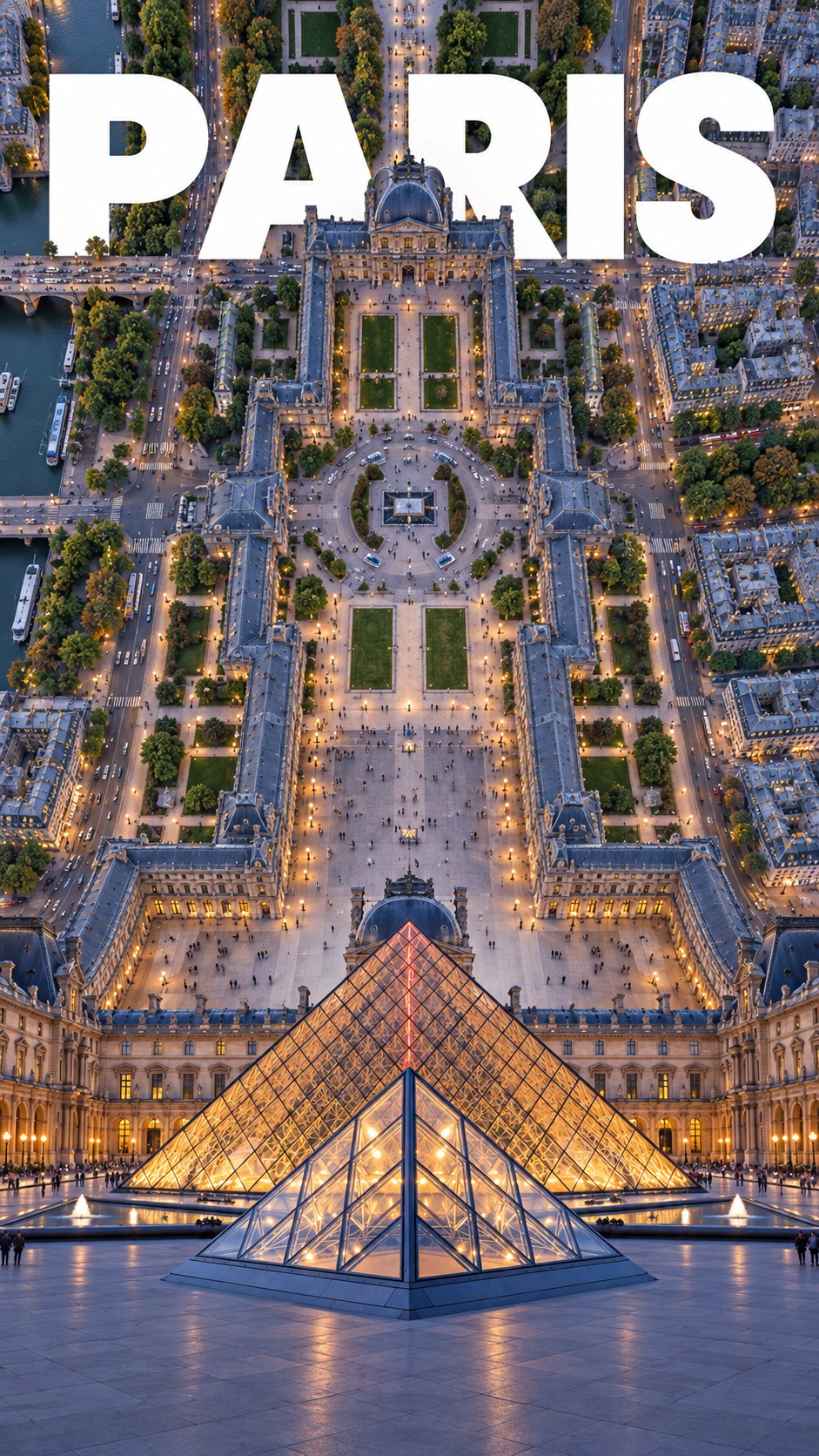
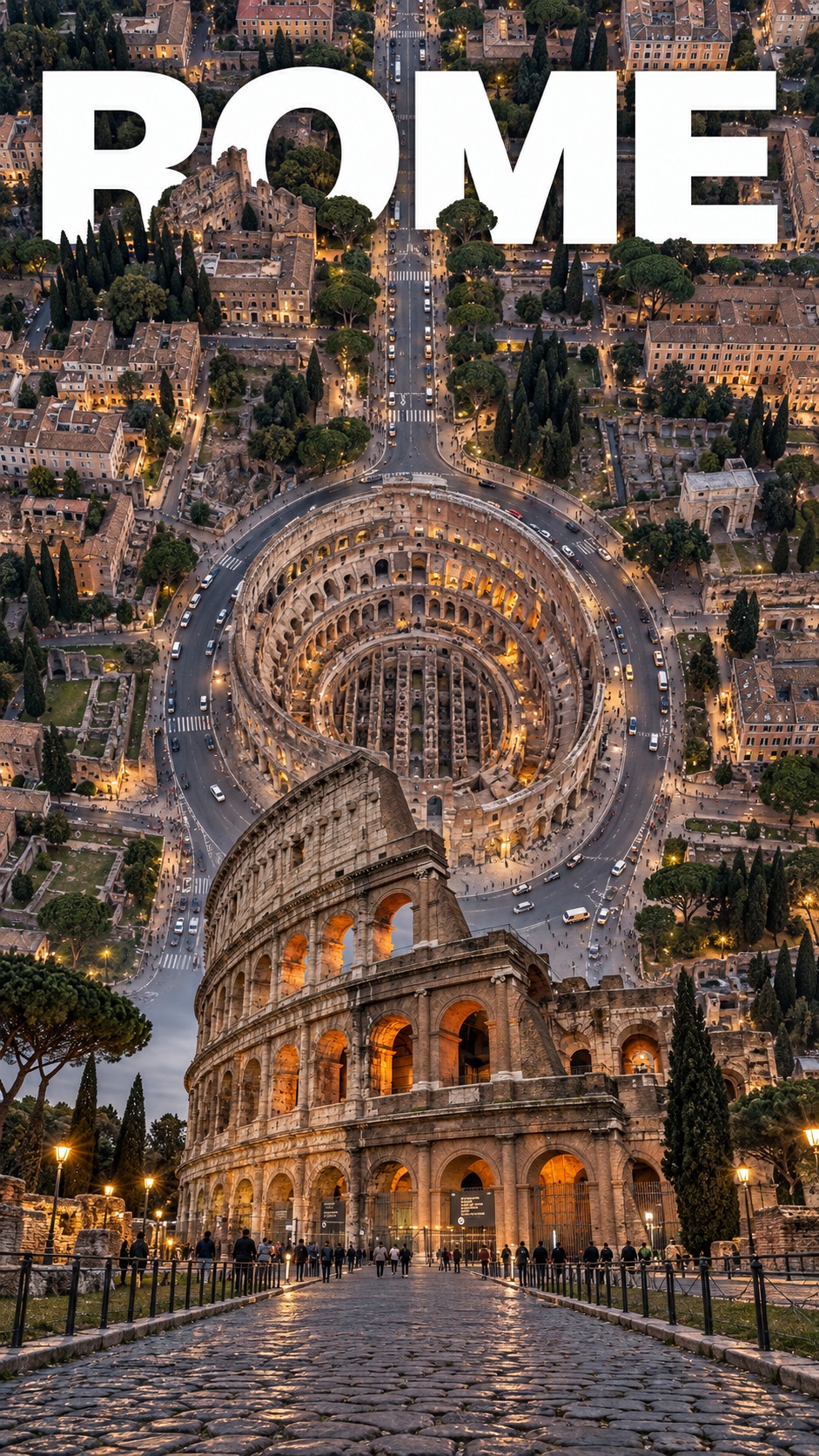
Prompt template
- Format
- Text
- Inputs
- Uploaded_photo (image) · Required
- Outputs
- Generated_image (image)
Using the uploaded photo, whether it shows a city, building, street, square, or landmark, create a surreal architectural photograph in a vertical 9:16 format.

Main visual: Reconstruct the original scene as a “vertically folded world” with a strong visual illusion. The lower part of the image should retain a relatively normal perspective, such as a street or ground surface, which gradually rises and transitions seamlessly into an almost 90-degree bird’s-eye view, as if the entire urban landscape had folded upward. Automatically analyze the buildings, streets, squares, landscape, landmarks, and spatial axes in the original image. Preserve the subject’s most recognizable shapes, architectural language, and environmental character. Adapt the fold to the original scene layout, and do not artificially insert large landmarks where none belong.

Spatial composition: Combine extreme-high-angle and ultra-wide-angle architectural photography with an orthographic top-down view. Emphasize central symmetry, leading lines such as roads, geometric order, and spatial depth. Streets, steps, or squares in the lower part of the frame should extend upward, creating a continuous, flowing, striking folded-space effect.

Visual detail: Render architectural facades, road markings, vegetation, vehicles, pedestrians, and ground textures with accurate proportions and rich detail. Distant trees should form intricate geometric patterns, while clusters of buildings should create the realistic visual density of a miniature city.

Photographic quality: Use hyper-realistic architectural photography, authentic aerial imagery, cinematic natural lighting, high-definition architectural textures, clear spatial layering, subtle ambient shadows, realistic materials and lighting, and 8K-level visual detail.

Composition: Establish a clear visual center. Arrange buildings and landscape along the frame’s central axis; use the foreground to create a strong sense of depth and show a precise top-down perspective in the background. The overall aesthetic should be striking, rational, and surreal—a work of architectural art.

Landmark typography at the top:

Automatically identify the city, region, or famous landmark in the uploaded image, then use its English name as the main title (examples: TOKYO, PARIS, KYOTO, HOKKAIDO).

Place the large English title in the top 20% of the frame, using a bold, clean sans-serif typeface inspired by modern Japanese graphic design and premium travel-magazine layouts.

Set the title horizontally, filling as much of the frame’s width as possible with tight letter spacing. Use clean white or another color that strongly contrasts with the surroundings.

Layering: Place the text in front of the urban background but behind the main landmark. Use existing building outlines as a foreground mask so the landmark naturally occludes part of the text, creating precise layering and a sense of spatial depth.

Keep the architectural structure intact, and do not let the text obscure the landmark’s defining features. The overall design should be clean, bold, and visually striking.

Do not include additional subtitles, logos, decorative text, frames, or watermarks.

Negative constraints: Do not use fisheye or circular distortion, a “round planet” effect, floating buildings, arbitrary duplication of structures, elements that obscure recognition of the main subject, cartoon styling, plastic-looking CGI textures, cluttered collages, visible image seams, or text watermarks.
What you'll create
An uploaded urban scene begins with a relatively normal street perspective that rises seamlessly toward a nearly overhead view. Recognizable buildings, landmarks and spatial axes remain connected as if the landscape itself has folded upward in a vertical architectural illusion.
Usage instructions
Provide a photo of a city, building, street, square, or landmark. The prompt uses its recognizable architecture and layout to build the folded-perspective composition; the 9:16 format and large English title are fixed requirements. For a different visual emphasis, use a source photo whose street or central axis clearly leads into the main landmark.
Frequently asked questions
Is this a tiny-planet effect?
No; the source excludes circular distortion, fisheye effects and round-planet layouts.
May extra landmarks be inserted?
No; recognizable architecture should come from the source scene rather than arbitrary additions.




Comments
Tried this prompt? Share what you made, compare results, or ask a question