Black Palace: The Last Royal Appearance
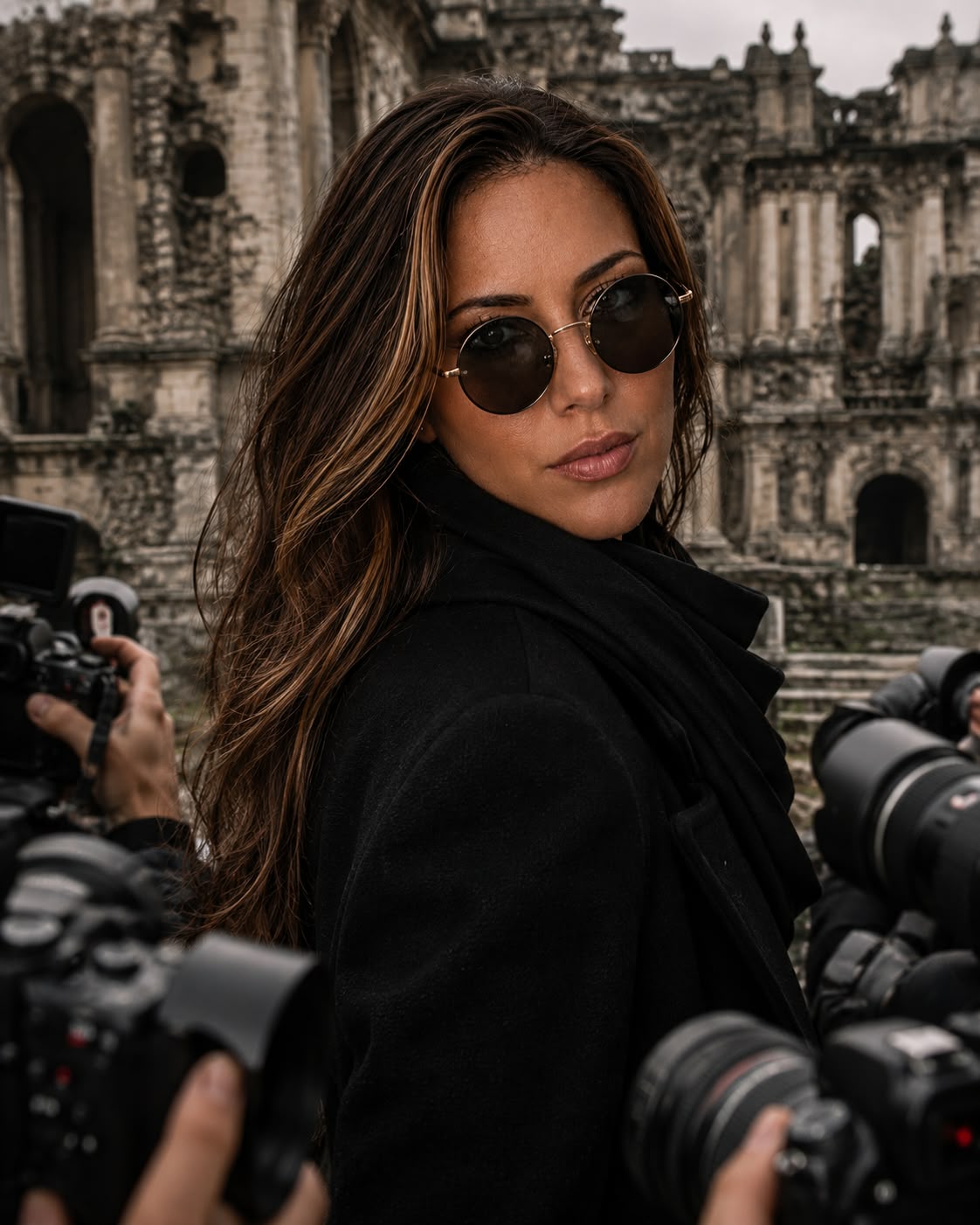
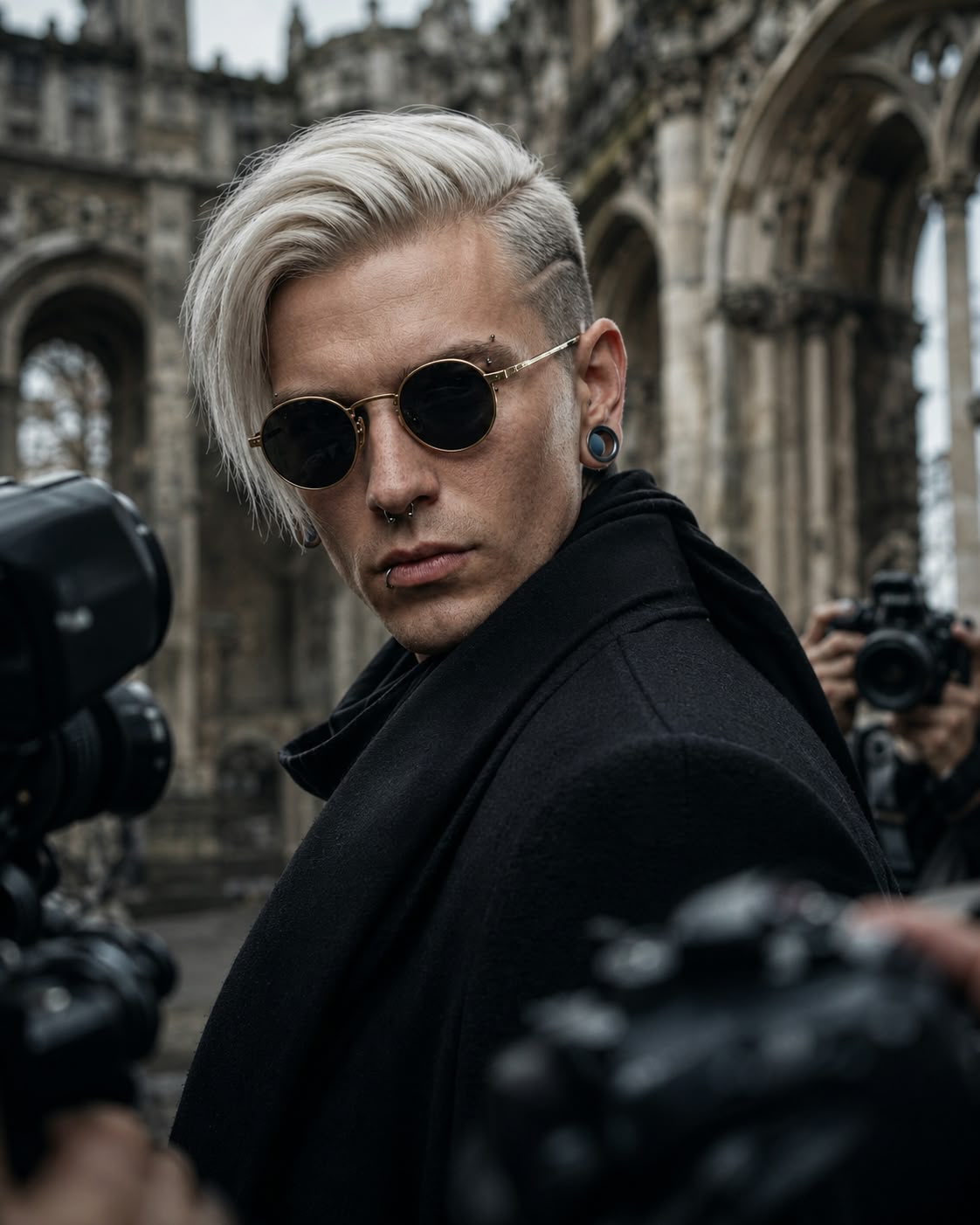
Create a photorealistic winter-fashion editorial portrait of a reference-model in dark luxury tailoring, framed by palace ruins and press cameras.
Example outputs
Prompt template
- Format
- Markdown
- Inputs
- Reference_photo (image) · Required
- Outputs
- Editorial_portrait (image)
# BLACK PALACE — THE LAST ROYAL APPEARANCE
Unisex dark luxury • winter tailoring • royal ruins • media paparazzi • high-fashion editorial • ultra-photorealism

Create a single vertical 4:5 luxury editorial photograph, framed from the top of the head to the upper shoulders and chest. Use a cinematic analog-photography aesthetic, natural textures, and no CGI appearance.

## Identity — absolute face identity lock
Use the reference photograph of the person as the exclusive, unalterable source for facial identity and physical characteristics. Rigorously preserve the original identity, including face shape and bone structure, forehead, eyebrows, eyes and their spacing, nose, lips, cheekbones, jaw, chin, ears, neck, natural asymmetries, apparent age, skin tone and undertone, and skin texture. Preserve realistic skin, including pores, microtexture, minor imperfections, and natural variations in tone.

Do not artificially beautify, narrow the face, alter anatomy, make the person look younger or older, or replace their identity with a generic editorial-model appearance. The reference image is the only authorized source for the character’s identity. Preserve the reference person’s gender presentation and natural characteristics; adapt only the styling explicitly specified here, without transforming their identity.

## Composition — three-quarter side portrait
Position the person at a three-quarter angle, with the body turned approximately 40 degrees relative to the camera. One shoulder is closer to the lens and the other recedes naturally, creating depth and an elegant diagonal line. Turn the head slightly toward the camera so both the side of the face and both eyes are visible. Direct the gaze straight into the lens: firm, penetrating, and fully aware of the photographers. The expression is serious, controlled, and unshaken; the lips are relaxed, without a smile. Convey authority, exclusivity, and a commanding presence without exaggerated gestures.

Keep the neck naturally elongated and the shoulders firm but not artificially rigid. The pose should feel captured during an unexpected public appearance, as if the person has just stopped before a crowd of journalists. Make the composition asymmetrical, sophisticated, and visually tense. Place the face in the upper center; the black coat forms a dark mass in the lower portion, while the ruins and cameras create depth around the person. Do not show the full body, make this a straight-on passport-style portrait, or crop the top of the head.

## Hair — adapt to the reference
If the reference person is female, use a short, sophisticated, architectural bob ending near or slightly below the jaw, while respecting the reference’s natural hair texture, color, and characteristics. Give it an elegant finish, subtle movement, visible individual strands, and contemporary haute-couture construction. A side part is acceptable if it respects the natural hairline and suits the original face. Convey European luxury, personality, and editorial sophistication. Do not add length, volume, or bangs that would change the reference person’s appearance.

If the reference person is male, use short, structured, contemporary hair with subtly trimmed sides and a natural top, preserving the reference person’s cut, texture, color, and hairline. Keep the finish elegant and understated, without artificial shine or an excessively styled appearance.

General rule: if the reference requires greater preservation of identity, retain the person’s original hair characteristics rather than imposing a new cut.

## Makeup — only if the reference is female
Use sophisticated, restrained winter editorial makeup in cool tones. Define the eyes with softly blended graphite and black shadow, adding subtle depth near the lash line. Use a fine, elongated eyeliner that respects the natural eye shape, and define the lashes without excessive artificial volume. Keep the skin natural and satin-finished, preserving pores, texture, and realistic contours. Use soft contouring without changing the face shape. Choose cool nude or dusty-rose lips with a satin-matte finish. Makeup must appear applied to real skin, without beauty filters, a plastic effect, or changes to facial identity.

If the reference person is male, add no visible makeup; preserve natural skin and the person’s original appearance.

## Glasses — aged gold and black round frames
Add luxurious round glasses with circular aged-gold metal frames and deep-black details. The frame has a brushed, subtly oxidized finish with small, realistic variations in the metal; the gold is neither bright yellow nor excessively polished. Use dark, nearly black smoky lenses with subtle optical transparency and physically coherent environmental reflections. The design combines European vintage references, intellectual character, and discreet luxury.

The gaze must remain perceptible through the dark glass without losing the direct expression. Fit the frames naturally to the nose and ears, respecting real anatomical proportions. Add delicate reflections of cameras, the overcast sky, and palace structures on the lenses, without completely hiding the eyes. Do not use opaque mirrored lenses, enlarge the glasses artificially, or distort the face.

## Coat — heavy black winter tailoring
Dress the person in a heavy, luxurious, structured black winter-tailoring coat, like an exclusive piece from a European haute-couture house. The visually dense fabric combines premium wool and cashmere, with a matte surface, delicate fibers, and clearly perceptible tactile texture. Include impeccably constructed structured shoulders; wide, sculptural, well-defined lapels; a precisely shaped tailored collar; thick fabric with a naturally heavy drape; discreet seams and artisanal finishing; realistic folds caused by movement and gravity; and deep black tones with variations revealed by ambient light.

The coat should convey weight, protection from the cold, and aristocratic sophistication. Its collar and lapels frame the lower face, creating a strong, imposing silhouette. The fabric must not look like plastic, synthetic leather, or digital material; wool should show microfibers and small natural irregularities. Show no logo, brand, or visible print.

## Scarf — black silk-cashmere drape
Show a luxurious black scarf behind the neck and shoulders, arranged elegantly and partly visible behind the person’s silhouette. It has the visual combination of fine cashmere and black silk, with a soft texture, delicate density, and refined finish. Let it extend behind the shoulders, tracing the silhouette and adding movement. One end may appear discreetly behind a shoulder while the other remains partly hidden by the coat.

The scarf must not cover the mouth, hide the nose, or compete visually with the glasses. Give its black material a slightly different texture from the coat’s wool so the materials remain distinguishable within the monochrome palette. Convey quiet luxury, mystery, and protection from the cold.

## Setting — historic palace ruins
Place a monumental, ancient, partly ruined palace in the background. Include worn stone columns, tall arches, old stairways, partly destroyed walls, and ornamental details that suggest the building’s former grandeur. The stone shows damp stains, cracks, erosion, small moss-covered areas, and marks left by time. Parts of the roof have collapsed, allowing cold, diffuse natural light to enter.

The ruins must not look like a digital fantasy set. They should resemble a real historic palace, abandoned for decades and photographed in natural atmospheric conditions. Keep the monumental architecture slightly out of focus but still recognizable through its columns, arches, and stone surfaces. Use a palette of mineral gray, black, charcoal, and subtle aged green. The sky is overcast under cold winter light. A very subtle atmospheric haze may appear between distant structures, without making the scene supernatural. Let the architecture reinforce power, aristocratic decline, and historical presence.

## Foreground — press cameras
Place several professional media cameras pointed toward the person, discreetly occupying the lower and side edges of the frame. They are real photographic cameras with telephoto lenses of different lengths, black bodies, focus rings, buttons, lens hoods, and physically plausible mechanical details. Some are partly cropped by the frame edges, suggesting a crowd of photographers nearby.

Place one camera in the lower-left corner, slightly out of focus; another at the right edge, its lens aimed at the person’s face; and optionally a third farther away, partly overlapping the first layer. Use the cameras as foreground elements to create a sense of proximity and media pressure. The person remains clearly visible and is the image’s sole protagonist. Give the equipment natural optical blur proportional to focal length and depth of field. Small metallic reflections and glass details on the lenses reinforce photographic authenticity. Do not add oversized microphones, exaggerated flashes, floating screens, or futuristic equipment. Suggest that a crowd of journalists is photographing the person in front of a historic palace.

## Lighting — cold royal winter
Use soft, directional natural winter light. The main source is the overcast sky, positioned to the side of the person, producing broad, diffuse light on the face. Slight side contrast reveals natural bone structure, skin texture, and the contour of the gold frame. Use only very subtle fill light to preserve detail in the coat’s shadowed areas. Let small cool reflections run across the lapels, while warmer highlights bring out the glasses’ aged gold. Keep the background slightly darker than the face to separate the person from the ruins.

The light must not look like a studio flash. Create the atmosphere of an outdoor photograph taken on a cold, overcast afternoon, with deep contrast, natural shadows, and controlled highlights. Preserve detail in black areas so the coat and scarf do not merge into one dark mass.

## Camera — alternative settings
Use these photographic settings as an aesthetic reference: Fujifilm GFX 100 II medium-format digital camera; GF 80 mm f/1.7 R WR lens; aperture f/5.6; shutter speed 1/320 s; ISO 640; white balance 5,100 K. Prioritize focus on the eyes and the front of the glasses. Meter exposure for the highlights on the face. Use moderately shallow depth of field, keeping the face and the main architectural elements legible. Position the camera approximately at eye level, offset laterally from the body’s axis. Use enough camera distance to maintain natural facial proportions and avoid wide-angle distortion.

The 80 mm medium-format lens provides elegant perspective compression suited to a sophisticated editorial portrait. The f/5.6 aperture keeps the face, glasses, and part of the coat structure sharp while the nearest cameras and distant ruins blur gradually. A 1/320 s shutter speed preserves sharpness in the gaze and fabric details even with photographers and movement around the subject. These settings are a reference for image generation, not a guarantee of exact physical equipment simulation.

## Color grading — monochrome royal noir
Use a predominantly monochromatic palette of deep black, graphite, mineral gray, aged silver, and antique gold. Preserve the person’s original skin tone; do not turn it gray or artificially pale. The glasses’ gold should appear discreet and sophisticated as the composition’s main color contrast. Apply controlled cinematic contrast, dense blacks with preserved detail, and rich midtones. Add an extremely fine, irregular, nearly imperceptible grain inspired by medium-format analog negatives. Do not apply excessive vintage filters, artificial scratches, heavy vignetting, or exaggerated fading. The image should look like a contemporary luxury photograph with a subtle analog signature.

## Art direction — the last royal appearance
The visual narrative presents a person of undeniable presence appearing before the ruins of an ancient palace, surrounded by cameras and media attention. Aggression is unnecessary: the strength lies in posture, silence, a controlled expression, and a gaze that passes through the photographers’ lenses. Convey independence, authority, mystery, and sophistication. The contrast between impeccable tailoring and deteriorated architecture suggests a contemporary royalty that survived the fall of its own empire. The result should feel like an exclusive photograph published on the cover of an international fashion and culture magazine, communicating power without ostentation, luxury without excess, and presence without theatricality.

## Fidelity and realism rules
One photograph, one person, one identity. Preserve the reference’s facial identity, natural anatomy, real proportions, and authentic skin texture. Maintain the three-quarter angle, gaze directed at the camera, and shoulder-level framing. Include round glasses with black and aged-gold frames; a heavy black winter-tailored coat; a luxurious black scarf arranged behind the person; historic palace ruins in the background; and several professional media cameras in the foreground. Make materials, light, shadows, and depth of field physically coherent in a hyper-realistic photograph.

## Negative prompt — prohibited elements
Generic face; identity replacement; face swap; mixed identities; excessively symmetrical face; artificial beautification; plastic skin; beauty filter; CGI effect; doll-like appearance; 3D rendering; artificial eyes; changed skin tone; changed apparent age; modified jaw; altered nose; enlarged lips; distorted facial anatomy; hair incompatible with the reference; unrequested makeup on a male reference; gender transformation; square glasses; excessively gold frames; opaque mirrored lenses; distorted glasses; thin coat; shiny synthetic fabric; scarf covering the face; futuristic setting; digital palace; fantasy ruins; floating cameras; impossible lenses; incoherently duplicated equipment; deformed hands; blurred face; incorrect focus; obvious studio lighting; excessive saturation; aggressive HDR; artificial blur; distorted proportions; full-body framing; collage; montage; multiple images; text; logos; watermarks.
What you'll create
A tight winter-fashion portrait shows the subject from head to upper chest within palace architecture. Natural texture and analog styling keep the face central amid paparazzi equipment.
Usage instructions
Provide a reference photo of the person whose facial identity and natural features must be preserved. The prompt builds a winter luxury editorial around that reference, with a palace-ruin setting and press cameras framing the subject. The source specifies a 4:5 vertical crop; adjust the camera distance or framing only if needed to keep the face, glasses, coat, and foreground cameras legible.
Frequently asked questions
Is this a full-body royal portrait?
No. Full-body framing is excluded.
Should the ruins look like digital fantasy scenery?
No. The source avoids that appearance.



Comments
Tried this prompt? Share what you made, compare results, or ask a question