Delft Blue — The Porcelain Garden
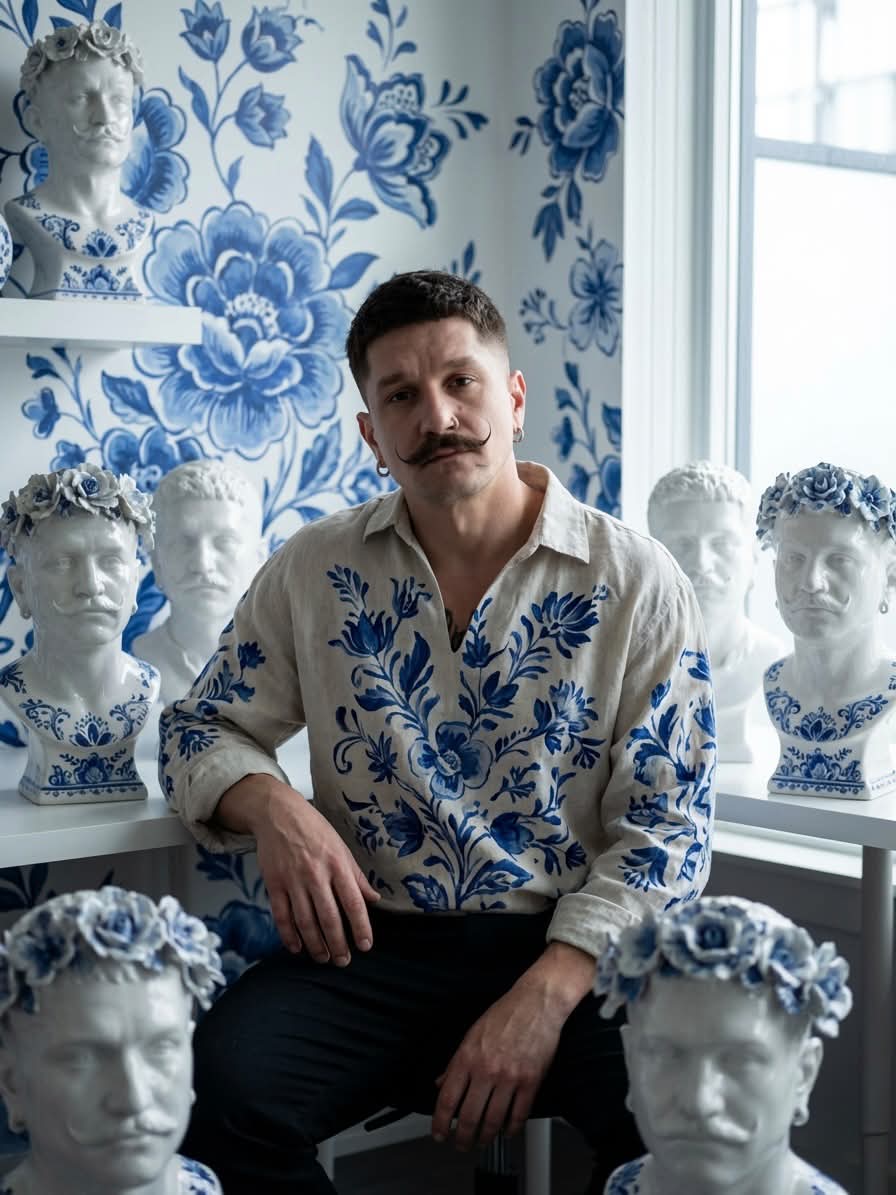
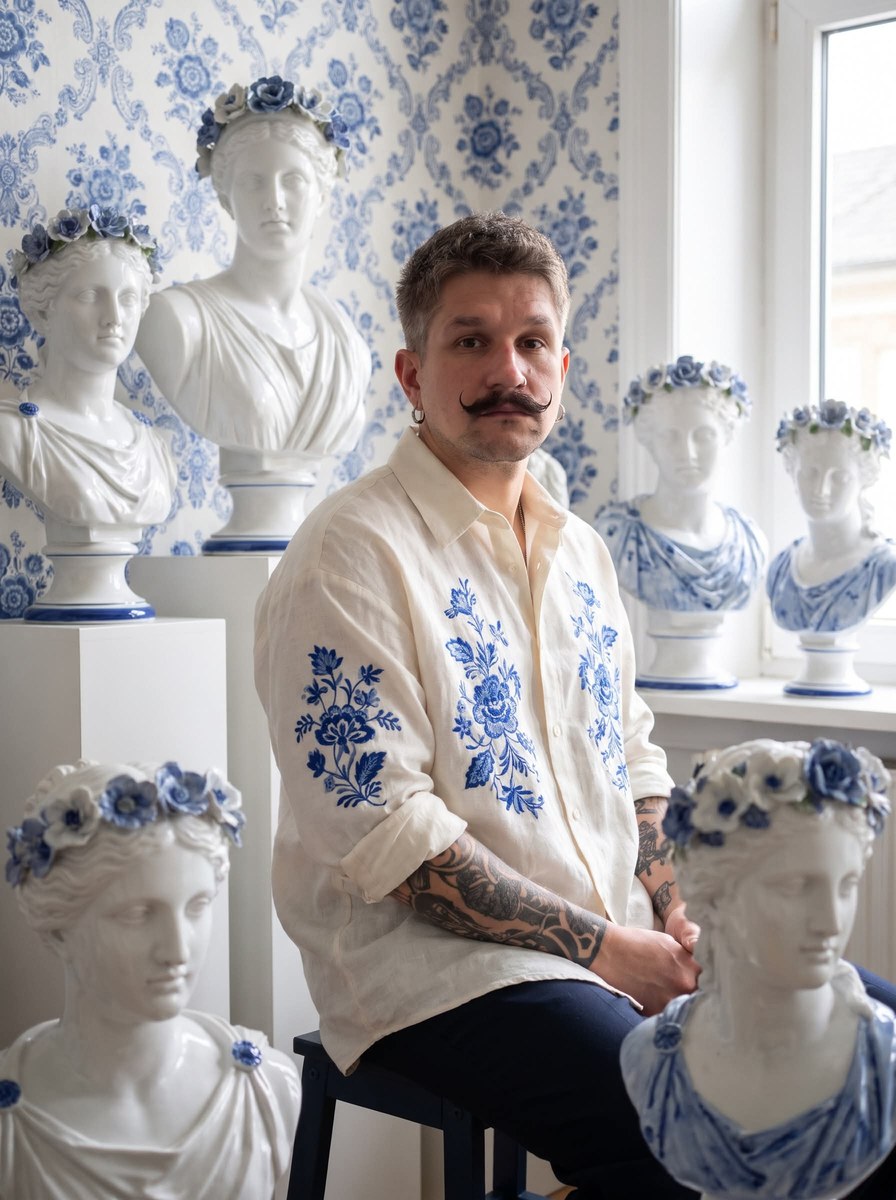
Create a photorealistic fashion-editorial portrait of a person seated among classical porcelain busts in a Delft Blue-inspired room.
Example outputs
Prompt template
- Format
- Markdown
- Inputs
- Reference_photo (image) · Required
- Outputs
- Editorial_portrait (image)
# DELFT BLUE — THE PORCELAIN GARDEN

Create an extraordinary high-end surrealist fashion portrait inspired by traditional Dutch Delft Blue porcelain, classical European sculpture, and contemporary editorial photography.

Use the uploaded photograph of the person as the **only** source of their facial identity.

## 1. Identity lock — absolute priority

Preserve the person’s exact recognizable identity, facial proportions, bone structure, eyes, nose, lips, skin tone, age, and distinctive facial features.

The subject can be a man or a woman. Adapt the styling naturally to the person’s actual gender presentation, appearance, and physical characteristics. Do not feminize a masculine face or masculinize a feminine face. Do not replace the person with a generic fashion model.

Preserve natural skin texture, pores, and realistic facial details. The final subject must unmistakably look like the person in the uploaded reference photograph.

## 2. Main concept — a living porcelain exhibition

Create a surreal yet photorealistic portrait of the subject sitting inside an elegant room that resembles a private European porcelain gallery or an artist’s ceramic workshop.

Surround the person with numerous classical white porcelain busts arranged at different heights and distances:
- Two large busts occupy the lower foreground, partially entering the frame.
- Several medium-sized busts stand on white display shelves behind the subject.
- One additional bust is positioned on a higher shelf in the upper background.

The sculptures should create a visually rich environment without obscuring the central subject. Each bust is a finely crafted classical porcelain sculpture with a subtle Delft Blue decorative aesthetic. Some busts wear delicate sculptural crowns made entirely of small blue-and-white porcelain flowers. The busts should feel like museum-quality collectible sculptures, not living people.

## 3. Subject — position and pose

The subject sits centrally on a simple dark stool or low chair. Use a medium-full portrait framed approximately from the knees upwards.

The body is relaxed and slightly leaning forward. The legs are naturally apart, creating a casual, confident seated posture. One forearm rests loosely on the thigh, with the hand hanging naturally; the other hand rests on the opposite thigh. The shoulders are relaxed.

The subject looks directly into the camera with a calm, slightly mysterious, self-assured expression. Avoid exaggerated fashion poses. The beauty of the image comes from the contrast between the ordinary, relaxed human presence and the elaborate porcelain surroundings.

## 4. Wardrobe — Delft Blue textile

The subject wears an oversized ivory or warm off-white linen shirt with a relaxed silhouette. The shirt features elaborate cobalt-blue floral embroidery inspired by traditional Delft Blue porcelain decoration, including large stylized flowers, delicate botanical branches, curving leaves and stems, intricate ornamental details, and traditional European floral motifs.

Distribute the pattern across the front, sleeves, and shoulders. The shirt has a slightly open collar, natural folds, and visible linen texture.

For a masculine presentation, use a relaxed oversized shirt with a slightly structured silhouette. For a feminine presentation, retain the same Delft Blue embroidered design but allow the silhouette to adapt naturally, without changing the central visual concept.

Combine the shirt with simple dark trousers or another understated lower garment. The clothing must look like a beautifully crafted designer piece, not a costume.

## 5. Environment and interior

The background features white walls covered with large-scale traditional Delft Blue floral wallpaper. The wallpaper has intricate, hand-painted-looking cobalt-blue flowers, leaves, and decorative botanical patterns on a warm white background.

On one side of the room, tall white-framed windows allow soft natural daylight to enter. White display shelves extend horizontally across the background and hold the porcelain busts.

The interior should feel like an unusual combination of a Dutch porcelain collector’s home, a classical sculpture gallery, an avant-garde fashion studio, and a carefully curated surrealist art installation.

## 6. Porcelain details

The busts are predominantly glossy white porcelain with subtle blue floral ornamentation. Their surfaces should have realistic ceramic reflections, delicate imperfections, and refined sculptural details.

The floral crowns are made of miniature white porcelain flowers decorated with cobalt-blue accents. Give the busts individual sculptural expressions and slight differences in appearance. Avoid identical, mass-produced copies.

## 7. Color palette

Use a strictly controlled palette of Delft cobalt blue, porcelain white, warm ivory, soft natural skin tones, and deep black or charcoal clothing accents.

The blue floral patterns should be visually rich and clearly visible without overwhelming the image. Avoid excessive saturation.

## 8. Lighting and photography

Use soft natural daylight coming from the large window on the right side of the composition. Add gentle directional illumination across the subject’s face and embroidered shirt, soft shadows behind the porcelain sculptures, and balanced exposure with delicate highlights on the glossy ceramic surfaces.

Photograph on a medium-format camera with a 50mm lens and natural perspective, in the style of editorial portrait photography. Use high detail, realistic materials, subtle film grain, natural depth of field, and sophisticated color grading.

The image should look like a real photograph from an exclusive fashion editorial, not a digital illustration.

## 9. Composition — important

The subject must remain the clear visual center of the image. The porcelain busts should surround the subject from the foreground, sides, and background, creating a layered three-dimensional composition.

Maintain this visual hierarchy:
1. The real person in the center.
2. The elaborate blue embroidered shirt.
3. The surrounding porcelain busts.
4. The Delft Blue floral wallpaper and bright window.

Do not crop the subject’s head. Do not let the foreground sculptures cover the subject’s face or torso. Maintain a balanced, symmetrical-feeling but naturally imperfect arrangement.

## 10. Strict negative constraints

No generic model face. No changes to the subject’s identity. No artificial beauty filters. No exaggerated makeup. No fantasy costumes. No plastic-looking sculptures. No cartoon aesthetics. No excessive blue color grading. No random objects. No clutter. No distorted anatomy. No duplicated human subjects. No extra limbs or hands. No text, logos, or watermarks.

## Final result

Create an elegant, surrealist editorial portrait of the person sitting in a room filled with classical white porcelain busts, Delft Blue floral wallpaper, and delicate porcelain flower crowns. The subject wears an ivory linen shirt decorated with intricate cobalt-blue botanical embroidery.

The result should feel simultaneously aristocratic, eccentric, artistic, and quietly humorous—as if a living person has entered a private collection of enchanted Dutch porcelain. Make it photorealistic, sophisticated, richly detailed, and visually memorable.
What you'll create
A seated reference-based subject appears knee-up among porcelain busts, wearing a Delft Blue embroidered shirt. Dutch ceramic motifs, sculptural surroundings and rich realistic detail create an aristocratic, quietly eccentric editorial portrait.
Usage instructions
Provide a clear photograph of the person; it is the sole source for their facial identity. The prompt builds a knee-up editorial composition around porcelain busts, with the seated pose and Delft Blue embroidered shirt as key visual elements. Keep the sculptures from obscuring the subject’s face or torso so the person remains the focal point.
Frequently asked questions
Should the sculptures conceal the person?
No; they must not obscure the face or torso, which remain the focal point.




Comments
Tried this prompt? Share what you made, compare results, or ask a question