Biometric Editorial Portrait Collage
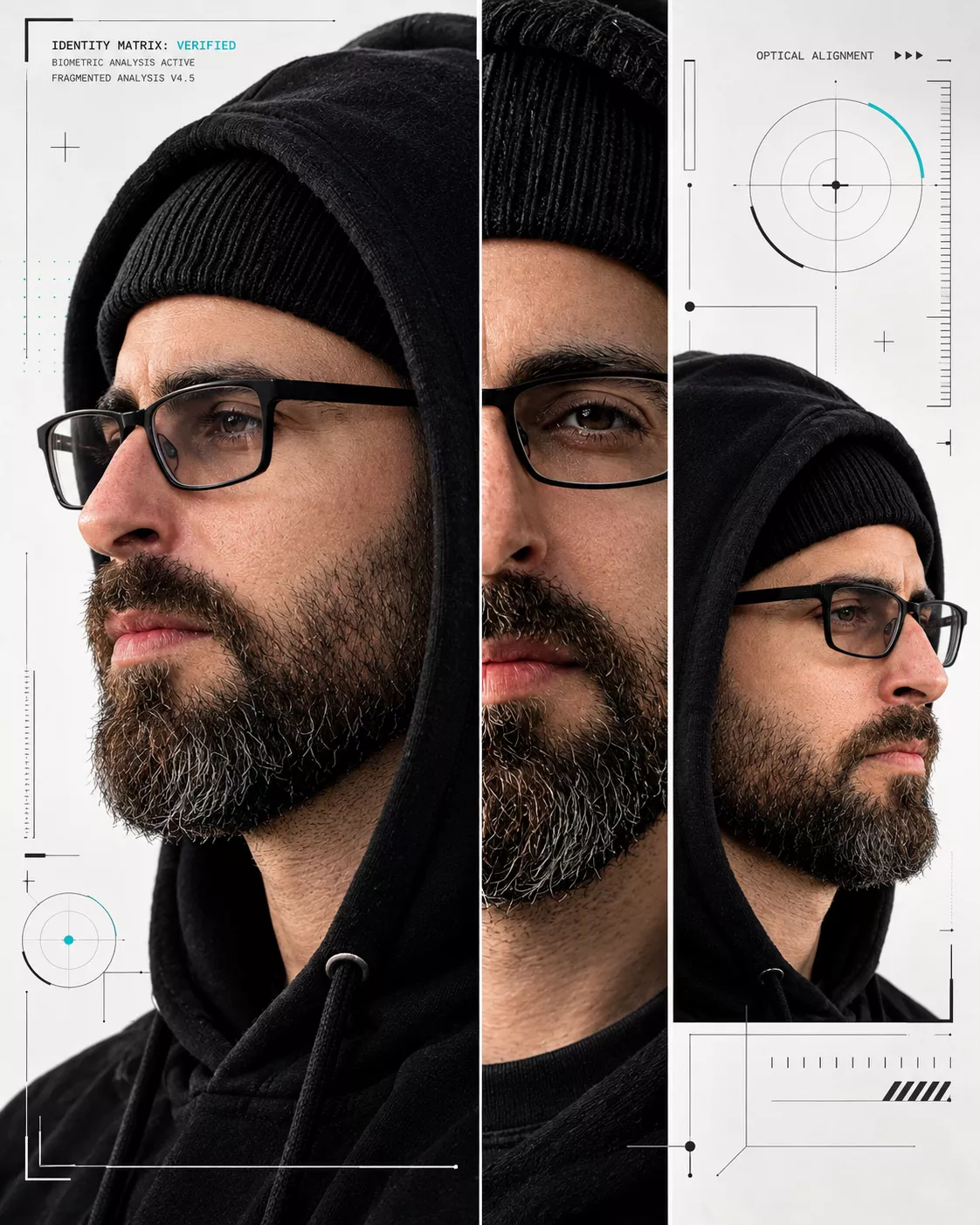
Create a refined biometric identity-study poster from face reference photos, combining three fragmented portrait views with subtle Swiss-inspired interface graphics.
Example outputs
Prompt template
- Format
- Text
- Inputs
- Face_reference_photos (image) · Required
- Outputs
- Biometric_editorial_portrait (image)
Create an ultra-photorealistic biometric fashion portrait poster based on the uploaded face reference photos. The final image must depict the exact same person from the uploaded references, preserving authentic identity with high fidelity: real facial proportions, eye shape and color, nose structure, lips, jawline, cheekbones, beard density, hairline, skin texture, natural asymmetry, and age details. Do not beautify or idealize the face. Preserve realism and recognizable identity.

STYLE:
A refined fusion of minimalist Swiss editorial design, a futuristic biometric analysis interface, and premium studio fashion photography. The image should look like a clean, high-end visual identity scan or conceptual portrait poster, not sci-fi movie art. Keep it elegant, minimal, intelligent, and highly designed.

COMPOSITION:
Vertical 4:5 composition. Create one unified artwork built from fragmented portrait sections.

Main structure:
- On the left: a large close-up side profile of the person facing left. This is the most dominant fragment. It should occupy a significant part of the frame and clearly show the nose, lips, beard, glasses, beanie, and hood.
- In the center: a very narrow vertical crop showing a partial frontal slice of the same face. Reveal one eye clearly behind the glasses, part of the nose bridge, part of the cheek, and a narrow slice of the mouth and beard area. Keep this central strip elegant and architectural, not too wide.
- On the right: a smaller inset-style portrait of the same person in a right-facing side profile. It should feel like an analytical comparison fragment, integrated into the overall layout rather than appearing as a separate framed photo.
- All fragments must depict the same person in the same outfit and lighting conditions, arranged as one coherent visual system.
- The whole piece must read as a designer biometric collage or fragmented identity study.

SUBJECT STYLING:
The person wears:
- A black ribbed knitted beanie.
- A black hood pulled over the beanie.
- A black hoodie or black techwear outer layer.
- Black rectangular eyeglasses with clear, transparent lenses.

Keep the glasses consistent in all fragments: a thick black frame, rectangular shape, and clear lenses that are not tinted. Include realistic reflections and refraction while keeping the eyes visible.

The clothing should feel minimal, urban, slightly technical, and simple and clean. No flashy fashion branding and no logos.

FACIAL EXPRESSION:
Neutral, calm, serious, observant, and introspective. No smile. Create a subtle identity-scan mood that feels composed, intelligent, and slightly cold. The face must feel human and natural, not over-posed.

BACKGROUND:
Use a very light off-white or pale warm gray studio background. Keep it extremely clean and minimal, with no visible environment, room, or landscape. The background should feel like a premium studio backdrop with subtle tonal variation only.

GRAPHIC OVERLAY / BIOMETRIC INTERFACE:
Integrate subtle futuristic infographic elements around and across the composition, inspired by Swiss design and biometric analysis interfaces. Include thin precision lines, small crosshair symbols, delicate measuring rulers, modular frame lines, geometric brackets, micro-grid fragments, subtle circular radar-like arcs, small diagrammatic marks, alignment indicators, scanning UI details, technical notations, and tiny micro-labels. Keep the overlay delicate and elegant, not overloaded.

Possible tiny text fragments in a refined technical style include:
- “IDENTITY MATRIX: VERIFIED”
- “FRAGMENTED ANALYSIS V4.5”
- “OPTICAL ALIGNMENT”
- “BIOMETRIC ANALYSIS ACTIVE”

Keep these micro-labels very small, subtle, and naturally integrated into the design. They should never dominate the poster.

Use mostly light gray or charcoal interface lines, with very restrained pale cyan or muted aqua accents. Optional very small warm copper or orange details may be included, but keep them minimal. Avoid bright neon colors.

DESIGN BEHAVIOR:
Make the image feel highly intentional and art-directed: asymmetrical, clean, editorial, architectonic, intelligently fragmented, premium, minimalist, futuristic but believable, and analytical yet stylish. Avoid chaotic cyberpunk clutter, grunge, dystopian noise, and excessive glow.

LIGHTING:
Use professional studio portrait lighting with soft, diffused, high-end editorial light. Use a large soft frontal key light, soft fill to preserve facial detail, gentle directional shaping on the face, soft shadow transitions, a subtle shadow under the hood, and controlled reflections on the glasses. Include enough contrast to define the face's structure while keeping the image clean and polished. The light should be soft, balanced, natural, and premium—not dramatic cinematic lighting, harsh flash, or moody darkness.

CAMERA / PHOTO CHARACTER:
Create a photorealistic medium-format studio portrait look, with the suggested image quality of Hasselblad X2D or Phase One, an 80mm to 100mm portrait-lens feel, and an aperture around f/5.6. Include crisp facial detail, realistic optical depth, subtle natural falloff, extremely high detail, and editorial sharpness without over-sharpening.

SKIN / DETAIL:
Keep realistic skin texture, with visible pores, natural beard texture, fine lines, realistic eyebrows, and slight skin irregularities. Avoid plastic retouching, AI beauty smoothing, or waxy skin. The beard should look natural and detailed. Make the beanie's knit texture and the hood's cotton texture visible. The glasses frame should look solid and real.

COLOR PALETTE:
Use a minimal monochrome palette of black, charcoal, deep gray, pale gray, and an off-white background, with very subtle pale cyan accents in the graphics. Keep the color grading clean, crisp, and controlled.

OUTPUT FEEL:
The final image should look like a premium biometric portrait poster, a clean futuristic identity-analysis collage, a modern Swiss graphic-design fashion piece, and a minimal high-end editorial portrait system.

NEGATIVE INSTRUCTIONS:
Do not generate a different face, beauty retouching, a smiling expression, heavy cyberpunk neon, sci-fi armor, helmets, cluttered HUD screens, obvious CGI, fantasy styling, exaggerated text blocks, large typography, logos, watermarks, extra people, random background objects, mirrored sunglasses, tinted lenses, a cartoon look, painterly effects, overly cinematic darkness, grunge textures, low-detail skin, the wrong glasses shape, the wrong hat shape, or identity drift.

The person must remain recognizable from the uploaded reference photos. Preserve the fragmented biometric poster composition with the large left profile, narrow central facial slice, and smaller right profile inset.
What you'll create
A dominant left-facing profile, a narrow central facial slice and a smaller right profile form a fragmented vertical portrait. Minimal Swiss editorial styling and a conceptual analysis interface surround the same reference-based face without idealizing its natural asymmetry.
Usage instructions
Provide clear face reference photos; they are required for the requested identity-based portrait. The prompt combines a dominant left-facing profile, a narrow frontal slice, and a smaller right-facing profile into one designed composition. You can adjust the tiny interface labels or accent colors while keeping the three-part layout intact.
Frequently asked questions
Is this a medical or identity-verification result?
The requested output is a conceptual editorial poster styled like an identity scan, rather than a real biometric assessment.
What keeps the fragments connected?
Each section depicts the same person with consistent natural facial proportions and distinctive features.




Comments
Tried this prompt? Share what you made, compare results, or ask a question