Cinematic Multiverse Action Scene from a Reference Photo
Create a vertical, hyper-realistic cinematic action scene that places the person in a reference photo in the recognizable universe of a specified film, series, anime, or cartoon.
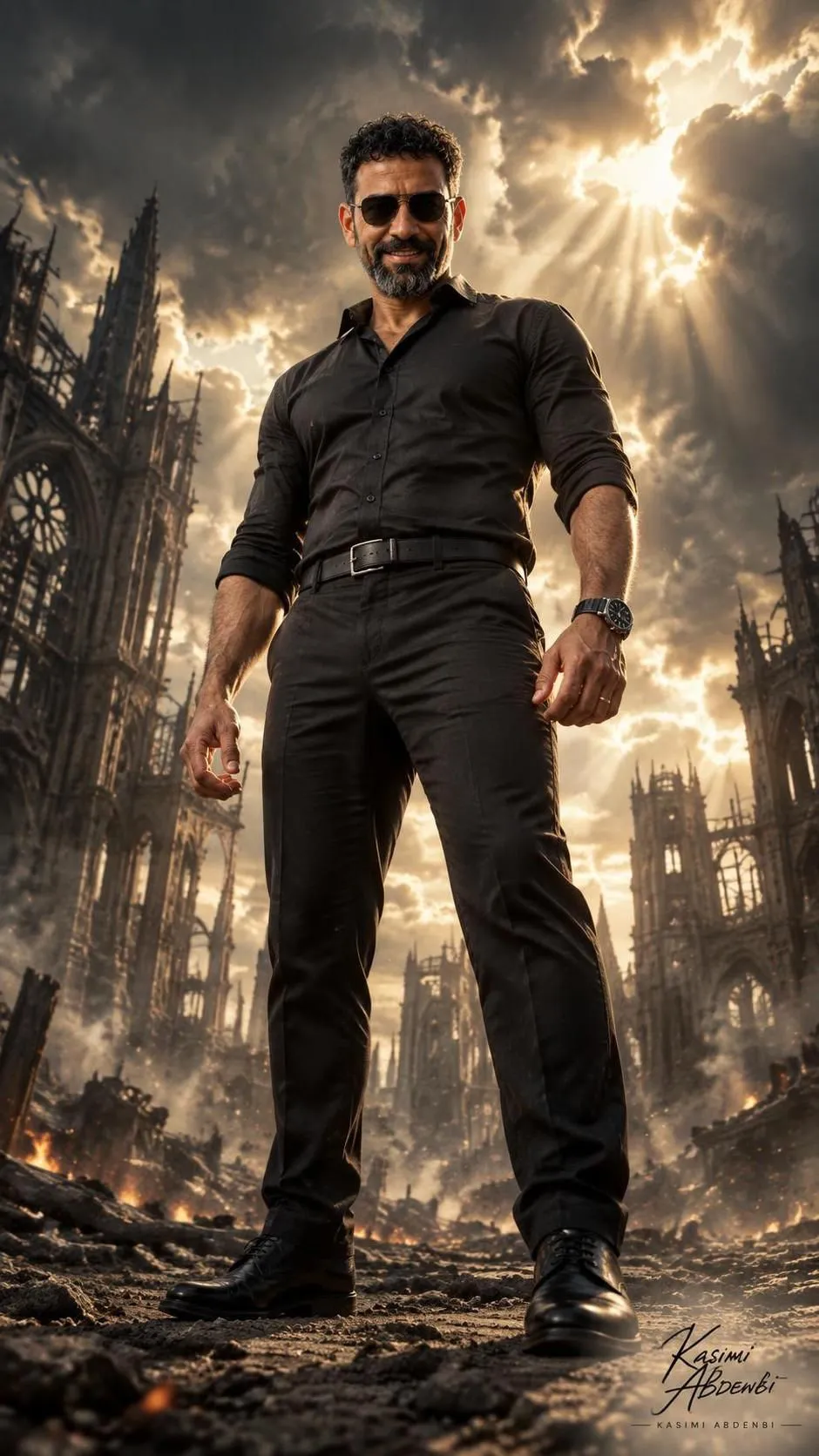
Example outputs
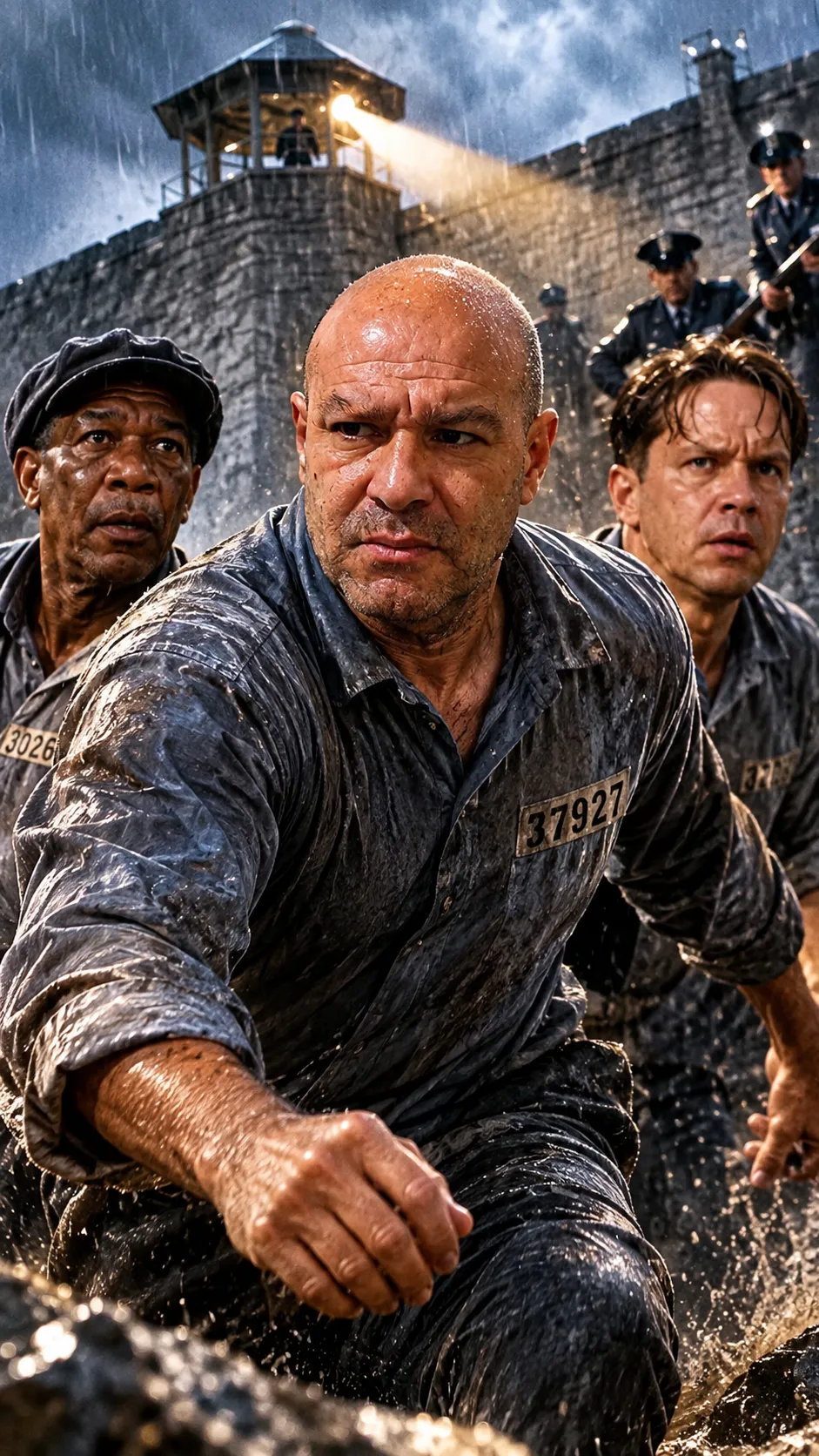
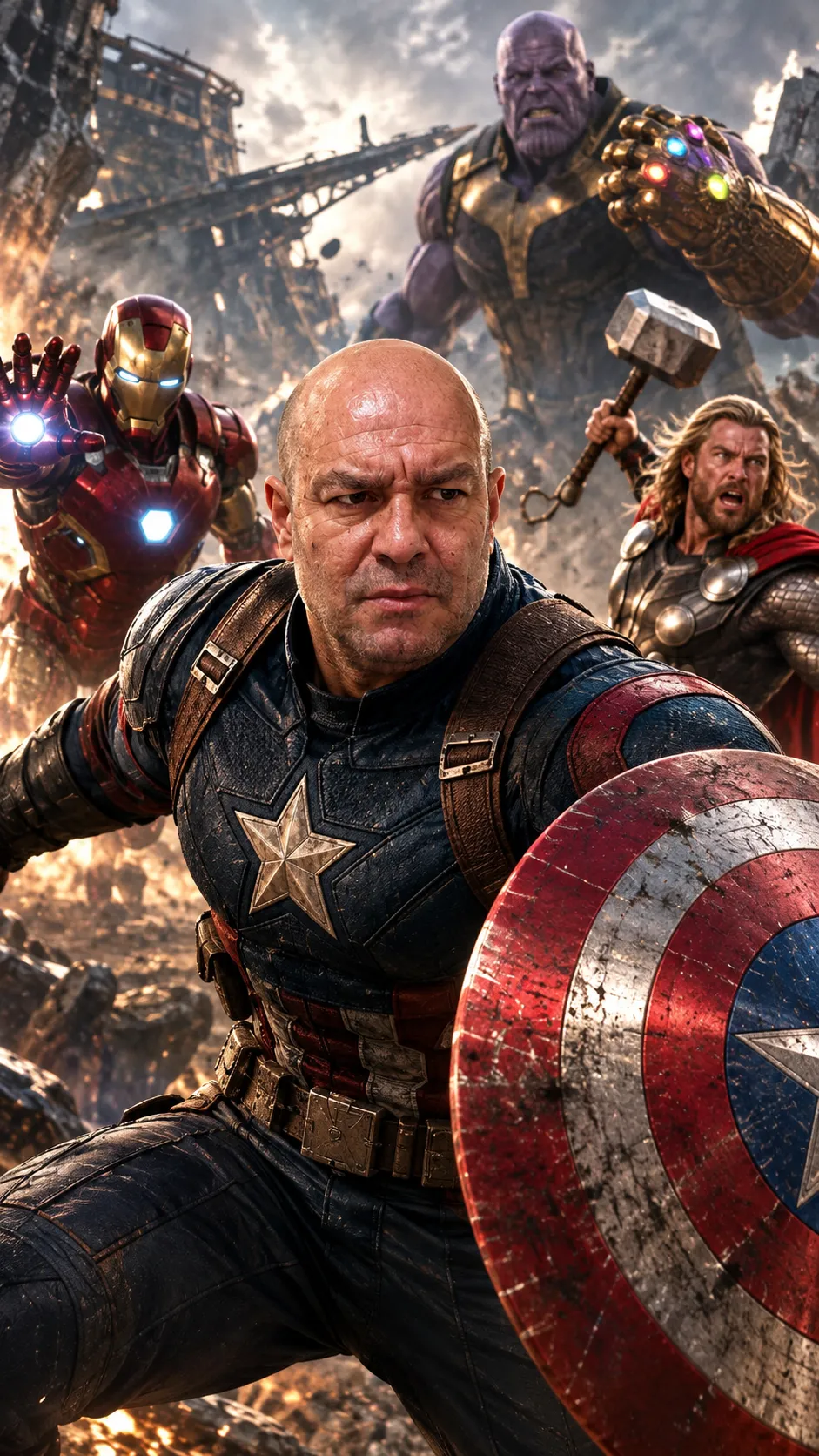
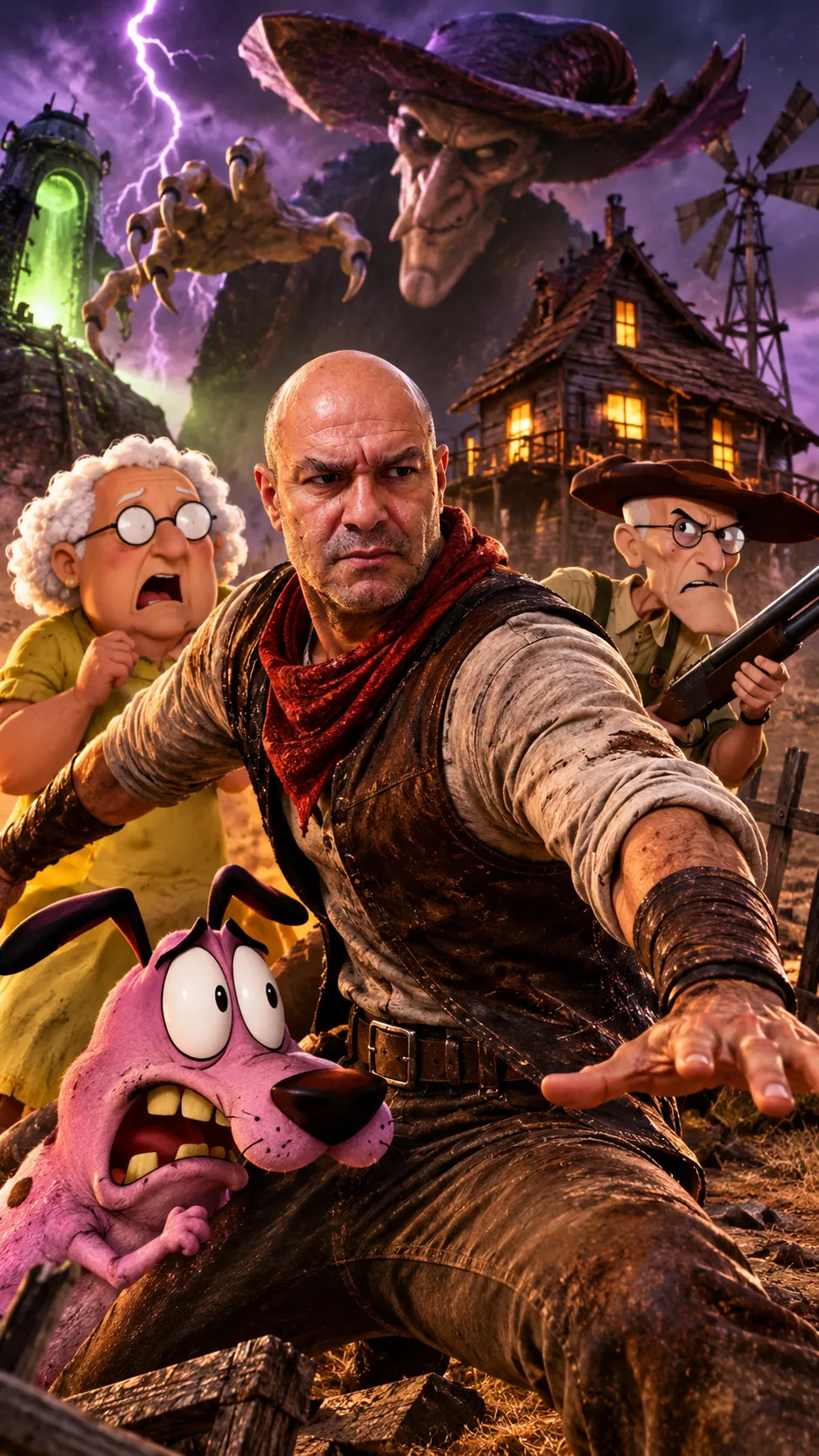
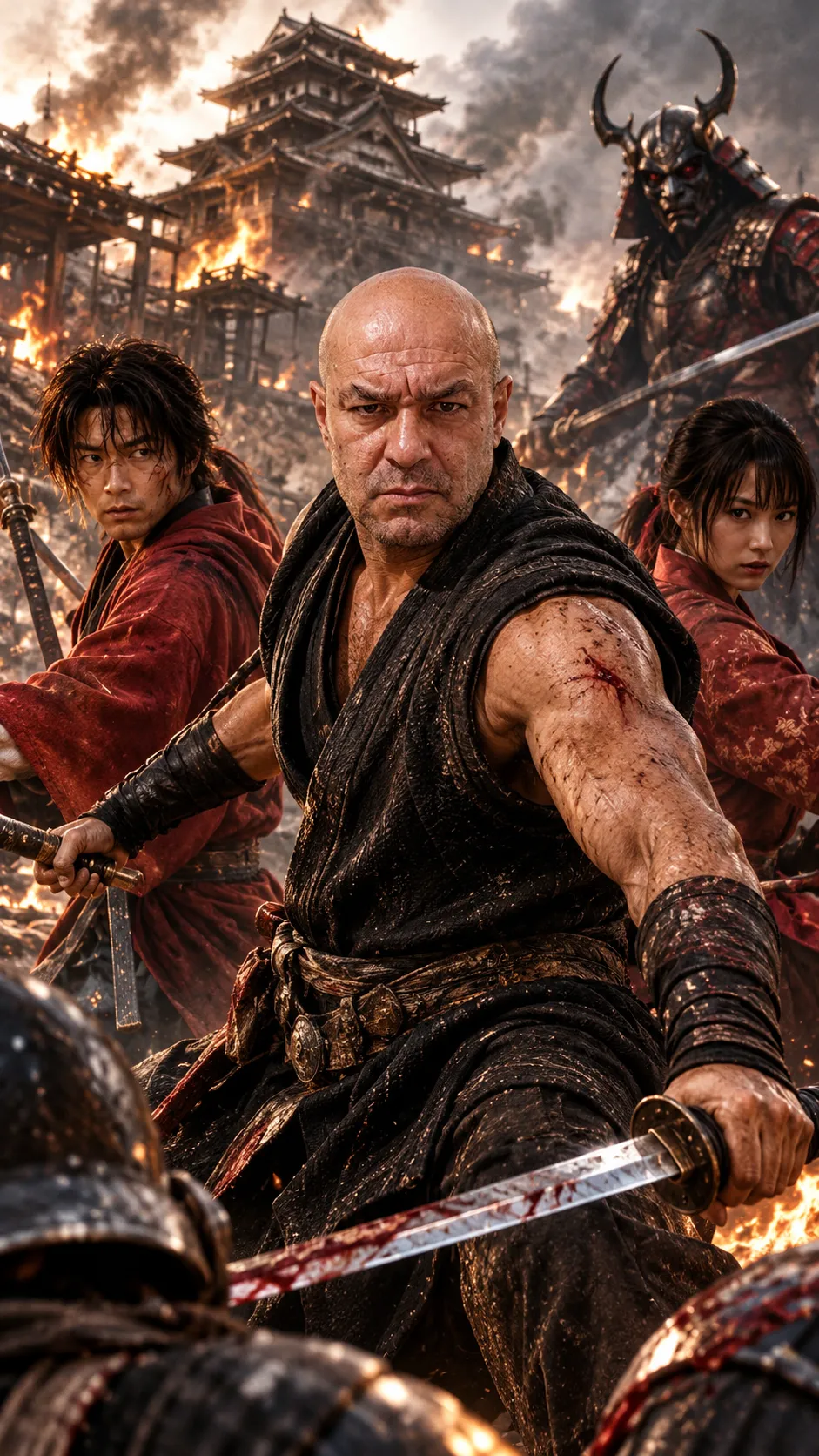
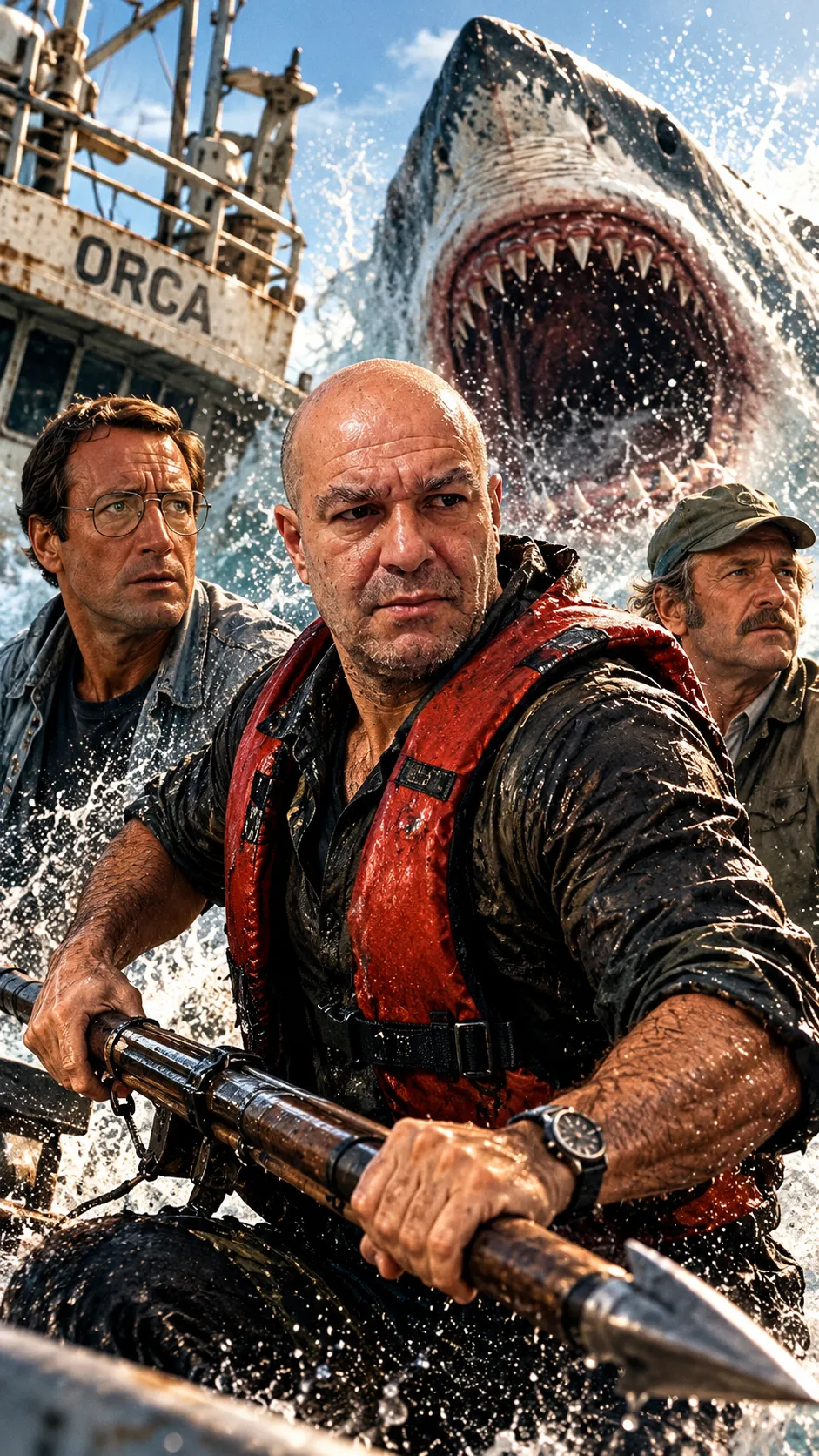
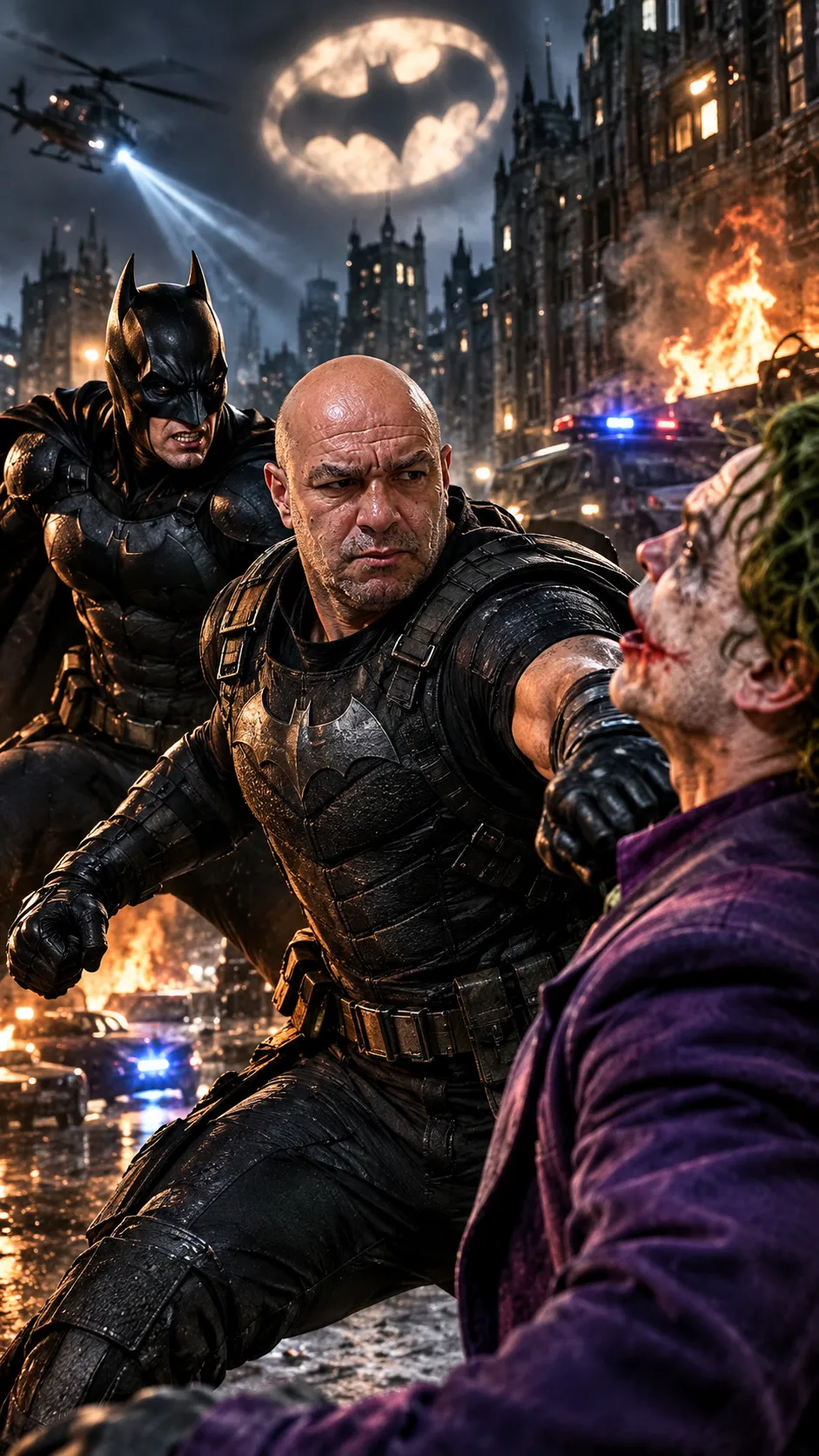
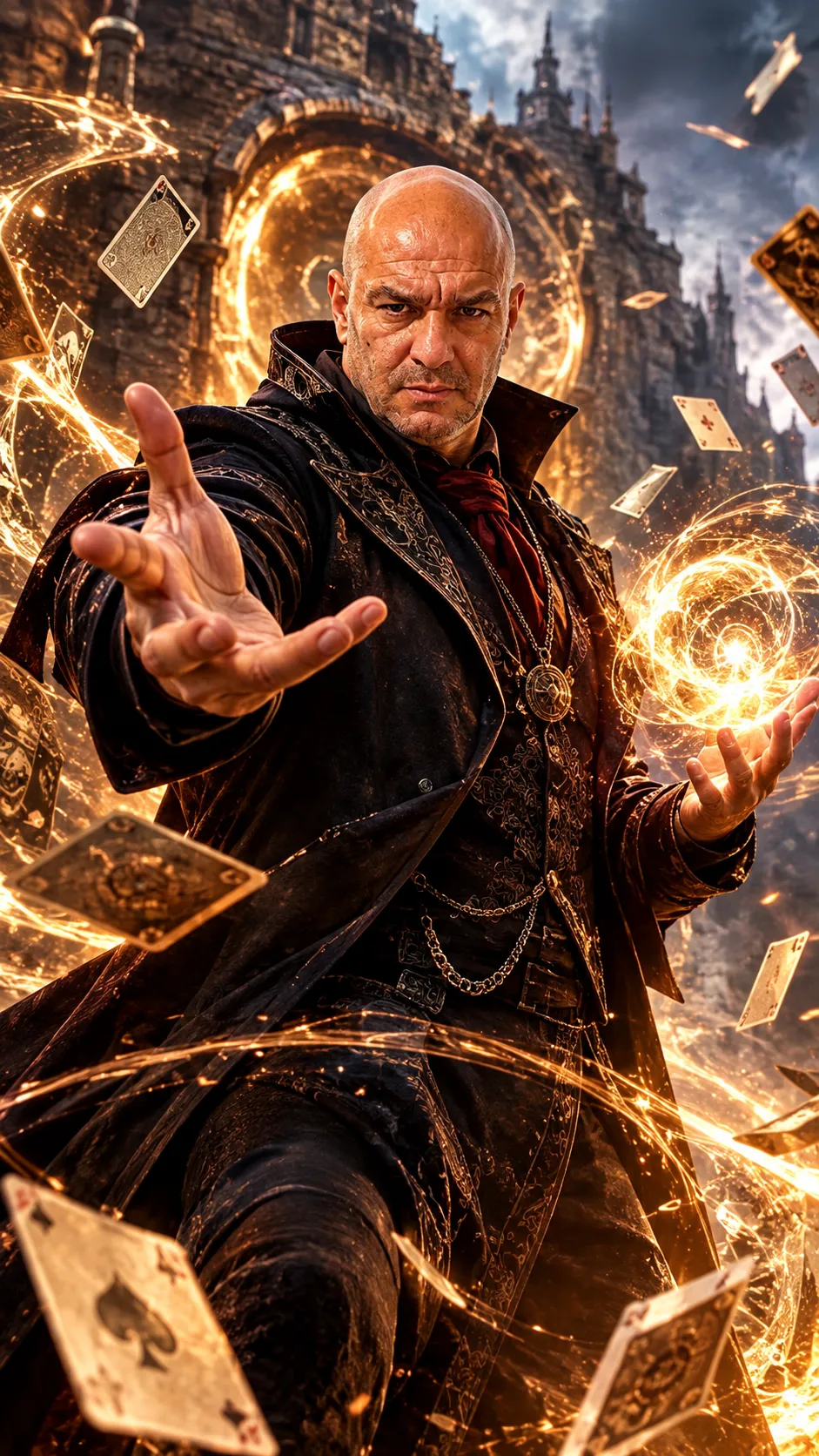
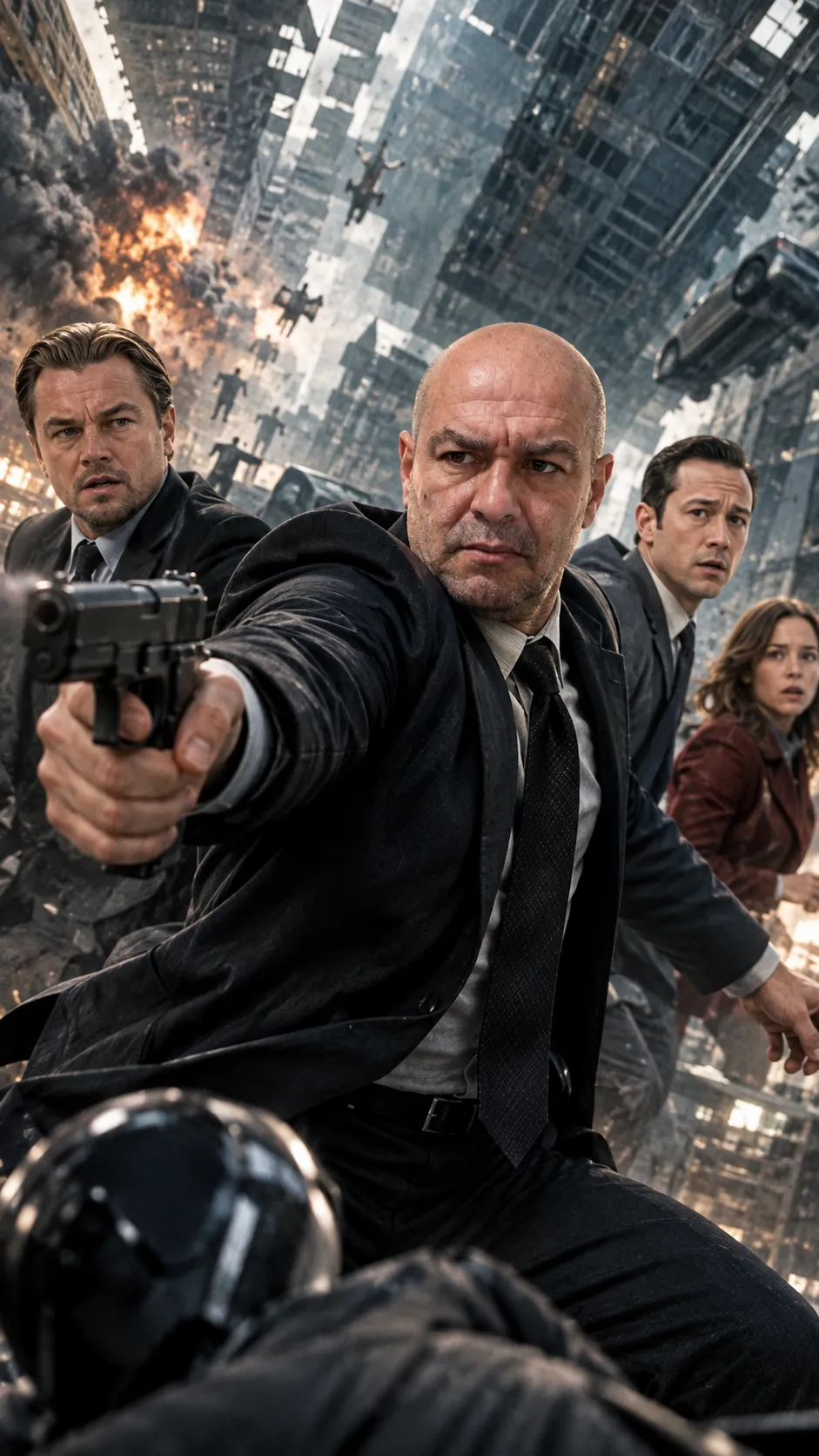
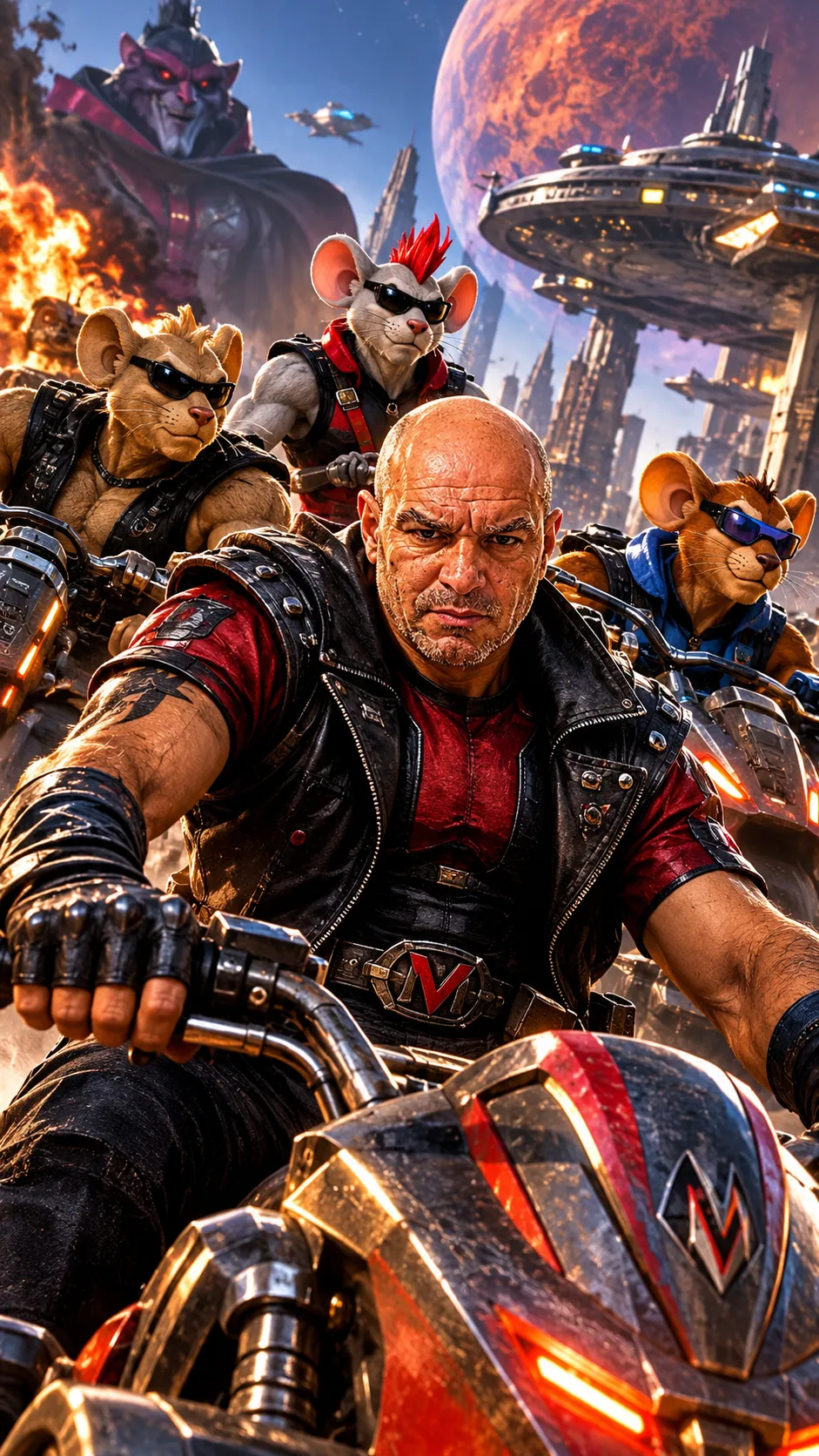
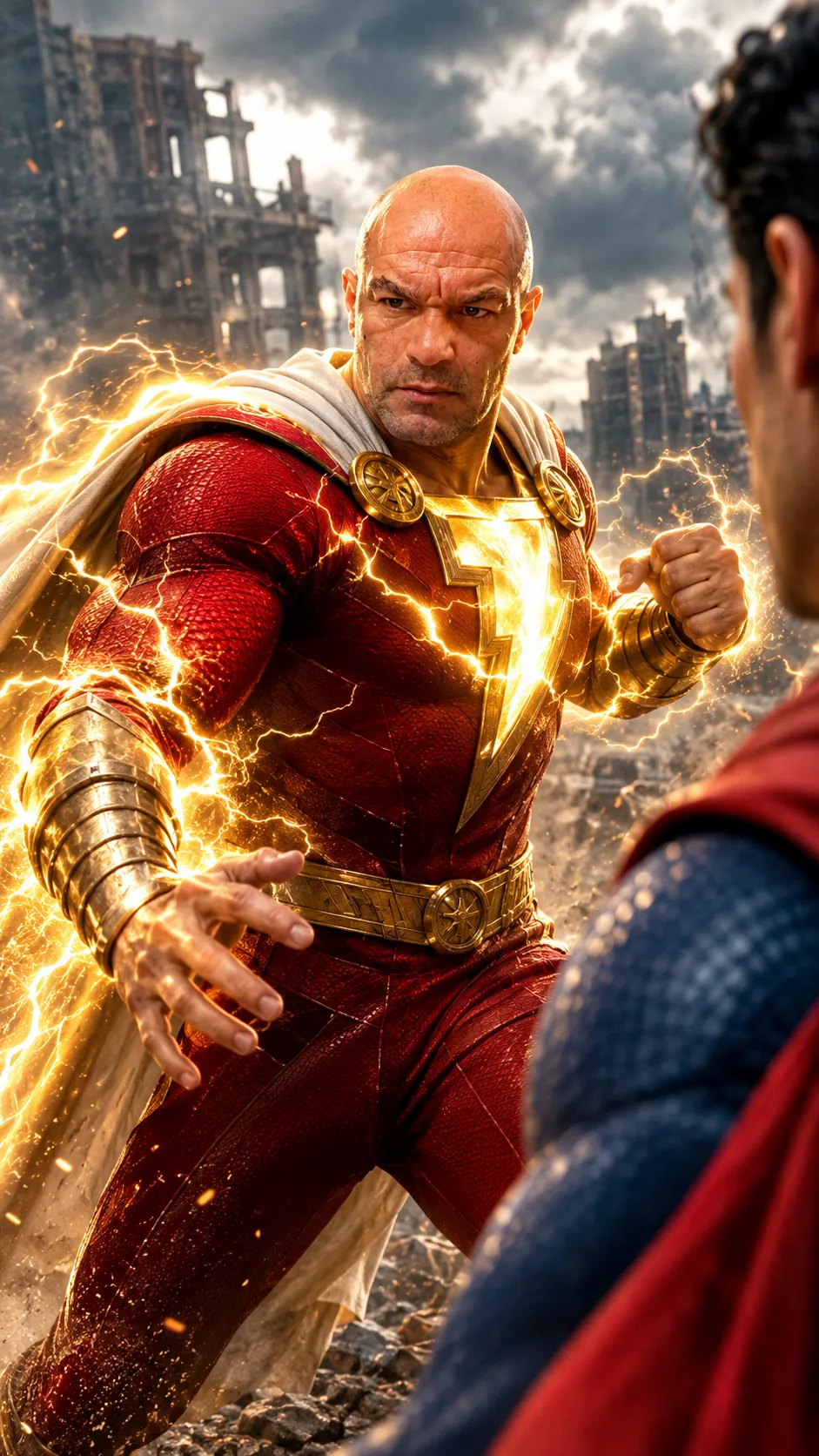
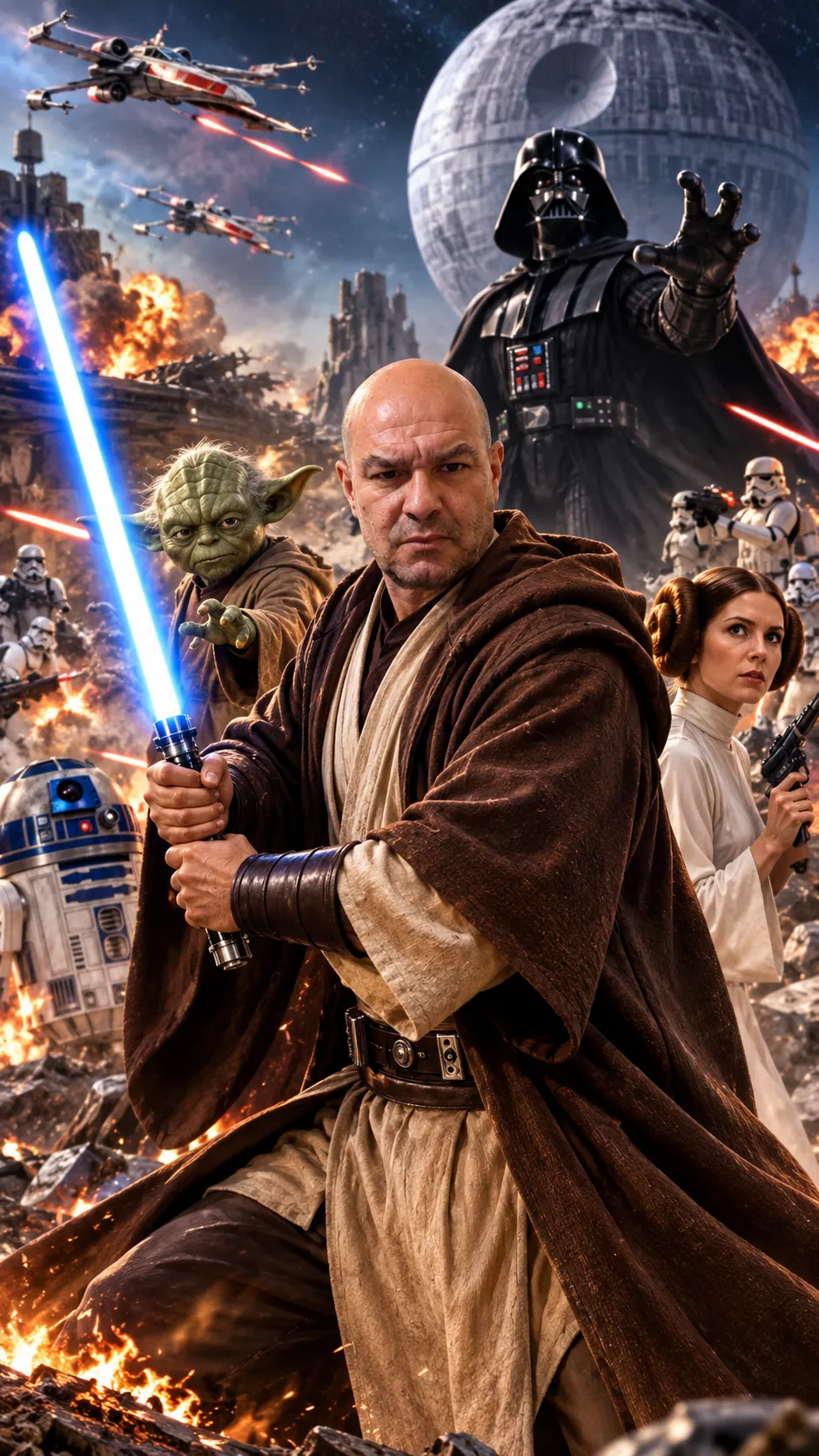
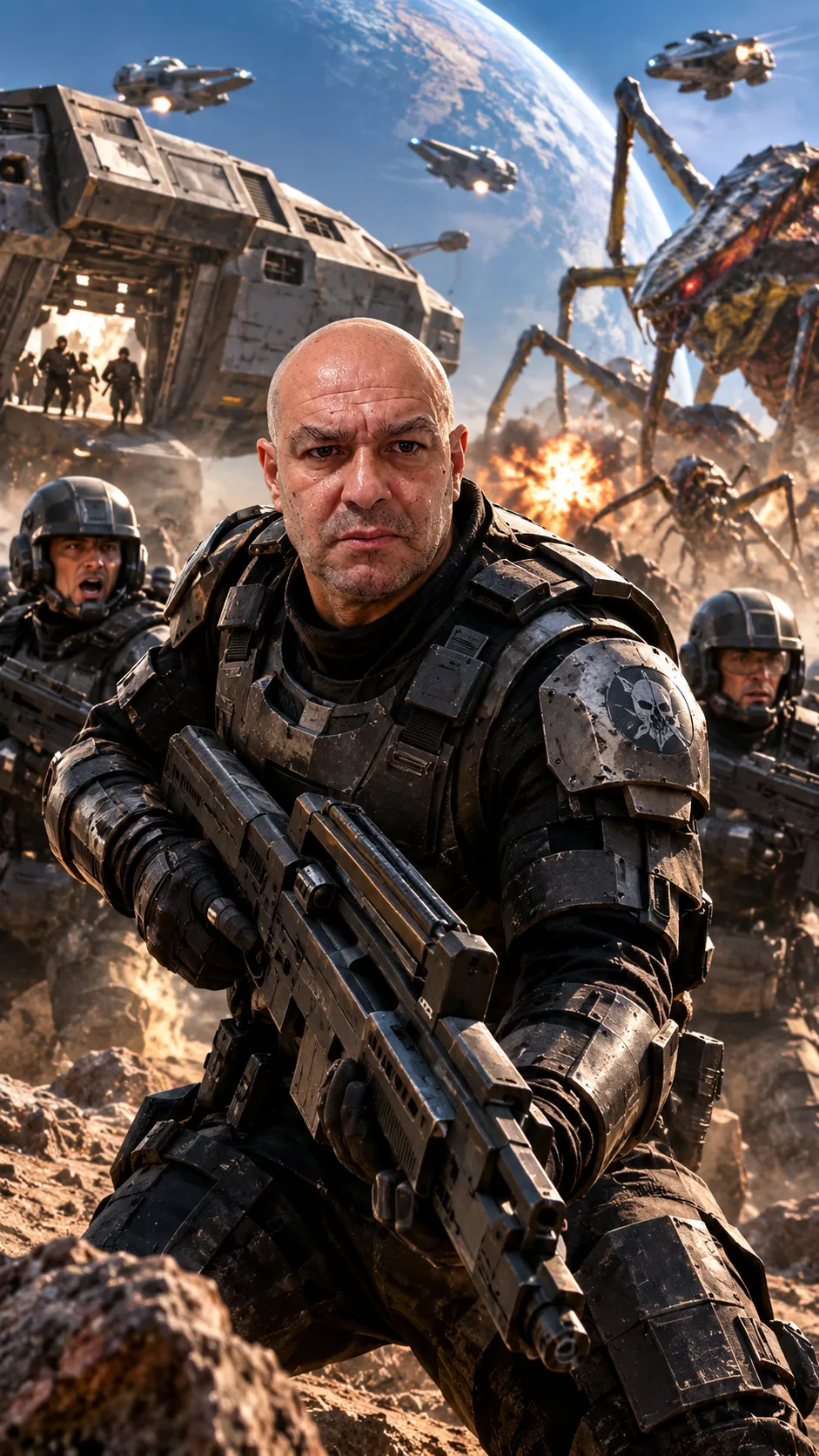
Prompt template
- Format
- Markdown Parameterized
- Inputs
- Reference_photo (image) · Required title (text) · Required
- Outputs
- Cinematic_action_image (image)
# Cinematic Action Scene with Absolute Facial Identity Preservation

## 1. Cinematic direction and primary objective

Act as an elite Director of Photography (DoP), specializing in visual storytelling, action direction, cinematic blocking, frame composition, advanced lighting, practical effects, hyper-realistic CGI, motion capture, and cinematic reconstruction of fictional universes.

Create ONE hyper-realistic cinematic image with the visual quality of a major Hollywood production. You must use the attached photograph as the exclusive identity reference for the male protagonist. Place the man from the photograph directly in the universe of the supplied title, as though he were a legitimate character in that work, participating in an authentic action scene alongside its original characters.

The image should look like a frame from a high-budget film production and include rigorously preserved facial identity, original characters from the title, characteristic settings and visual elements, faithful costumes and equipment, a title-appropriate pose, convincing physical action, realistic character interaction, immersive cinematic atmosphere, professional lighting, and three-dimensional depth. Use hyper-realistic CGI or cinematic live action as appropriate to the universe.

Tell a clear visual story by capturing a specific instant in an action sequence. The approach must work for live-action films, television and streaming series, Japanese anime, classic cartoons, modern animation, superhero films and comic-book universes, science fiction, medieval fantasy, horror, adventure, police action, monster universes, tokusatsu, martial arts, post-apocalyptic fiction, historical productions, and any title released from 1969 to the present.

## 2. Title and automatic identification of the universe

**Selected title:** "${title}"

Identify the work, franchise, fictional universe, and visual identity from the supplied title. The title may be given in its original language or Brazilian Portuguese. If given in Brazilian Portuguese, identify the corresponding Brazilian release; if given in its original language, use the corresponding original work. Resolve similar titles using context. Do not confuse different adaptations, remakes, sequels, or alternate versions, and do not mix characters from different adaptations without narrative justification. Respect the specific version named by the user.

From that identification, determine the original visual identity, official and recognizable characters, protagonists and antagonists, historical or futuristic period, characteristic architecture and settings, costumes and uniforms, iconic accessories, weapons and equipment, vehicles, powers and technologies, creatures and entities, the universe's physical and supernatural rules, narrative style, emotional atmosphere, predominant cinematic aesthetic, and production-specific visual language.

The image must unmistakably belong to the selected title. Do not turn its universe into a generic action setting. Choose all visual elements automatically from the title without requiring further instructions. Build the scene from the recognizable identity of the specified work, not from superficial similarities. Do not replace characters, settings, costumes, or iconic objects with generic alternatives or arbitrarily alter the universe's visual identity.

## 3. Absolute facial identity preservation — highest priority

Use the attached photograph as the exclusive visual reference for the male protagonist's identity. The photographed person's face must remain fully recognizable. Rigorously preserve the original face shape and bone structure; forehead and hairline; eyes, including their shape, spacing, and position; eyebrows; nose and proportions; mouth, lips, and natural smile; jaw and chin; ears; skin tone and natural texture; apparent age; individual features and natural asymmetries; hair; and distinctive facial characteristics.

**Non-negotiable:** Do not replace, reinterpret, artistically reconstruct, or modify the facial identity. Do not apply artificial beautification, make the person younger or older, slim the face, alter the nose or eyes, change facial structure, turn the protagonist into a famous actor or character, apply beauty filters, create a hybrid face, or use a fictional character's face as a replacement reference.

The face must retain a photographic, realistic appearance even if the rest of the scene is rendered as 3D CGI, live action, or another cinematic style. The reference photograph's facial identity takes absolute priority over the visual stylization of the selected universe. Transform the environment, costume, pose, lighting, and cinematic elements—not the protagonist's identity.

## 4. Main protagonist: the person in the photograph

Integrate the man from the photograph organically into the selected title's universe. He is the scene's main protagonist, with visual prominence and an active role in the action. Automatically create a universe-appropriate costume, characteristic equipment, applicable weapons, specific accessories, a dynamic body position, an expression suited to the moment, realistic physical movement, direct interaction with original characters, a narratively coherent role, and a pose appropriate to the title and action.

He must not look out of place or artificially composited into the scene. He should appear to belong in the universe without losing his original facial identity.

Adapt his visual and narrative role to the work. In a superhero title, he may be a hero, ally, combatant, or member of that universe, wearing an original outfit inspired by the work's visual language without exactly copying a specific actor's face. In anime, he may take a combat position, use appropriate equipment, or display abilities consistent with that universe. In horror, use body language suited to the threat. In a historical production, use clothing, equipment, and physical behavior appropriate to the period. In martial arts, use a fighting stance consistent with the discipline and the production's visual style. Make this adaptation automatically.

## 5. Pose and action: follow the specified title

The man's pose must be determined by the supplied title. This rule is mandatory and takes priority over any generic reference pose. Automatically identify the action, body posture, gesture, and visual attitude characteristic of the selected universe. Determine the pose from the work's title and genre, the protagonist's assumed character or role, the type of action, the environment, equipment in use, the threat, narrative context, and the production's characteristic body language.

Interpret the title appropriately. For superhero films, use a fitting action pose such as an impact landing, defensive stance, jump, attack, flight, use of powers, or combat with antagonists. For combat anime, use a characteristic fighting stance with weight distribution and arm, leg, torso, and center-of-gravity positions suited to the discipline or ability. For martial arts films, use a functional stance, guard, balance, movement, and strikes consistent with the depicted style. For police action, show pursuit, protection, tactical approach, advance, or combat suited to the scene. For medieval fantasy, use characteristic combat poses with swords, shields, bows, or other equipment. For horror, show survival, escape, defense, investigation, or confrontation, with body language suited to the threat. For science fiction, use poses appropriate to that universe's weapons, technology, equipment, environments, and threats. For cartoons and animation, translate the characteristic pose of the character or scene into a three-dimensional or live-action representation while retaining its visual readability.

Do not use a default pose with crossed arms, hands on hips, neutral posture, or promotional posing. Do not automatically repeat the same pose for different titles, ignore the supplied title, or choose a pose solely because it looks attractive. The pose must be recognizable as consistent with the specified work.

## 6. Original characters from the title: required

Automatically include official, recognizable characters from the selected universe. Choose those most relevant to an intense action scene, prioritizing protagonists, allies, and iconic figures from the title.

Preserve each character's essential visual features: identity, characteristic features, hair, costumes, uniforms, armor, accessories, weapons, powers, visual personality, and iconic elements. Do not replace known characters with generic versions or invent characters to take their place. Official characters must interact directly with the person in the photograph, taking part in the same action and sharing the same physical environment.

For superhero universes, include the official characters most relevant to the work and preserve their characteristic silhouettes, suits, emblems, armor, equipment, colors, powers, abilities, and distinctive visual elements. The protagonist from the photograph must share the scene with them without being confused with them. Respect the universe's visual identity and create an original scene rather than reproducing an existing promotional photograph or film frame exactly.

## 7. Original villains from the same universe: a real threat

Automatically include the most iconic official antagonists from the selected title. Identify those most suited to the scene and faithfully reproduce their recognizable visual features. Villains must be directly involved in the conflict, present a concrete threat, perform an offensive or destructive action, interact with the heroes, share the setting, have threatening body language consistent with their personalities, and use their original weapons, abilities, powers, or technology.

Possible actions include hand-to-hand attacks, gunfire, physical charges, pursuit, use of powers, explosions, creature attacks, sword combat, clashes of superpowers, structural destruction, ambushes, or simultaneous attacks by multiple antagonists. A villain must be a clear visual and narrative threat, not merely a decorative figure in the background. Do not add antagonists from other franchises or mix universes unless explicitly requested.

## 8. Automatic adaptation of anime and cartoons to 3D CGI or live action

When the selected title is an anime, cartoon, or animation, automatically adapt the universe into a hyper-realistic cinematic version. Choose the most appropriate visual approach:

**A. Hyper-realistic 3D CGI:** Transform originally 2D characters into exceptionally detailed three-dimensional models. Rigorously preserve original character designs, characteristic silhouettes, hair and hairstyles, costumes, iconic colors, weapons, powers, recognizable expressions, and exclusive visual elements. Apply physically realistic materials, cinematic lighting, detailed textures, natural shadows, three-dimensional depth, and Hollywood-level visual effects.

**B. Cinematic live action:** Convert animated characters into human-looking or physically realistic versions while retaining their original visual identities. Adapt costumes into real fabrics and materials, armor into plausible physical materials, hair into realistic strands, weapons into convincing cinematic objects, powers into realistic visual effects, creatures into three-dimensional anatomical models, and settings into physical cinematic environments. Do not make the characters unrecognizable.

Choose automatically between hyper-realistic 3D CGI and live action according to which best represents the title. Do not create an incoherent mix of children's-cartoon styling, 2D anime, generic CGI, and live action. The protagonist from the photograph must retain his original photographic face.

## 9. Automatically select the setting, costumes, weapons, and other elements

Build the complete environment exclusively from the title's universe. Automatically identify and include all relevant iconic settings and locations, characteristic architecture, landscapes, urban environments, forests, castles, secret bases, laboratories, spaceships, planets, ruins, combat arenas, vehicles, equipment, weapons, armor, uniforms, narrative objects, creatures, technology, supernatural effects, environmental elements, and context-appropriate destruction. Keep everything consistent with the supplied title.

Use the universe intelligently and automatically: use its weapons if it has them; represent its superpowers if it has them; include relevant creatures; use iconic vehicles when they support the story; and incorporate magic, futuristic technology, transformations, or special abilities cinematically when the universe calls for them. Respect the period in historical works, the technology in futuristic works, the atmosphere in horror, and the identity of action comedies without turning them into generic drama. Do not require the user to describe these elements manually; infer them from the title.

## 10. Physical interaction and cinematic blocking

Involve all main characters in shared, realistic, visually convincing action. The protagonist from the photograph must physically interact with at least one original character from the title. Possible interactions include fighting side by side, blocking an attack, pulling someone away from an explosion, protecting an ally, landing a strike, holding a weapon together with another character, dodging an attack, jumping over obstacles, running through destruction, confronting a villain, making a synchronized attack, physically colliding with an antagonist, or saving a character in danger.

Respect gravity, body weight, center of mass, inertia, physical contact, muscular reaction, fabric tension, hair movement, the direction of impacts, and spatial continuity. Every movement should have a perceptible physical consequence. Avoid characters merely standing beside each other, static poses, promotional-poster compositions, and cast-photograph appearances. Capture a fraction of a second of ongoing action.

## 11. Narrative moment: absolute climax

Construct the most intense and visually impactful moment of an action sequence. Capture an irreversible instant, such as the fraction of a second before a decisive strike; an explosion; a hero intercepting an attack; a collision between protagonists and antagonists; a desperate escape from a threat; combat at the height of destruction; the final confrontation between heroes and villains; activation of a devastating power; a collapsing structure; or a simultaneous attack by multiple enemies.

Convey urgency, danger, tension, movement, impact, adrenaline, and imminent consequences. The image must tell a story without relying on text. Keep the moment consistent with the title; avoid random events or events incompatible with the work.

## 12. Professional cinematography

Use an ARRI Alexa LF camera or an equivalent digital cinema system, with a cinematic IMAX aesthetic, a 35 mm or 50 mm anamorphic lens, and simulated aperture of f/1.8 to f/2.8. Use cinematic depth of field, natural perspective, coherent focal distance, primary focus on the protagonist's face, dynamic composition, realistic three-dimensional perspective, selective and controlled motion blur, and natural sharpness without excessive artificial enhancement.

Keep the protagonist's face perfectly recognizable and detailed. Let the action fill the frame organically rather than looking artificially assembled. The camera should follow the physical logic of the action and the characters' positions. Do not distort the face through excessive perspective.

## 13. Cinematic lighting

Create Hollywood-level lighting adapted to the selected universe. Use cinematic key light, strong rim light, dramatic backlight, volumetric lighting, physically plausible shadows, realistic reflections, tonal contrast, contextual ambient light, particle illumination, and realistic interaction between light and materials.

Automatically use light sources appropriate to the scene, such as fire, explosions, neon, lightning, supernatural energy, sunlight, moonlight, industrial lamps, futuristic technology, magic, headlights, or interior lighting. Illuminate the protagonist so his face stands out without altering his identity. Integrate him into the environment with lighting; do not make him look cut out or composited into it.

## 14. Composition and framing: vertical 9:16

Create a cinematic action composition with visual depth and narrative clarity. **Required aspect ratio: vertical 9:16.** Plan the composition for a vertical image from the beginning; do not create a horizontal image and simply crop its sides.

Use the rule of thirds, foreground, midground, and background, visual leading lines, three-dimensional perspective, separation between characters, visual hierarchy, dynamic balance, intelligent distribution of elements, a sense of scale, diagonal movement, impactful composition, vertical depth, and characters distributed across different planes. The protagonist from the photograph must be the image's visual and emotional center. Keep the original characters clearly recognizable, the villains identifiable as threats, and the setting immediately identifiable as belonging to the universe.

Arrange the action so it works naturally in 9:16. Prioritize a central or dominant position for the protagonist, a fully visible face, a body and pose suited to the title, secondary characters in complementary planes, clearly identifiable threats, and vertical elements of the setting.
Replace the ${…} placeholders with your values
before using this prompt. See parameters
and defaults below
Parameters
Replace each placeholder with your own value, or use its default when one is provided
${title}
title
Required
What you'll create
One recognizable protagonist occupies a blockbuster composition with matching threats, setting and secondary characters. Vertical environmental forms and a title-appropriate pose create coherent action storytelling.
Frequently asked questions
Is one fixed fictional world prescribed?
No. The chosen title determines the universe.
How many final images are requested?
One cinematic image.





Comments
Tried this prompt? Share what you made, compare results, or ask a question