Photorealistic Superhero Poster with an Original Comic Collage
Transform an adult in a reference photo into a photorealistic live-action superhero, preserving their recognizable identity and placing them against a vibrant, original 1980s–1990s comic-book collage.
Example outputs
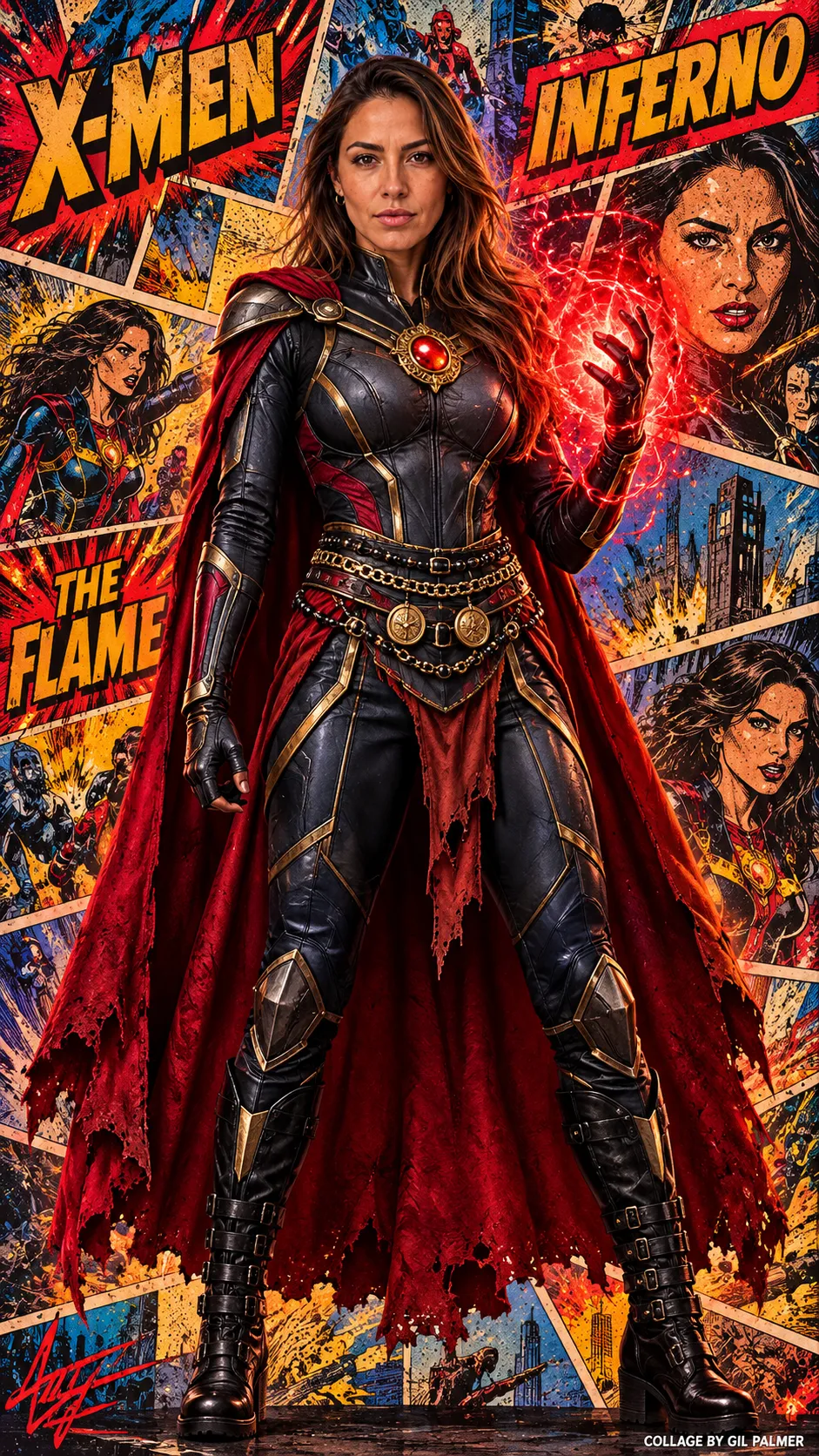
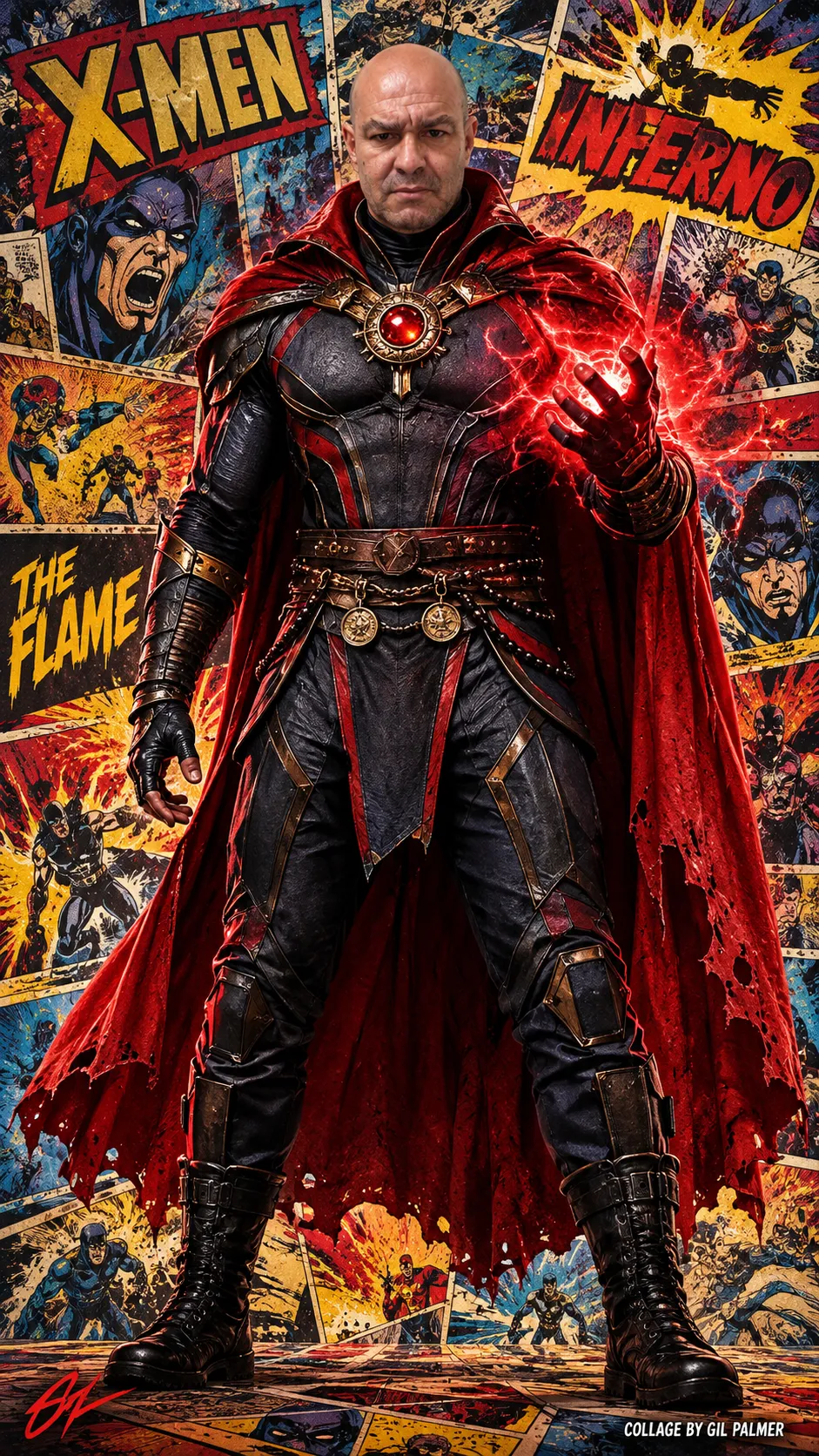
Prompt template
- Format
- Text Parameterized
- Inputs
- Reference_photo (image) · Required credit (text) · Optional · Default: COLLAGE BY GIL PALMER
- Outputs
- Superhero_poster (image)
## 1. Reference Photo and Identity Preservation — Highest Priority

Use the attached photograph as the primary visual reference for the person depicted. Preserve their natural, recognizable facial characteristics as faithfully as possible, including:

- Bone structure and overall face shape.
- Eyes, eyebrows, and the distance between the eyes.
- Nose, mouth, lips, and natural smile.
- Jaw, chin, and cheekbones.
- Ears, skin tone, and individual characteristics.
- Natural marks and distinctive features.

The depicted person must remain recognizable as the same person in the reference photograph. Do not replace their face with a generic fictional character's features. Do not artificially beautify, rejuvenate, age, or otherwise unnecessarily alter their appearance.

The reference photograph determines the person's visual identity. Apply the artistic transformation to their superhero characterization, costume, setting, and cinematic visual language without changing who they are.

## 2. Adapt to the Reference's Gender Presentation and Appearance

Visually identify the adult depicted's gender presentation and adapt the costume accordingly.

- If the reference depicts an adult woman, create a superheroine in a feminine-cut combat suit, respecting her natural anatomy, body proportions, and original physical characteristics. Preserve her hair as shown in the reference, including its length, texture, volume, color, and hairline.
- If the reference depicts an adult man, create a superhero in a masculine-cut combat suit, respecting his natural anatomy, body proportions, and original physical characteristics. Preserve his hair, haircut, texture, volume, color, and hairline. If he has a shaved head or no hair, retain that feature.

Do not artificially alter the person's identity, apparent gender, age, or individual characteristics.

## 3. Visual Concept and Art Direction

Create a photorealistic, cinematic, ultra-high-resolution RAW photograph depicting the person in the attached photograph as the lead in an original live-action superhero production.

Combine the visual grandeur of cinematic superhero films, the graphic language of Western comic books from the 1980s and 1990s, the editorial finish of a collector's poster, dramatic high-budget studio photography, and a contemporary film-production aesthetic with handcrafted costumes and realistic visual effects.

The result must look like an authentic photograph of an adult portraying a superhero in a film. Show the person standing, full-length, centered, and occupying approximately 65–75% of the frame's height. They have an adult, athletic, physically prepared appearance, with natural anatomical proportions consistent with the reference photograph.

Give them a serious, determined, confident, defiant expression. Their gaze is directed straight at the camera, conveying authority, courage, strength, and readiness for combat. Render natural photographic skin texture, pores, small imperfections, and realistic detail. Render individual hair strands and natural movement while preserving the reference's hair characteristics.

## 4. Costume — Original Superhero Suit

Create a wholly original, sophisticated, cinematic combat suit inspired by the visual language of classic 1980s and 1990s superhero comics. Do not reproduce the specific costume of any existing character, franchise, or intellectual property.

Use a primary palette of dark blue-gray, graphite, and black, with gold metallic details and deep-red ornamental elements. Give the suit a moderately satin finish, durable materials, and visually convincing construction. Include:

- A structured high collar and long sleeves.
- Gloves integrated with or coordinated to the suit.
- Anatomical protective panels and original geometric cutouts.
- Visible technical seams and durable material textures.
- Protective elements on the shoulders, arms, waist, and legs.
- Subtle metallic finishes and distinctive original ornamentation.

The suit's cut must follow the photographed person's anatomy naturally. For a woman, use an elegant, functional feminine construction that is fully opaque and provides adequate coverage. For a man, use a robust, functional masculine construction that is anatomically coherent. The costume must convey strength and sophistication without unnecessary body exposure, transparency, a lingerie-like appearance, or sexual connotations.

## 5. Distinctive Ornaments

At the waist, incorporate an original ornamental arrangement consisting of layered decorative belts, fine metal chains, small dark spherical beads, and two circular pendants positioned at the front. These elements should look like functional accessories on a cinematic costume and harmonize with the outfit.

Add a long blood-red cape that extends below the knees. Give it irregularly torn edges, subtle wear, heavy fabric, broad folds, and natural movement.

On the chest, add an original circular medallion with a detailed gold rim and an intensely luminous faceted red gemstone. Give it its own design; do not reproduce symbols, emblems, or insignia belonging to existing characters or franchises.

Small, discreet metal accessories may complement the characterization when consistent with the photographed person's appearance.

Add sturdy, high-shaft black combat boots made of leather or technical material with a moderately glossy finish.

## 6. Pose and Body Language

Show the person standing full-length in an imposing, powerful stance, ready for combat:

- Legs apart in a stable stance, with one foot slightly forward.
- Right arm extended naturally at their side.
- Left arm bent, with the left hand positioned approximately at chest height.
- Fingers naturally curved in a gesture of concentration and energy control.

A supernatural red energy effect may appear around the left hand. Render it with glowing particles, fine light filaments, and subtle reflections on the suit and skin. Do not let the effect obscure the face, hands, or costume details.

Keep the person's musculature and body structure natural, respecting the reference's proportions and characteristics. The pose should convey authority, control, confidence, and strength without suggestive poses or sexualized body language.

## 7. Cinematic Lighting and Photography

Create a hyperrealistic RAW photograph with the finish of a high-budget film production. Use soft, diffused frontal lighting slightly above eye level, and a subtle red rim light outlining the hair, shoulders, arms, and cape. Use controlled specular highlights on the boots, medallion, and metal accessories.

Use natural cinematic shadows, clear separation between the person and the background, and balanced contrast. Keep the face, especially the eyes, extremely sharp while retaining definition in the costume and legibility across the full body. Use balanced depth of field; do not blur the person excessively.

Professional photography reference: ARRI Alexa 65 cinematic camera, 85 mm anamorphic lens, HDR lighting, RAW texture, and a premium poster finish.

## 8. Setting — Original Classic Comic-Book Collage

Fill the entire image edge to edge with a gigantic graphic collage of original comic-book pages and fragments. Evoke the editorial language of 1980s and 1990s Western comics through vivid colors, expressive outlines, print halftones, intense contrasts, and dynamic narrative composition.

**Essential originality rule:** All illustrated characters, drawings, pages, covers, symbols, speech balloons, graphic elements, and compositions must be original creations. Do not reproduce, imitate, or reconstruct copyrighted characters, recognizable costumes, existing character faces, published covers, specific pages, logos, trademarks, or identifiable illustrations from real publishers or franchises. Inspiration must remain at the level of artistic language, period, graphic technique, and editorial atmosphere; do not copy specific works.

The collage should include original fictional characters in action scenes, dramatic close-ups of invented faces, dynamic fight sequences, yellow, red, and orange graphic explosions, motion lines, impact effects, original speech balloons, fictional page fragments, overlapping narrative panels, traditional print textures and halftones, and original editorial typography.

Integrate the three textual titles **X-MEN**, **INFERNO**, and **THE FLAME**, using them only as words in an original typographic composition. Do not reproduce official logos, distinctive typefaces, covers, or graphic elements associated with existing works. Keep these titles as secondary graphic elements that do not compete with the main character.

Do not include a horizon, sky, or realistic ground. Keep the person clearly separated from the collage, with a realistic, three-dimensional photographic appearance, while the setting retains its illustrated graphic aesthetic. The result should feel like a real person photographed in front of a gigantic artistic comic-book wall.

## 9. Art Direction and Visual Treatment

Combine hyperrealistic cinematic photography for the lead character with digital painting and the graphic language of classic comics in the setting. The lead must look entirely real, like a photograph of an actor in a superhero film. Do not render the lead as a drawing, anime, manga, illustration, or 3D render.

Preserve natural skin texture, facial details, individual hair strands, realistic human anatomy, physically convincing materials, coherent reflections and shadows, and cinematic lighting. Use a vibrant overall palette dominated by red, yellow, blue, and black. Create an epic, powerful, dramatic atmosphere with the premium poster finish of an original superhero production.

## 10. Credit and Typography

Add small, discreet, elegant, perfectly legible white text bearing this exact inscription: "${credit:COLLAGE BY GIL PALMER}". Position it in the lower-right corner, with clearance from the feet and image edges.

Add a small, stylized red graphic signature with an original abstract design in the lower-left corner. Do not add other names, brands, logos, or signatures.

## 11. Final Format and Framing

- Vertical 9:16 orientation.
- Full-body composition with the person centered and occupying approximately 65–75% of the image height.
- Keep the head, hair, hands, legs, and feet fully visible; do not crop any body part at the edges.
- Use natural anatomical proportions.
- Fill the entire composition with the graphic background and clearly separate the lead from the setting.
- Use ultra-high resolution, cinematic RAW photography, a professional superhero-poster finish, and hyperrealistic visual quality.

## 12. Representation Constraints

The depicted person must be unequivocally an adult. Keep the costume fully opaque, durable, and appropriate for a combat character. Do not include nudity, transparency, intimate exposure, eroticization, sexualized poses, or suggestive body language.

Do not artificially change the reference person's facial identity, apparent gender, age, or individual characteristics. Do not reproduce specific third-party characters, costumes, symbols, illustrations, pages, covers, or logos. Prioritize original design and fidelity to the photographed person.

## 13. Negative Prompt

Low quality, low resolution, blurry image, out of focus, pixelation, compression artifacts, excessive digital noise, distorted anatomy, deformed hands, extra fingers, missing fingers, extra arms, extra legs, misaligned eyes, distorted face, incorrect proportions, incorrect perspective, duplicated body parts, cropped head, cropped feet, severed limbs, incomplete body, unnatural joints, exaggerated musculature, artificial skin, plastic skin, excessive retouching, excessive shine, inconsistent artificial lighting, unrealistic shadows, transparent clothes, translucent fabrics, nudity, intimate exposure, lingerie, eroticization, sexualized pose, suggestive body language, fetish aesthetic, excessive cleavage, costume incompatible with the anatomy, artificial change of gender, artificial hair, wig, hair that does not match the reference, altered hairline, altered facial identity, generic face, face replacement, inconsistent features, artificial beautification, rejuvenation, aging, anime, manga, cartoon, illustration of the lead, CGI appearance, 3D render, digital doll, motion blur on the person, incomplete framing, cropped limbs, empty background, horizon, sky, realistic ground, photographic background, disorganized collage, duplicated elements, known characters, copyrighted characters, recognizable costumes from existing franchises, reproduction of published covers, existing comic-book pages, official logos, registered symbols, publisher brands, reproduced official typefaces, copied graphic compositions, unwanted signatures, watermark, random text, illegible letters, spelling errors, excessive grain, overexposure, underexposure, faded colors, uncontrolled saturation, excessive contrast, loss of detail.
Replace the ${…} placeholders with your values
before using this prompt. See parameters
and defaults below
Parameters
Replace each placeholder with your own value, or use its default when one is provided
${credit:COLLAGE BY GIL PALMER}
credit
Default: COLLAGE BY GIL PALMER
What you'll create
A reference-based person becomes the central heroic subject within a vivid comic-inspired poster. Natural facial marks and proportions remain recognizable amid the dramatic editorial design.
Frequently asked questions
Can a generic superhero face replace the person?
No. The original recognizable identity remains.
Should uncontrolled saturation hide detail?
No. The result preserves clear detail and balanced color.




Comments
Tried this prompt? Share what you made, compare results, or ask a question