Photorealistic Jessica Rabbit Cabaret Portrait
Create a cinematic, photorealistic cabaret portrait of the person in a supplied photo dressed as Jessica Rabbit, preserving their identity and facial features.
Example outputs
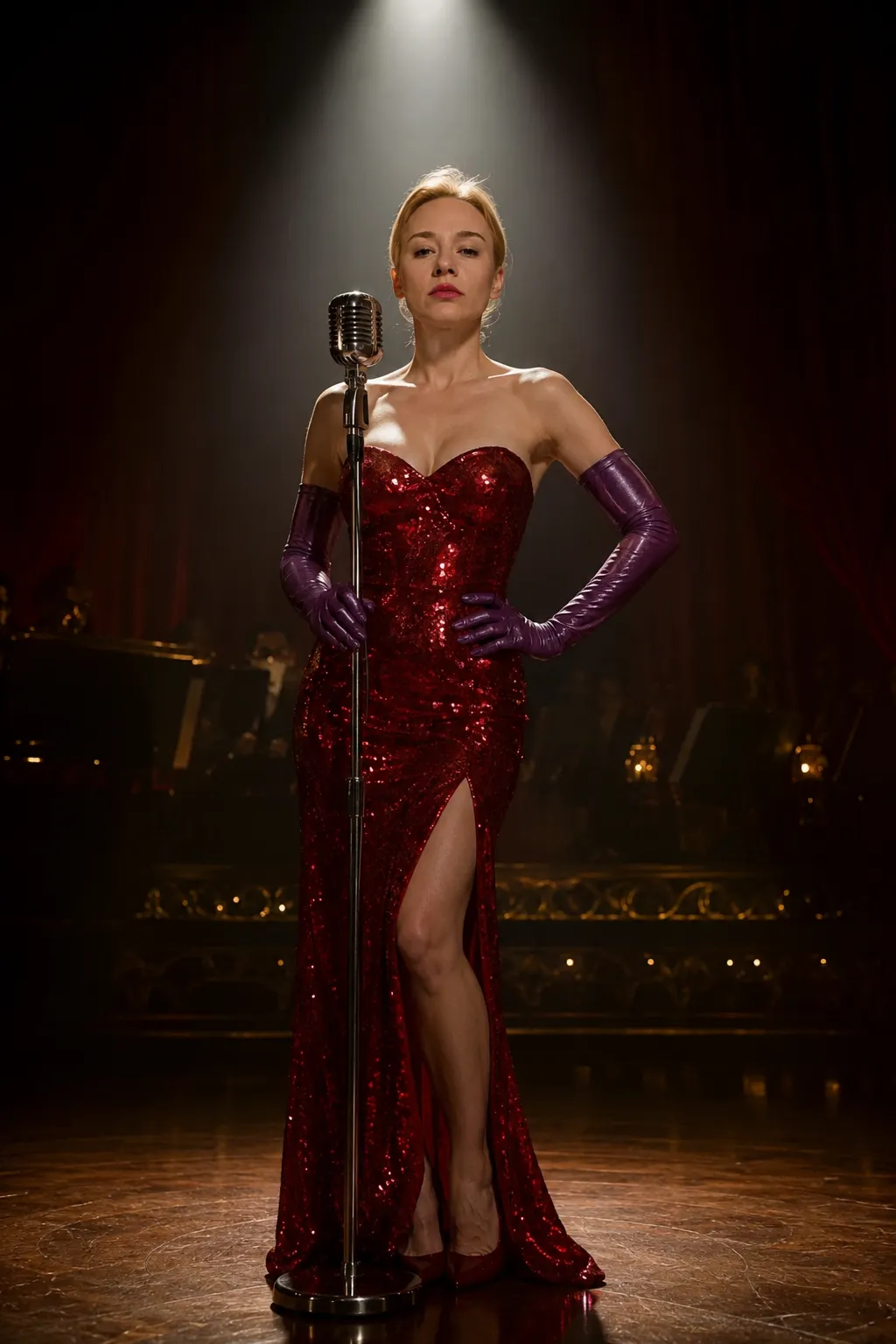
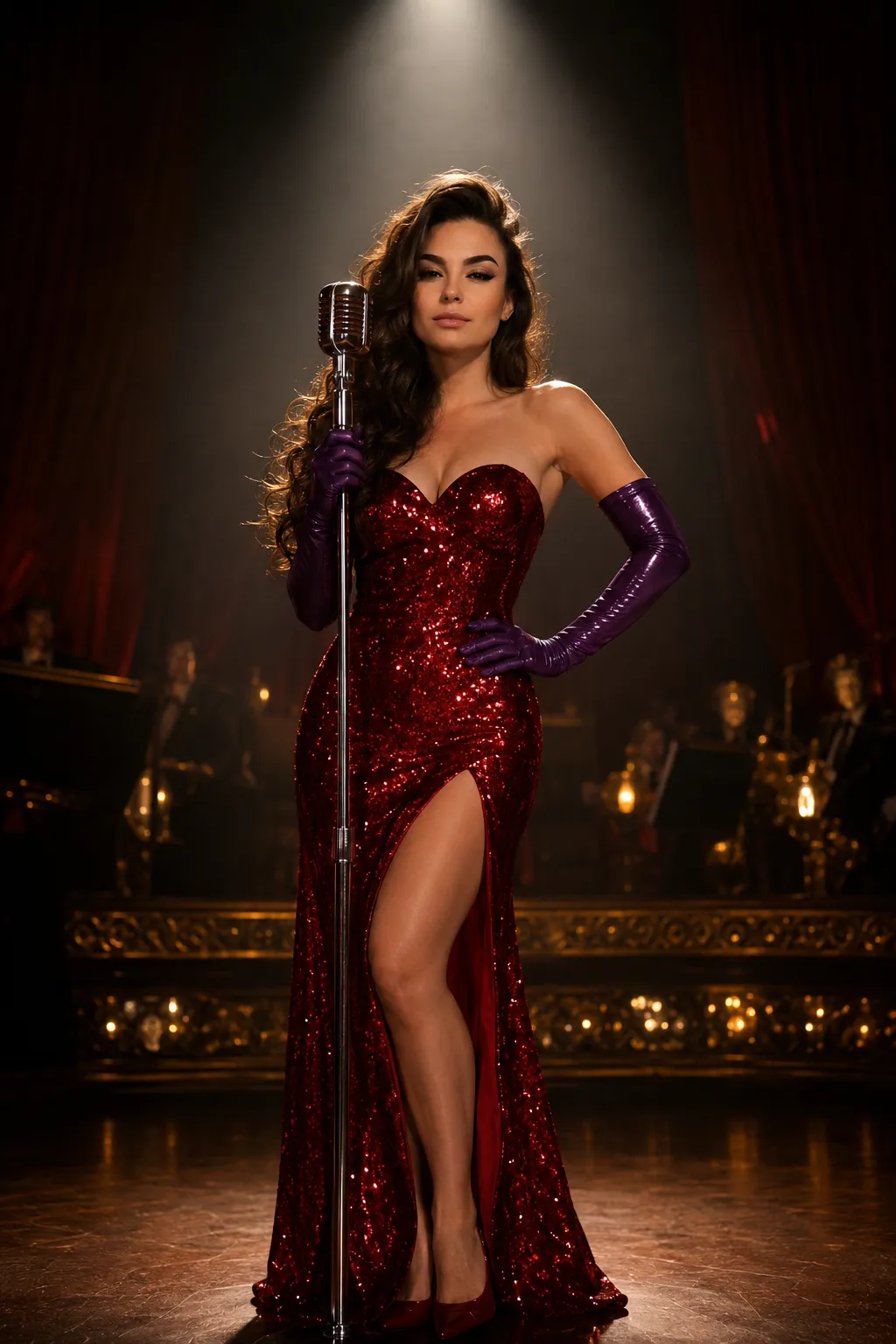
Prompt template
- Format
- Text
- Inputs
- Identity_reference_photo (image) · Required
- Outputs
- Cabaret_portrait (image)
Use the uploaded photo as the only identity reference.

Carefully analyze the photo and preserve the person’s exact facial identity and recognizable features, including facial structure, head shape, hairstyle and hair color if visible, eyebrows, eyes, nose, lips, ears, jawline, skin tone, apparent age, and body proportions. Do not beautify, stylize, or otherwise alter the face. Maintain maximum facial accuracy and identity consistency.

Create an ultra-photorealistic cinematic portrait of the person dressed as Jessica Rabbit from “Who Framed Roger Rabbit,” as a realistic human interpretation that faithfully preserves the iconic costume and glamorous aesthetic. Set the scene on the stage of an elegant 1940s–1950s cabaret.

Place the person confidently at the exact center of the stage beneath a single dramatic white spotlight shining from directly above. The spotlight creates a theatrical pool of light while the rest of the venue fades into darkness. Position a vintage chrome microphone on a classic retro microphone stand in front of the performer.

Recreate Jessica Rabbit’s famous look: a shimmering, floor-length, form-fitting deep-red sequined evening gown with realistic reflective fabric; elegant, opera-length purple gloves reaching above the elbows; matching classic high heels; and refined Hollywood glamour styling. Make the sequins sparkle naturally under the spotlight with physically accurate reflections.

Pose: one hand gently holding the microphone stand and the other resting naturally on the waist. Use confident posture, elegant body language, relaxed shoulders, a subtle smile, and a direct gaze toward the camera.

Expression and mood: poised, charismatic, confident, sophisticated, and graceful. Emphasize elegance, stage presence, and classic Hollywood glamour without exaggerated seduction or excessive sexuality.

Environment: luxurious vintage cabaret interior with velvet curtains, a polished wooden stage, faint golden stage lights in the background, soft atmospheric haze, subtle dust particles visible in the spotlight, cinematic depth of field, and premium editorial lighting.

Camera: eye-level, medium full-body shot, vertical 2:3 composition, centered framing, 85mm lens, shallow depth of field, and razor-sharp focus on the performer.

Lighting: a single overhead spotlight as the dominant light source, realistic light falloff, cinematic contrast, soft rim lighting, physically accurate reflections on the sequined gown, and volumetric light rays.

Style and quality: ultra-photorealistic, premium fashion editorial, cinematic realism, Hollywood production quality, HDR, natural skin texture, realistic fabric physics, high dynamic range, global illumination, ray-traced lighting, extremely detailed, 8K, masterpiece quality.

Negative prompt: cartoon, anime, CGI look, doll-like face, identity change, face swap, beautification, excessive makeup, exaggerated body proportions, over-sexualization, revealing clothing, nudity, low resolution, blur, noise, artifacts, duplicated limbs, distorted anatomy, plastic skin, oversaturated colors, fantasy effects.
What you'll create
The reference person appears as a human interpretation of the iconic character on an elegant mid-century cabaret stage, centered before a vintage chrome microphone.
Generation settings
OpenAI GPT
Advanced settings
- Negative prompt
- cartoon, anime, CGI look, doll-like face, identity change, face swap, beautification, excessive makeup, exaggerated body proportions, over-sexualization, revealing clothing, nudity, low resolution, blur, noise, artifacts, duplicated limbs, distorted anatomy, plastic skin, oversaturated colors, fantasy effects.
Frequently asked questions
Should the face become a cartoon?
No, the source preserves the person’s natural facial identity in a photorealistic interpretation.




Comments
Tried this prompt? Share what you made, compare results, or ask a question