Modern Eastern Editorial Culture Event Poster
Create a culture-event poster using large color fields and a miniature narrative scene, with paper collage, watercolor, and natural-pigment textures.
Example outputs
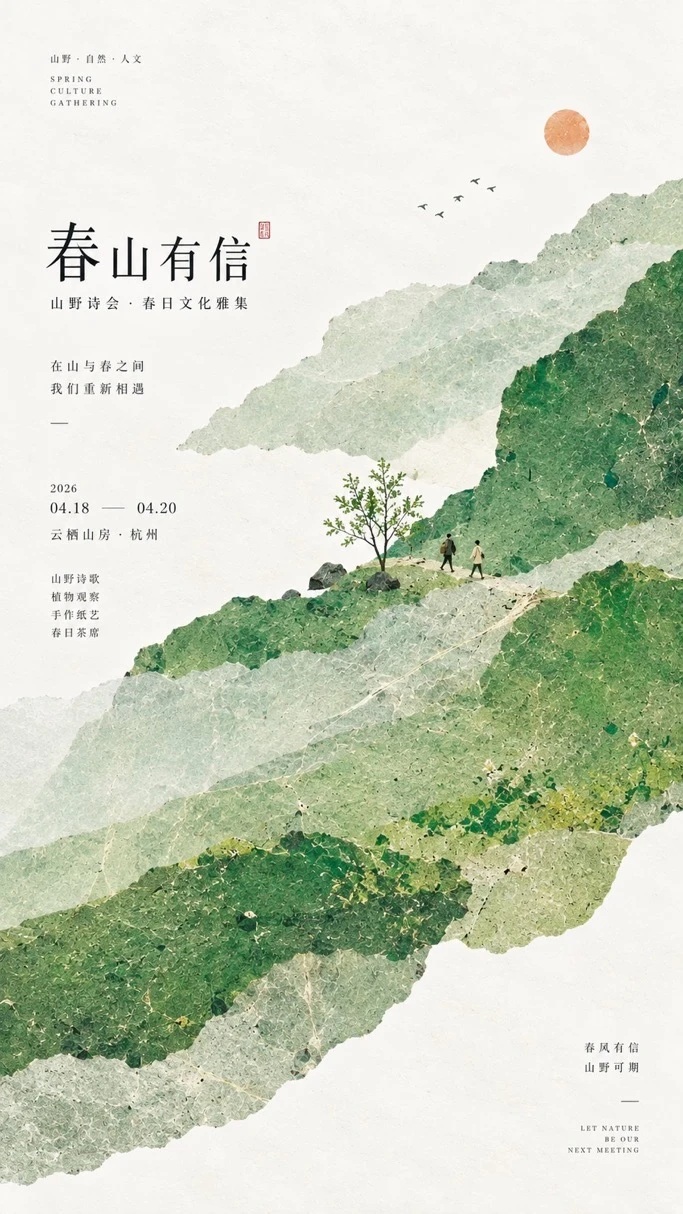
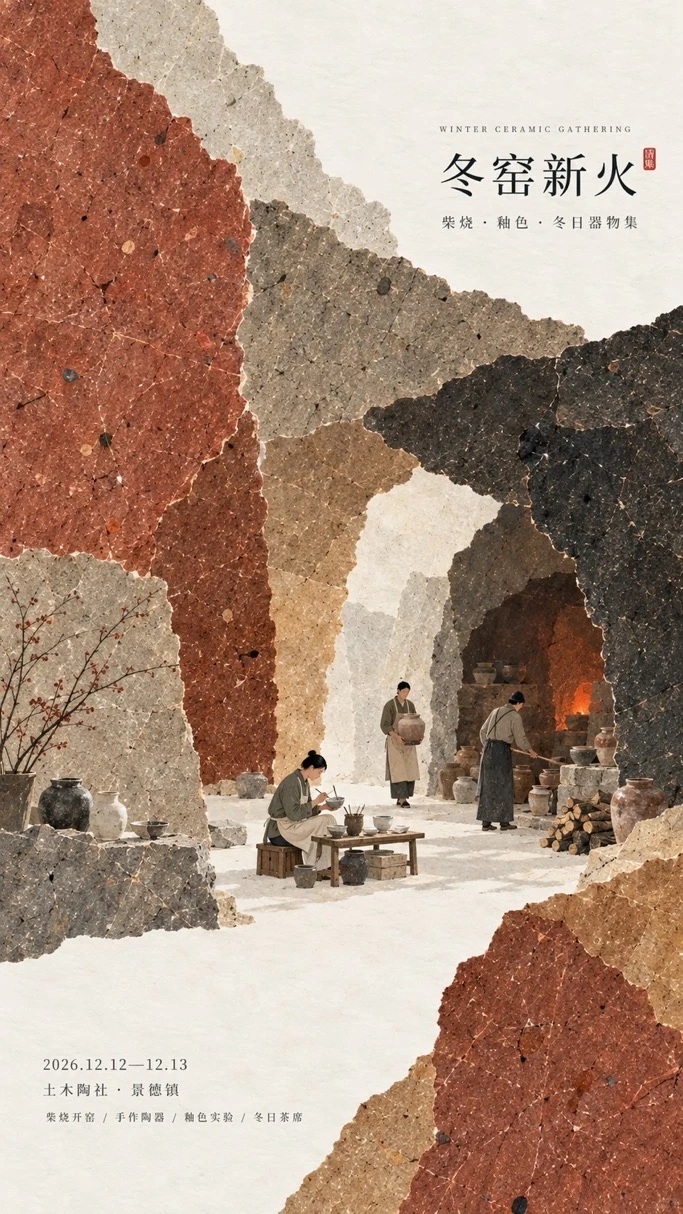
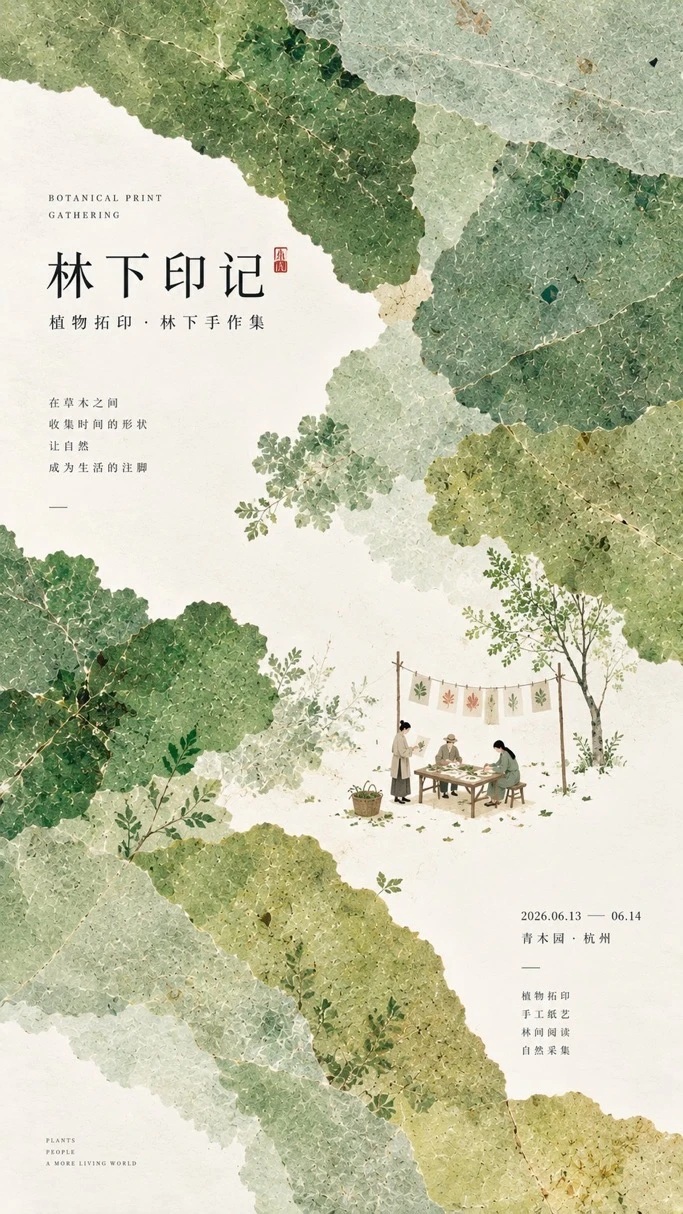
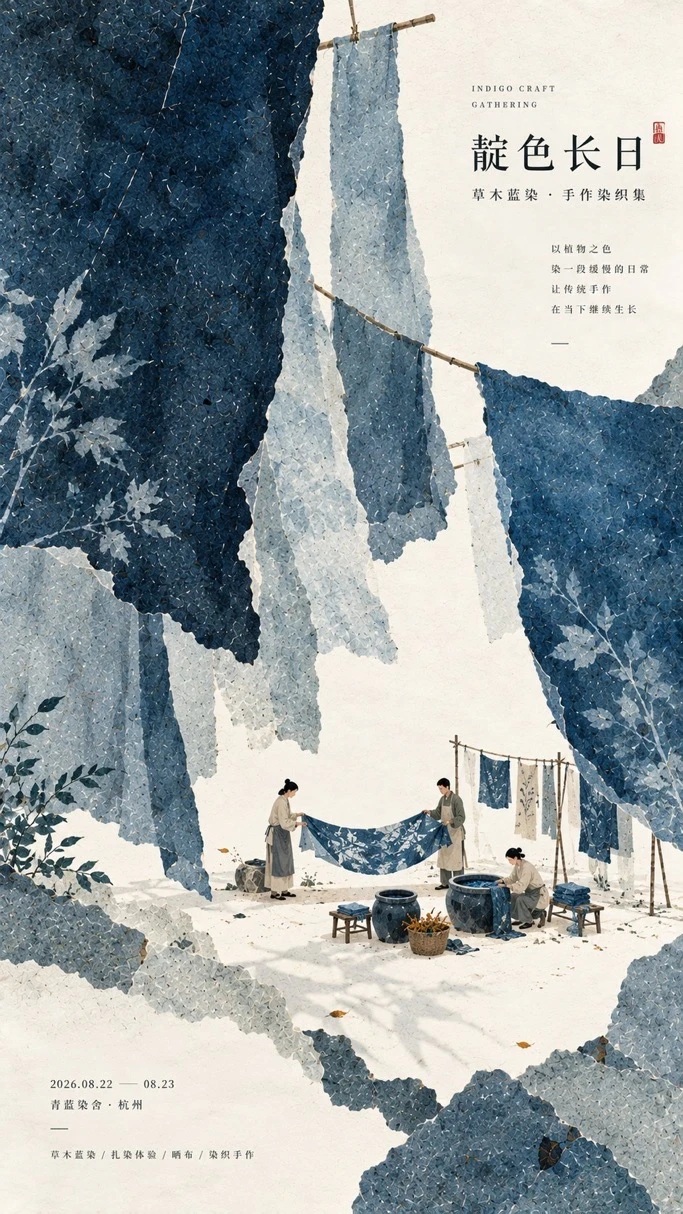
Prompt template
- Format
- Text Parameterized
- Inputs
- poster_theme (text) · Required main_title (text) · Required dominant_color_palette (text) · Required miniature_scene (text) · Required person_action (text) · Required cultural_elements (text) · Required event_information (text) · Required aspect_ratio (text) · Required
- Outputs
- Culture_event_poster (image)
Create a cultural event poster with a modern Eastern editorial aesthetic. Use “large color fields + miniature scene” as the core compositional approach, combining paper collage with the material qualities of watercolor and natural pigments.

Poster theme: ${poster-theme}
Main title: ${main-title}
Dominant color palette: ${dominant-color-palette}
Miniature scene: ${miniature-scene}
Person’s action: ${person-action}
Cultural elements: ${cultural-elements}
Event information: ${event-information}
Aspect ratio: ${aspect-ratio}

First establish a clear, visually weighty dominant color palette. Use large, irregular paper shapes with natural edges to carry the main composition. Based on the poster theme, arrange the shapes through layering, enclosure, offset, interweaving, suspension, extension, or negative space to create abstract space. The shapes may suggest mountains, courtyards, workshops, dyeing cloth, pottery kilns, or woodland, but do not depict an ordinary realistic scene directly.

Give the paper shapes a distinct, refined sense of real material: natural fibers of varied lengths, handmade paper-pulp grain, deposits of watercolor or mineral pigments, slight impressions, natural tonal variation, large-scale color variation, and irregular torn-paper edges. Make the materials rich, while keeping the overall image clean, composed, matte, and breathable. Avoid dirt, yellow stains, severe fading, random mottling, strong noise, and cheap faux-antique effects.

Make the large color fields the image’s primary visual feature. At a glance, the viewer should first see clear large forms, color relationships, and spatial structure. The poster should remain recognizable when reduced to social-media-feed size; do not rely on tiny text or complex detail to make it work.

Within the space formed by the large color fields, add the specified miniature scene. Keep it small in scale but complete in its storytelling, and incorporate the specified person’s action and cultural elements as appropriate.
Replace the ${…} placeholders with your values
before using this prompt. See parameters
and defaults below
Parameters
Replace each placeholder with your own value, or use its default when one is provided
${poster-theme}
poster-theme
Required
${main-title}
main-title
Required
${dominant-color-palette}
dominant-color-palette
Required
${miniature-scene}
miniature-scene
Required
${person-action}
person-action
Required
${cultural-elements}
cultural-elements
Required
${event-information}
event-information
Required
${aspect-ratio}
aspect-ratio
Required
What you'll create
Irregular layered paper shapes establish an abstract space in a strong dominant palette. A small complete scene introduces the supplied cultural action with watercolor and natural-pigment material qualities.
Frequently asked questions
Does the design depend on tiny details?
No. It should remain readable at social-feed size.
What determines the miniature story?
The supplied scene, person’s action and cultural elements guide it.


Comments
Tried this prompt? Share what you made, compare results, or ask a question