Cinematic Web-Slinging Superhero Portrait
Create a photorealistic, cinematic action portrait of an adult superhero with spider-like abilities. Add an optional face photo to use that person’s identity; without one, the prompt calls for an original character
Example outputs
Prompt template
- Format
- Text
- Inputs
- Optional (image) · Required
- Outputs
- CinematicActionPortrait (image)
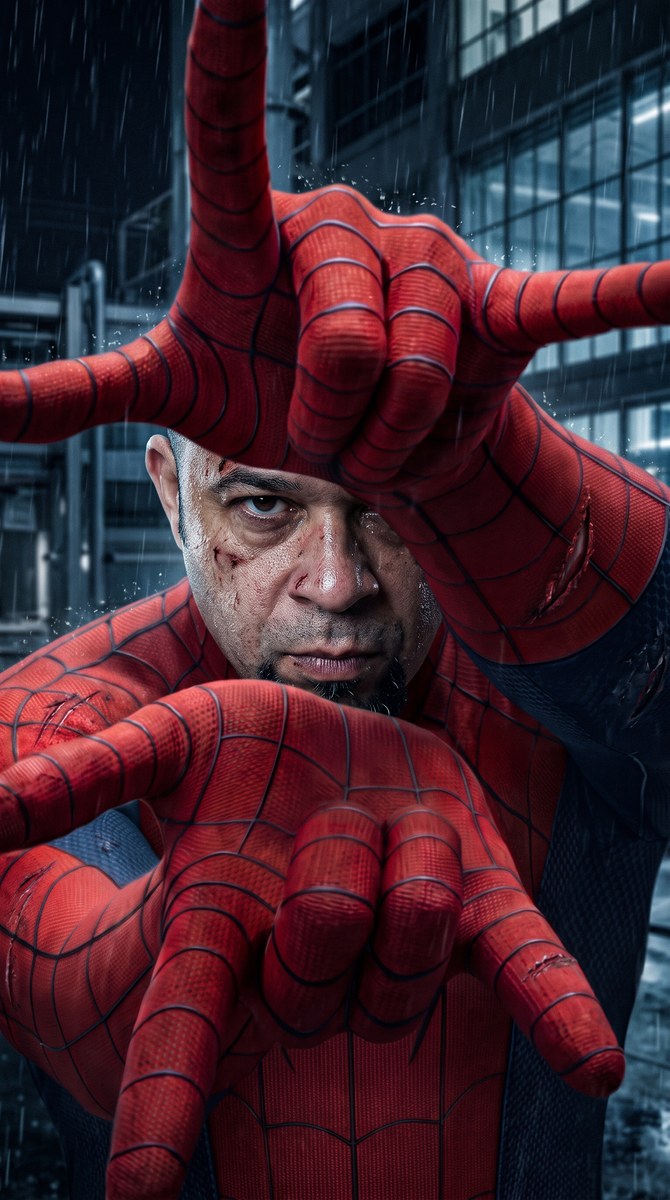
Create a hyper-realistic cinematic portrait of an adult male superhero with spider-like abilities in an intense action scene, like an official poster for a major Hollywood blockbuster.

COMPOSITION AND POSITIONING:

Create a vertical 9:16 cinematic photograph, framed extremely close, with the hero leaning forward and both arms thrust toward the camera.

Use a dramatic wide-angle perspective, with the hands occupying much of the foreground to create a striking sense of depth and three-dimensionality.

Raise one hand in front of the face. Extend the index finger, little finger, and thumb, with the other fingers folded, so that part of the eyes and forehead is hidden. Reach the other arm toward the camera, with the thumb, index finger, and little finger extended and naturally separated, and the other fingers folded, as if the character is about to shoot webs or block an attack.

CHARACTER AND FACIAL EXPRESSION:

Keep the face uncovered, with the appearance of someone who has just survived a violent battle.

Give the character an extremely intense expression and a direct gaze into the camera, with furrowed brows, a firm jaw, and a look of determination, exhaustion, and resilience.

Show realistic facial injuries: small cuts, bruises, scratches, and streaks of blood across the forehead and cheeks. Give the skin natural pores, minor imperfections, human texture, and authentic photographic detail.

HERO SUIT:

Use a red-and-blue suit.

Give the red sections an extremely detailed technical-fabric texture, with fine mesh, raised details, and geometric patterns resembling a high-strength weave.

Raised black web lines should cover the red surface, following the anatomy of the arms, hands, fingers, chest, and shoulders.

Place blue sections along the sides of the torso and the inner arms, using textured fabric with the appearance of athletic material.

Add subtle wear, small tears, seams, scratches, and damage to the suit, especially around the forearms, to suggest a recent battle.

Give the hands anatomically accurate fingers, made of the same red fabric with raised web lines and natural-looking joints.

SETTING AND LIGHTING:

Set the scene in a modern urban area, with metal architectural structures and large glass windows in the background.

Keep the background dark, with cool gray, blue, and black tones, and slightly out of focus to emphasize the man.

Include small suspended raindrops, a wet face and fabric, and natural reflections on surfaces.

Use dramatic cinematic lighting with cool side light, deep shadows, and soft highlights defining the face, arms, and suit.

PHOTOGRAPHIC DIRECTION:

Use the look of a major international blockbuster action photograph, with image quality comparable to the biggest Hollywood, Netflix, and Paramount Pictures productions.

Simulate capture with a professional cinema camera and an approximately 35 mm wide-angle lens. Use realistic depth of field and extremely sharp focus on the eyes, face, and hands.

Apply cinematic color grading with strong contrast, cool tones in the environment, and deep red in the suit.

Aim for 8K Ultra HD and HDR, realistic physical lighting, microscopic fabric details, natural skin texture, authentic reflections, and rigorously accurate human anatomy.

FINAL RESULT:

The image should look like a real photograph captured during the filming of a superhero blockbuster, not a digital illustration.

Do not use the appearance of CGI, 3D rendering, a video game, a drawing, anime, digital painting, or artificial skin.

Do not overdo the special effects. Prioritize photographic realism, human expression, material textures, and the strength of the composition.

OPTIONAL CHARACTER CUSTOMIZATION:

If a photo is attached, use it to replace the original character’s facial identity.

Faithfully preserve the person’s individual features from the photo: face shape, eyes, nose, mouth, goatee, eyebrows, facial structure, skin tone, and natural characteristics.

Integrate the person into the character so they appear to be wearing the suit and taking part in the scene.

Do not change the pose, hand positions, camera perspective, setting, lighting, cinematic injuries, or suit details.

Adapt the facial expression naturally to the scene while keeping the person visually recognizable.

If no photo is attached, create an original character without requesting additional images.

FORMAT: Vertical 9:16, hyper-realistic cinematic poster, 8K quality, professional Hollywood-photography finish.
What you'll create
This prompt creates a close, vertical action portrait of an adult superhero with spider-like abilities, posed with both hands thrust toward the camera. It specifies a realistic photographic look, a rain-darkened urban backdrop, and a worn red-and-blue suit, with an optional face reference for the character’s identity
Usage instructions
Attach a face photo only if you want the portrait to use that person’s identity; without one, the prompt calls for an original character. The reference guides facial identity, while the pose, hands, setting, lighting, and suit are specified by the prompt. To adjust the composition, change the stated 9:16 framing or wide-angle view
Frequently asked questions
Can I change the framing?
The prompt specifies a vertical 9:16 composition with a close wide-angle view; edit those details if you want a different framing




Comments
Tried this prompt? Share what you made, compare results, or ask a question