Torn-Stamp Artist Book Page
Turn an uploaded photo into a restrained artist-book or independent zine page, with a matching stamp-shaped cutout and photo fragment. The photo determines the crop, title, short poem, sketch subject, and archival details
Example outputs
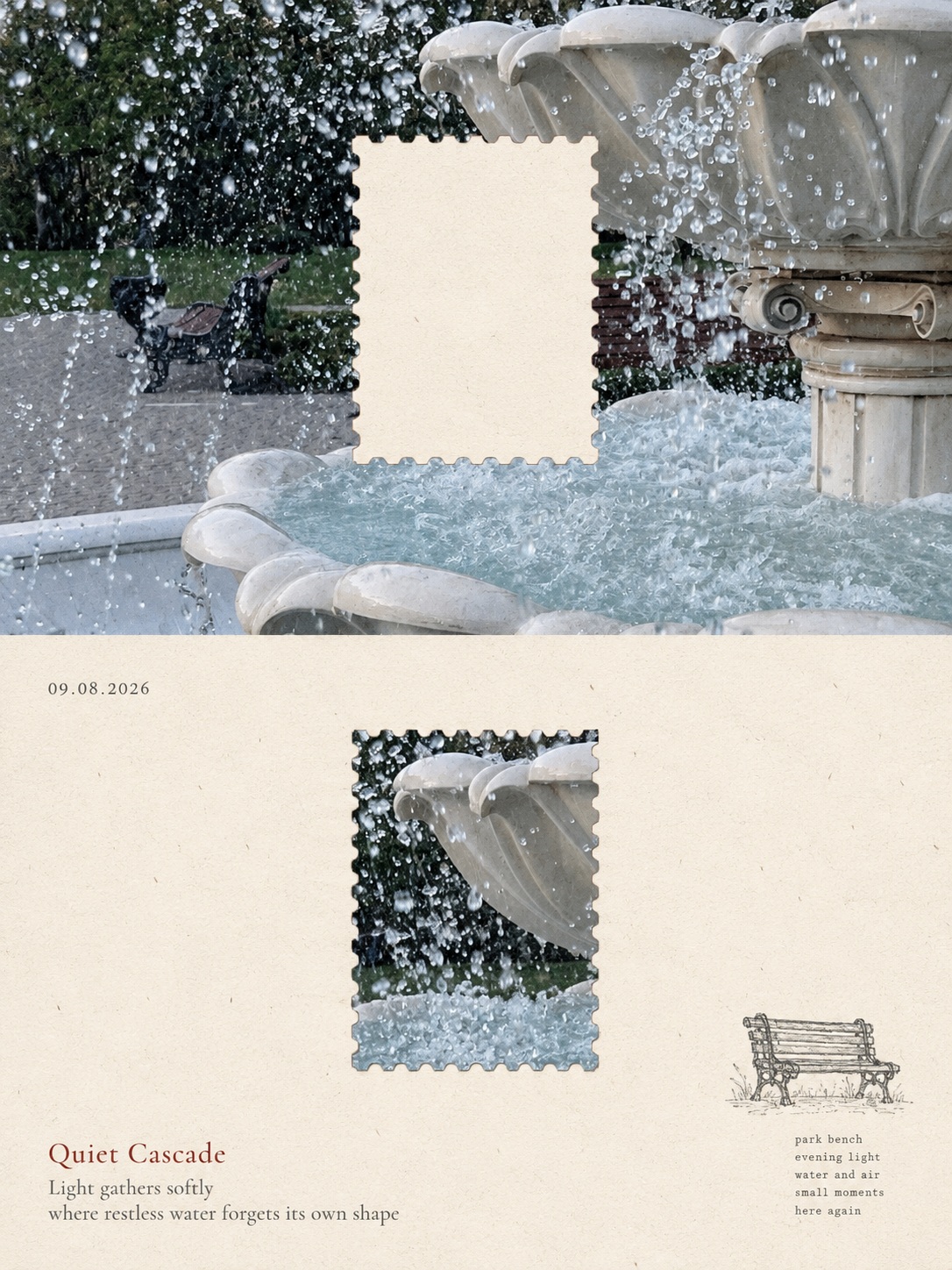
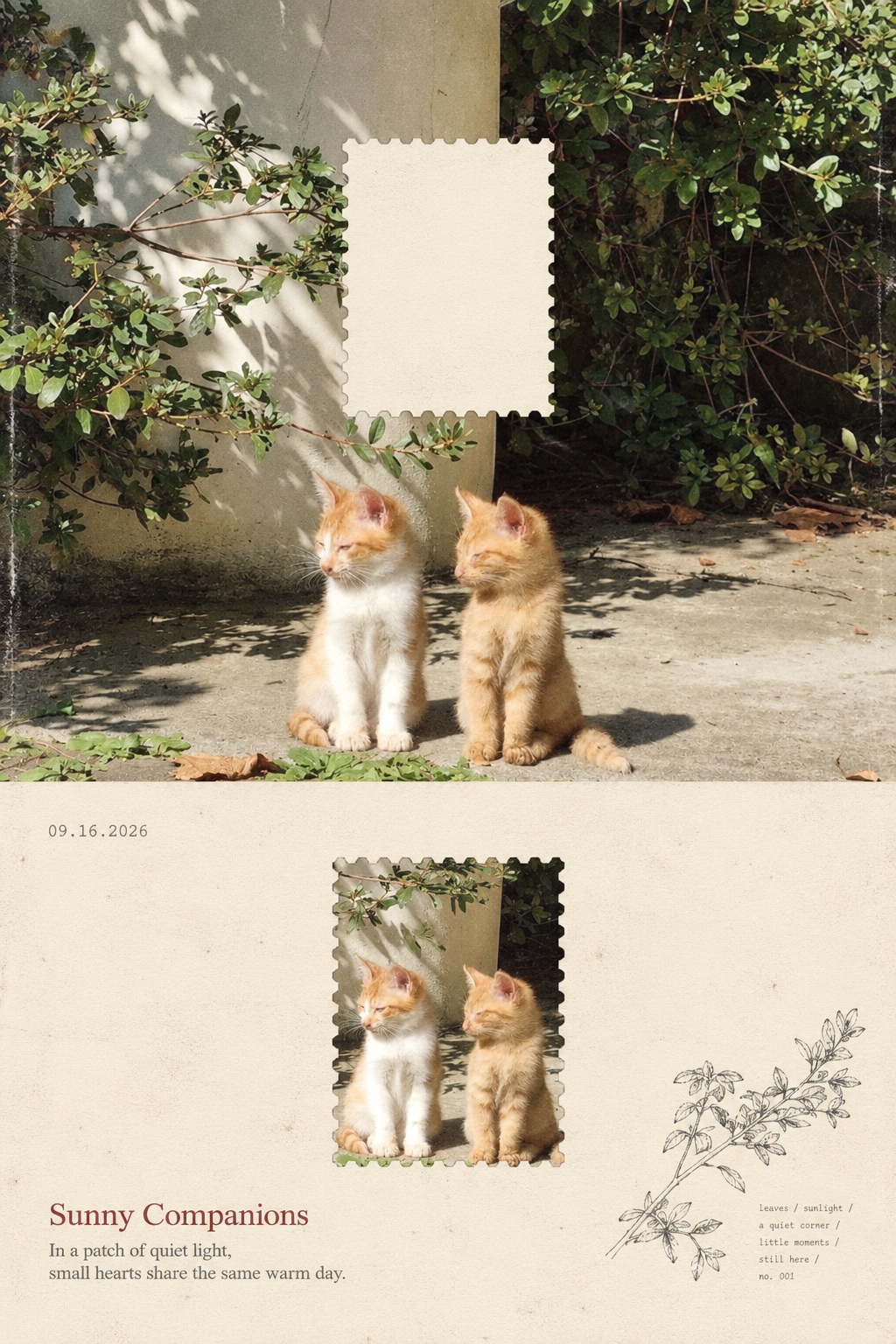
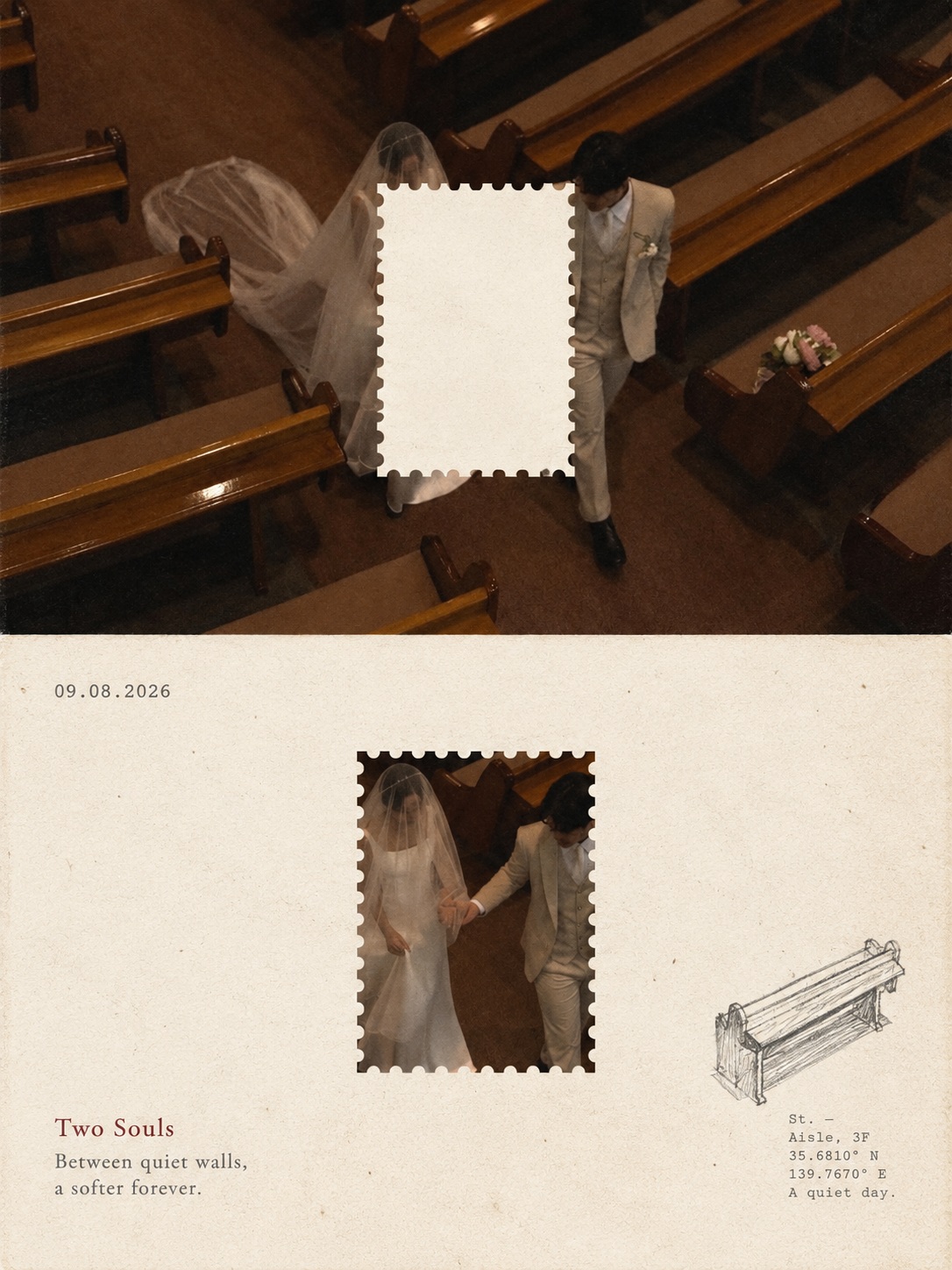
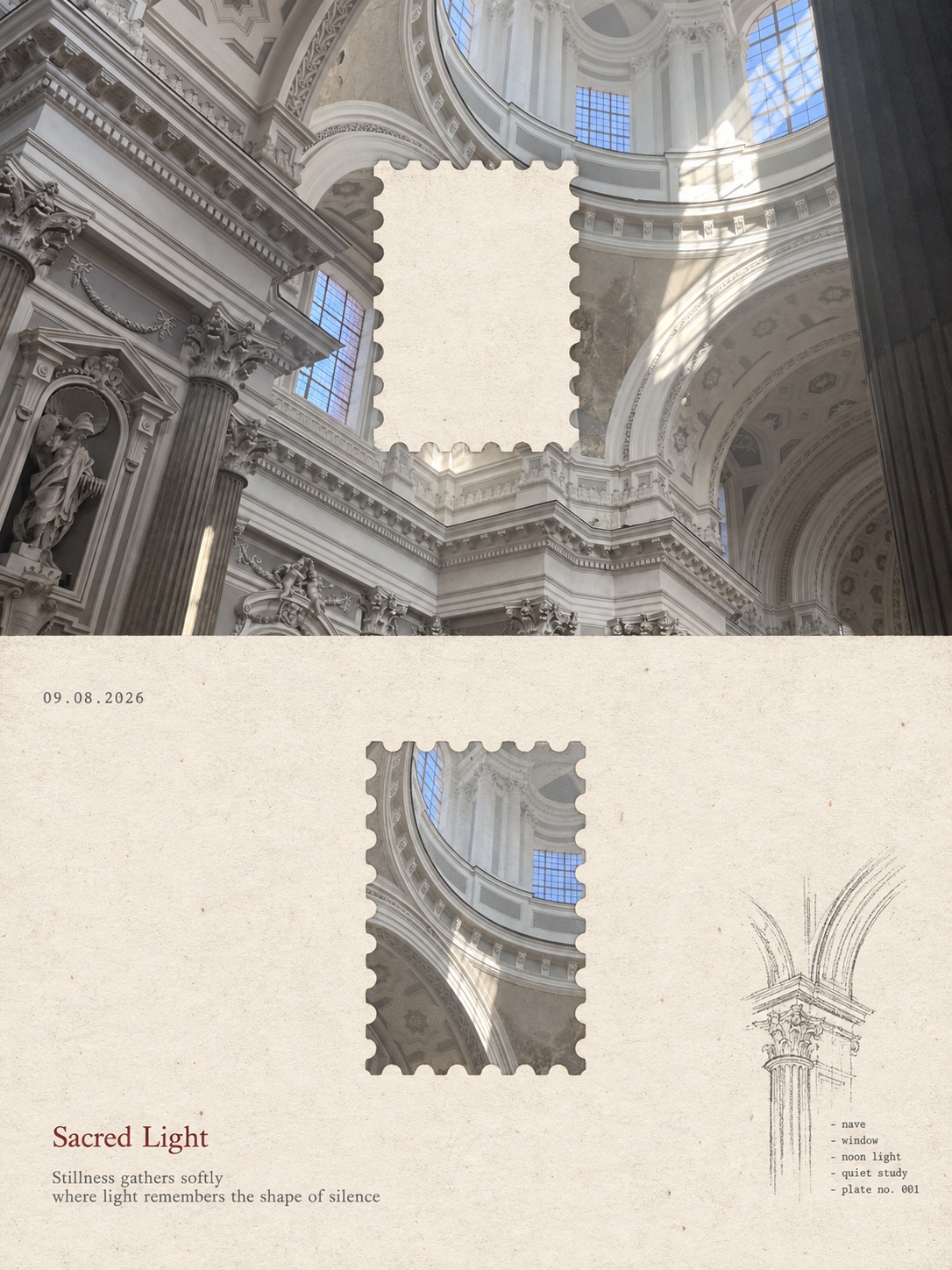
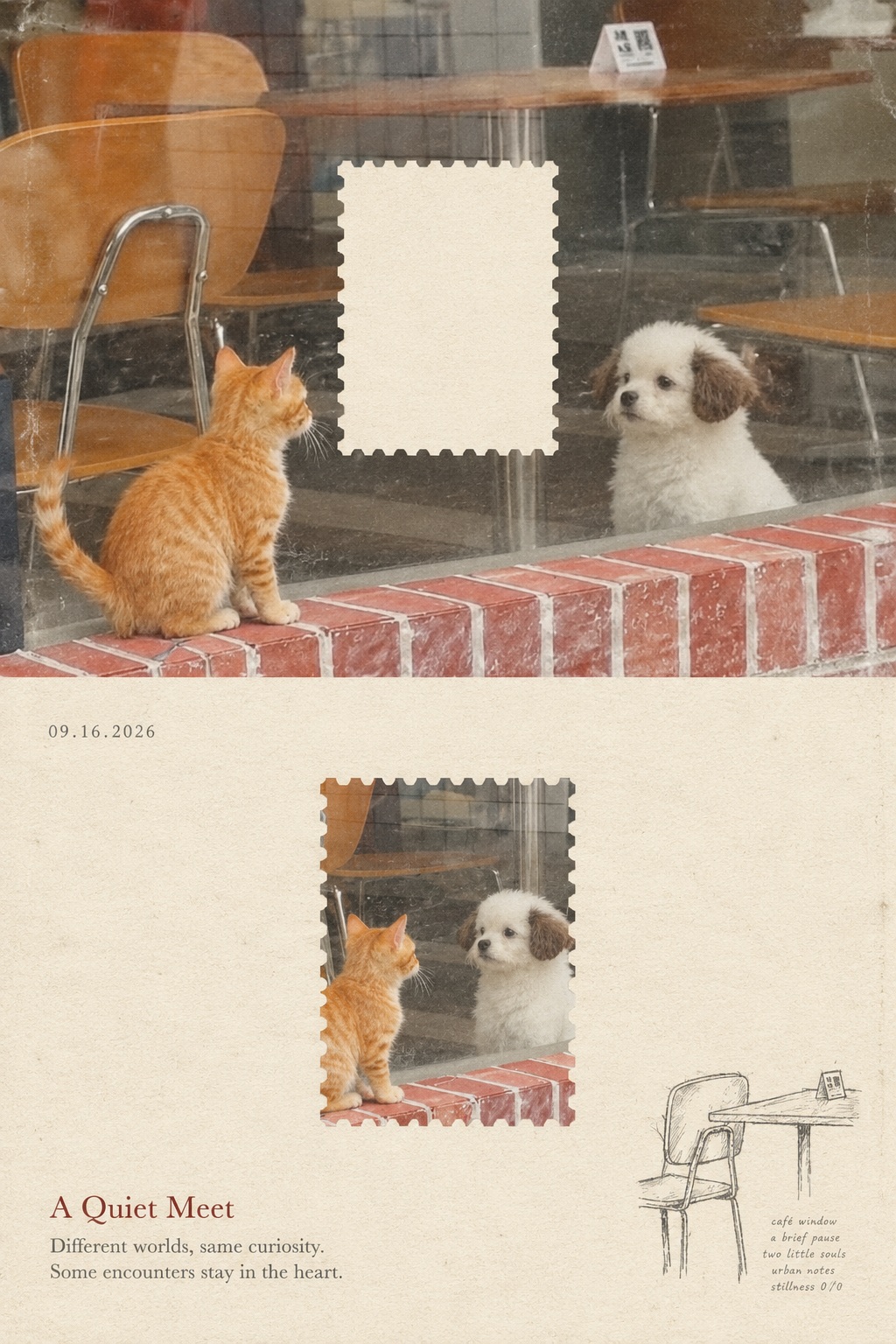
Prompt template
- Format
- Text
- Inputs
- Uploaded_photo (image) · Required
- Outputs
- Artist_book_page (image)
Transform the uploaded image into a single-page editorial art print / artist’s book / independent zine composition. Do not use any external reference images; the uploaded image is the sole visual source.

FINAL COMPOSITION
- Divide the canvas into two horizontal sections of exactly equal height.
- The entire upper section must be a photograph.
- The entire lower section must be warm ivory paper.
- The two sections must be exactly the same height.
- The finished image should look like a physical printed object, not a digital poster.

UPPER SECTION — PHOTO AND DIE-CUT OPENING
- Fill the upper section with the uploaded photo.
- Professionally crop the photo to preserve its most expressive composition.
- Do not replace, redraw, beautify, or substantially alter the original photo. Preserve its natural, phone-photograph quality.
- Choose a visually meaningful focal point within the photo, such as a house, tree, person, flower, object, patch of light, or landscape feature.
- Create a vertical, postage-stamp-shaped die-cut opening at the exact visual center of the upper section, centered both horizontally and vertically.
- The opening must contain no remaining photo content. Fill it with the exact same warm ivory paper color used in the lower section.
- Make the opening look like a physical punch or tear removed this part of the photo from a book page.
- Give its edge refined, evenly spaced postage-stamp perforations.
- The opening should be 20–30% of the full canvas width and 30–40% of the upper section’s height.
- Do not make the opening look like a decorative white layer placed on top of the photo. It must look like a real hole cut through the photo.

CORE PHOTO-EXTRACTION RULE
Before making the ivory opening, crop the original photo area that corresponds to its position. Reuse that exact photo crop inside the stamp shape in the lower section. Do not regenerate, reinterpret, or create a different version of the image; do not use generic stock material; do not fill the lower stamp with ivory paper. The lower stamp must use the original photo fragment removed from the upper section, preserving its composition, colors, objects, and details exactly.

Follow this sequence: original photo → select a meaningful area → copy that photo crop → replace its corresponding area in the upper section with ivory paper to create the opening → place the copied photo fragment inside the stamp outline in the lower section. The upper opening must be entirely blank ivory; the lower stamp must hold the photo fragment removed from the upper section.

LOWER SECTION — PAPER BASE
- Cover the entire lower section with warm ivory paper.
- Give the paper subtle natural fibers, fine grain, slight tonal variation, and minor printing imperfections.
- Make it feel like a scanned physical page from an artist’s book or independent publication, not clean digital white.
- Place the extracted photo stamp at the visual center of the lower section.
- The lower stamp must exactly match the upper opening in size, proportions, and perforated-edge style.
- Keep the photo content inside the stamp clear and recognizable.
- Do not add heavy shadows, gloss effects, 3D effects, or a modern sticker effect.

TYPOGRAPHY AND PAGE DETAILS
Use restrained, minimal typography inspired by vintage postcards, artist’s books, archival notes, and independent print publications. Keep the text small so it does not compete with the main image.

1. Date: Place it in the upper-left corner of the lower section. If there is no date metadata, use the current date. Format it as MM.DD.YYYY in small dark gray type, with generous surrounding whitespace.
2. Title: Create a poetic title based on the atmosphere of the original photo, using exactly 2–3 English words. Place it in the lower-left corner of the lower section. Use small, muted dark red type in an elegant, understated vintage serif, like a caption in an art book rather than a large poster headline.
3. Poetic line: Write a short poetic text based on the photo, using 8–12 English words. Split it into two lines directly below the title. Use small dark gray serif type, approximately the same size as or slightly smaller than the title, with balanced line breaks. Do not describe the visible objects directly; keep the mood quiet and observant, with a slight sense of ambiguity and open space.
4. Hand-drawn line sketch: Select a secondary scene element from the original photo that is different from the content of the stamp crop. Draw it as a minimal, loose, monochrome line sketch and place it in the lower-right corner of the lower section. Use dark gray, like a casual sketch in a notebook: minimal, delicate, imperfect, and slightly naïve. Do not make it look like polished professional illustration, and do not introduce objects absent from the original photo.
5. Tiny archival text: Add five lines of extremely small, thin dark gray English text beside the sketch. It is only a graphic archival detail and does not need to convey meaningful information. It may resemble fragmentary observation notes, coordinates, catalog entries, or remnants of print. Keep it tiny, visually subordinate, and like real printed matter; do not make it prominent or readily readable.

OVERALL VISUAL STYLE
Make the finished page feel like a torn-out page from a contemporary artist’s book, personal archive, postcard, or independent zine. Combine an ordinary real-life photograph, editorial graphic design, simulated collage, a stamp motif, warm ivory paper, restrained typography, a simple hand-drawn sketch, subtle printing imperfections, and a quiet, poetic atmosphere. The central concept is the contrast between an ordinary photograph and the visual effect of a physical stamp-shaped piece being cut or torn from it.

Keep the mood sophisticated, poetic, personal, slightly detached, and understated. Preserve the original photo’s natural colors, paired with warm ivory, dark gray, and muted dark red. Add only very subtle paper fibers, printing grain, imperfect ink, and a soft scanned-object texture.

IMPORTANT CONSTRAINTS
- The uploaded photo is the only image source.
- Preserve the appearance and qualities of the original photo.
- Do not redraw the photo as AI illustration.
- Do not add content that was not in the original image.
- Do not add unnecessary decorative elements.
- Do not use gradients, gloss, strong shadows, 3D effects, or modern UI graphics.
- Do not make the text large.
- Except for the specified placements, do not force excessive symmetry; preserve generous negative space.
- The upper stamp-shaped opening must be completely blank ivory.
- The lower stamp must contain the original photo fragment removed from the upper section, with the two stamp shapes matching exactly.
- Keep the title and poetic line small and understated, like an art-book caption; the poetic line must be split across two lines.
- The final result must look like a physical printed artist-book page, not a generic AI poster template.

Keep the overall page logic coherent. Let the photo determine the crop, poetic title, short text, sketch subject, and tiny archival text.
What you'll create
Create a two-part artist-book page that pairs an unaltered photo with warm ivory paper and a perforated stamp-shaped opening. Repeat the opening’s photo fragment as a matching stamp below, alongside quiet editorial text and a minimal sketch
Usage instructions
Provide the photo you want to transform; it is the only visual source the prompt allows. The design uses one crop from that photo for both the upper cutout and lower stamp, while the same photo also guides the text and sketch. For a different balance, adjust the stamp’s permitted size ranges while keeping the cutout and stamp exactly matched
Frequently asked questions
What should appear in the stamp-shaped cutout and the matching stamp?
The upper cutout should be empty ivory paper, while the lower stamp should contain the exact photo crop removed from that opening
What date should be used if the photo has no date metadata?
Use the current date in MM.DD.YYYY format


Comments
Tried this prompt? Share what you made, compare results, or ask a question