Bizen Ware Hidasuki Kimono Couture
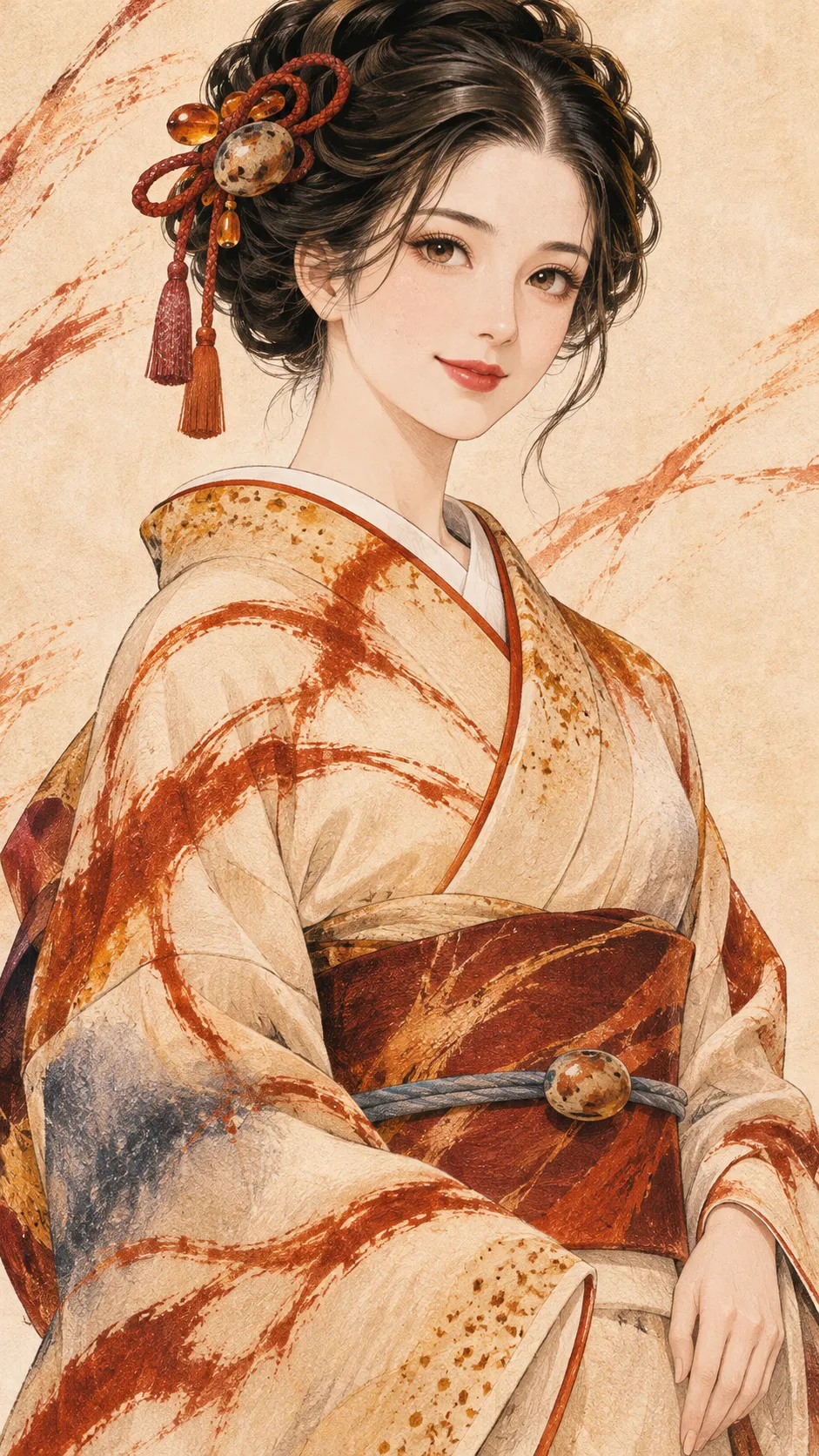
Create a refined, fully hand-drawn 2D fashion illustration combining Bizen ware’s natural firing patterns, traditional Japanese kimono, and the decorative spirit of ukiyo-e bijin-ga.
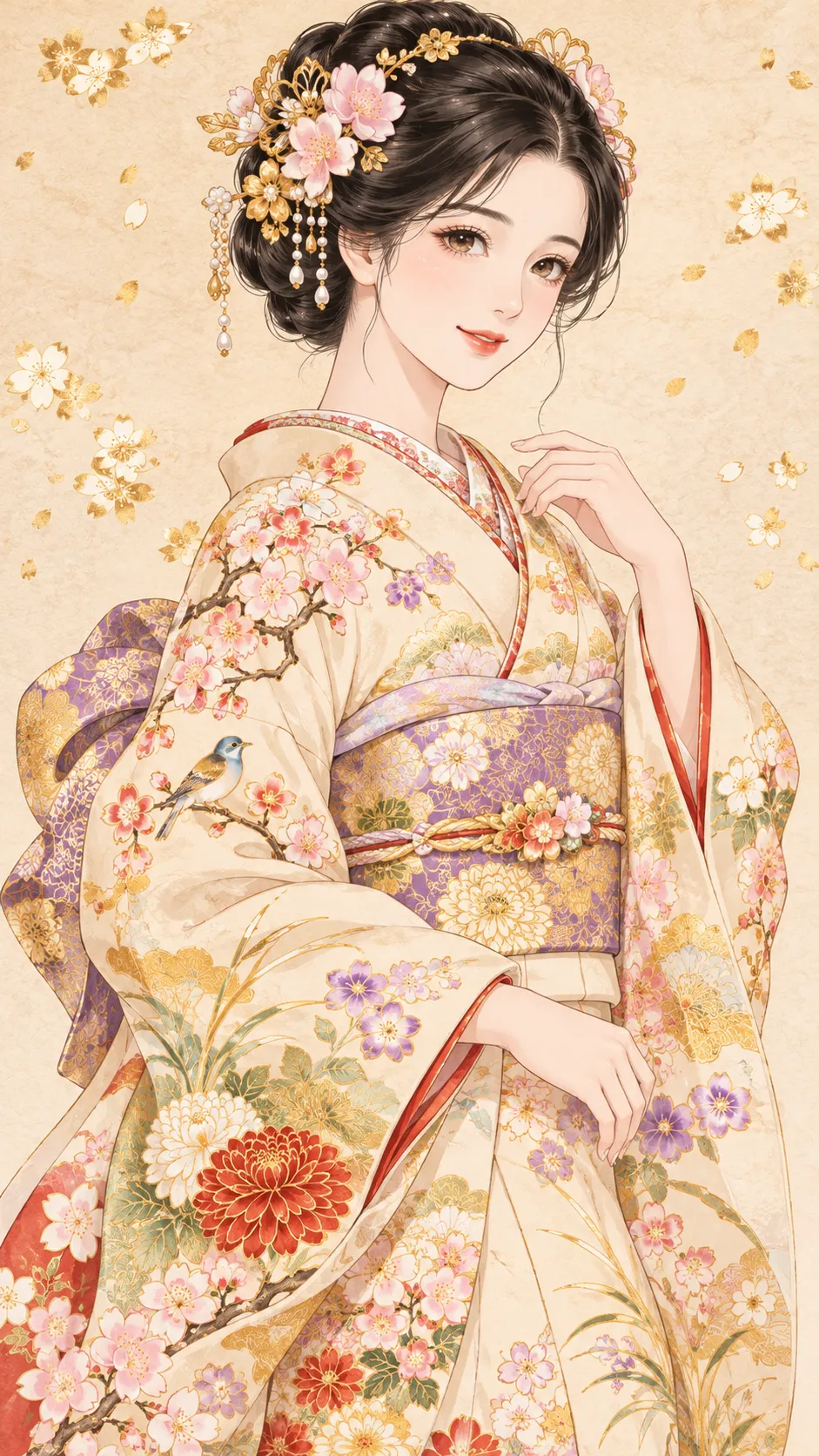
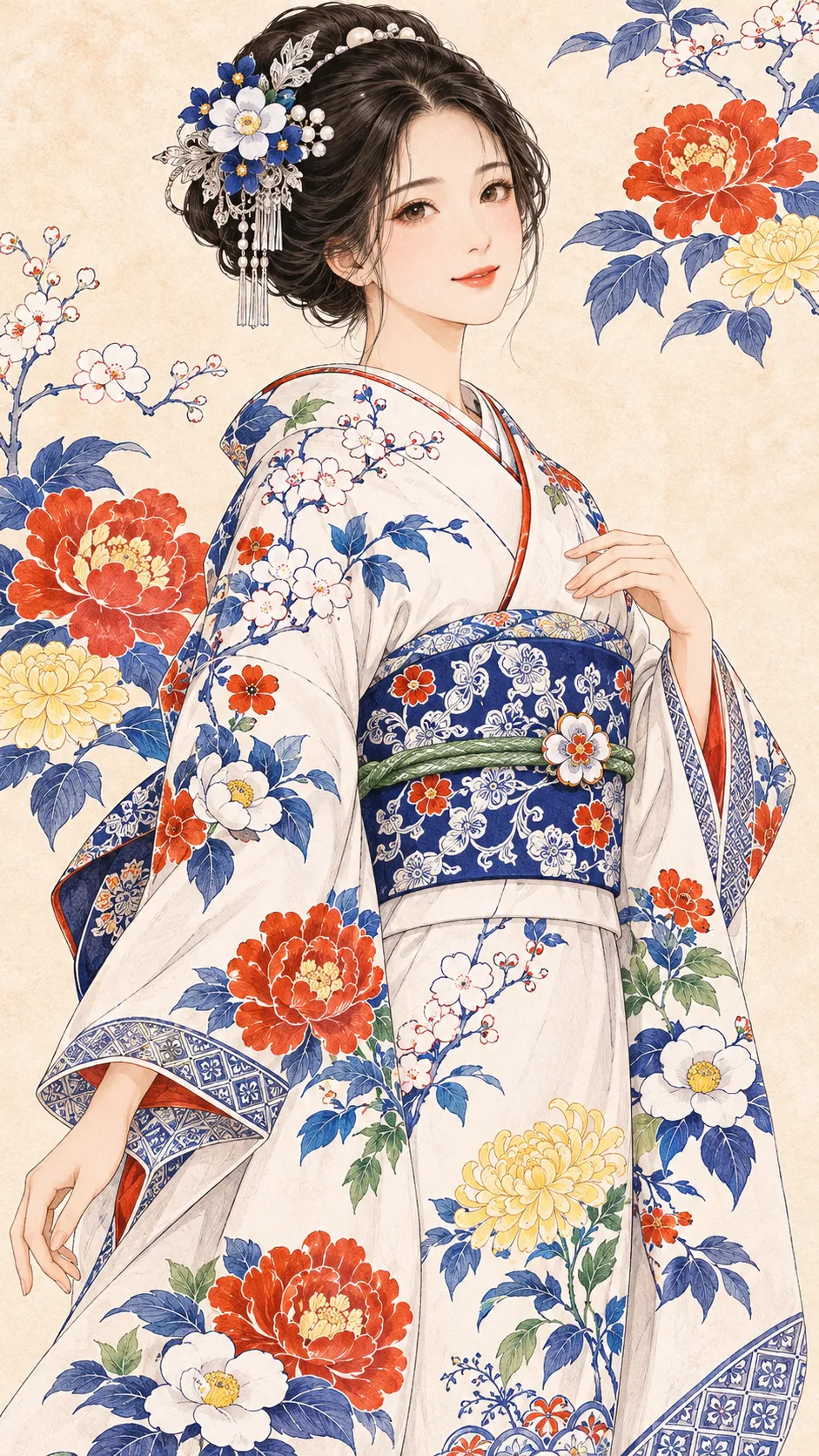
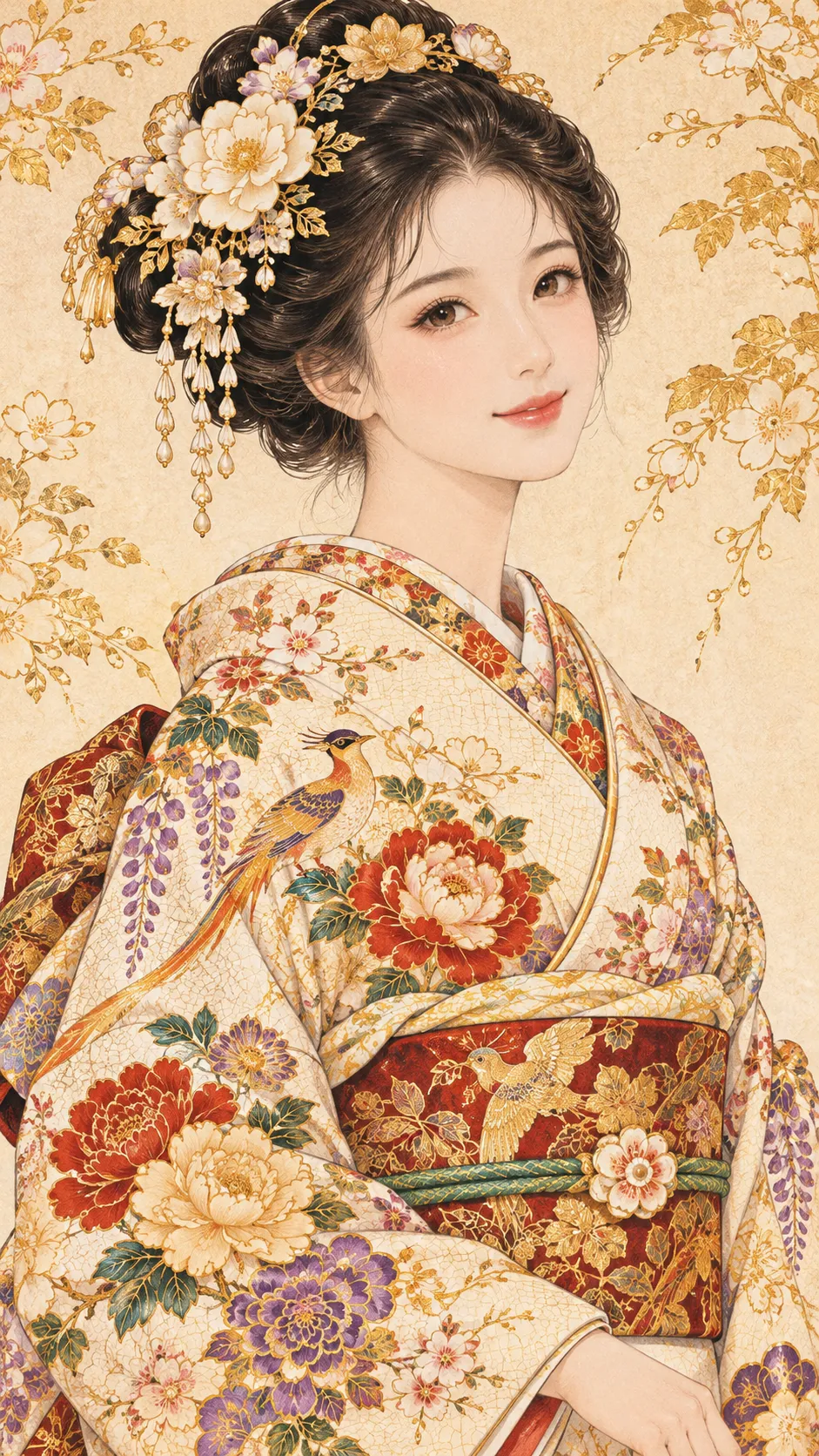
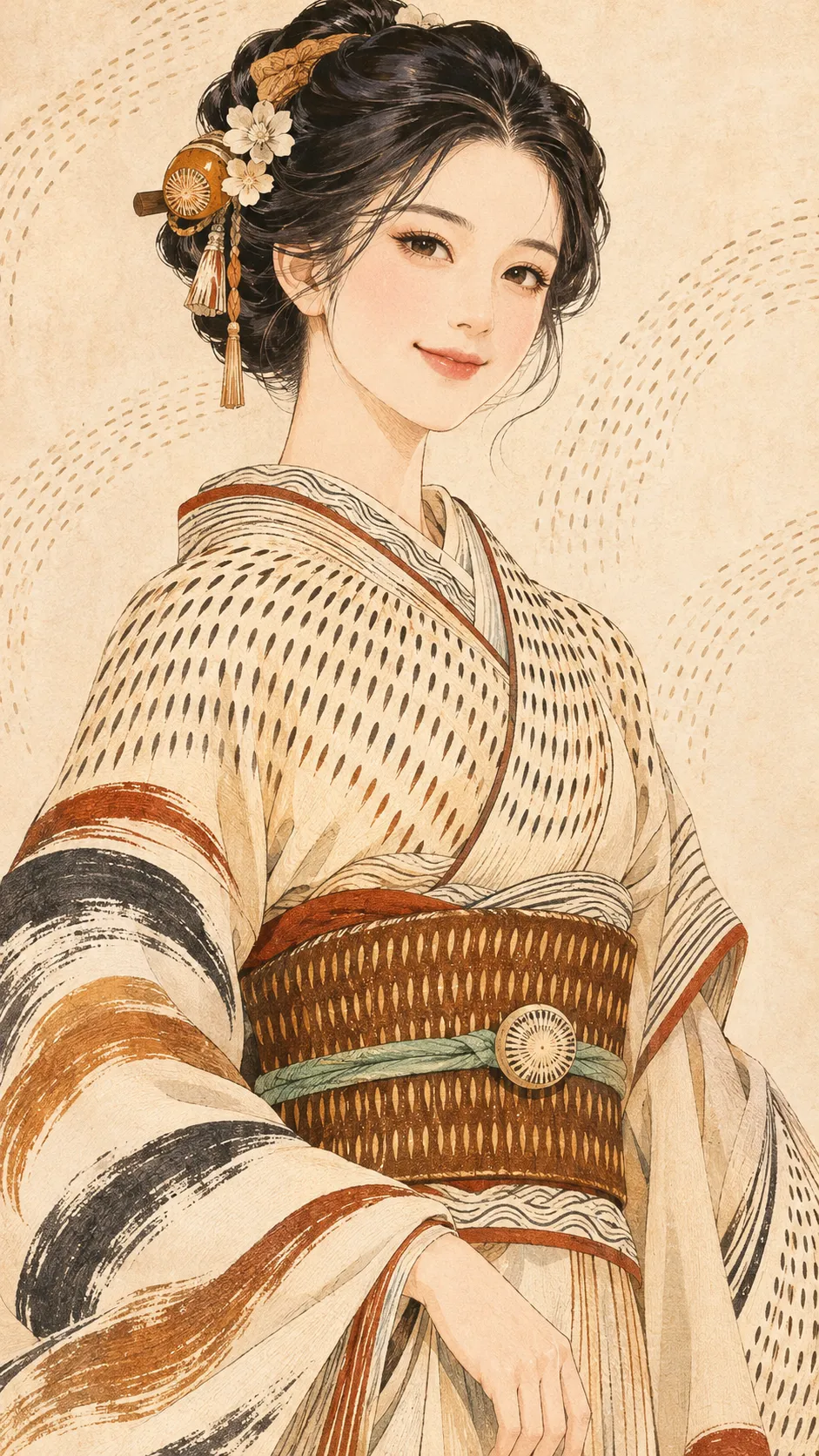
Example outputs
Prompt template
- Format
- Markdown
- Outputs
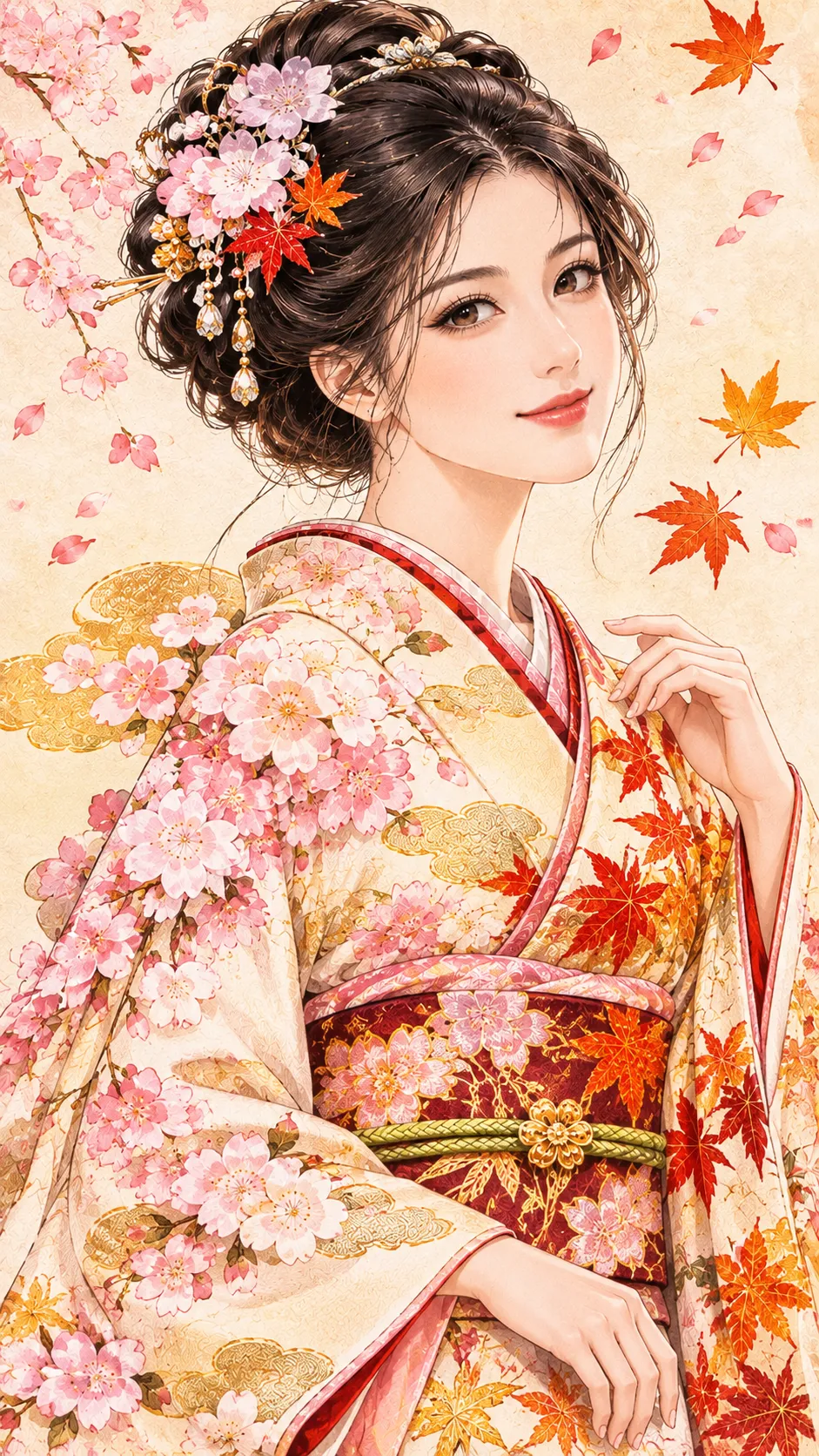
- Fashioneditedorialillustration (image)
Create a fully 2D, hand-drawn fashion illustration combining traditional Japanese Bizen ware, the beauty of its Hidasuki firing patterns, Edo-period ukiyo-e bijin-ga, Japanese kimono culture, and contemporary luxury fashion illustration.

## Concept
Depict a breathtakingly beautiful adult Japanese woman wearing the scarlet art created by Bizen ware’s earth and fire, radiating both natural strength and refined elegance. Transform the characteristic Bizen ware patterns—Hidasuki, goma, and sangiri—into the design of one kimono. Make Hidasuki the central motif, especially its red-brown lines against pale earthen tones. Reimagine the pottery patterns as silk dyeing, weaving, and embroidery rather than simply placing ceramic patterns onto fabric.

Convey artistry through bold, flame-like curves, natural shifts of color, and graceful negative space. Do not rely on lavish gold decoration or florid bird-and-flower motifs. Harmonize the rustic warmth of fired pottery with the sophistication of contemporary luxury fashion.

## The woman
Show one adult Japanese woman with youthful-looking, refined features. Give her delicate, harmonious beauty reminiscent of a fine Western bisque doll, balanced with the graceful softness of a Japanese woman: large, clear eyes with natural, beautiful double eyelids; fine eyelashes; a neat nose bridge; softly full, elegant lips; and a smooth oval face. Balance charm and intelligence with a poised, dignified presence. Her expression is calm and lively, with a beautiful sparkle in her eyes and a natural, elegant smile that conveys quiet confidence.

Arrange her glossy black hair in a polished, Japanese-Western-inspired updo. Include deep scarlet braided cords, small amber-colored ornaments, and ceramic-style accessories reminiscent of Bizen ware’s unglazed, fired surface. Keep the hair ornaments restrained so they support rather than compete with her face and kimono.

## Kimono design
Create one-of-a-kind Japanese couture centered on Bizen ware’s Hidasuki, with colors and effects drawn from goma and sangiri. Base the garment on fine silk in warm ivory and pale earth tones, beautifully combined with vivid scarlet, deep red-brown, amber, ink black, and blue-gray.

The kimono’s defining feature is a bold, flowing red-brown pattern recalling Hidasuki. Let scarlet curves spread naturally from the shoulders across the sleeves, evoking the path of flame. Make the lines irregular and organic, reflecting the natural interaction of rice straw and clay rather than a uniform digital pattern. Vary their thickness and intensity to create an elegant rhythm across the unbleached silk.

In parts of the sleeves, add delicate blurred-dye effects in ink black and blue-gray inspired by sangiri. Let the color transition from pale earth to deep ink black, giving quiet beauty an underlying strength. Place restrained, fine amber-colored embroidery inspired by goma at the collar and cuffs. Do not fill the entire garment with pattern; preserve the contrast between beautiful unpatterned space and bold scarlet ornament.

Use deep red-brown for the obi, with a refined woven pattern echoing Hidasuki’s curves. Use a muted blue-gray obijime, and add a small ceramic-style obi ornament reminiscent of Bizen ware’s rustic, unglazed fired surface. Respect the structure of traditional Japanese dress while giving the silhouette the polish of contemporary luxury fashion. The clothing must look soft and beautiful, like silk—not hard, as if the woman were wearing pottery.

## Composition and pose
Use a vertical 9:16 fashion-editorial composition, framed from around the woman’s waist to the top of her head. Clearly show her face, hair ornaments, Hidasuki pattern spreading from shoulder to sleeve, and the upper part of the obi. Make her face an important visual focal point, highlighting the sparkle in her eyes, delicate expression, and refined features.

Give her a naturally elegant standing pose with gentle movement through the shoulders and upper body. Turn her face to a flattering angle toward the viewer and give her a natural, graceful smile. Position her arms comfortably so the scarlet sleeve patterns remain visible. Do not cross her arms. Make the path from each shoulder through the elbow and wrist anatomically clear: one arm and one hand on each side. Keep fingers natural, avoid extreme perspective or intricate overlapping fingers, and do not place her hands in front of her face. Do not let an arm disappear unnaturally inside a sleeve. If a wrist or hand falls outside the composition, handle the crop naturally.

Give the woman comfortable space in the frame so her beauty and the kimono’s pattern work in harmony. Allow artistic variation in the pose, the flow of the sleeves, and the placement of the motifs so each result can feel distinct and beautiful.

## Background and palette
Use a simple, refined background in warm pale ivory, reminiscent of fine Japanese washi paper. Add only very subtle red-brown brushstrokes around the woman, recalling Hidasuki. Keep background decoration unobtrusive so the woman and kimono remain prominent. Do not depict specific buildings, landscapes, a kiln, or flames themselves.

Create beautiful contrasts among ivory, earth tones, scarlet, red-brown, amber, ink black, and blue-gray. Keep the overall palette warm, bright, and elegant, with vivid scarlet making a memorable impression. Do not make the work dark or drab; let natural strength coexist with luxurious refinement.

## Art style and technique
Use a completely 2D, hand-drawn fashion-illustration style that fuses the decorative quality of Edo-period ukiyo-e bijin-ga, the natural firing patterns of Bizen ware, traditional Japanese dyeing and weaving, and the polished figure illustration of a contemporary luxury fashion magazine. Use delicate, beautiful contour lines; intricate pattern work; the soft texture of silk; color fields reminiscent of woodblock prints; and graceful brushwork.

Render Hidasuki as bold, flowing red-brown curves; goma as fine amber decoration; and sangiri as natural gradations of ink black and blue-gray. Give the patterns the irregular variation of natural processes, avoiding mechanical uniformity. Make the woman’s features contemporary and attractive, while the kimono expresses Bizen ware’s rustic beauty and distinctive ornamentation.

The style must be dignified and original, combining traditional Japanese aesthetics with luxury fashion illustration—not shōjo manga or anime. Emphasize flat color composition and the artistry of hand drawing. Do not use photographic rendering, 3D CGI, or dimensional rendering.

## Final requirements
Make the woman strikingly beautiful at first glance. Let Bizen ware’s Hidasuki be the leading motif, with features of goma and sangiri incorporated into an original, sophisticated kimono. Express the natural art of earth and fire as contemporary Japanese couture. Emphasize her face and the bold scarlet pattern across her upper body, and harmonize the features, patterns, colors, and composition into a highly finished, museum-worthy artwork.

Vertical 9:16 composition; upper-body framing from around the waist to the head; completely 2D; high-detail hand-drawn finish. Do not include any text, title, logo, signature, or watermark in the image.
What you'll create
A woman appears in a detailed upper-body illustration with red-brown lines and understated fired-earth colors. Silk dyeing and embroidery reinterpret pottery marks without filling every area with decoration.
Usage instructions
Use the supplied description as a detailed art direction for a single upper-body illustration; no reference image is required. The design’s main controls are the Hidasuki curves and the balance of ivory, earth, scarlet, amber, charcoal, and blue-gray; adjust their prominence while keeping the kimono’s uncluttered negative space. Keep the 9:16 portrait framing and the stated prohibition on text, logos, signatures, and watermarks.
Frequently asked questions
Are ceramic patterns pasted onto clothing?
No. They become silk dyeing, weaving and embroidery.
What is the central motif?
Hidasuki’s red-brown linear pattern.


Comments
Tried this prompt? Share what you made, compare results, or ask a question