Onta Ware Couture Kimono Portrait
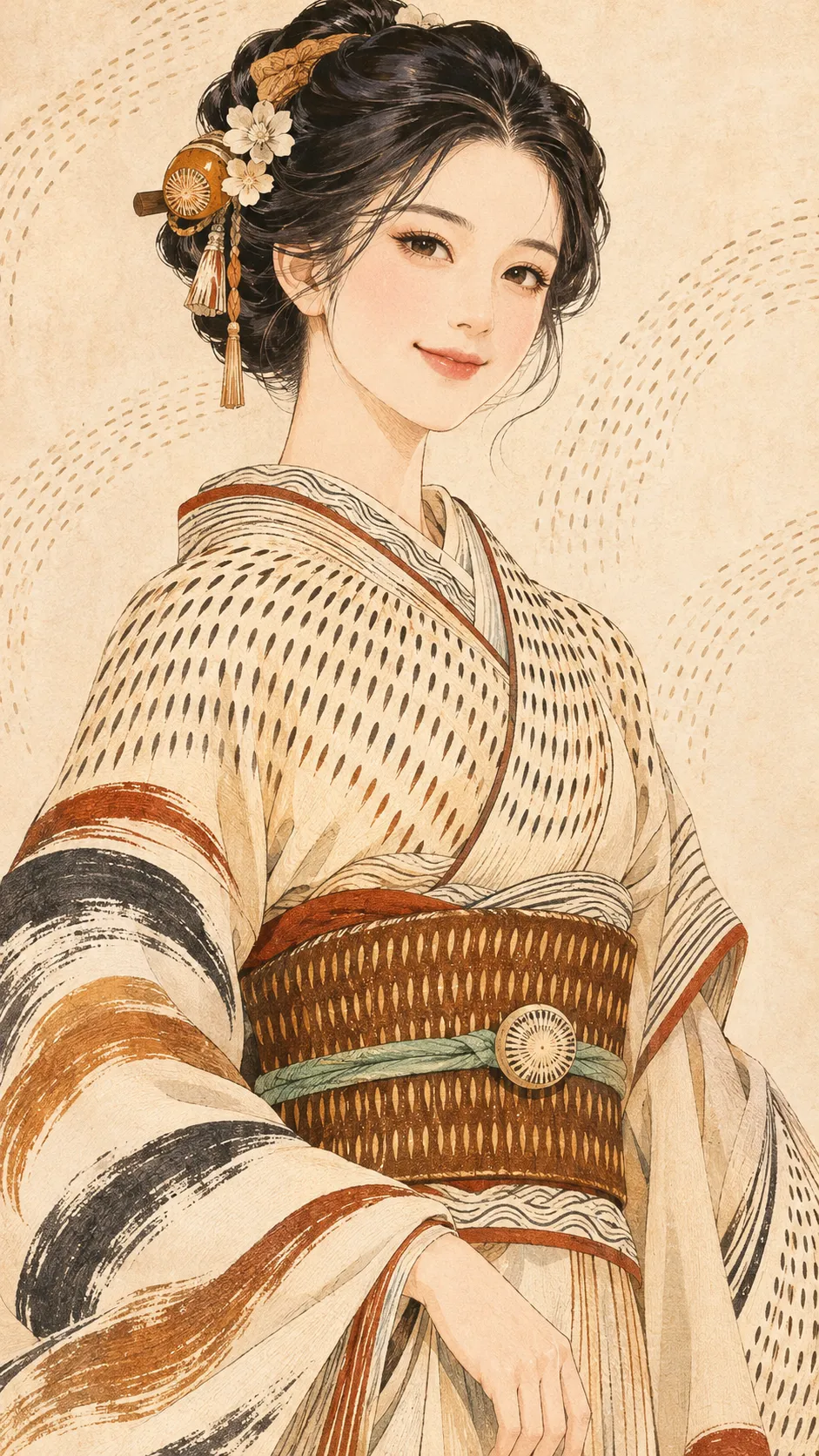
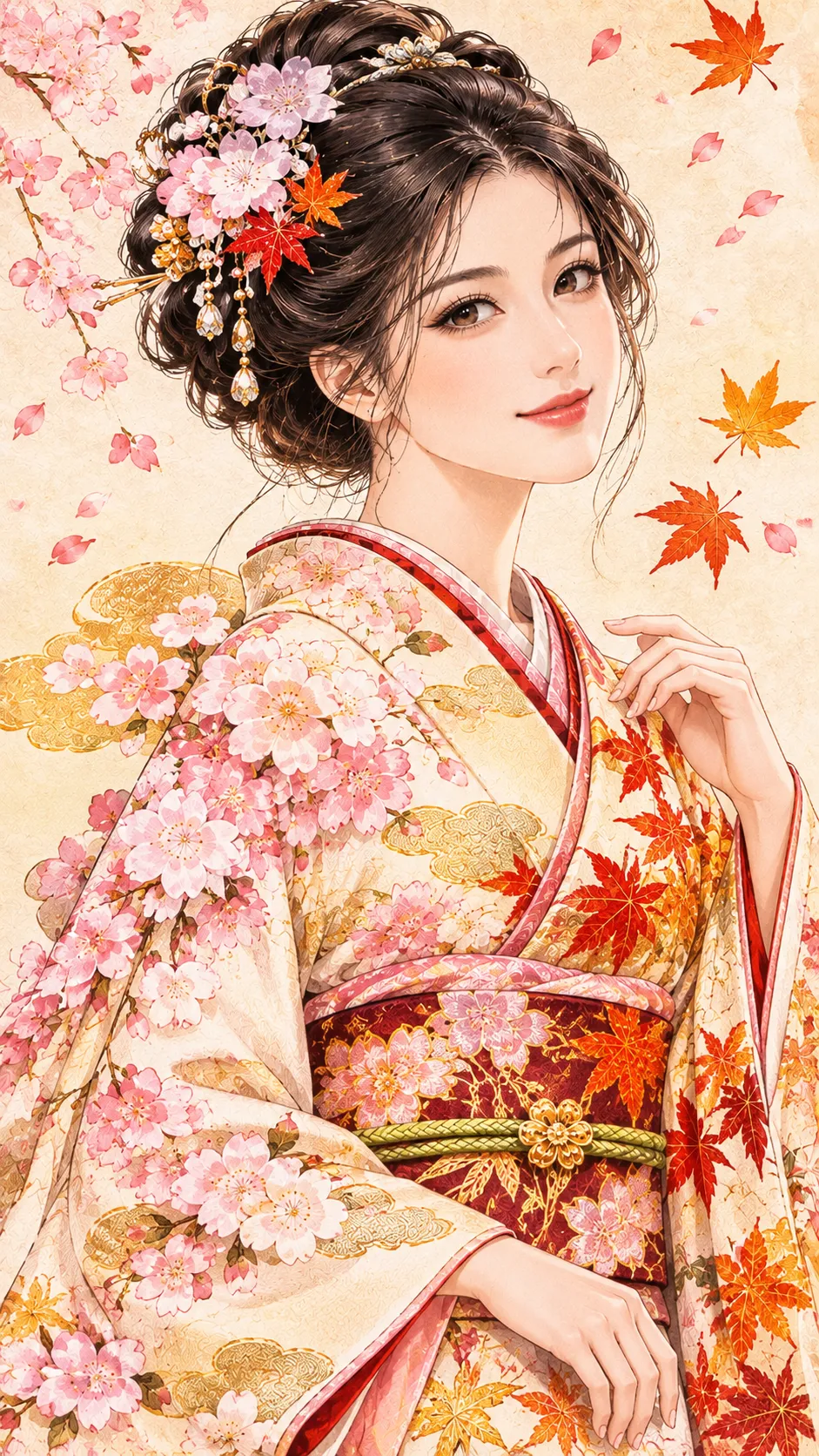
Create a refined, entirely 2D hand-drawn fashion illustration of an adult Japanese woman wearing a couture kimono inspired by Onta ware’s handmade patterns and earthy palette.
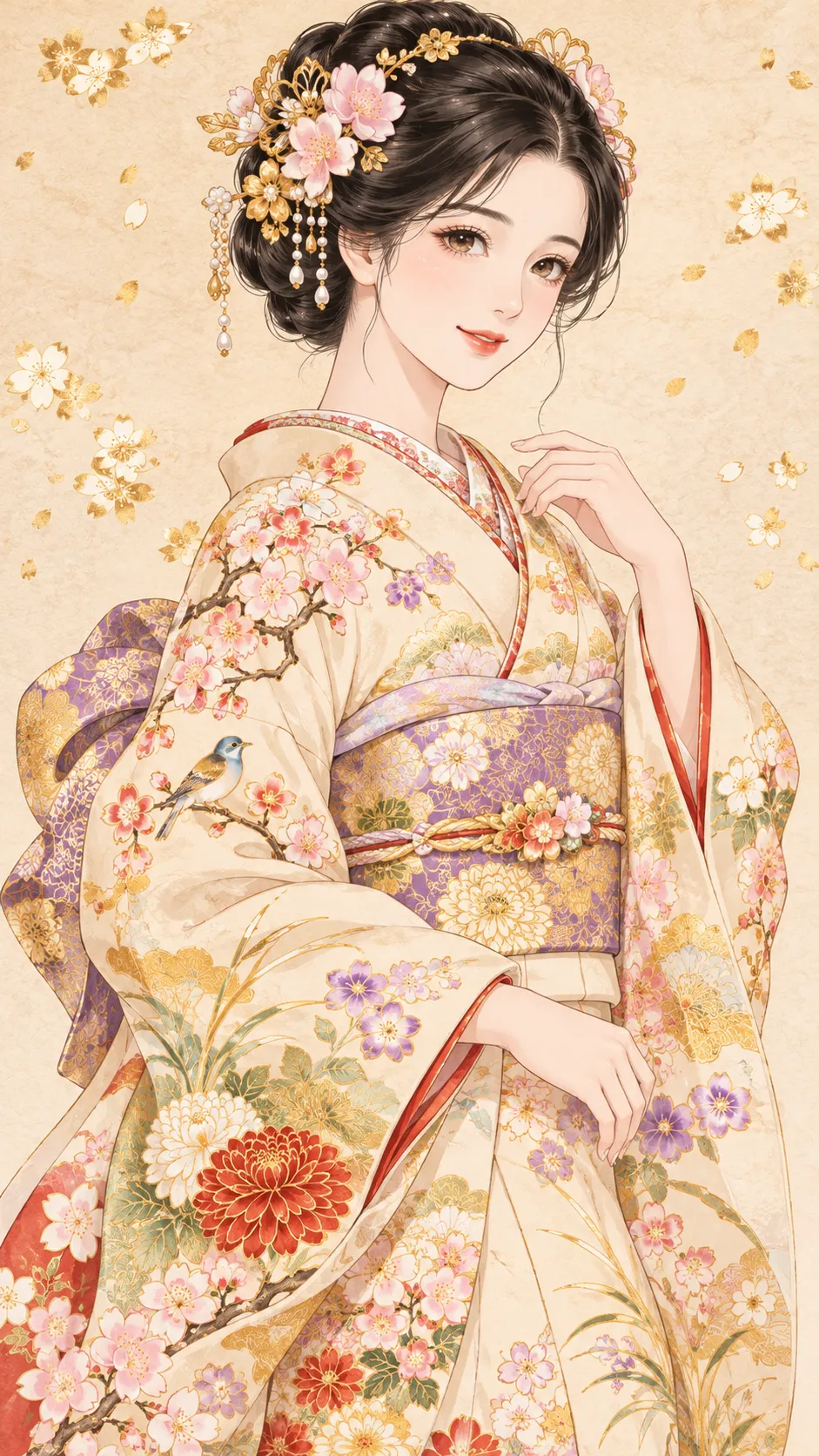
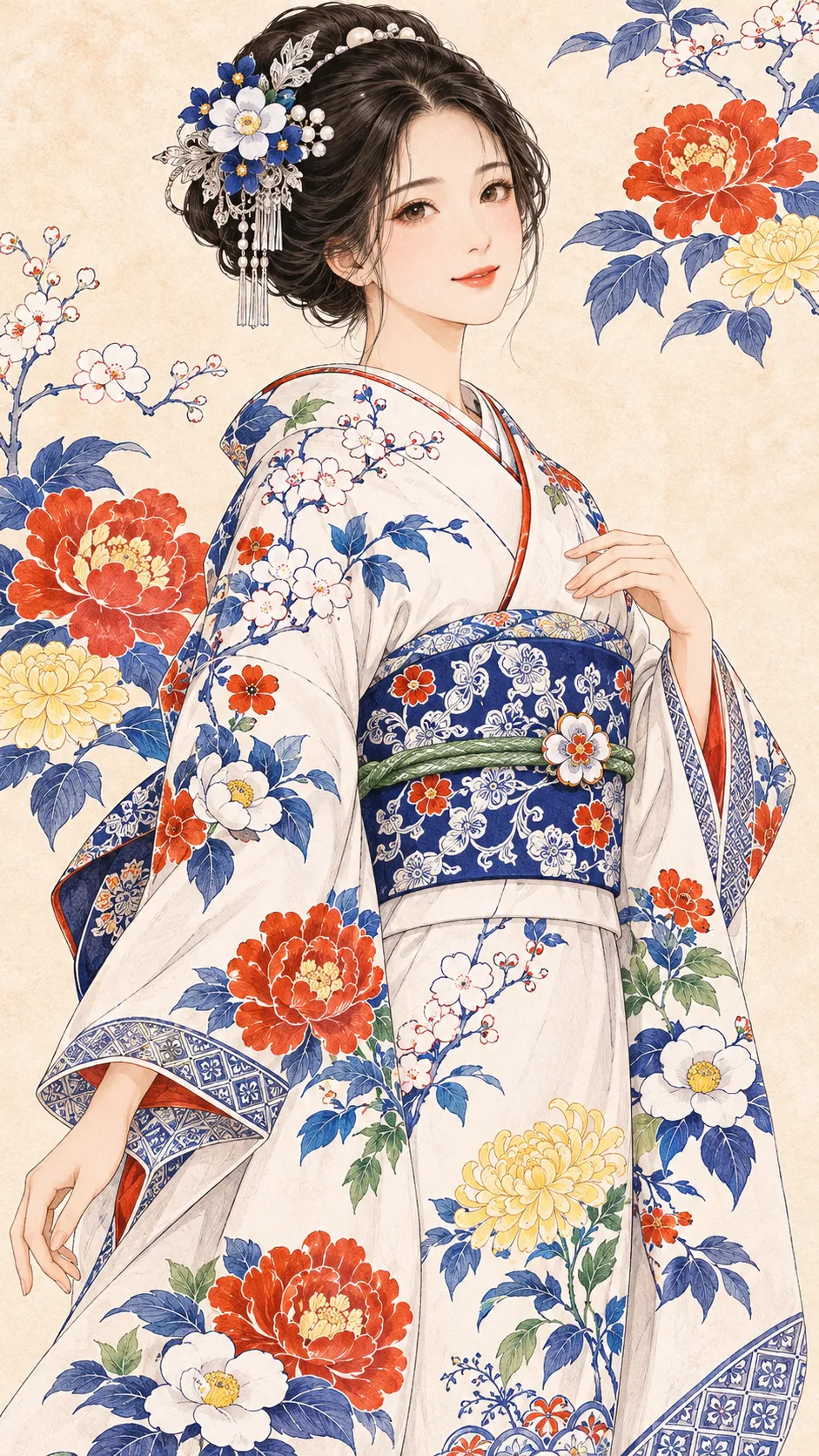
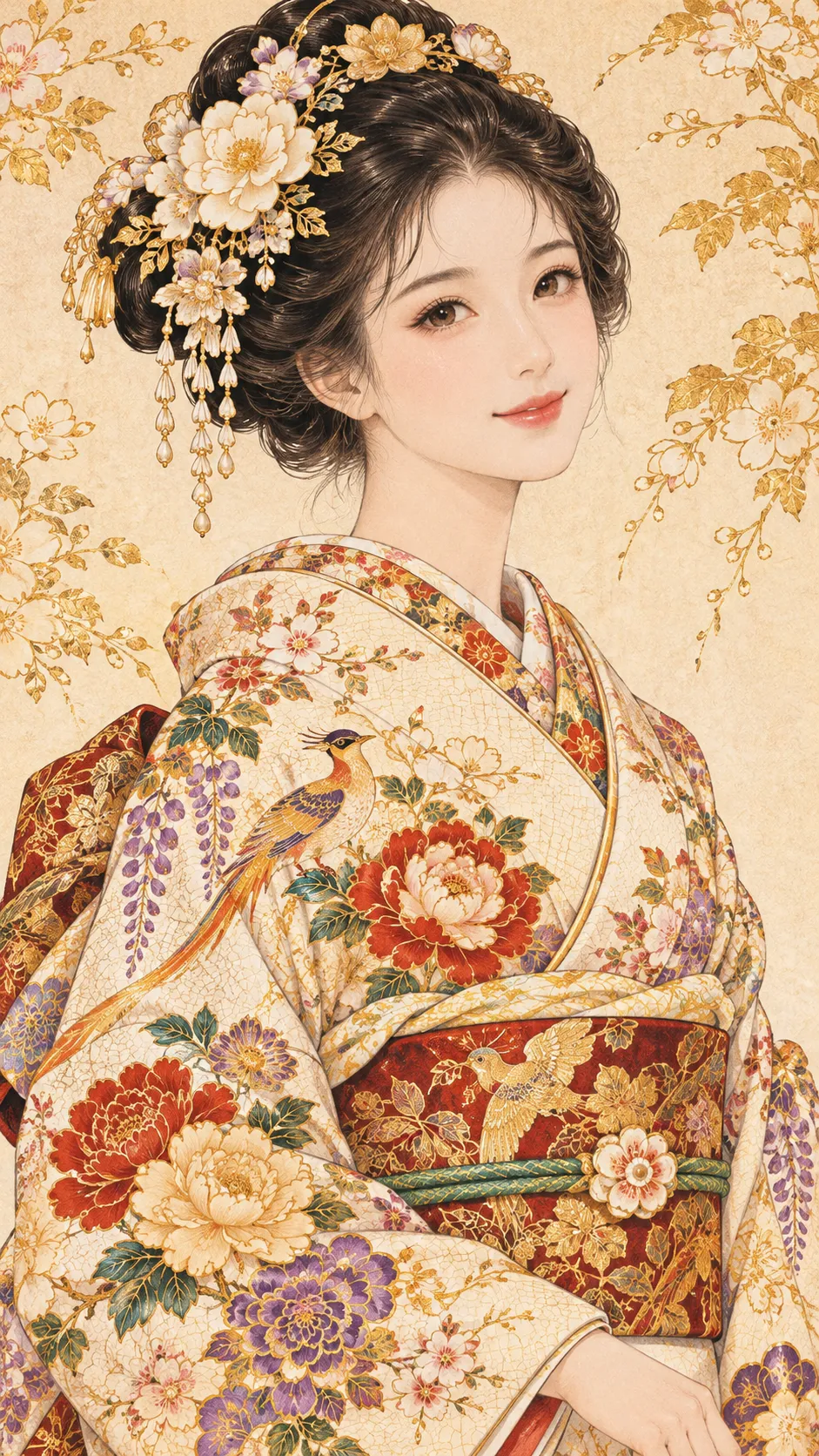
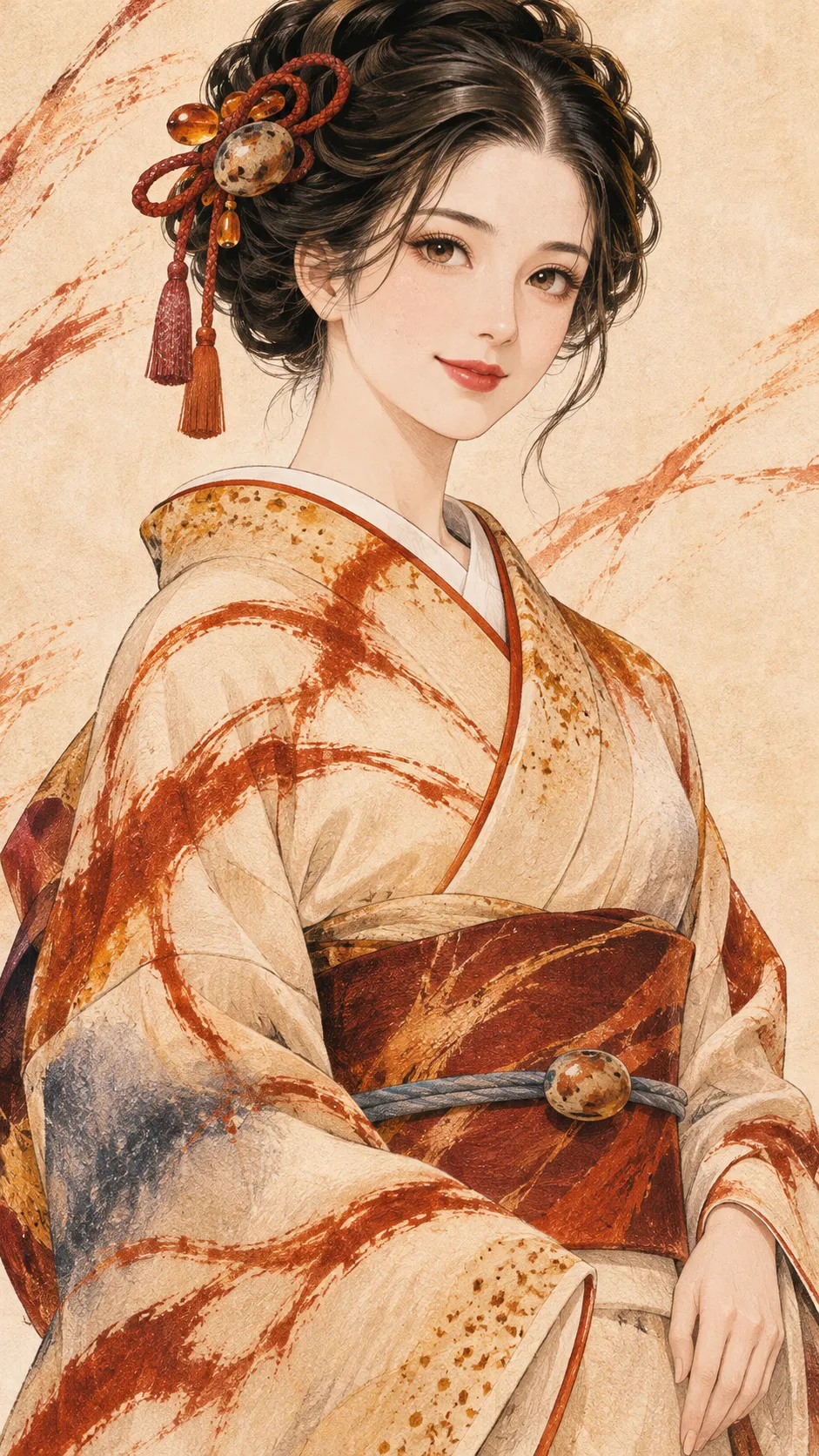
Example outputs
Prompt template
- Format
- Text
- Outputs
- Fashion_illustration (image)
THE JAPANESE PORCELAIN COUTURE

No.06 | ONTA WARE — TOBI-KANNA

The title and subtitle are for work management only; do not include them in the generated image.

## Concept
Create a completely 2D, artistic, hand-drawn work that combines the traditional Japanese craft of Onta ware, the aesthetics of the Japanese folk-craft movement (Mingei), the beauty of women in Edo-period ukiyo-e prints, Japanese kimono culture, and contemporary luxury fashion illustration.

The theme is an extraordinarily beautiful woman who wears the rustic warmth of Onta ware and the beautiful patterns created by artisans’ handwork, radiating refined elegance.

Transform Onta ware’s signature decorative techniques—tobi-kanna (jumping-kanna), hakeme (brush-mark), and kushime (comb-mark)—into the design of a single kimono. Do not simply paste pottery patterns onto the garment: reinterpret them as silk dyeing, weaving, and embroidery to create an original kimono haute couture design.

Avoid relying on elaborate gold decoration or lavish floral and bird motifs. Express artistry through the rhythm of the patterns, color contrasts, and a refined composition. Balance the rustic beauty of Mingei with the sophistication of contemporary luxury fashion.

## Subject
Depict one adult Japanese woman with youthful, refined features. Combine the delicate, polished beauty of a Western luxury bisque doll with the graceful, gentle beauty of a Japanese woman.

Give her large, clear eyes; natural, beautiful double eyelids; delicate eyelashes; a straight, well-defined nose; full, elegant lips; and a smooth oval face. Her features should harmonize charm and intelligence with dignified composure. Her expression is calm and lively, with a lovely sparkle in her eyes. Give her a natural, refined smile and an air of quiet confidence and elegance.

Style her glossy black hair in a beautiful, sophisticated updo blending Japanese and Western influences. Decorate it with small ivory-colored floral ornaments, wooden adornments, and understated, amber-colored pottery-like accessories. Avoid excessive ornamentation so her face and the kimono pattern remain prominent.

## Kimono design
Design a one-of-a-kind kimono haute couture piece inspired by Onta ware’s traditional decorative techniques. Use high-quality, warm ivory silk as the base, beautifully combining deep amber, ink black, soft earth tones, muted celadon, and accents of iron red.

Make the kimono’s defining feature the regular, rhythmic pattern of tobi-kanna. From the shoulders across the sleeves, let fine incised marks spread in graceful curves, creating an original design that evokes pottery decoration. Give the marks delicate irregularities and a natural, hand-worked rhythm rather than a uniform digital pattern.

Add bold, flowing hakeme-inspired motifs to the sleeves. Let amber or ink-black brush marks sweep elegantly across the ivory silk, bringing movement to its quiet beauty. Place delicate kushime-inspired parallel lines or wavy decorations at the collar and cuffs.

Do not fill the entire kimono with small patterns. Emphasize the contrast between beautiful unpatterned space and bold decoration. Make the obi primarily deep amber, with a finely woven repeating tobi-kanna motif. Use muted celadon for the obijime, and add a small pottery-like obi ornament suggesting the rustic texture of Onta ware.

Respect the structure of traditional Japanese dress while giving the kimono a refined silhouette suited to contemporary luxury fashion.

## Composition and pose
Use a vertical 9:16 fashion-editorial composition, centered on the woman from the waist up. Clearly show her face and hair ornaments, the tobi-kanna and hakeme patterns extending from the kimono’s shoulders across its sleeves, and the upper part of the obi.

Make her face an important visual focal point, with luminous eyes, a delicate expression, and well-defined features. Give her a natural, elegant standing pose, with gentle movement through her shoulders and upper body. Turn her face at a flattering angle toward the viewer and give her a natural, refined smile.

Position her arms naturally so the sleeve patterns can be seen. Do not cross her arms. Make the connection from each shoulder to elbow and wrist easy to understand. Show exactly two arms, one on each side, and two hands, one on each side. Keep the fingers natural; avoid extreme perspective and complicated finger overlap. Do not place her hands in front of her face, and do not let an arm disappear unnaturally inside a sleeve. If a wrist or hand falls outside the composition, handle it with a natural crop at the image edge.

Give the figure comfortable space in the frame so her beauty and the kimono patterns are in balance. Allow artistic freedom in the pose, flow of the sleeves, and placement of the patterns so each result can be a distinct, beautiful work.

## Background and color
Use a simple, warm, pale ivory background reminiscent of fine Japanese washi paper. Add only subtle, delicate repeating motifs inspired by Onta ware’s tobi-kanna around the figure. Keep the decoration restrained so the woman and kimono remain prominent. Do not depict specific buildings or scenery.

Bring out the beautiful contrast among ivory, amber, ink black, earth tones, celadon, and iron red. Keep the palette subdued yet bright and refined, with a sense of warmth and richness. Do not make the work dark or drab.

## Style and technique
Create a completely 2D, hand-drawn fashion illustration. Combine the decorative quality of Edo-period ukiyo-e bijin-ga (pictures of beautiful women), traditional Onta ware patterns, Mingei aesthetics, and the sophisticated figure rendering of a contemporary luxury fashion magazine.

Use delicate, beautiful outlines, intricate pattern detail, the soft texture of silk, color areas reminiscent of woodblock prints, and elegant brushwork. Render tobi-kanna as fine repeating marks, hakeme as bold, flowing brushwork, and kushime as overlapping delicate lines. Give the patterns the natural irregularity of handwork rather than mechanical uniformity.

Make the garment look like soft silk, not like rigid pottery. Render the woman’s features in an appealing contemporary manner, and give the kimono Onta ware’s rustic beauty and original decorative character. Avoid a shōjo-manga or anime look; create a distinctive, dignified style that blends traditional Japanese art with luxury fashion illustration.

Emphasize flat color composition and the artistry of hand drawing, not photography, 3D CGI, or dimensional rendering.

## Final requirements
Create a woman whose beauty immediately captivates the viewer, wearing an original, refined kimono incorporating Onta ware’s tobi-kanna, hakeme, and kushime techniques. Express the warmth of rustic earth and the beauty of artisans’ handmade patterns as contemporary kimono haute couture.

Emphasize her beautiful face and the rhythmic patterns across the upper body. Harmonize the figure’s features, kimono patterns, colors, and composition in a highly finished work of gallery-worthy quality.

Vertical 9:16 format. Waist-up composition, from the waist to the head. Completely 2D. High-detail hand-drawn finish. Do not include any text, title, logo, signature, or watermark in the image.
What you'll create
A woman’s upper body carries refined textile ornament drawn from folk-craft surfaces. Delicate 2D rendering balances the portrait with expressive sleeve and obi detail.
Usage instructions
No additional input is required. The prompt combines Onta ware’s traditional decorative techniques with an ukiyo-e-inspired, high-fashion illustration and specifies the portrait’s composition, palette, and finish. Keep the 9:16 aspect ratio and waist-up framing, or revise those explicit composition details if you want a different crop.
Frequently asked questions
Is a photographic product display requested?
No. It is entirely hand-drawn fashion illustration.
Does the framing show the shoes?
No. It is waist-up.


Comments
Tried this prompt? Share what you made, compare results, or ask a question