Vintage Halftone Poetry Poster from a Photo
Transform an uploaded photo into a vertical vintage print poster with a short poem, oversized typography, and color halftone treatment.
Example outputs
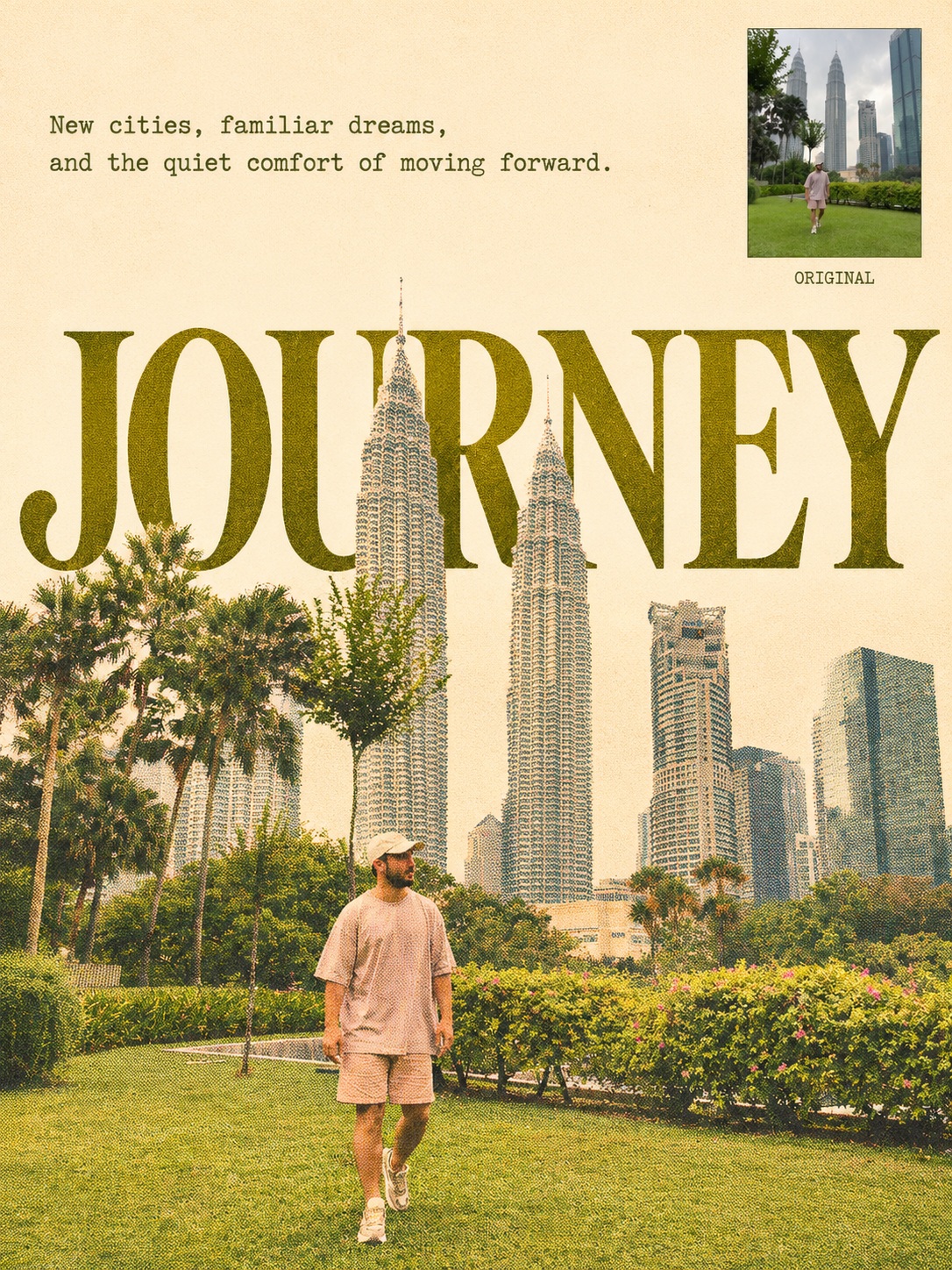
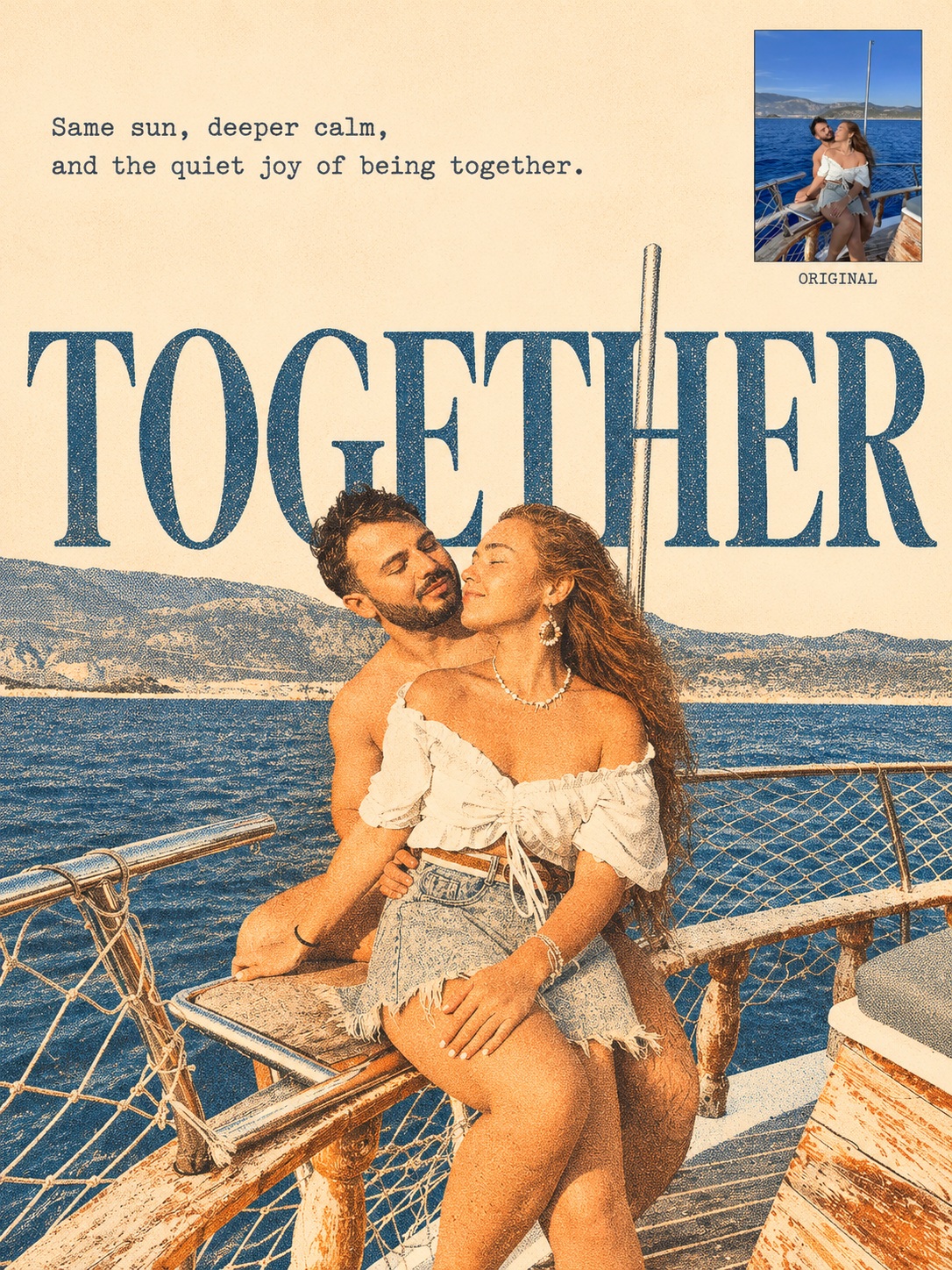
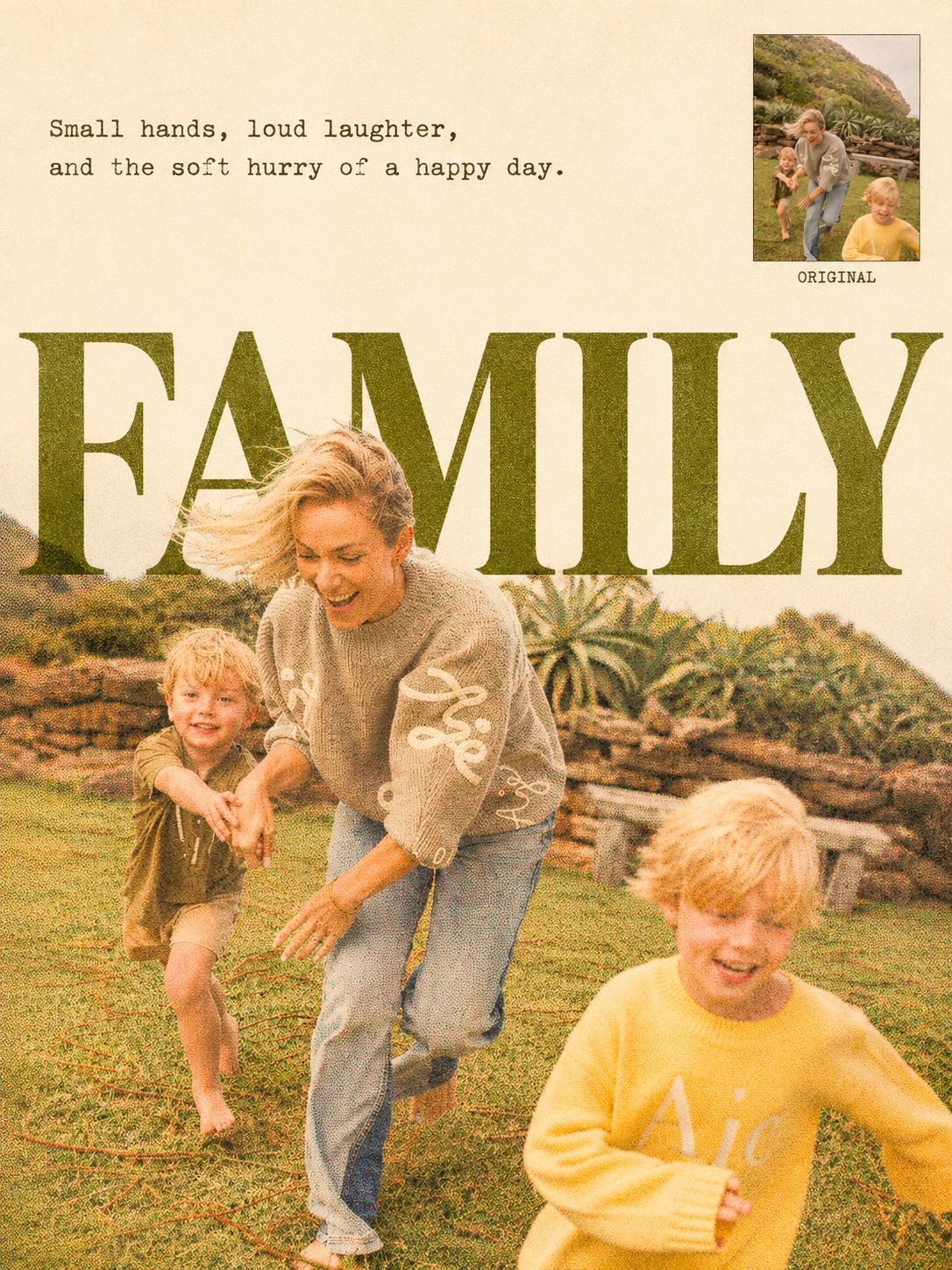
Prompt template
- Format
- Text
- Inputs
- Original_photo (image) · Required
- Outputs
- Poster (image)
Turn my uploaded photo into a 3:4 vertical poetic vintage print poster.

First, study the photo and choose the most recognizable subject that can naturally extend upward. Preserve the original photo's key scene, viewpoint, pose, and subject relationships. Do not add objects arbitrarily.

The top third should be clean warm-white paper-colored negative space, holding two short English lines of poetry that echo the photo's mood, set in a restrained, small typewriter font.

In the middle, based on the photo's theme, choose one short English word and render it in huge, high-contrast serif capitals spanning the full width of the poster.

Let the real photographic subject rise naturally from the original scene below, pass through the large word, cover parts of some letter strokes, and clearly extend above the top of the letters into the warm-white space. The subject must stay connected to the original scene with normal proportions. Prefer adjusting the word's position and the framing; do not stretch necks or heads, distort bodies, or create floating objects. Keep the overlap moderate so the word remains clearly legible.

The poster must read as one continuous image. Use the subject's silhouette, lighting, background color, and halftone density to blend the photo naturally into the negative space between the letters and around the subject. Avoid stacked top/bottom rectangles, straight horizontal cut lines, white cutout halos, and harsh gradients.

Pick the color of the large word from the photo itself (petals, fruit, leaves, walls, feathers, or water), harmonizing with the dominant palette while keeping readable contrast. Do not default to blue. The poem and small detail marks should use a darker shade of the same color family.

Enhance a light-and-color mood that suits the original image while keeping the photo recognizable.

Inside the large word and the stylized photo, add fine, clearly visible round color halftone dots. Cyan, magenta, and yellow dots may be slightly misregistered, denser in shadows and sparser in highlights. The overall look should resemble vintage magazine color halftone printing, not generic noise or scratches. The subject should still retain a real photographic texture, and the warm-white area at the top should stay relatively clean.

In the top-right corner, place a thumbnail of the original photo about 15–18% of the poster width. Show the full original image at its true aspect ratio, uncropped and uncolor-graded, with a thin border and an accurate "ORIGINAL" label. Keep it clear of the poem and the subject.

Overall: restrained and poetic, with accurate English. No extra titles, added watermarks, or unrelated decoration. Output only one complete poster, no collage or mockup.
What you'll create
The original scene rises into a bold central word beneath a warm-white top margin. Two small typewritten poetry lines echo the image’s mood in a complete single-sheet composition.
Usage instructions
Provide the original photo as the required input; the poster’s subject and palette are derived from it. The composition uses the photo’s subject to overlap the large word while preserving the scene and readable lettering. If needed, adjust the word’s position and framing to keep the overlap moderate without distorting the subject.
Frequently asked questions
Should arbitrary new objects be added?
No. The design follows recognizable features already in the photo.
What occupies the top third?
Warm-white negative space with two short English poetry lines.






Comments
Tried this prompt? Share what you made, compare results, or ask a question