- Category
- Design & Image
One Face Across Randomized Historical Eras
Generate one vertical historical portrait based on a reference photo, preserving the person’s identity while transforming the era, scene, pose, and visual medium.
By Threads — Published on
Example images
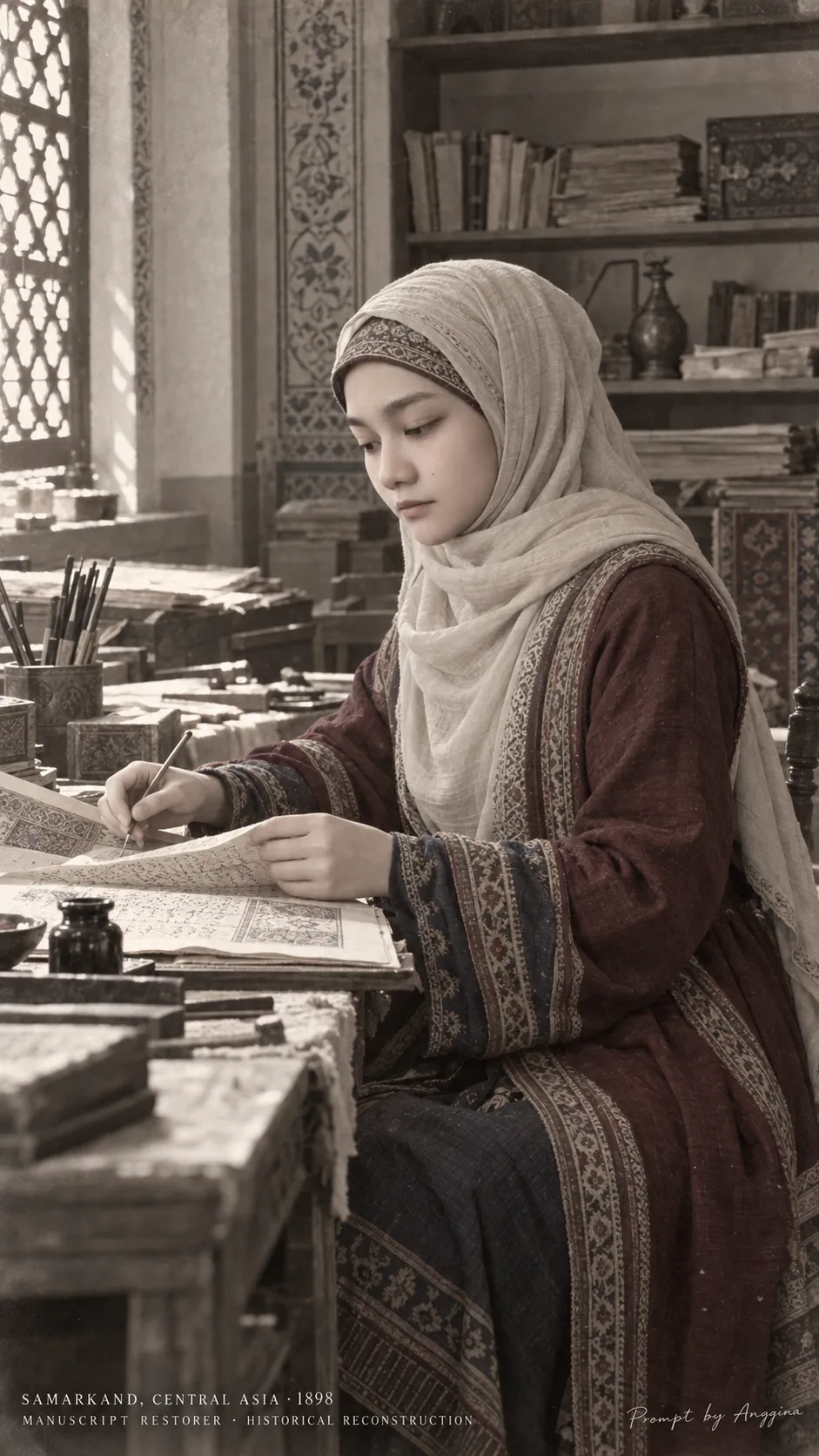
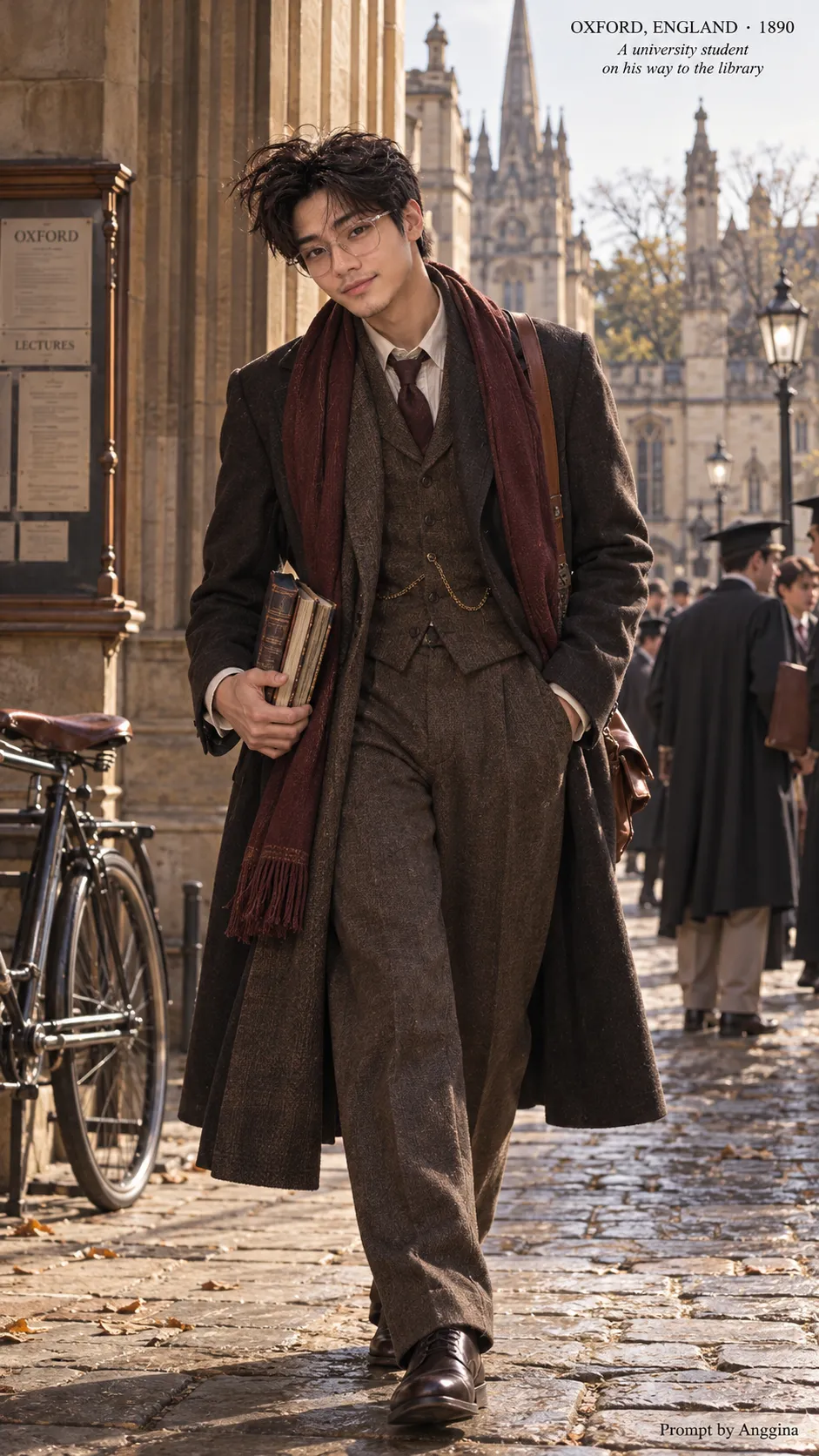
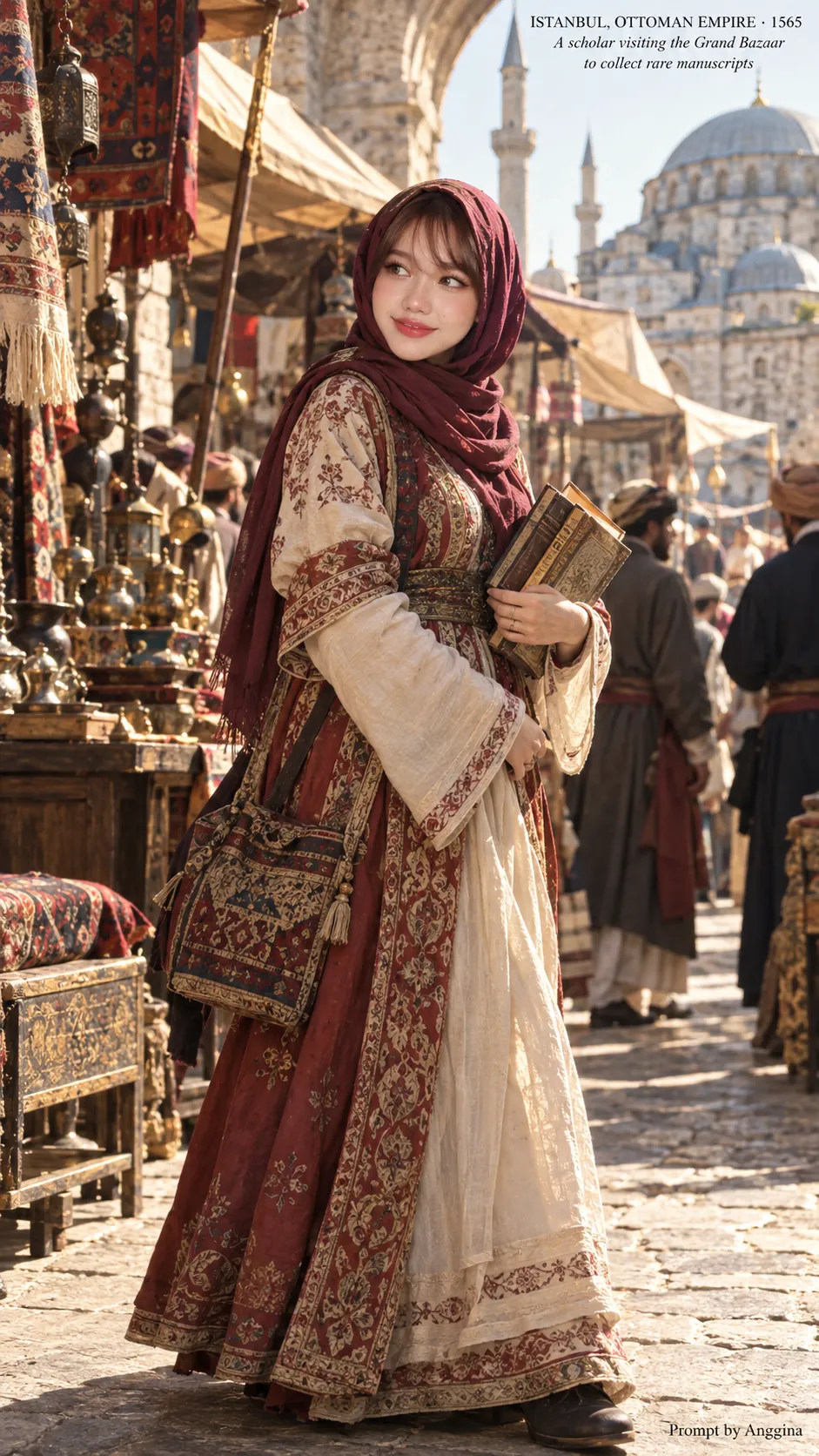
Prompt template
- Format
- Markdown Parameterized
- Inputs
- reference_photo (image) · Required previous_results (image) · Required watermark_text (text) · Optional · Default: Prompt by Anggina
- Outputs
- historical_timeline_portrait (image)
Replace the ${…} placeholders with your values
before using this prompt. See parameters
and defaults below.
## Generate One Historical Timeline Portrait

Create exactly **one standalone vertical 9:16 image** using the uploaded photo strictly as a facial identity reference.

### Identity and hair
- Preserve the reference person’s exact face, facial structure, proportions, natural skin tone, age, and distinctive features. Keep their identity recognizable while changing their facial expression. Never reshape or replace the face.
- If the reference person wears a hijab, retain it. Change its style, fabric, and color while fully covering the hair, hairline, baby hairs, ears, neck, shoulders, and chest. Use a hijab color different from the outfit; do not create a pointed forehead shape.
- For a reference without a hijab, never add one. Change the hairstyle, haircut, length, texture, volume, parting, and hair color to suit the selected era.

### Randomize the historical life
Randomly choose **one coherent** era, country or region, civilization, social identity, occupation, and activity. Draw from civilizations worldwide, including ancient societies, Asian dynasties, medieval Europe, the Renaissance, Victorian times, the 1920s, and other periods.

Occasionally—and rarely—choose a historically inspired Majapahit, Srivijaya, Mataram, or other Nusantara setting. Keep it culturally grounded and do not make it the default. Distinguish documented history from fictional alternate timelines.

### Transform the scene
Transform the clothing, fabrics, colors, accessories, grooming, makeup, expression, head direction and tilt, gaze, body orientation, pose, activity, environment, lighting, camera angle and height, perspective, distance, framing, and composition. Depict a believable spontaneous activity, not a fashion pose.

Prioritize full-body, head-to-toe framing while keeping the face recognizable; use three-quarter framing where appropriate. Maintain naturally tall proportions, long proportional legs, realistic anatomy, and graceful posture. Match fashion, materials, architecture, objects, daily life, grooming, and cosmetics to the selected culture and period. Preserve natural skin texture; do not automatically apply modern Korean glass-skin makeup.

Create a believable historical environment with coherent details and natural interactions. Avoid unnecessary chaos, surreal effects, and artificial photoshoot backgrounds.

### Match the actual visual medium to the date
- **Before photography:** use a period-appropriate painting, drawing, or engraving—not a fake photograph.
- **Early photography:** use a historically accurate process, including appropriate monochrome tones, exposure, resolution, contrast, and optical limitations.
- **Film and later eras:** use authentic period cameras, film or color processes, grain, sharpness, and color reproduction.
- **Modern or futuristic eras:** use technology appropriate to the selected timeline.

Do not disguise a modern image with generic sepia or vintage filters. Avoid inappropriate HDR, modern digital sharpness, contemporary cinematic grading, portrait-mode bokeh, and modern beauty lighting. Do not add blur, scratches, grain, or monochrome automatically. The entire image must reflect its actual medium, not merely a post-processing filter.

### Realism and caption
Use realistic anatomy, natural textures, authentic materials, coherent perspective, and believable lighting. Avoid plastic skin, waxy faces, synthetic eyes, excessive smoothing, malformed hands, distorted anatomy, and a CGI appearance. Preserve the reference identity as faithfully as the historical medium permits.

Add concise, readable **English** text stating the year, country or region, era or identity, and activity. For example:
“VENICE, ITALY · 1924”
“ROARING TWENTIES”
“A journalist documenting daily life”

Use plausible historical details. Label fictional timelines **ALTERNATE HISTORY** and historical artwork **RECONSTRUCTION** where appropriate. Keep text separate from the face.

### Avoid repetition
Randomize every major visual and narrative element. ${previous-results}When previous results are provided, avoid identical or substantially similar eras, outfits, hairstyles or hijabs, makeup, activities, expressions, head directions, poses, camera angles, compositions, environments, and visual media. Minor changes do not count as a new result. Make each image feel like a genuinely different life and historical world.

### Final output
Generate exactly **one image**, vertical 9:16. Do not create a collage, grid, split screen, or extra logos. Add the exact watermark “${watermark-text:Prompt by Anggina}” discreetly at the bottom-right.

**Identical face. Changed expression. Never remove a hijab present in the reference. Transform everything else. Create a different life, pose, head direction, camera angle, and historically appropriate medium. Randomize globally; make Nusantara settings a rare surprise. Avoid repetition. One image only.**
Parameters
Replace each placeholder with your own value, or use its default when one is provided.
${previous-results}
previous-results
Required
${watermark-text:Prompt by Anggina}
watermark-text
Default: Prompt by Anggina




Comments — 0