- Category
- Design & Image
Photo and Minimalist Illustration Keepsake Card
Transform an uploaded photo into a vertical keepsake card pairing the original photograph with a simplified, softly textured illustration of the same scene.
By Threads — Published on — Modified on
Example images


Prompt template
0 copies
- Format
- Text
- Inputs
- reference_photo (image) · Required
- Outputs
- keepsake_card (image)
Use only the uploaded photo as the source of content. Create a vertical (3:4 aspect ratio) keepsake card in a “real-world photograph + minimalist illustration” style based on this image. Preserve the subjects, their number, poses, viewing angle, spatial relationships, and overall scene logic. Do not redesign the original image or add unrelated content.

Layout: Divide the card into upper and lower sections, each occupying approximately 50% of the card. In the upper section, retain the original photograph and its photographic qualities. Crop naturally to fit, but do not stretch, mirror, rearrange, or alter the subjects. Preserve natural light and shadow, realistic materials, and the original color atmosphere, applying only subtle magazine-style color grading. Use a warm ivory handmade-paper background for the lower section, with a landscape-oriented illustration of the same scene centered within it. The illustration should occupy approximately 63%–67% of the lower section’s width, with generous whitespace around it.

Scene transformation: The lower illustration must preserve the original image’s most recognizable subjects, main structures, important objects, viewing angle, depth of field, relative proportions, and key positions. Remove small bits of clutter, fine photographic textures, reflections, and complex shadows. Simplify the scene into slightly awkward geometric color blocks and fine hand-drawn lines. If people or animals appear, maintain their recognizability through silhouettes, poses, hair or fur outlines, clothing colors, and positions, while allowing facial details to be simplified. Contour lines may show slight wobbling, breaks, displacement, or misalignment, while ensuring that the overall scene remains easy to recognize.

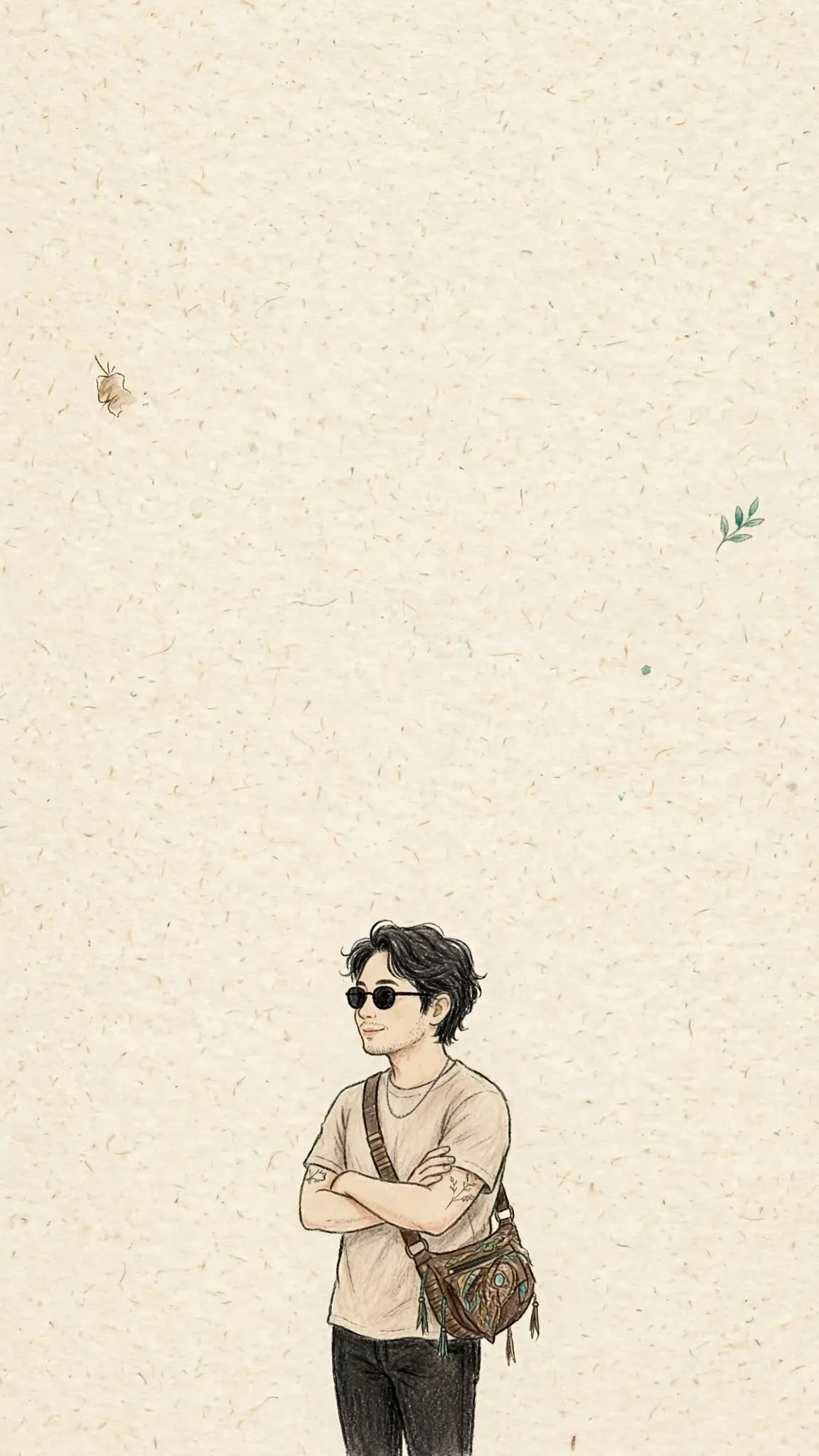
Illustration style: Use a restrained, unpretentious editorial illustration style combining soft geometric simplification with a handmade feel. Combine fine sketch lines with flat color blocks. The lower scene should feel quiet, fresh, slightly imperfect, and visually pared down rather than technically precise. Avoid realistic rendering.

Color: Extract 4–6 representative colors from the original photo and rework them into a soft, low-saturation palette. Use muted tones derived from the original image with flat fills, maintaining enough contrast to distinguish the subjects and the scene’s layers. Avoid complex gradients, highlight effects, or a heavy 3D-modeled appearance.

Texture: Blend the textural qualities of crayon, pastel, screen printing, and old book illustrations. Let the paper show through, retaining fine grain, slight pigment unevenness, worn edges, and subtle print-registration misalignment. The finished image should have the feel of an independent editorial illustration printed on aged paper: warm, quiet, nostalgic, and collectible.

Typography: Beneath the illustration, you may include exactly two lines of brief English text related to the scene, mood, location, or moment. Use a small retro serif typeface, left-aligned. If the text cannot be rendered clearly and legibly, leave the space blank. Do not include any other readable text.

Cleanup: Remove any phone user interface (UI), subtitles, screenshot artifacts, and interface elements appearing in the image. Do not invent missing scenery or decorative props.

Negative constraints: Do not substantially change the composition or add or remove subject objects. Do not use photorealistic painting, polished watercolor, anime/manga styles, vector clip art, oil painting, impasto, 3D rendering, logos, watermarks, black borders, UI elements, or unrelated decorations.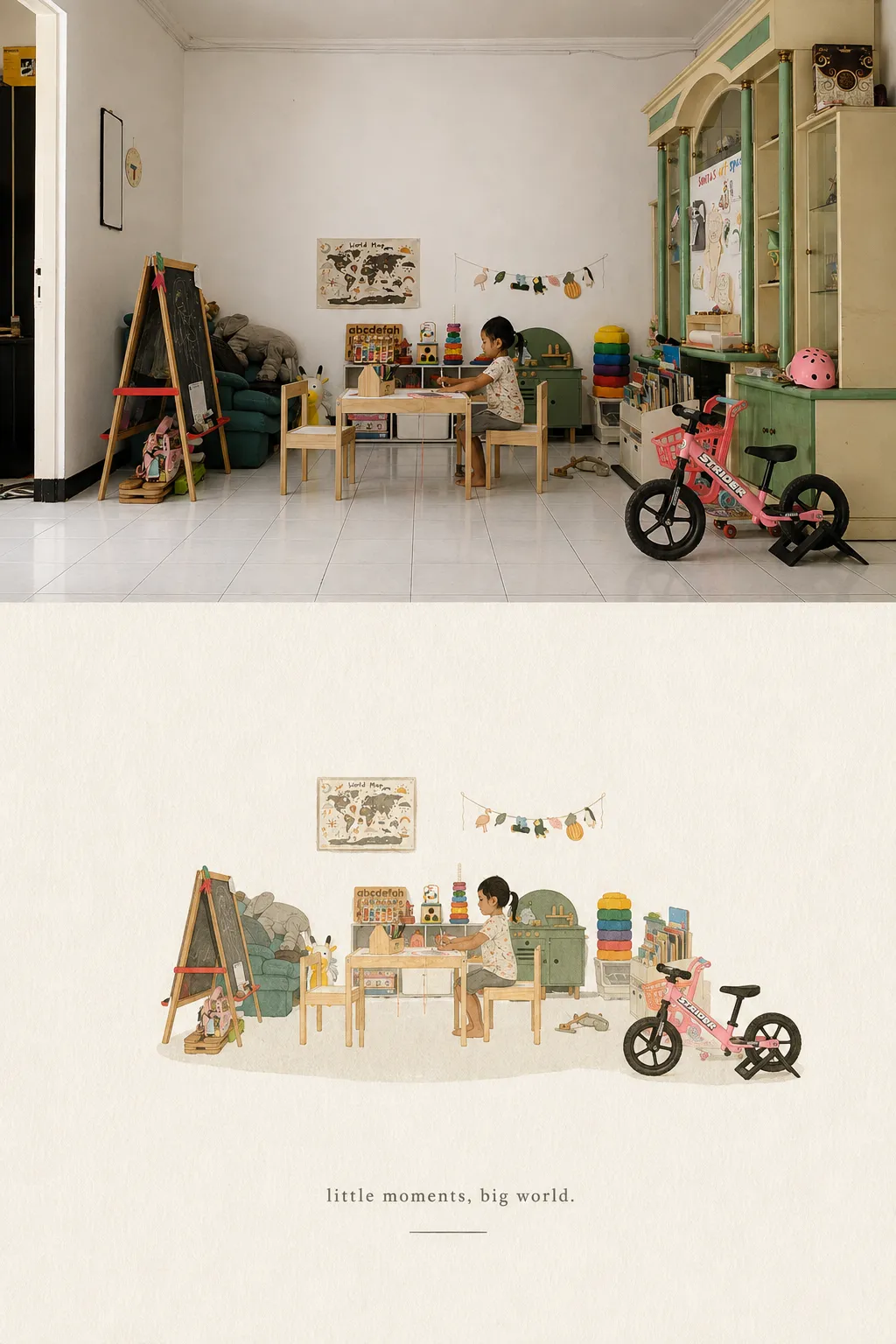




Comments — 0
Tried this prompt? Share what you made, compare results, or ask a question.