- Category
- Design & Image
Photo-to-Paper-Cut Editorial Poster
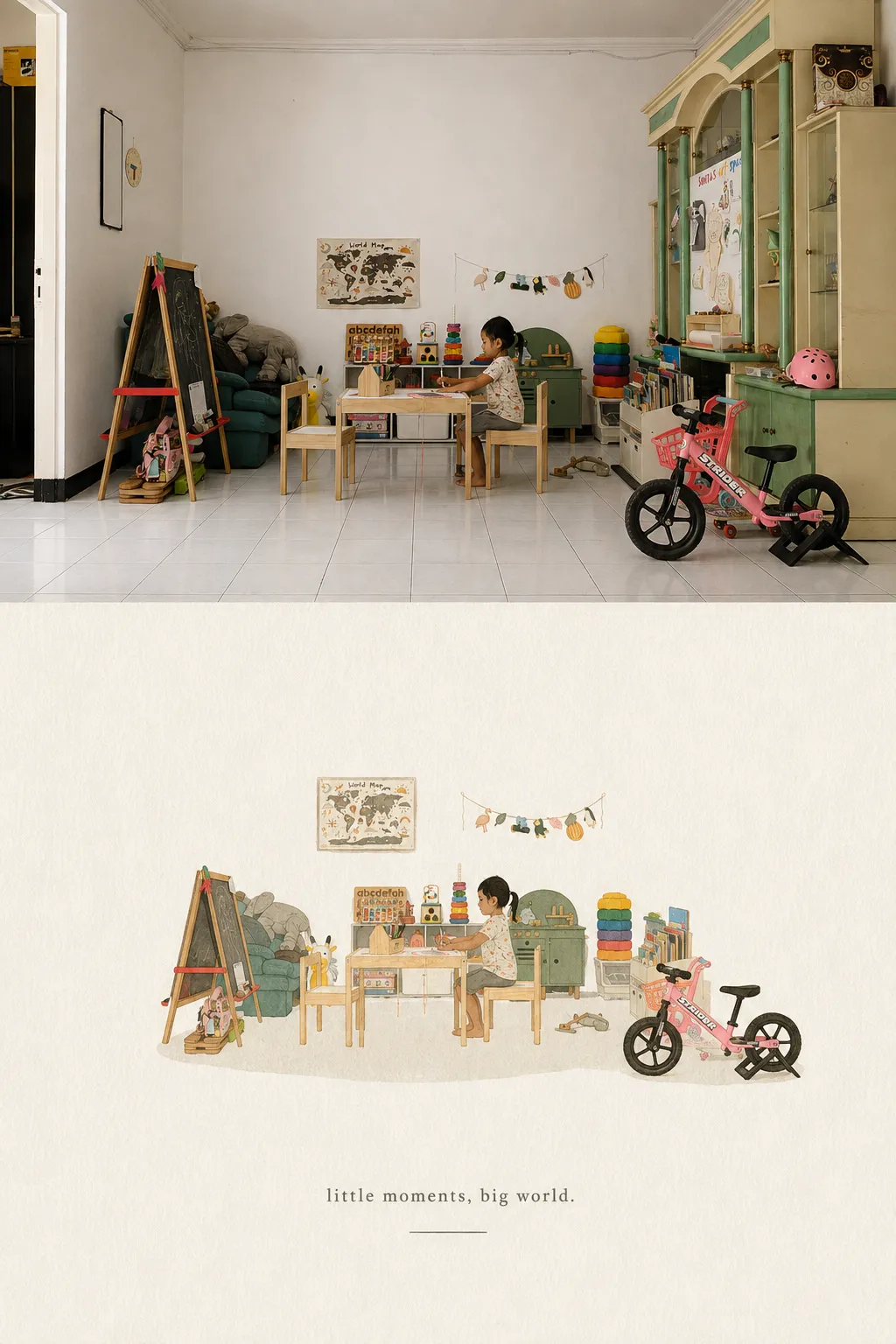
Create a separate 3:4 editorial poster for each uploaded photo, pairing a lightly refined original photograph with a contemporary folk-art paper-cut collage illustration.
By Threads — Published on
Example images


Prompt template
- Format
- Text
- Inputs
- Uploaded_photo (image) · Required
- Outputs
- Poster_image (image)
For each uploaded photo, create one separate, high-end design poster. Do not combine multiple photos into a collage; output one poster per photo.

Use a 3:4 portrait composition divided into two regions of exactly equal height, each occupying 50% of the canvas.

UPPER HALF — ORIGINAL PHOTO
Preserve the original photograph, including the subject’s identity, structure, pose, realistic texture, natural lighting, and original color atmosphere. Apply only subtle, sophisticated color grading to give it the feel of an art magazine, independent publication, or exhibition image. You may naturally extend the environmental background to fit the format, but do not stretch, distort, or alter the subject.

LOWER HALF — CONTEMPORARY FOLK-ART PAPER-CUT COLLAGE
Extract the most recognizable subject, silhouette, pose, and narrative relationships from the photo, then reinterpret them as a flat illustration in a contemporary folk-art paper-cut collage style. Do not reproduce the photo in full. Remove irrelevant details and retain only the essential structures, lines of movement, and visual cues needed to make the connection to the photo immediately recognizable. Recompose elements such as subjects, plants, buildings, animals, objects, or surroundings as separate pieces of colored paper, using silhouettes, color blocks, carved lines, positive and negative shapes, and restrained layering. Forms may be slightly naïve, symbolic, or geometric. Avoid realistic perspective and intricate detail; emphasize cultural character, handmade quality, and contemporary design.

COMPOSITION
Maintain the relationship of a small-scale subject with a seal-like visual presence and generous negative space. Arrange the subject according to its direction, proportions, and visual weight; it may be off-center, near an edge, or partially cropped. Keep the hierarchy clear, balance the density and open areas, and use an editorial sense of composition. The subject may sit to one side or toward the bottom as a visual anchor. Include only a few supporting elements and avoid creating multiple competing focal points.

MATERIAL AND BACKGROUND
Combine the feel of paper-cut collage and printmaking. Allow slightly hand-cut edges, subtle misregistration, occasional ink loss, and gentle grain. Preserve the texture of paper fibers and fine art paper. Avoid smooth vector graphics, 3D rendering, photographic filters, and excessive retouching. Use an ivory, warm white, or pale paper-colored background with calm, generous negative space.

COLOR
Extract 2–4 of the most distinctive colors from the upper photograph and translate them into a vivid yet restrained, bright but gentle system of flat color blocks. You may refine and brighten the colors slightly, organizing them into clear primary, secondary, and sparing accent colors. Preserve the original photo’s mood and identity while achieving a polished contemporary folk-art collage aesthetic. Avoid muddy or dull colors, heaviness, cheap candy-like color, and chaotic palettes.





Comments — 0