- Category
- Design & Image
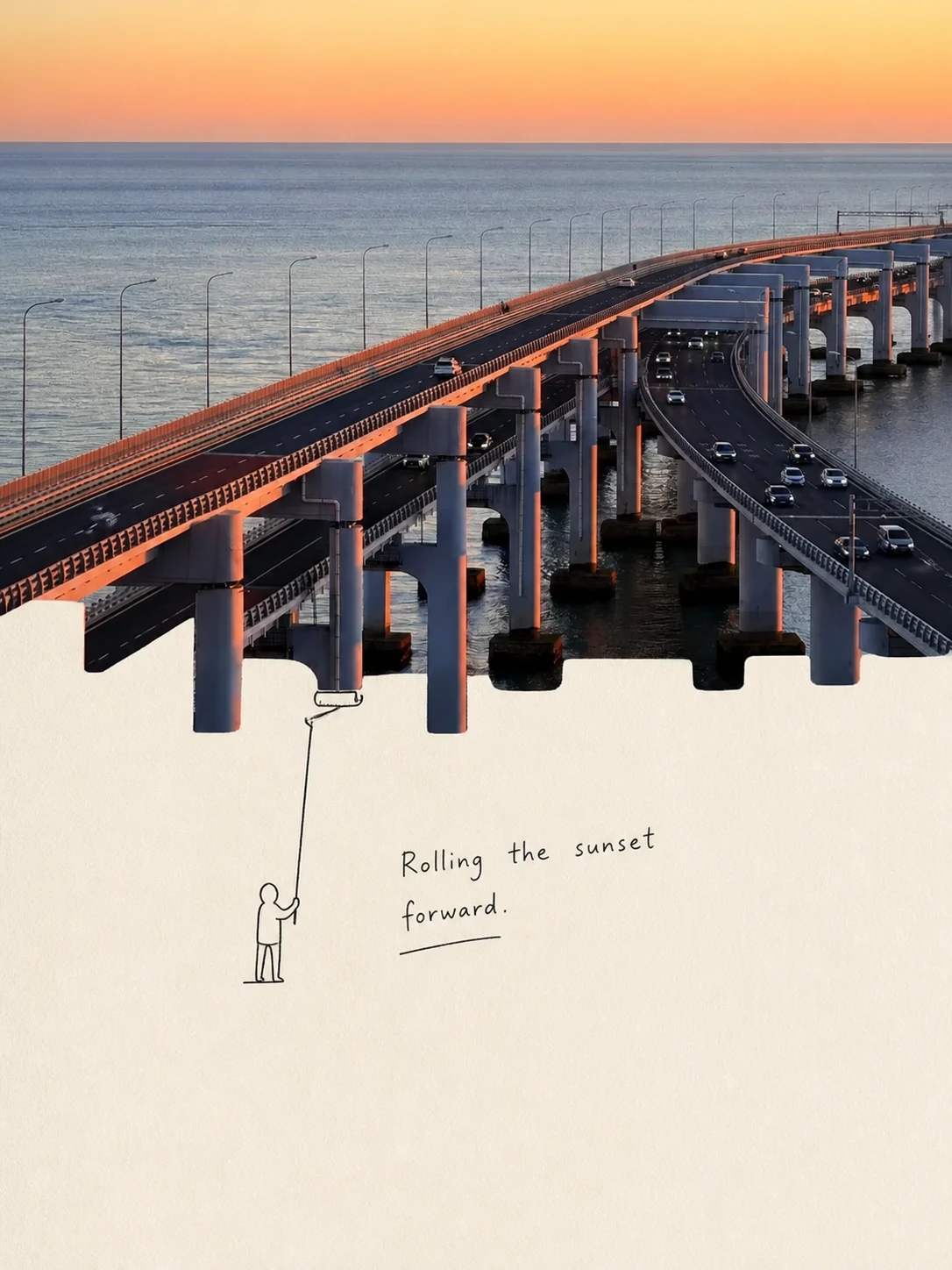
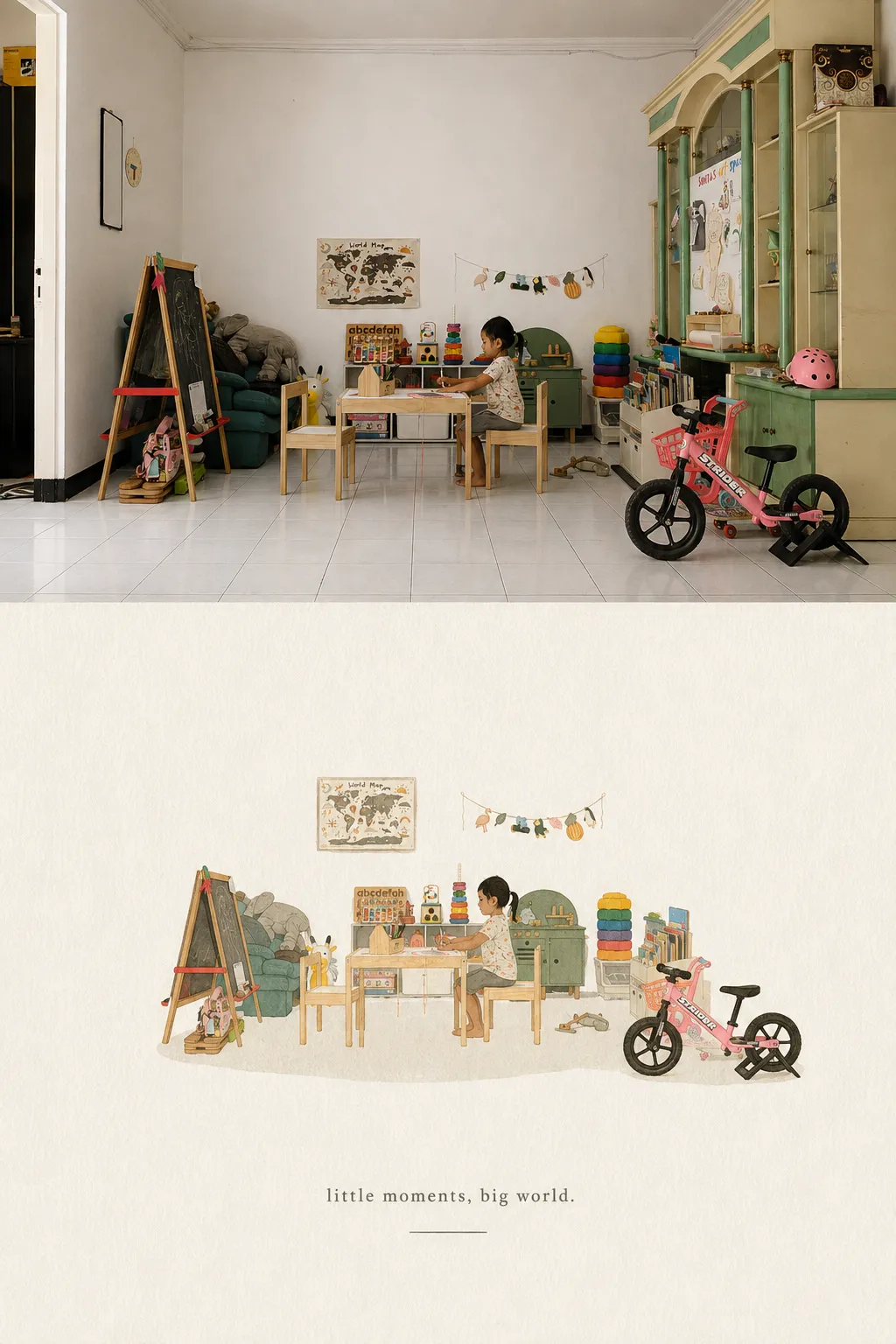
Second World Photo Collage Poster
Turn an uploaded photograph into a restrained, playful editorial collage by finding a photo-specific way to make one of its visual structures into a usable second world.
By Threads — Published on
Example images



Prompt template
- Format
- Text Parameterized
- Inputs
- Uploaded_photo (image) · Required aspect_ratio (text) · Optional · Default: 3:4 portrait
- Outputs
- Second_World_poster (image)
Replace the ${…} placeholders with your values
before using this prompt. See parameters
and defaults below.
Based on my uploaded photograph, create a vertical “Second World” photo-collage poster in ${aspect-ratio:3:4 portrait} format, divided into two equal halves.

TOP HALF — Preserve the original photograph as faithfully as possible. Do not change its subject, people, actions, spatial relationships, colors, or natural lighting. Only crop proportionally when necessary.

BOTTOM HALF — Use warm ivory paper with generous empty space. Do not automatically apply a fixed “torn paper plus tiny people” template.

Before creating the poster, carefully examine the photograph:
1. Identify its most distinctive visual structure, not merely its subject matter. This might be water, a road, a reflection, clouds, branches, a beam of light, a shadow, an architectural edge, a person’s action, or a ridgeline.
2. Ask: “If this structure in the photograph could really become something that can be touched, used, or changed, what would it naturally be?” Use the answer to discover a “second world” unique to this photograph. Find a fitting action—such as pulling, pushing, parting, entering, fishing something out, measuring, repairing, unfolding, smoothing, climbing, connecting, or collecting—but do not mechanically reuse these or any other actions.
3. Make the shape of the photographic cutout itself part of the interpretation. Do not default to an ordinary irregular torn-paper edge. Water might become a small body of water; light might become something that can be borrowed; a road might continue onward; clouds or branches might create a new spatial relationship. The specific idea must arise from this photograph.

You may add 0–3 minimalist black hand-drawn line-art figures. They must act as users of the second world and genuinely interact with physical structures in the photograph, not simply pose nearby. Do not add figures if the original photograph already contains a strong human action.

Write one short, natural, lighthearted English handwritten caption, with a hint of humor or voiceover. Base it on what is actually happening in this photograph. Do not make it an inspirational quote, and do not reuse stock phrasing such as “Same… different.” Place it according to the available negative space and direction of action; do not fix it in a particular corner.

Overall style: realistic photography, warm ivory paper, and minimalist black-line doodles; clean, bright, restrained, with a subtle handmade-collage and independent-magazine feel.

Avoid a commercial-advertising look, complex illustration, crowded figures, a fixed torn-paper template, repetitive actions, arbitrary decorative leaves or stars, and any unauthorized change to the photograph’s colors or photographic content.

Most importantly: do not decorate the photograph. Understand it first, then discover the other world that may already be implicit within it. The ideal result should make viewers think, “I can see how this photograph could always have been understood that way.”
Parameters
Replace each placeholder with your own value, or use its default when one is provided.
${aspect-ratio:3:4 portrait}
aspect-ratio
Default: 3:4 portrait




Comments — 0