Photorealistic Torn-Paper Portrait Collage with a Red Heart
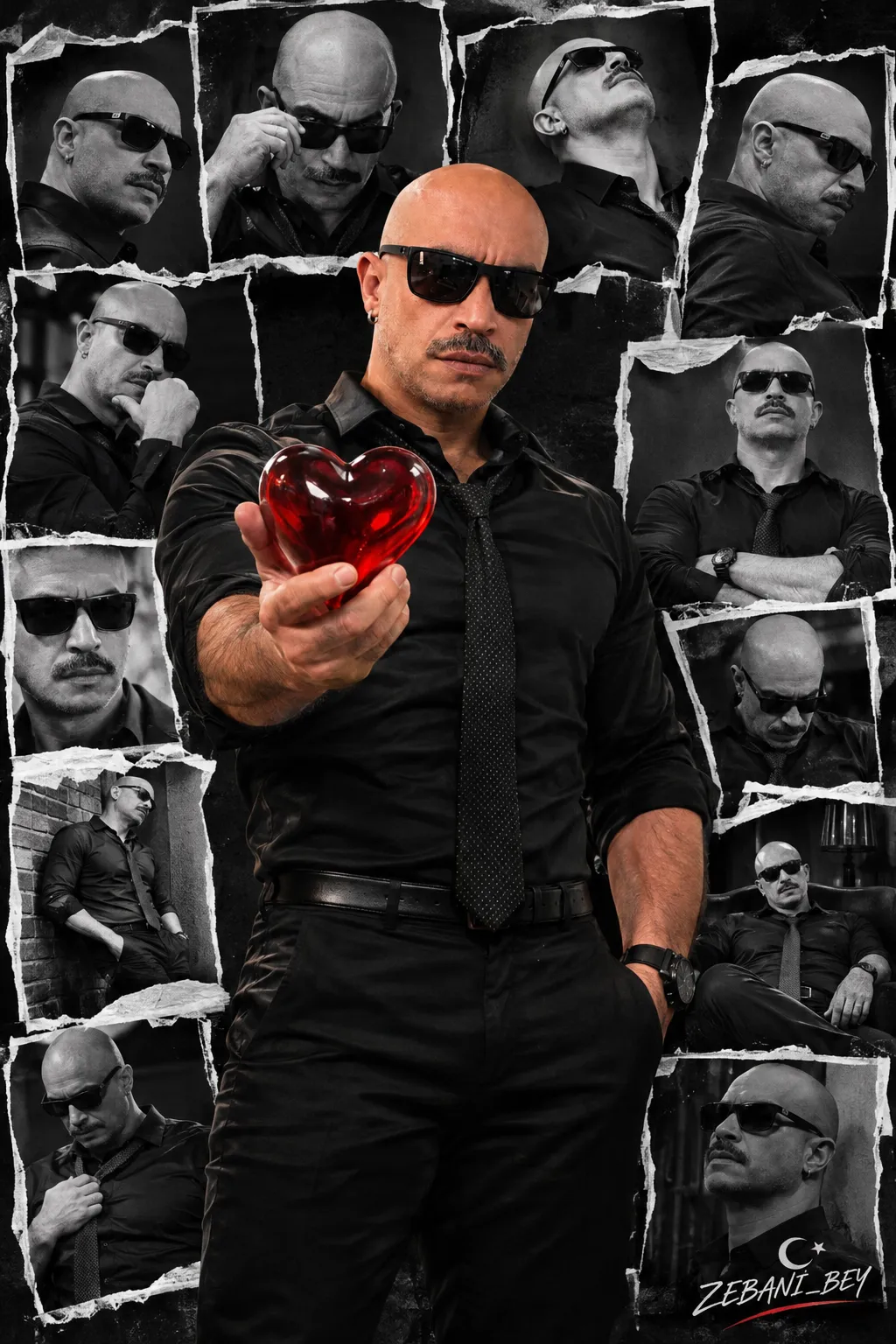
Create a vertical fashion-editorial collage from a reference photo, with a color central portrait holding a glossy burgundy heart and twelve torn-paper black-and-white portraits of the same person behind it.
Example outputs
Prompt template
- Format
- Text Parameterized
- Inputs
- Reference_photo (image) · Required signature (text) · Optional · Default: ZEBANİ_BEY
- Outputs
- Photographic_collage (image)
Create a physically realistic photographic collage made from thirteen authentic-looking professional human photographs. Use the uploaded reference photo as the sole and absolute source for the person’s identity.

IDENTITY AND CLOTHING
Preserve the reference person’s facial anatomy and identity, head and forehead shape, eyes, nose, lips, jaw, cheeks, natural facial asymmetry, age, skin tone, pores, wrinkles, moustache and beard characteristics, and hair or baldness. Preserve the reference person’s body type, shoulder width, muscle proportions, and physical features. Do not beautify, rejuvenate, recreate, or transform the person into someone else.

Use the exact clothing and accessories from the reference image. Keep fabric patterns, seams, zippers, buckles, pockets, and accessory placement consistent with the reference. The central subject and all background portraits must wear the same clothing and accessories.

PHOTOGRAPHIC STYLE AND FORMAT
The entire image must look as though it is made from real photographs. Make it appear to be a physical collage assembled from real human photographs printed on matte photo paper, photographed with a professional full-frame camera. Use Sony A7R V, an 85 mm f/1.8 portrait lens, natural perspective, true optical depth of field, high dynamic range, controlled softbox lighting, and a professional RAW-photo aesthetic. Use a vertical 2:3 composition, 8K RAW HDR, with the quality of a professional fashion-magazine cover.

Keep skin texture realistic, including pores, beard stubble, moustache hairs, fine wrinkles, and small imperfections. Do not use digital beautification, artificial sharpening, smoothing, or a plastic appearance. Photographic realism takes priority over dramatic effects and artistic stylization.

CENTRAL COLOR PORTRAIT
Place a large, approximately knee-up color portrait of the reference person in the center. Turn the body slightly toward the camera, with naturally broad shoulders and a confident stance. Tilt the head slightly and look directly at the camera. The expression should be naturally serious, calm, stern, and slightly defiant. Put one hand in a trouser pocket and extend the other toward the camera at chest height.

Keep the face, glasses, moustache, beard, and clothing textures exceptionally clear. Preserve natural skin tones, physically accurate light transitions, and professional photographic detail in the central portrait.

RED HEART
The subject holds a classic heart-shaped, dark burgundy-red object in the hand extended toward the camera. Make it palm-sized, three-dimensional, glossy, and like real glass or polished resin. Give it soft reflections from real studio lights, subtle optical refraction, and natural highlights. The red heart should be the most prominent color accent against the black clothing and black-and-white background. Let faint red reflections fall naturally on the fingers.

Keep the hand anatomy, finger lengths, joints, and grip physically correct. Do not add flames, smoke, sparks, neon, magical energy, or fantasy lighting effects to the heart.

TWELVE BLACK-AND-WHITE BACKGROUND PORTRAITS
Behind the central subject, arrange twelve different black-and-white portraits of the same person. Every portrait must look like a real studio photograph taken with a professional camera and converted to black and white—not a drawing, engraving, sketch, charcoal image, or digital painting.

In every portrait, preserve the reference person’s identity, natural proportions, and age. Show realistic skin pores, beard hairs, and facial texture; natural environmental reflections in the glasses; clear clothing patterns, fabric texture, and seams; natural shadows from real studio lighting; and rich photographic transitions among black, white, and gray. Keep high resolution and real camera sharpness. Black-and-white toning should remove only color information, without changing real skin texture, clarity, or optical characteristics.

Use these twelve different poses:
1. Slightly turned to the right, with a serious, determined gaze.
2. Close-up while adjusting sunglasses with the fingers.
3. Head tilted back, looking upward.
4. Calm portrait from a slight side profile.
5. One hand on the chin, with a thoughtful gaze.
6. Strong stance with arms crossed over the chest.
7. Close-up looking directly at the camera.
8. Serious portrait looking slightly downward.
9. Relaxed stance leaning against a wall.
10. Seated portrait looking toward the camera.
11. Natural pose adjusting the clothing collar.
12. Confident portrait photographed from a three-quarter angle.

All portraits must show the same person, face, clothing, and accessories. Poses may vary, but facial anatomy and physical features must not.

PHYSICAL TORN-PAPER COLLAGE
Make the twelve black-and-white photographs look printed on high-quality matte photo paper with hand-torn edges. Include natural white paper fibers, irregular tears, slight curls, and realistic physical shadows. Arrange the photos asymmetrically at different angles, partly overlapping, with some partly behind others. Use a dark anthracite and matte-black surface behind the collage.

Keep the paper edges natural—not excessively worn, dirty, or burned. Do not apply grunge, scratches, old-paper effects, or wall textures to human faces. Keep faces clean, sharp, realistic, and high-resolution. Keep the physical texture of the paper distinct from the image texture of the photographs.

LIGHTING AND DETAIL
Use controlled, natural studio lighting for the central portrait: soft light from a broad softbox on one side of the face and natural, deep shadows on the other. Keep skin tones realistic, balanced, and consistent with the reference. Avoid orange saturation, excessive contrast, and artificial brightness.

Light the black-and-white background portraits as though they came from different professional portrait sessions: some with soft window light, some with controlled studio light, and some with natural city light. Maintain the same high photographic quality across all portraits. Separate the central color portrait naturally from the background with optical depth of field and physical shadows.

Preserve real human skin, camera optics, natural light, physical fabric textures, and professional photographic detail throughout. Show micro-pores, fine lines, natural asymmetry, beard stubble, and moustache hairs. Make the reference clothing’s fabric fibers, zipper teeth, pockets, metal buckles, and seams distinct. Give the red heart physically accurate reflections, and show real paper fibers and layered thickness along the torn photo edges. Keep natural camera sharpness and high dynamic range across the image. The result should look like a high-resolution photograph of a physical collage prepared by a real photographic artist, not an AI illustration.

SIGNATURE
Add the elegant handwritten signature ${signature:ZEBANİ_BEY} in the bottom-right corner without disrupting the composition. Place a small Turkish crescent-and-star symbol above it. Use a thin, elegant, legible white or light-silver signature; a very thin dark-red line may appear beneath it. Do not cover the face, heart, or important background photographs.

NEGATIVE PROMPT
NO ILLUSTRATION, NO DIGITAL PAINTING, NO COMIC BOOK, NO GRAPHIC NOVEL, NO PENCIL DRAWING, NO CHARCOAL SKETCH, NO ENGRAVING, NO ETCHING, NO CROSS-HATCHING, NO PAINTERLY TEXTURE, NO STYLIZED FACE, NO 3D RENDER, NO CGI.

Avoid cartoons, anime, manga, concept art, oil painting, ink drawing, artificial facial details, wax skin, plastic skin, beauty filters, excessive sharpening, exaggerated HDR, unrealistic skin texture, fake photographic grain, grunge texture on faces, drawn black-and-white portraits, inconsistent faces, different identities, altered clothing, missing accessories, distorted hands, extra fingers, blurry portraits, unrealistic shadows, a burning heart, flames, sparks, and fantasy effects.

FINAL REQUIREMENT
The central image must be a natural, high-resolution color photograph of the exact person in the uploaded reference. Preserve the original facial identity, anatomy, natural skin texture, age, clothing, and accessories. The subject wears the exact reference outfit and sunglasses and holds a glossy burgundy-red heart toward the camera. Behind the central subject, arrange twelve different black-and-white photographic portraits of the same person, printed on physically realistic torn photographic paper.

All twelve background portraits must look like actual black-and-white camera photographs, not drawings or digital art. Preserve realistic skin pores, natural facial imperfections, authentic optical depth, true grayscale photographic tonality, clean facial details, and real studio lighting in every background portrait. Apply the torn-paper effect only to the physical edges of the photographs. Do not apply sketches, engraving, illustration, distressed texture, or artistic filters to faces.

The final composition must look like a real-world editorial photo installation photographed with a professional full-frame camera. Add the elegant Turkish crescent-and-star ${signature:ZEBANİ_BEY} signature in the bottom-right corner.

REAL HUMAN PHOTOGRAPHY. REAL SKIN. REAL CAMERA OPTICS. REAL BLACK-AND-WHITE PHOTOGRAPHS. REAL PAPER. REAL LIGHT. NO ILLUSTRATION. NO CGI.
Replace the ${…} placeholders with your values
before using this prompt. See parameters
and defaults below
Parameters
Replace each placeholder with your own value, or use its default when one is provided
${signature:ZEBANİ_BEY}
signature
Default: ZEBANİ_BEY
What you'll create
A reference-guided person retains the original outfit and identity across a central color portrait and twelve black-and-white photographs. Realistic paper edges and camera optics distinguish the collage from painted faces.
Usage instructions
Provide the reference photo whose identity, clothing, and accessories should be preserved. The prompt builds a color central portrait around twelve varied monochrome portraits, using the torn-paper effect only at the photo edges; change the signature text through the optional signature input if needed.
Frequently asked questions
Does torn texture cover the faces?
No. It is limited to photograph edges.
How many source-style photographs form the collage?
Thirteen in total.




Comments
Tried this prompt? Share what you made, compare results, or ask a question