The Final Act: A Man’s Story
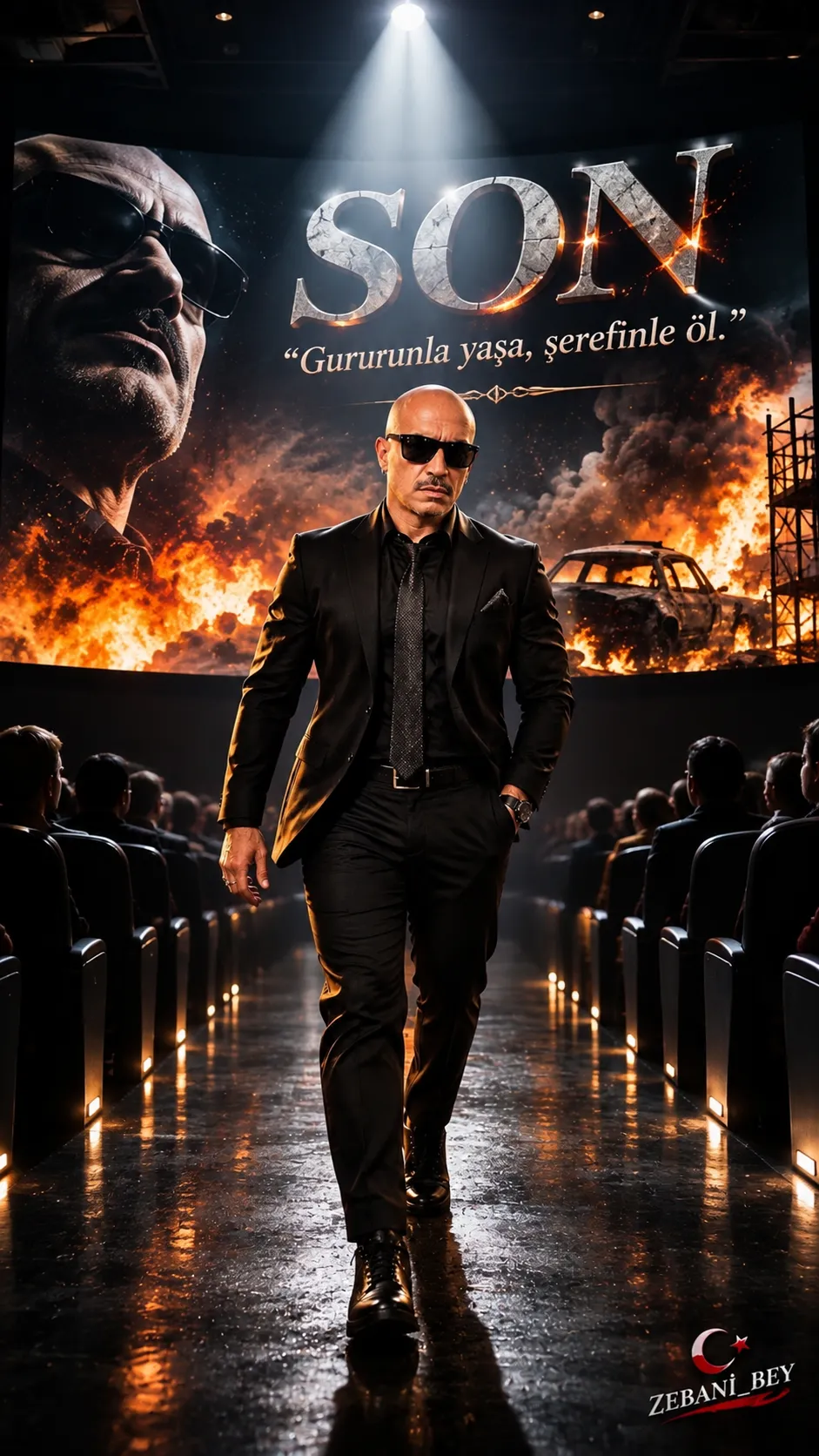
Create a photorealistic, cinematic full-body portrait of the person in a reference photo walking down a grand cinema aisle toward the camera, with a dramatic finale on the screen behind him.
Example outputs
Prompt template
- Format
- Markdown Parameterized
- Inputs
- Reference_photo (image) · Required signature (text) · Optional · Default: Zebani_Bey
- Outputs
- cinematic_portrait (image)
Create an extreme-photorealistic, Hollywood-style cinematic final scene as professional cinema photography. Use a vertical 9:16 composition with 8K RAW HDR detail.

**Identity and wardrobe preservation**
Use the real person in the uploaded reference photo as the sole, definitive identity source. Preserve their face anatomy, head shape, eyes, nose, lips, jaw, natural facial asymmetry, age, skin tone and pores, facial hair, and hair or baldness exactly. Preserve their height, shoulder width, athletic build, and all physical proportions. Keep the clothing, shoes, glasses, jewelry, and accessories from the reference photo unchanged. Do not beautify, rejuvenate, redesign, reinterpret, or turn the person into someone else.

**Scene and composition**
Set the scene in a vast, dark, exceptionally luxurious cinema. Place the camera low at the beginning of the center aisle, facing straight ahead in a perfectly symmetrical perspective. The main character walks directly toward the camera along the long central aisle with slow, steady, confident steps. Keep their shoulders straight and head raised, with natural arm movement; convey the unshakable confidence of someone shaped by experience, not showiness. Place audience members in black seats on both sides of the aisle, mostly as softly blurred silhouettes in the darkness; some turn to watch the character. Keep the main character exactly centered and fully visible from head to shoes.

**Lighting and atmosphere**
A single strong, cool-white spotlight falls from the high ceiling onto the character, forming a visible cone through light cinematic haze. Create dramatic shadows while keeping the face recognizable and photorealistic, never a solid black silhouette. Show realistic reflections of the character’s feet, shadow, and spotlight on the glossy black floor. Make the atmosphere deep, mysterious, grand, and emotional.

**Cinema screen**
Place a huge cinema screen behind the character, farther back than the spotlight. Show an extraordinarily realistic cinematic finale that symbolizes the character’s life and personality; leave the finale’s imagery to the AI’s creativity. Ensure the screen does not overpower the foreground character.

At the top of the screen, show the large, elegant cinematic word “SON”. Immediately below it, show this smaller, strong, legible line: “Bu kısımdaki yazıyı da yapay zekanin yaraticiligina bırakıyorum.” Render both lines in white and lightly weathered silver, with the aesthetic of a real Hollywood film’s closing credits.

**Cinematography**
Use a vertical 9:16 cinematic composition, a centered full-body subject, a low camera angle, strong perspective, and the look of a 35 mm cinema lens. Include realistic depth of field and optical bokeh, a volumetric spotlight, and atmospheric haze. Use deep blacks, cool blue tones, and controlled golden reflections. Preserve realistic skin texture and fabric detail, physically accurate light, shadows, and reflections, and a cohesive, high-end professional cinema-photography look. Make the foreground walk and the finale on the screen feel like two narrative layers of the same film.

**Signature**
Add “${signature:Zebani_Bey}” in the lower-right corner in small, elegant silver-white lettering. Keep it legible and harmonious with the atmosphere, but unobtrusive.

**Avoid**
Anime, cartoons, illustration, artificial 3D characters, plastic skin, artificial faces, face replacement, a different identity, beautification, rejuvenation, changed clothing, bad anatomy, disproportionate bodies, deformed hands, extra fingers, artificial lighting, excessive glare, illegible text, duplicate characters, low resolution, a blurry main character, broken perspective, and unrealistic reflections.

**Emotional tone**
The scene should tell of a man who remains standing tall after every battle in life, not of a defeat. The audience stays seated as he continues to walk. The film may be over for everyone else, but for ZEBANİ, the final act is only a new beginning.
Replace the ${…} placeholders with your values
before using this prompt. See parameters
and defaults below
Parameters
Replace each placeholder with your own value, or use its default when one is provided
${signature:Zebani_Bey}
signature
Default: Zebani_Bey
What you'll create
A reference-guided person walks toward a low camera along the cinema’s central aisle. Blurred spectators sit on both sides, a spotlight cuts through haze and the glossy floor reflects the figure. A large finale screen behind them adds a second narrative layer without overpowering the subject.
Usage instructions
Frequently asked questions
Should the person become a black silhouette?
No. The source explicitly keeps the face recognizable and photorealistic despite the dark surroundings.
Does the ending symbolize defeat?
No. Its stated emotional direction is resilience and a new beginning, even as the film ends.




Comments
Tried this prompt? Share what you made, compare results, or ask a question