Create a Person-and-Dog Lookalike Portrait
Create a photorealistic studio portrait pairing each person in a reference photo with one individually matched dog, using facial resemblance and coordinated accessories.
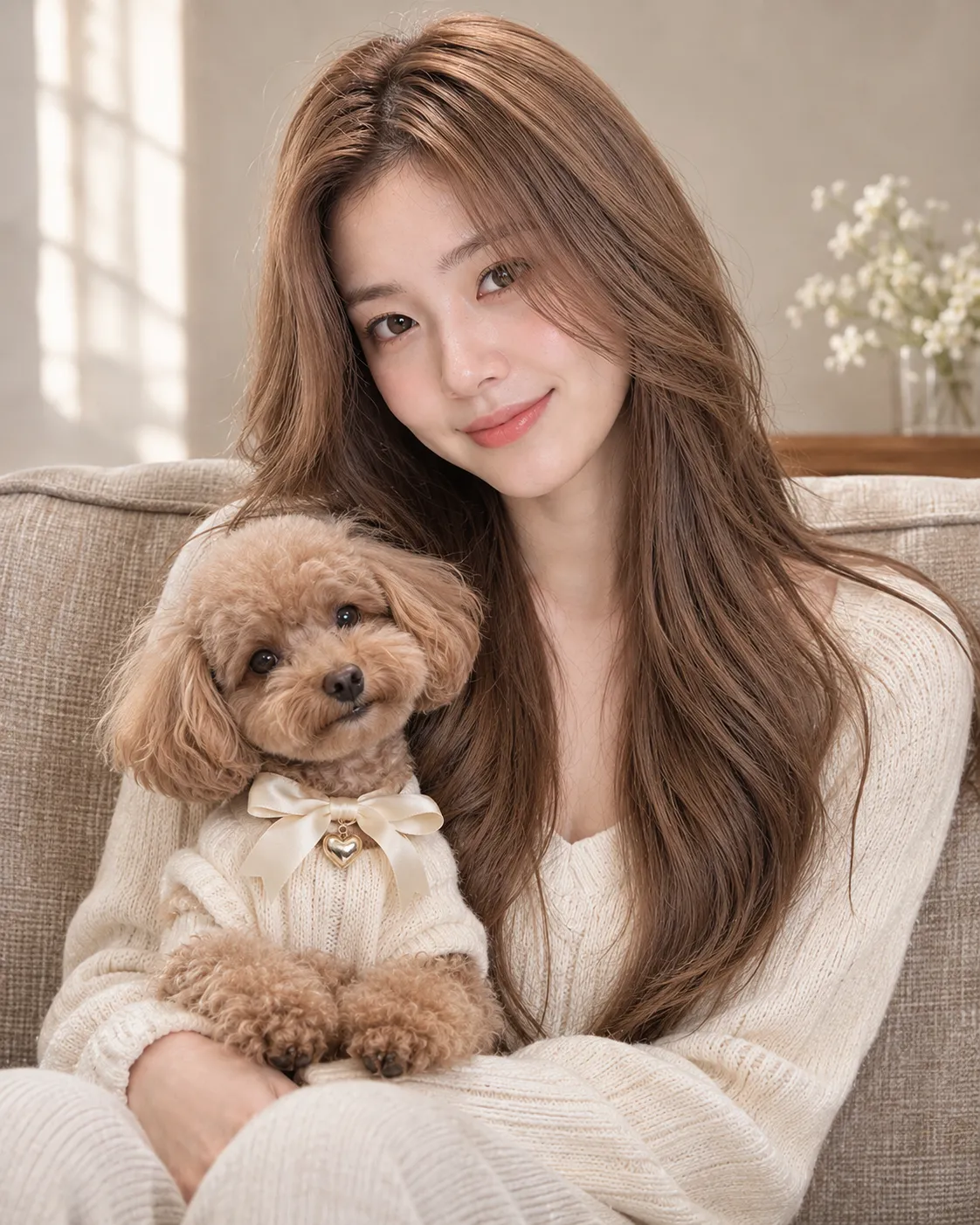
Example outputs
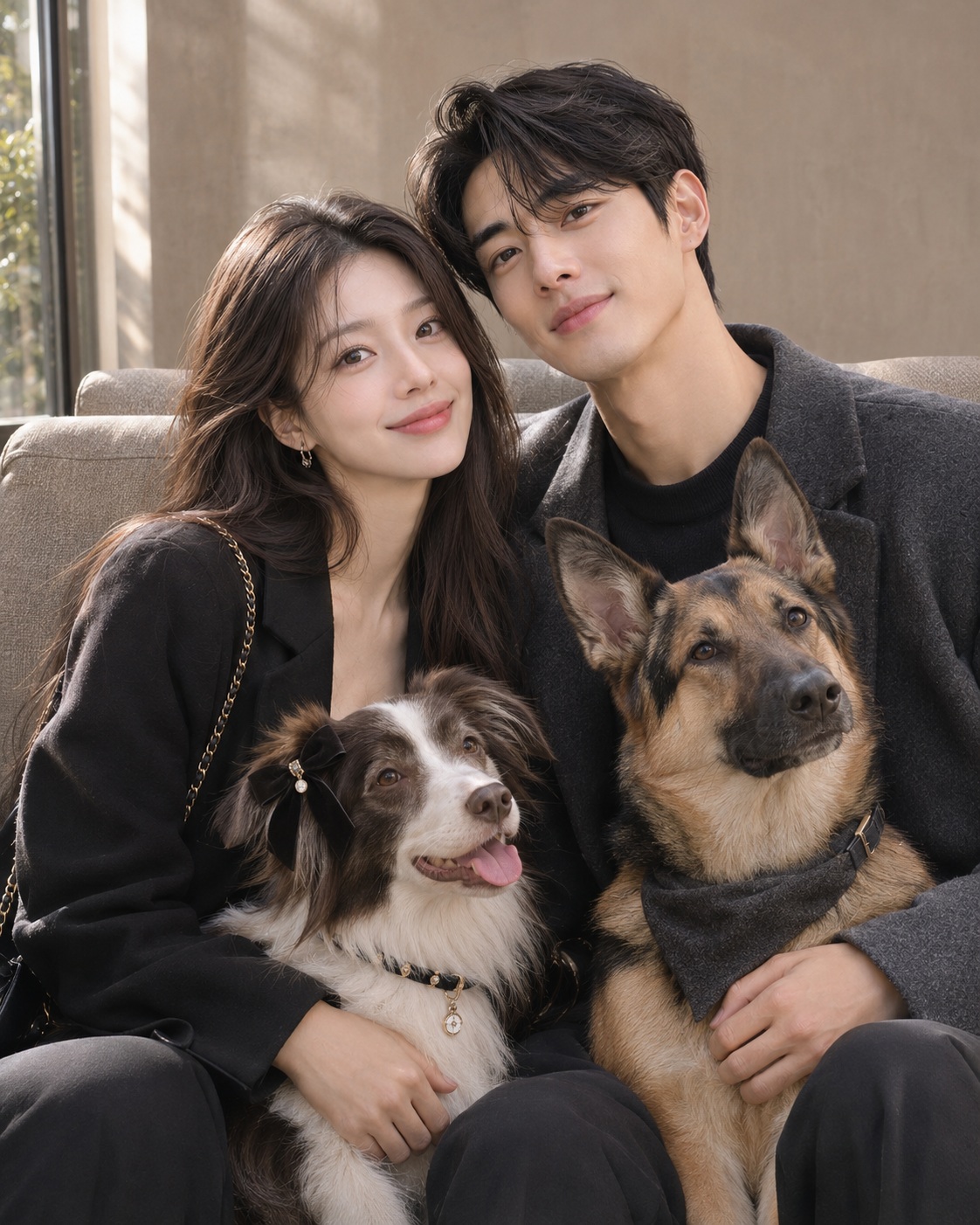
Prompt template
- Format
- Text
- Inputs
- Reference_photo (image) · Required
- Outputs
- Photorealistic_portrait (image)
Using the attached photo, create an ultra-photorealistic portrait featuring every person in the photo alongside a dog that closely resembles that person’s facial features. Each person and their own dog should look like a stylish, playful pair who coordinated their appearance for a real photo together. Coordinate them through facial impression and, where appropriate, the colors of headbands, ribbons, accessories, and clothing.

If the original photo contains N people, show exactly N people and N dogs. Assign one dog to each person and place it immediately beside that person. Preserve the people’s left-to-right order as much as possible. Do not omit, add, or duplicate any person or dog.

Preserve each person’s facial identity independently and strongly: face shape; the position and proportions of eyes, nose, and mouth; eyebrows, cheekbones, cheeks, jawline, skin tone, age, distinctive expression, and natural asymmetry. Retain the original hairstyle, hair color, clothing, and distinctive accessories. Do not blend one person’s face or style with another’s.

Assess each person’s face individually, including its length and width; eye size and spacing; eye-corner direction; the impression made by the eyelids and eyebrows; cheekbone and cheek volume; jaw width and angle; and the balance around the nose and mouth. Choose a breed or plausible mixed breed that resembles that person in two or three of their most distinctive features at the same time.

Do not restrict breed choices to popular small dogs or conventionally cute dogs. Consider a broad range, including pugs, bulldogs, boxers, bull terriers, borzois, greyhounds, basset hounds, beagles, dachshunds, schnauzers, terriers, shepherds, Dobermans, retrievers, collies, Shiba Inu, Jindo dogs, chow chows, Shar-Pei, spaniels, and poodles, as well as other breeds and mixes. Prioritize resemblance to the individual over cuteness.

Reflect each person’s eye shape, facial contours, muzzle length and width, and cheek and jaw shape within a dog’s normal anatomy. If a purebred dog cannot achieve a convincing resemblance, use a natural-looking mixed breed. Do not make every dog’s eyes large, face round, muzzle short, or coat fluffy. Make the differences between the people apparent in the differences between their dogs.

[Pair-specific accessories and coordinated styling]
Identify each person’s most noticeable style elements and match them only to that person’s own dog. Where feasible, echo the accessory’s color, material, pattern, decorative shape, and placement.

If a person wears a headband, give their dog a small headband in the same color and material, with a similar width and decoration. Adapt it naturally to the dog’s head size and ear placement while preserving the dog’s actual ear shape.

If a person wears a ribbon or hair clip, give their dog a matching ribbon or small decoration in a corresponding color and shape, placed near the ears or somewhere else appropriate. Do not attach human hair to the dog; make the decoration look natural among the dog’s fur.

If a person wears a hat, give their dog a small dog-appropriate hat with a similar feel. If glasses are a significant style element, reinterpret them as a small frame that fits the dog’s eyes and muzzle naturally. Do not obscure the defining features of either face.

If a person wears a scarf, necklace, or clothing with a distinctive pattern, echo its color and pattern in the dog’s bandana, collar, or simple dog outfit. Do not force a complete copy of the person’s outfit; choose only one or two of its most noticeable elements.

If a person has no accessories, do not invent a headband or hat for their dog. You may subtly echo a representative clothing color or material in a small bandana or collar instead. Do not give every dog identical decorations.

The person and dog should still look alike even without their accessories. Coordinated styling is a supporting, playful detail that highlights their facial resemblance. Never swap pairings—for example, do not put the left person’s headband on the right person’s dog.

[Scene and photography]
Set the scene in a natural-light studio with a calm taupe-gray background and a low fabric sofa. Seat each person close beside their own dog. Small dogs may sit comfortably supported on a lap or on the adjacent seat; large dogs should sit immediately beside their person. Preserve realistic scale and body proportions.

Capture the instant after the photographer makes a small sound beside the camera, as each person and dog looks toward it. The head angle and expression of each pair should subtly resemble one another. Follow each person’s expression in the reference naturally; do not force everyone into the same smile or pose.

For a small group, use close two-shots that show faces and accessories clearly. For a larger group, use a group composition in which every pair is easy to distinguish. Keep all faces unobstructed and every eye sharply in focus. Adjust seating and camera distance to accommodate the number of people.

Soft window light should illuminate people and dogs together. Show lifelike skin texture and pores, flyaway hairs, fabric creases, dog fur and whiskers, moist noses, and the real materials of headbands and ribbons. Accessories should rest naturally against hair or fur, with visible contact shadows and a sense of weight; they must not float or pass through ears or faces.

Do not place human facial features directly onto dogs. Exclude human skin, human teeth, human-like faces, and deformed front paws. Avoid excessive beautification, toy-like dogs, blended faces, and visible compositing seams. The result should look like a real photo of the people and dogs together.

Make the portrait inviting viewers to notice the facial similarities between each person and dog, and to smile at their matching headbands or style. Before finishing, check the number of people and dogs, each individual resemblance, and every one-to-one accessory pairing. No text, name tags, logos, or watermark. Vertical 4:5 aspect ratio.
What you'll create
Every person in a reference photograph appears beside a corresponding lookalike dog, with individual facial identity preserved. Coordinated colors and distinctive accessories create stylish pairs within a photorealistic vertical group portrait.
Usage instructions
Provide a photo that clearly shows everyone whose likeness should appear; the number of people in it determines the number of dogs. The prompt matches each person to a dog by facial features and coordinates only the most distinctive visible style elements. The composition is fixed at a vertical 4:5 ratio; for a clearer group portrait, use a reference where faces and accessories are visible.
Frequently asked questions
How many dogs should appear?
Exactly one per person, with no added, omitted or duplicated people or dogs.
Should labels identify each pairing?
No; resemblance and coordinated styling convey the pairs without text, name tags or logos.

Comments
Tried this prompt? Share what you made, compare results, or ask a question