People with Their Lookalike Dogs
Create a photorealistic studio portrait that pairs every person in a reference photo with a dog whose facial features and styling resemble theirs.
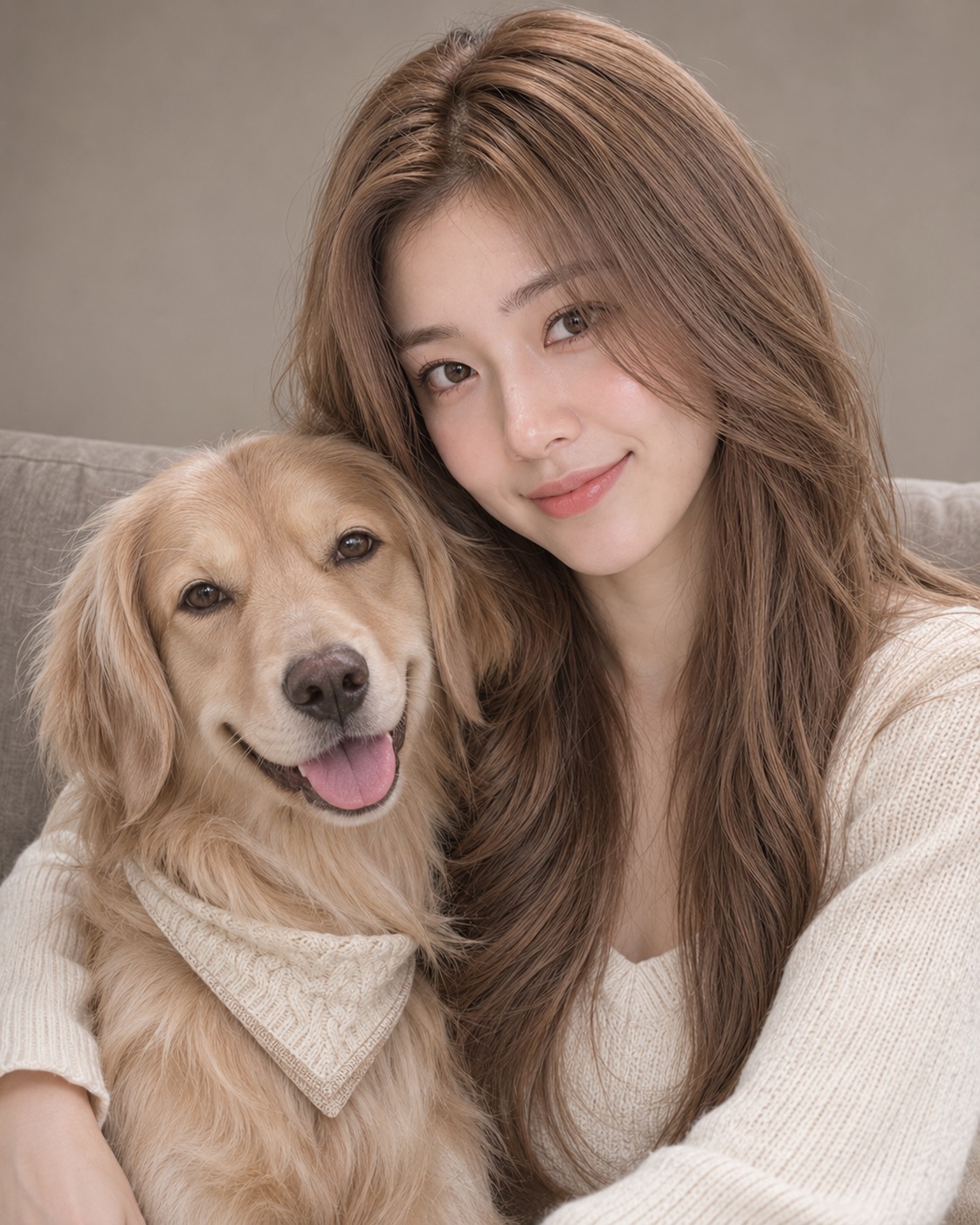
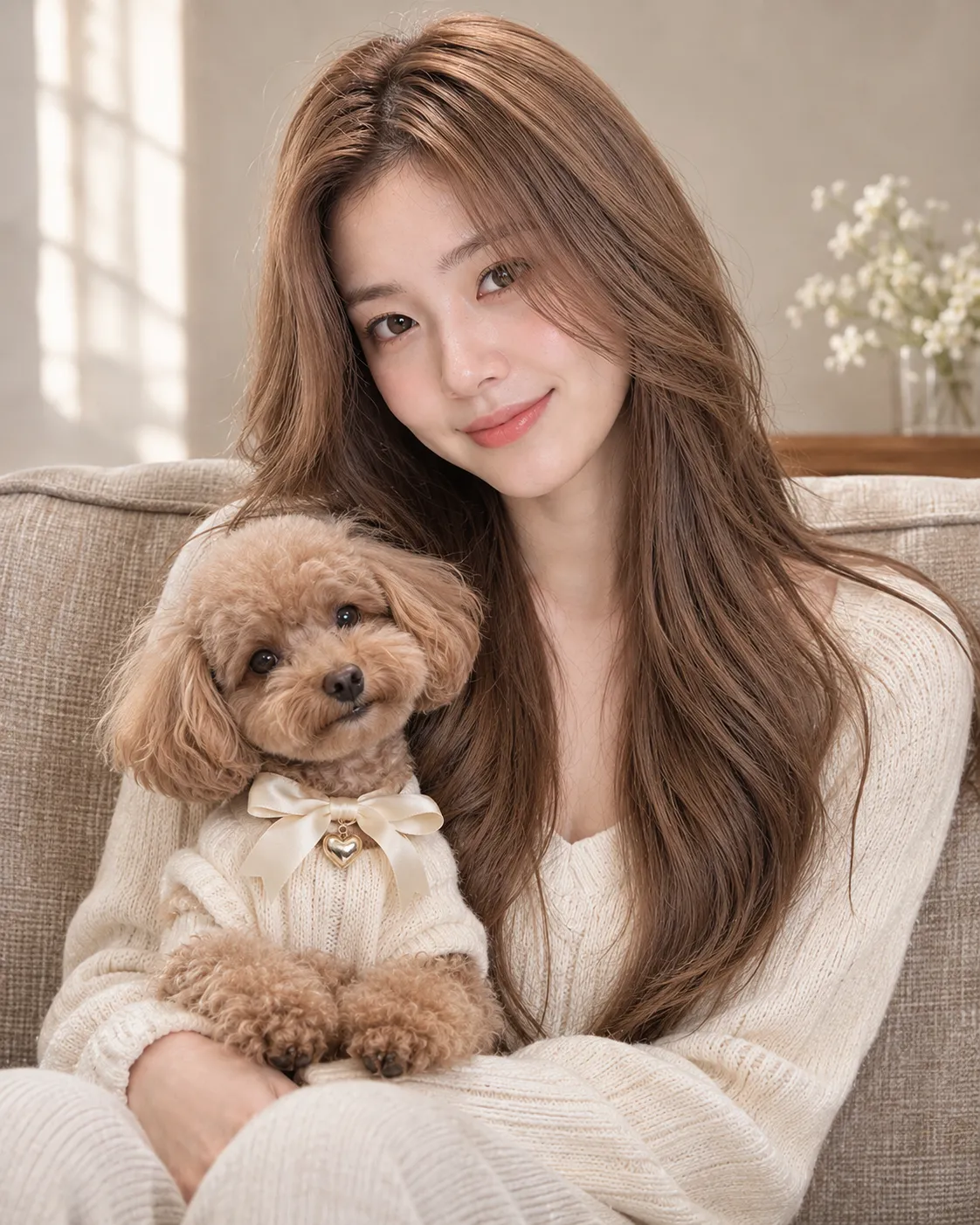
Example outputs
Prompt template
- Format
- Text
- Inputs
- Reference_photo (image) · Required
- Outputs
- Portrait (image)
Create an ultra-realistic portrait featuring every person in the reference photo alongside a dog that closely resembles that person’s facial features. Each person and their dog should look like a stylish, playful pair, naturally coordinated in the impression of their faces and in the colors of their headbands, ribbons, accessories, and clothing—as if a real owner and pet had posed together for a thoughtfully styled portrait.

If the reference contains N people, show exactly N people and N dogs. Pair each person with one dog and place that dog right beside them. Preserve the people’s left-to-right order as much as possible. Do not omit, add, or duplicate any person or dog.

Preserve each person’s facial identity independently and very strongly. Retain their face shape; the positions and proportions of their eyes, nose, and mouth; eyebrows, cheekbones, cheeks, jawline, skin tone, age, distinctive expression, and natural asymmetry. Preserve the original hairstyle, hair color, clothing, and distinctive accessories. Do not blend anyone’s face or style with another person’s.

Examine each person’s face individually: compare its length and width, eye size and spacing, eye-corner direction, eyelids and brows, cheekbone and cheek volume, jaw width and angle, and the balance around the nose and mouth. Choose a dog breed, or a plausible mixed breed, that simultaneously resembles two or three of that person’s most distinctive features.

Do not limit breed choices to popular small breeds or conventionally cute puppies. Consider a broad range, including pugs, bulldogs, boxers, bull terriers, borzois, greyhounds, basset hounds, beagles, dachshunds, schnauzers, various terriers, shepherds, Dobermans, retrievers, collies, Shiba Inu, Jindo dogs, chow chows, Shar-Peis, spaniels, and poodles. Other breeds are also acceptable. Prioritize resemblance to the person over cuteness.

Reflect each person’s eye shape, facial contours, muzzle length and width, and cheek and jaw shape within a dog’s anatomically normal structure. If a purebred dog cannot achieve a convincing resemblance, use a natural-looking mixed breed. Do not give every dog large eyes, a round face, a short muzzle, or thick fur. The dogs should remain distinguishable from one another in ways that reflect their paired people.

[Coordinate accessories and styling for each pair]
Identify each person’s most noticeable style details and match them only to their own dog. Where feasible, echo the accessory’s color, material, pattern, decorative shape, and placement.

If a person wears a headband, give their dog a small headband in the same color and material, with a similar width and decoration. Adapt it naturally to the dog’s head size and ear placement while preserving the ears’ real shape.

If a person wears a ribbon or hairpin, give their dog a corresponding ribbon or small decoration in a matching color and shape, placed near the ears or somewhere suitable. Do not put human hair on the dog; integrate the decoration naturally into the dog’s fur.

If a person wears a hat, give their dog a small dog-appropriate hat with a similar feel. If glasses are a significant style detail, reinterpret them as a small frame that fits the dog’s eyes and muzzle naturally. Do not obscure the defining features of either face.

If a person wears a scarf, necklace, or clothing with a distinctive pattern, echo its colors or pattern in the dog’s bandana, collar, or simple pet garment. Do not force a complete copy of the person’s outfit; select only one or two of its most noticeable elements.

If a person has no accessories, do not invent a headband or hat for their dog. You may subtly reflect a representative clothing color or material in a small bandana or collar instead. Do not give every dog the same decoration by default.

The person and dog should still look alike even without their accessories. Coordinated styling should add playful emphasis to their resemblance, not substitute for it. Never cross-match accessories—for example, do not give the dog paired with the person on the left the headband belonging to the person on the right.

[Scene and photography]
Set the scene in a natural-light studio with a calm taupe-gray background and a low fabric sofa. Each person sits close beside their own dog. A small dog may sit comfortably supported on the person’s lap or on the adjacent seat; a large dog sits right beside its person. Maintain realistic size and body proportions.

Capture the moment just after the photographer makes a small sound beside the camera, as the people and dogs look toward it together. Subtly echo head angles and expressions within each pair. Keep expressions natural to the people in the reference; do not force everyone to share the same smile or pose.

With few people, use a close two-shot that makes faces and accessories prominent. With several people, use a group composition that clearly distinguishes each pair. Do not let faces obscure one another, and keep every eye sharply in focus. Adjust seating and camera distance to fit the number of people.

Soft window light falls on both people and dogs. Show lifelike skin texture, pores, flyaway hairs, clothing folds, dog fur and whiskers, moist noses, and the real materials of headbands and ribbons. Accessories should rest naturally against the head or fur, with visible contact shadows and believable weight. Nothing should float or pass through ears or faces.

Do not paste human facial features onto dogs. Avoid human skin, human teeth, human-shaped faces, and abnormal front paws. Avoid excessive beautification, doll-like dogs, blended faces, and visible compositing seams; the result should look like a real photograph of the people and dogs together.

Create a portrait that invites viewers to compare each person with their dog and notice their facial resemblance, then smile at their coordinated headbands or styling. Before finishing, verify the exact number of people and dogs, each individual resemblance, and the one-to-one accessory pairing. No text, name tags, logos, or watermarks. Vertical 4:5 aspect ratio.
What you'll create
Each reference-based person stands beside a dog chosen for a similar facial impression. Matching ribbons, headbands or clothing colors create a natural owner-and-pet look while maintaining separate, recognizable identities in a vertical portrait.
Usage instructions
Provide a photo containing every person to include, with faces and any distinctive accessories visible. The prompt pairs each person with a dog based on their individual facial features, then coordinates only the most noticeable style details. The number of pairs and framing adapt to the people in the photo.
Frequently asked questions
Can one dog stand for several people?
No; every person receives one dog placed immediately beside them.
Should the people be reordered?
Their original left-to-right order is preserved as much as possible.



Comments
Tried this prompt? Share what you made, compare results, or ask a question