Minimalist Photo and Negative-Space Poster
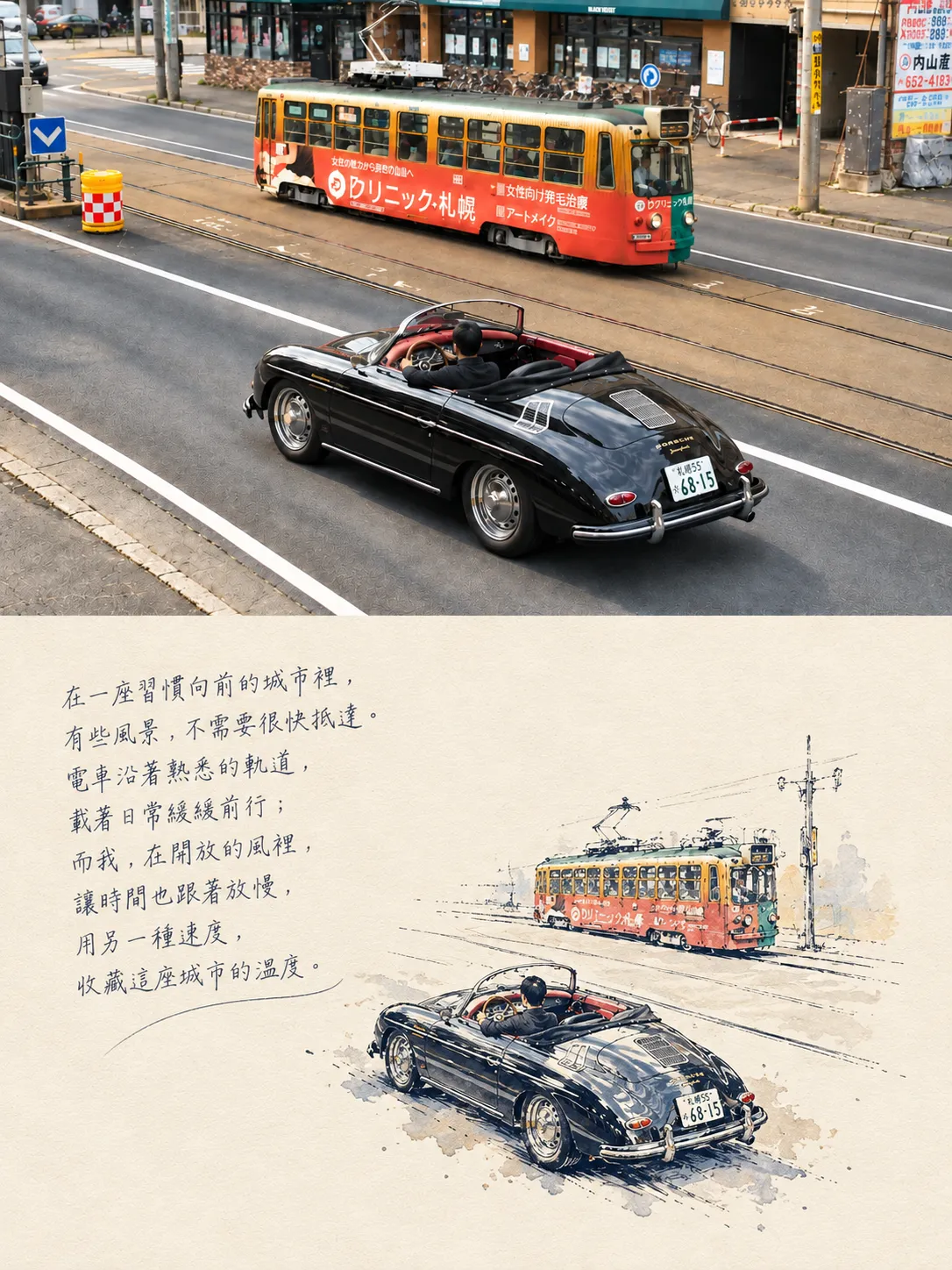
Turn each supplied photo into a separate 3:4 editorial poster, pairing the preserved photograph with a restrained conceptual illustration and a short handwritten passage in Traditional Chinese.
Example outputs
Prompt template
- Format
- Text
- Inputs
- reference_photo (image) · Required
- Outputs
- editorial_poster (image)
Create one separate, high-end editorial poster for each photo I upload. Do not combine multiple photos into a collage; output one poster per photo.

Use a vertical 3:4 composition divided into two equal-height sections, with the upper and lower sections each occupying exactly 50% of the image.

In the upper section, preserve the original photo, including the subject’s identity, structure, pose, realistic texture, natural lighting, and existing color atmosphere. Apply only subtle, refined color grading to evoke an art magazine, independent publication, or exhibition image. You may naturally extend the environmental background to fit the frame, but do not stretch, distort, or alter the subject.

In the lower section, identify the photo’s most distinctive subject, outline, structure, pose, and narrative relationships. Do not reproduce the photo in full. Instead, interpret its most meaningful emotion, relationships, direction, and visual metaphors, and reconstruct them as a minimalist conceptual illustration with generous negative space. Remove most background and secondary details, retaining only a few cues that define the image. The illustration should feel distinct from a simple tracing while still clearly corresponding to the photo above.

Treat negative space as a primary compositional element, not an empty background. Use it to suggest air, distance, loneliness, time, pauses, or psychological space. Build a restrained, poetic composition with lingering resonance through the contrast in scale, placement, and directional tension between the subject and the open space. Prefer omission over filling the frame.

Make the illustrated subject very small relative to the large area of negative space. Place it below center, off to one side, or wherever the composition works best. It may be incomplete, partially cropped, simplified, or symbolic.

Use low-information hand-drawn linework, simple silhouettes, a few traces, and symbolic forms rather than realistic volume or intricate detail. Keep lines fine and natural, with slight irregularities and pauses like handwriting. A few repeated lines, broken contours, or abstract traces may reinforce emotion and metaphor. Simplify people, buildings, animals, plants, objects, and landscapes into concise visual symbols with psychological resonance.

Use a warm gray-beige or naturally aged-paper background with a single muted cool-color drawing palette. Choose a suitable cool hue in response to the overall color temperature of the photo, and render the main graphic, lines, and text in a restrained monochrome such as indigo, blue-violet, gray-violet, or a similar hue. Create depth through variations in value and density, allowing the paper to show through. Keep the background warm, soft, and low in saturation, with only a very subtle warm-cool contrast. Avoid richly varied colors, strong complementary contrast, and digital gradients.

Add only a small amount of text. Do not impose a fixed title, numbering, or information format. In the lower section’s open space, include a short handwritten passage in Traditional Chinese that evokes the feeling of the scene. Derive a few words or a short phrase from the photo’s subject, emotion, relationships, actions, memories, or metaphors. Set the text in a small, fine, restrained style with the feel of a handwritten note or old print. Integrate it quietly into the negative space, along the edge of the illustration, or among its traces, so it creates a poetic reading rhythm rather than a commercial poster headline.

The overall result should feel like a refined conceptual illustration assembled from a small vignette, generous artistic negative space, a warm paper ground, muted monochrome hand-drawing, visual metaphor, and poetic typography—like an independently published poetry book, a personal manuscript, or an archive of psychological images.

Avoid recreating the entire scene, filling the frame, complex backgrounds, realistic illustration, a cartoon look, a 3D appearance, vivid multicolor palettes, commercial-illustration styling, and generic template-like poster effects.
What you'll create
The source remains intact in the upper half. A sparse lower interpretation gives the image the quiet feeling of a poetry manuscript or personal visual archive.
Frequently asked questions
Should the entire lower scene be reconstructed?
No. Complete scene recreation is excluded.
Is a vivid multicolor palette required?
No. The lower treatment is restrained and monochrome-oriented.




Comments
Tried this prompt? Share what you made, compare results, or ask a question