Photo and Hand-Drawn Doodle Editorial Poster
Turn each photo into a separate editorial poster that pairs the original photography with a story-driven lower panel of hand-drawn doodles. The fixed 3:4 layout preserves the original subject while adding small illustrated participants and brief handwritten English copy
Example outputs
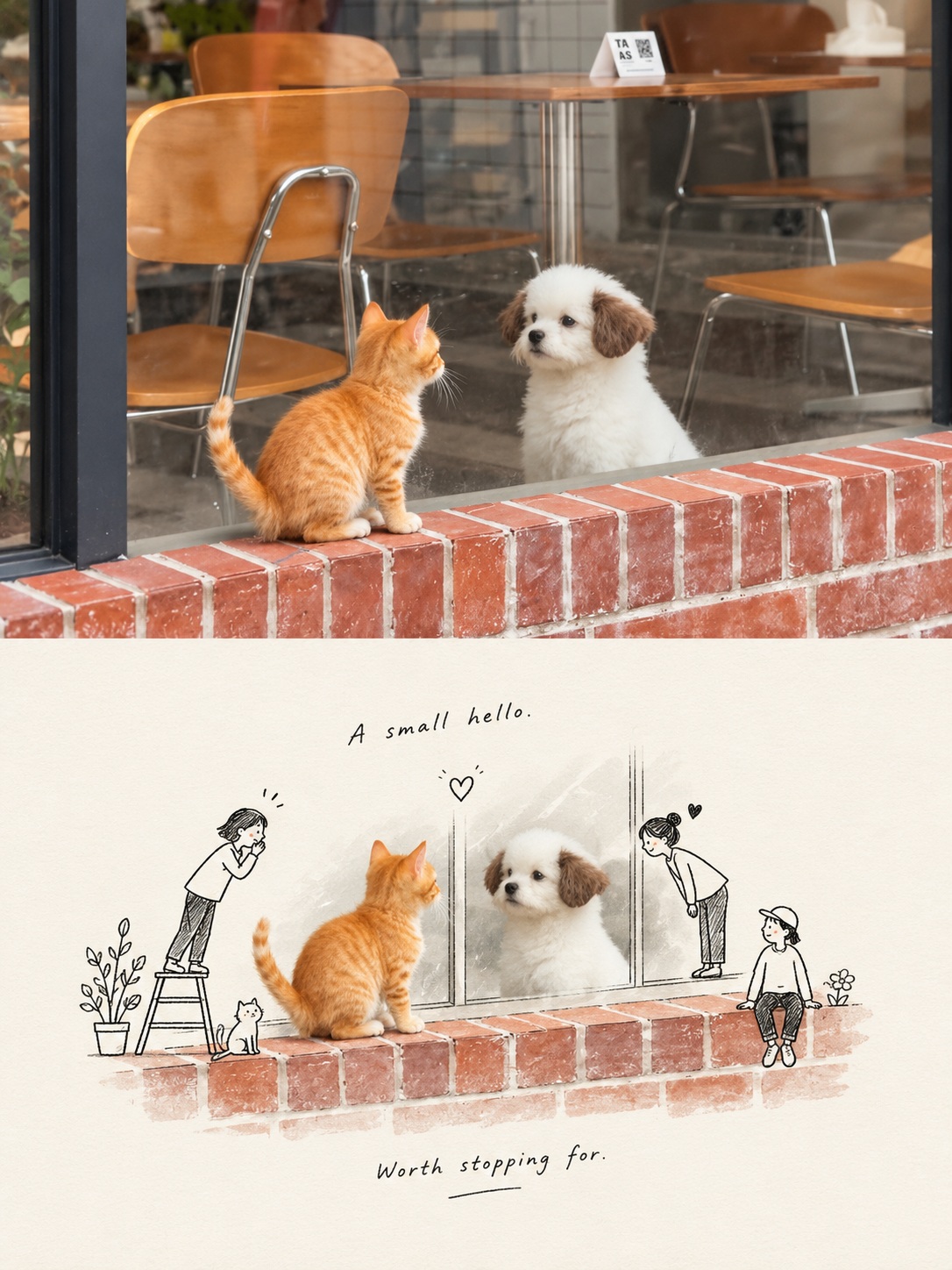
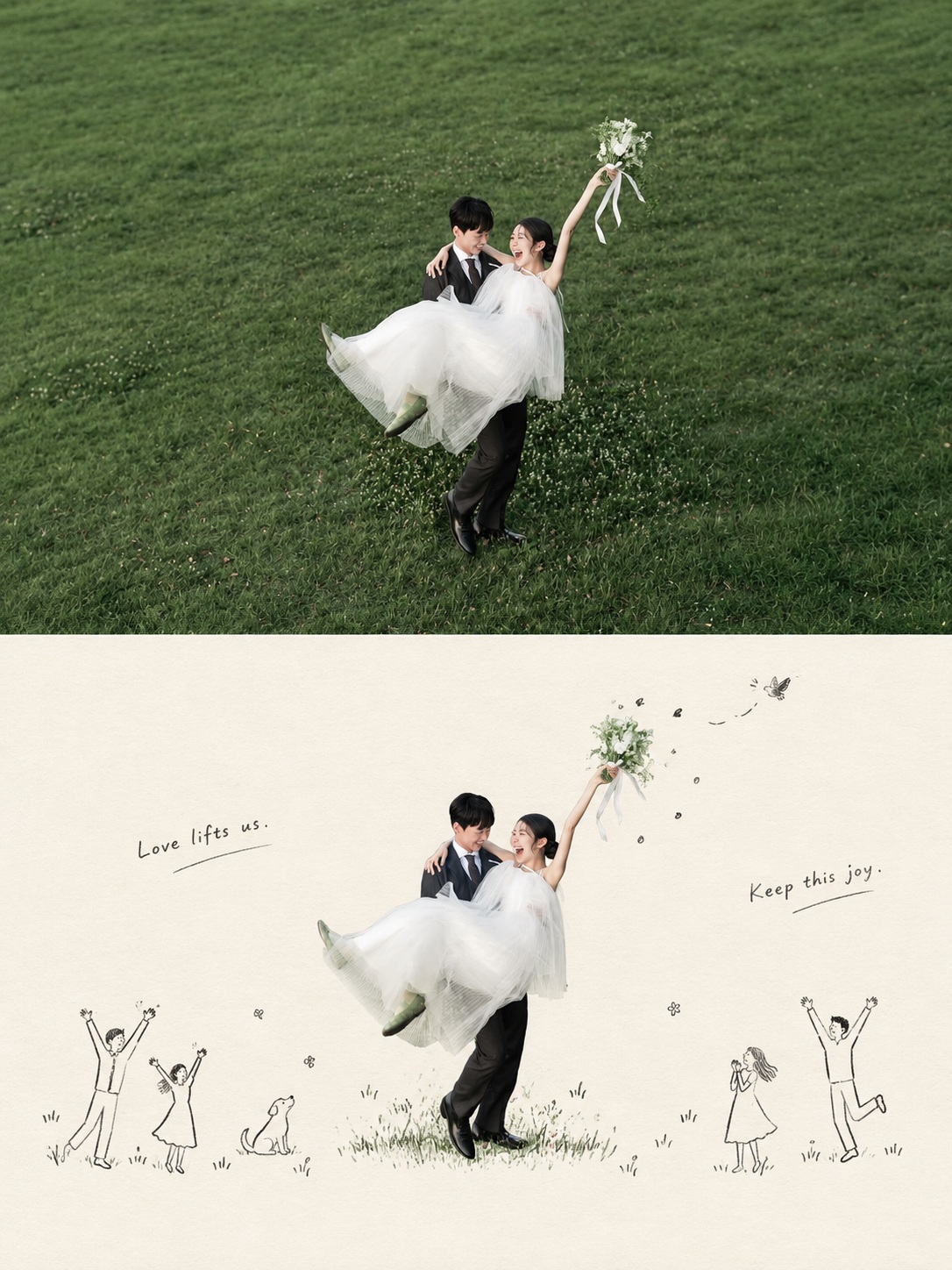
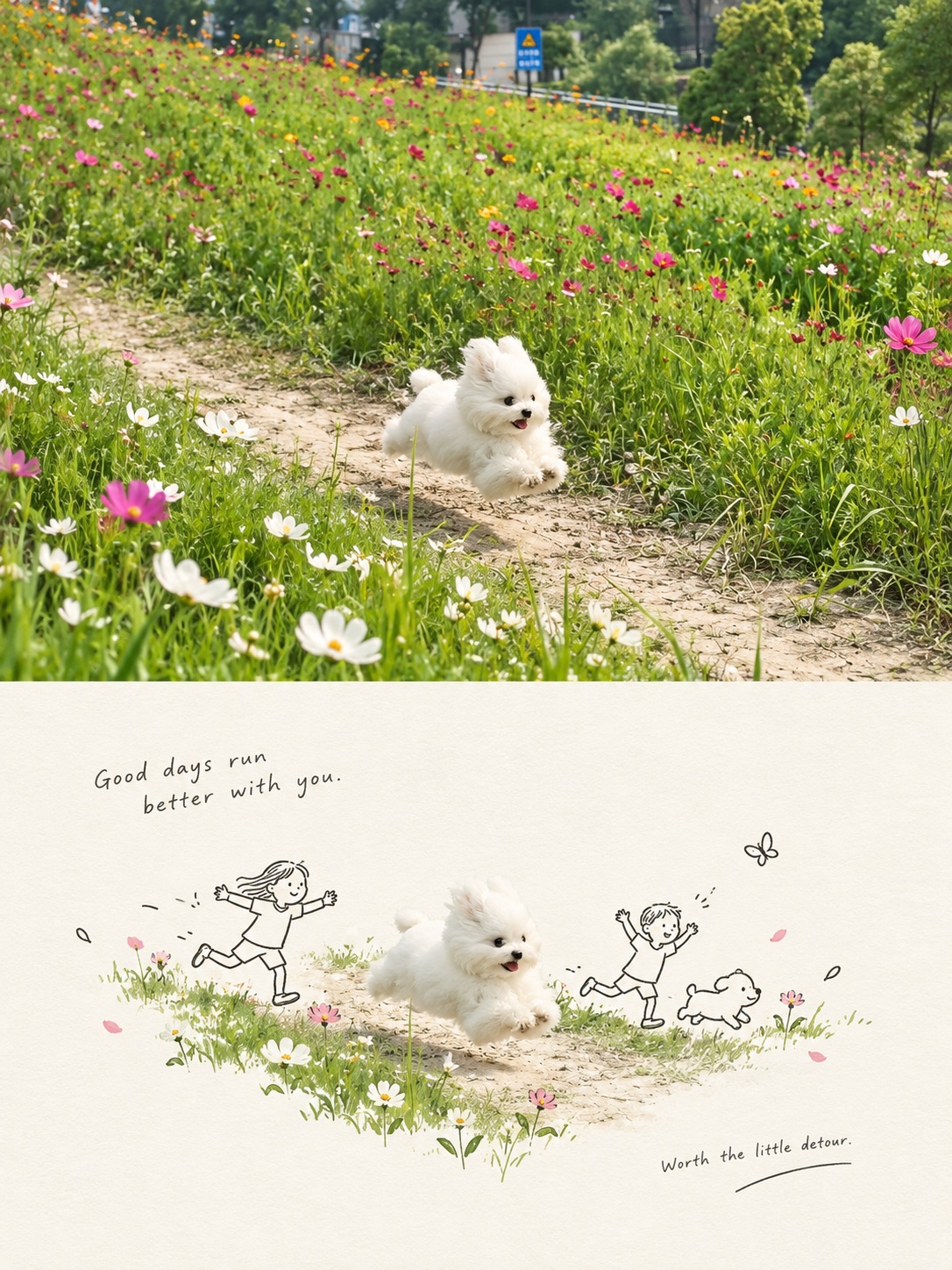
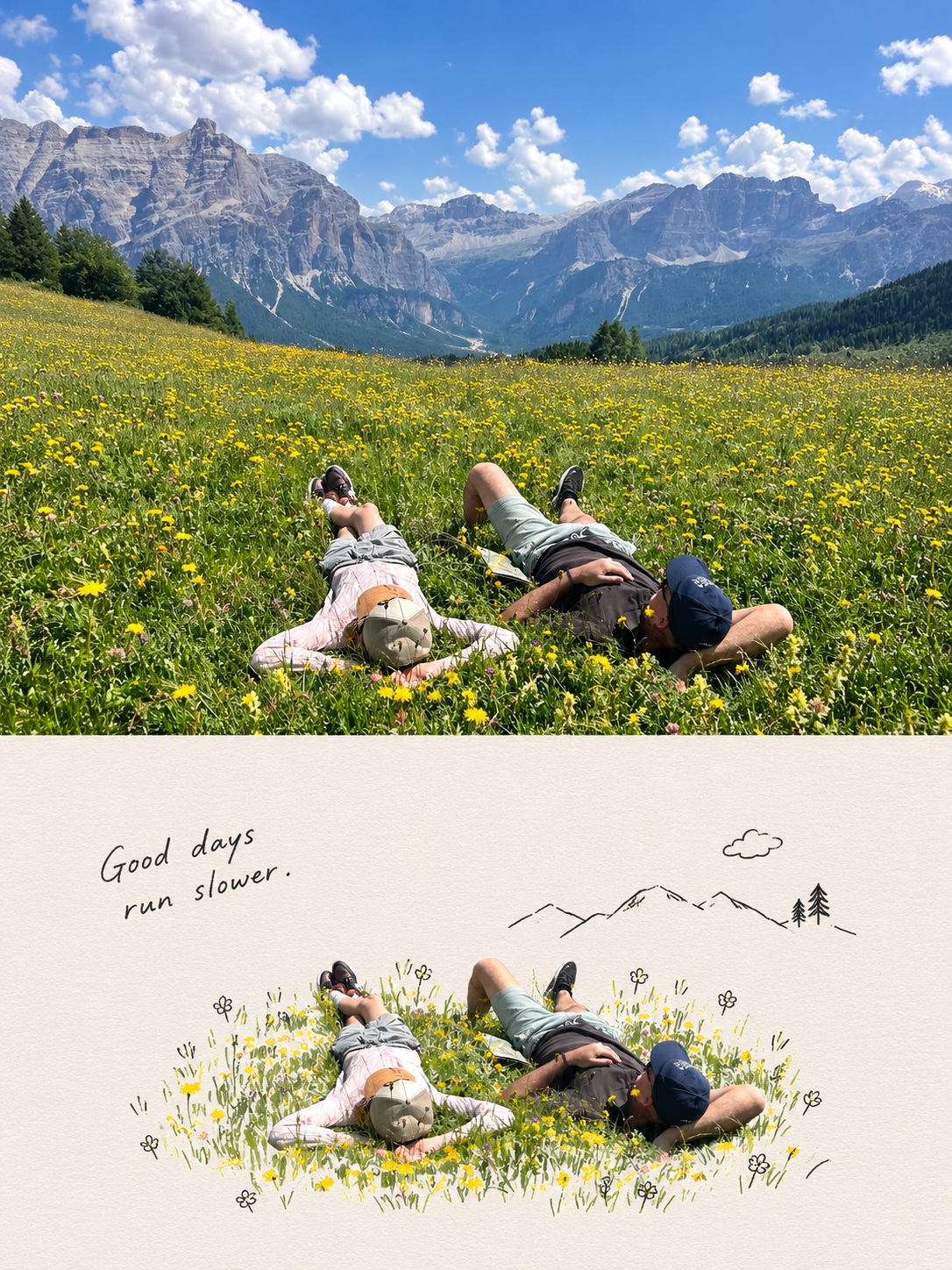
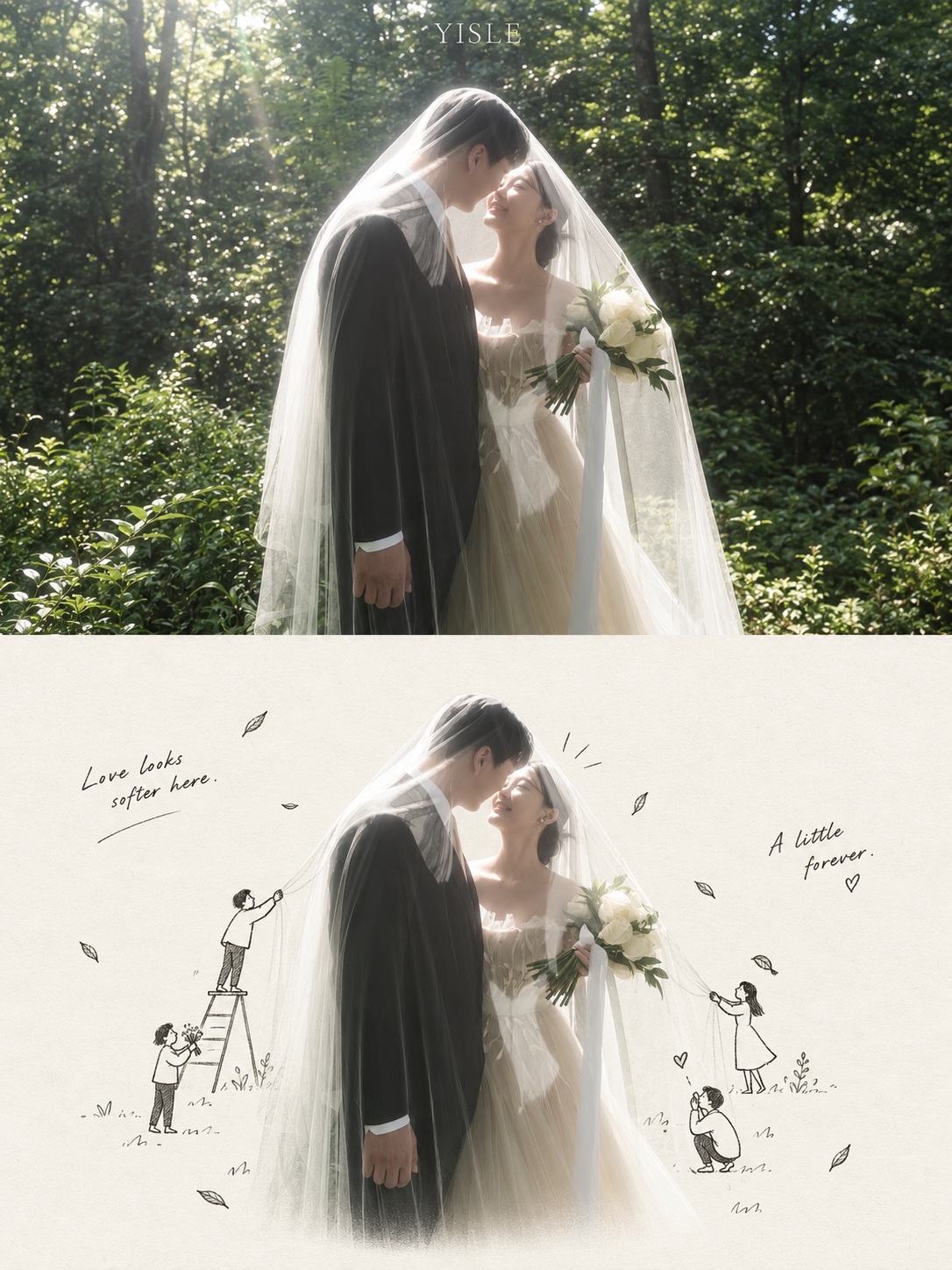
Prompt template
- Format
- Markdown
- Inputs
- Reference_photo (image) · Required
- Outputs
- Editorial_poster (image)
Create one separate high-end editorial poster for each uploaded photo. Output each photo individually; do not make a collage, photo grid, or composition combining multiple photos.

## Overall composition
- Use a strict 3:4 portrait aspect ratio.
- Divide the image horizontally into two equal halves: the top is exactly 50% and the bottom is exactly 50%.
- Combine the feel of a high-end lifestyle magazine, independent publication, art photography, and hand-drawn illustration.
- Keep the image clean, bright, restrained, artistic, and full of negative space.

## Top half: original photography
- Preserve the original photo as much as possible.
- Retain the identity and features, pose, action, proportions, materials, compositional and spatial relationships, natural lighting, and authentic photographic quality of its people, animals, or objects.
- Do not alter a person’s face, body, or clothing, or an animal’s features. Do not stretch, distort, or reconstruct the subject.
- Apply only subtle, refined photographic color grading: adjust exposure, tonal depth, contrast, and color to evoke editorial photography, a lifestyle magazine, or independent photographic work.
- If the image needs more space at the edges, extend only the background naturally without changing the subject.

## Bottom half: a second visual narrative
- Understand the original photo’s visual core and story, rather than merely identifying what it depicts.
- Determine what is most memorable: an action, relationship, emotion, direction, moment, visual detail, or symbolic meaning.
- Redesign the bottom half around that core so it feels like the same photo has been imagined again.
- Retain the most important real subject from the original photo and keep its authentic photographic quality.
- You may naturally remove the background around the subject, adjust its position and scale, simplify unrelated background details, and refine the composition, but viewers must immediately recognize its connection to the original photo.
- Do not turn the real subject into an illustration.

## Black-line doodle figures
- Add a small number of minimalist, fine-line hand-drawn figures in black or dark gray.
- Give them a casual, natural feel: light, simple, imperfect lines, not a polished commercial vector style.
- Make them participants in the story, not decoration.
- Base their actions naturally on the subject, action, and setting in the original photo. They may follow, observe, run, guide, climb, chase, imitate, accompany, interact, or add a touch of gentle humor.
- Make them seem to live within the photo’s story rather than posing arbitrarily.

## Color
- Extract the most distinctive dominant color from the original photo and adapt it for the lower half.
- Use an off-white, cream, warm white, or very light gray background.
- Keep the real subject’s original colors.
- Draw the figures with fine black or dark gray lines.
- Keep the overall palette muted, soft, and cohesive; avoid excessive saturation and clutter.

## Hand-drawn details
- Add only a few hand-drawn details that naturally support the photo’s story, such as flowers, birds, butterflies, clouds, wind lines, paper airplanes, ladders, balloons, paths, small animals, arrows, or simple plants.
- Every detail must serve the story of the original photo. Do not fill the image with decorations.
- Preserve generous negative space.

## Text
- Based on the photo’s central emotion, generate one or two extremely short handwritten lines in English.
- Do not directly describe an object, write an advertising headline, or explain the photo.
- The text should read like a photographer’s aside, a quick remark from one of the small figures, a gentle observation, or a light play on words.
- Examples:
  - “Let the wind carry us.”
  - “Good days run better with you.”
  - “A small hello can be the biggest adventure.”
  - “Some days are for looking up.”
  - “Worth the little detour.”
- Use natural handwriting in black or dark gray, at a small size. Arrange it naturally along the subject’s movement or outline, or within an open area.
- Keep the text sparse; negative space matters more.

## Overall effect
Combine authentic photography, black-line hand drawing, high-end editorial design, light storytelling, and a warm lifestyle aesthetic. The key impression should be that an illustrator has reread and reimagined a real photograph.

## Avoid
Children’s picture-book style, cartoon posters, pure illustration, ordinary photo collages, complex infographics, commercial advertising style, excessive decoration, too much text or too many doodles, changes to the original subject’s identity, changes to a person’s face or an animal’s features, and stretching or distorting the photo.

## Strict output requirements
- Portrait 3:4.
- Top 50%: original photography.
- Bottom 50%: the real subject, black-line doodles, and a second narrative.
- Output one separate poster for each photo.
What you'll create
This prompt creates a clean, high-end editorial poster from each uploaded photo, with the original photography in the top half and a reimagined scene in the bottom half. The lower panel combines the recognizable photographic subject with sparse dark hand-drawn figures and details, muted colors, and short handwritten English copy
Usage instructions
Provide the photo or photos to use as references; each photo will become its own poster rather than being combined with others. The lower panel’s story and palette are derived from each photo, so a clear action, relationship, or mood gives the prompt a strong narrative to work with while the 3:4 split remains fixed




Comments
Tried this prompt? Share what you made, compare results, or ask a question