Photo and Chinese Paper-Cutting Comic
Turn a single reference photo into a vertical split composition that preserves the original image above and reimagines its scene as a traditional Chinese paper-cutting comic below. The lower half includes a small English title based on the photo.
Example outputs
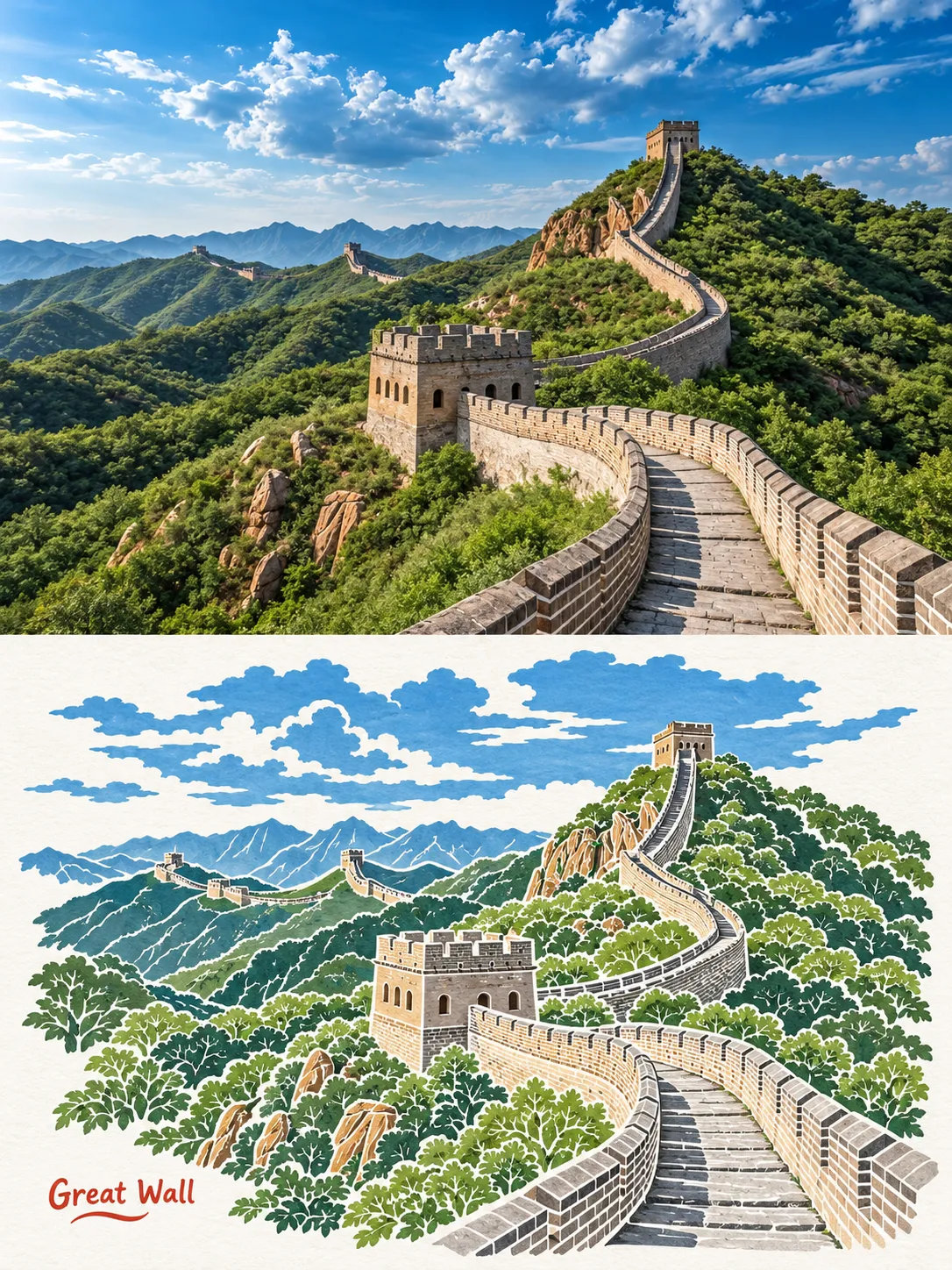
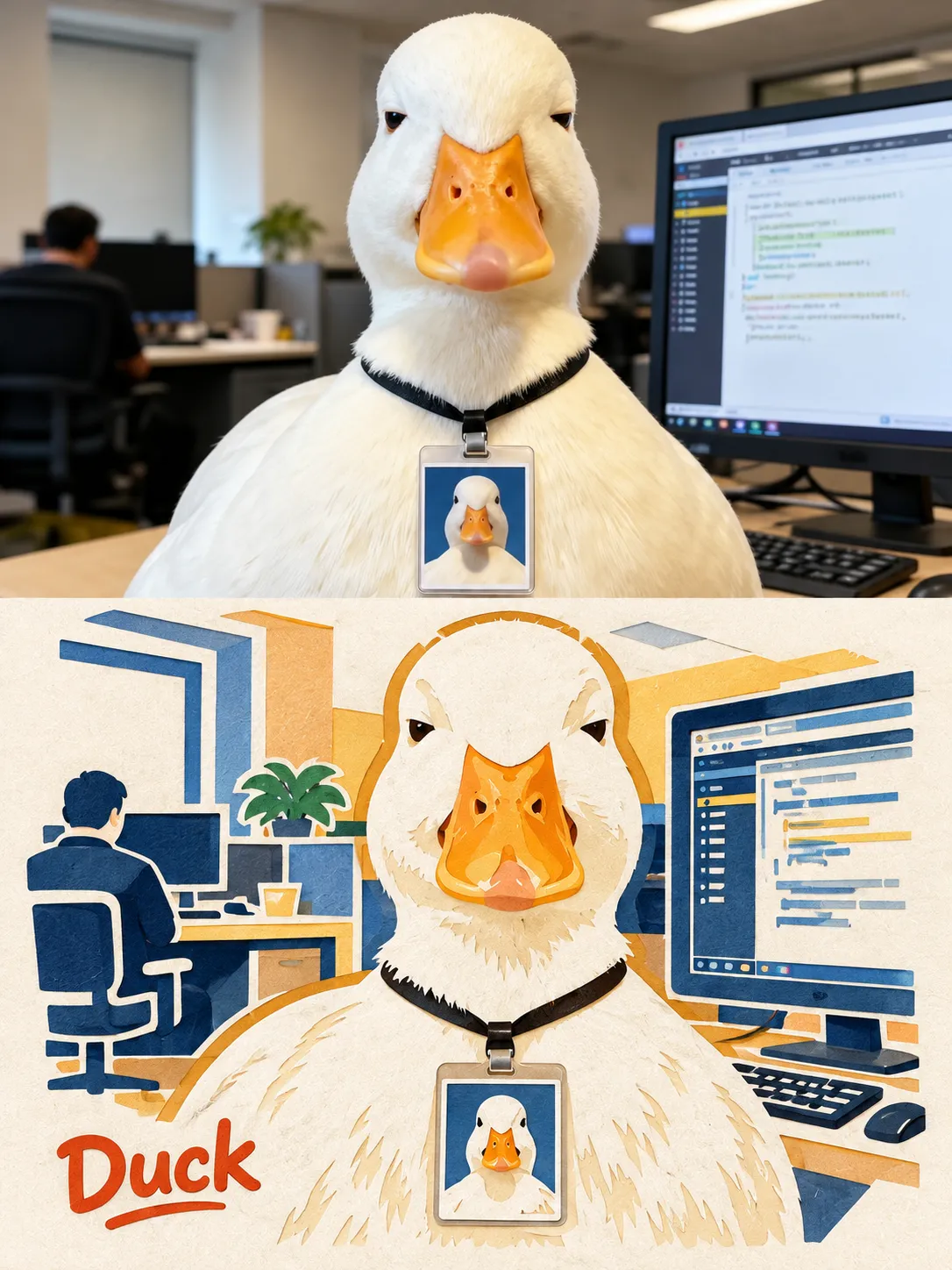
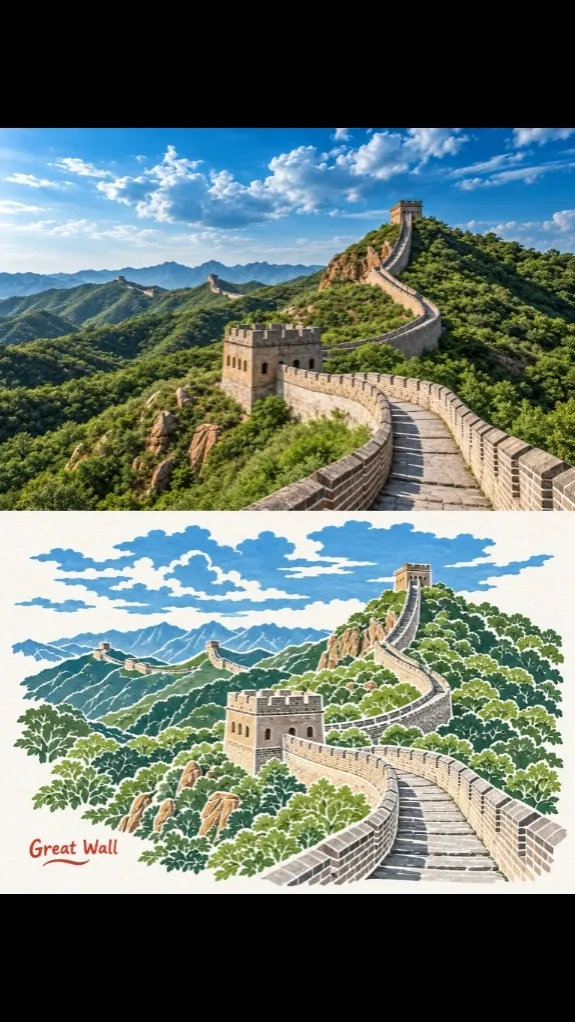
Prompt template
- Format
- Text
- Inputs
- Reference_photo (image) · Required
- Outputs
- Vertical_split_artwork (image)
Use only the single uploaded photo as the reference. Create one 3:4 vertical image, not a collage, puzzle, or mix of images.

Divide the canvas into two equal halves, with a strict 50/50 split: the original photo occupies the top half, and a Chinese paper-cutting comic interpretation of the same scene occupies the bottom half. Do not blend the halves together or add borders or gaps.

Top half — preserve the original photo: Keep its subject, composition, identity, posture, objects, spatial relationships, natural light, colors, and important environmental features. Preserve the photo’s aspect ratio and do not crop away key background details. Do not redraw, deform, or remove anything, and add no text to the photo.

Bottom half — create a refined traditional Chinese paper-cutting comic of the same scene. Preserve the subject’s key outline, number, actions, expressions, structure, and distinctive features. Do not reduce the image to a simple two-tone design, or add characters, props, or plot. Use continuous, real-color paper-cutting with delicate white-paper cutouts for facial features, folds, leaf veins, and other key details. Keep the cutout outline relaxed, with rhythmic, slightly rough lines and a complete structure; avoid holes, broken lines, and messy patterns. Make it a pure 2D effect, not 3D paper-cutting.

Use the photo’s dominant color as the main color, complemented by white paper and small amounts of ink green, indigo, or light ochre. Keep the colors flat and clean, without gradients, shadows, or metallic sheen. Use a clean off-white or neutral-white art-paper background with only a slight, delicate texture; avoid yellowing, dirt, and dense noise.

In the lower half, let the main subject occupy about two-thirds of the area, leaving about one-third as white space around the edges for breathing room and the title. Keep the subject moderately sized, detailed, and fully within the edges; do not let it overlap the edges, shrink into a badge, or force symmetry. Keep the composition elegant and the printing texture clean. Do not add auspicious clouds, dragons, peonies, lanterns, or other unrelated decorations. Do not use watercolor, gouache, 3D effects, or full-page patterns.

Add one small English title of 1–3 words, chosen based on the photo content, in a rounded, cute font with a slight handwritten feel. Set it in vermilion or a coordinated deep color in the lower white space, without covering the main subject. Keep the title and all blank space within the bottom half. Add no Chinese text, subtitle, seal, or watermark.
What you'll create
This prompt creates a vertical artwork that places the preserved original photo above a traditional Chinese paper-cutting rendition of the same scene. The lower half uses refined real-color cut-paper details, open white space, and a small English title.
Usage instructions
Frequently asked questions
Can the lower illustration add decorative motifs or new story elements?
No. Keep the original scene and its environmental features, and do not add characters, props, plot, or unrelated decorations.
What text should appear in the lower section?
Include only one small English title of 1–3 words, chosen to suit the photo; do not add Chinese text, subtitles, seals, or watermarks.


Comments
Tried this prompt? Share what you made, compare results, or ask a question