Poetic Halftone Photo Poster
Turn a recognizable subject in an uploaded photo into a restrained, vintage magazine–style poster. The prompt specifies the poster’s layout, English text, halftone treatment, and original-photo thumbnail, while letting the lighting and color palette suit the image’s mood
Example outputs
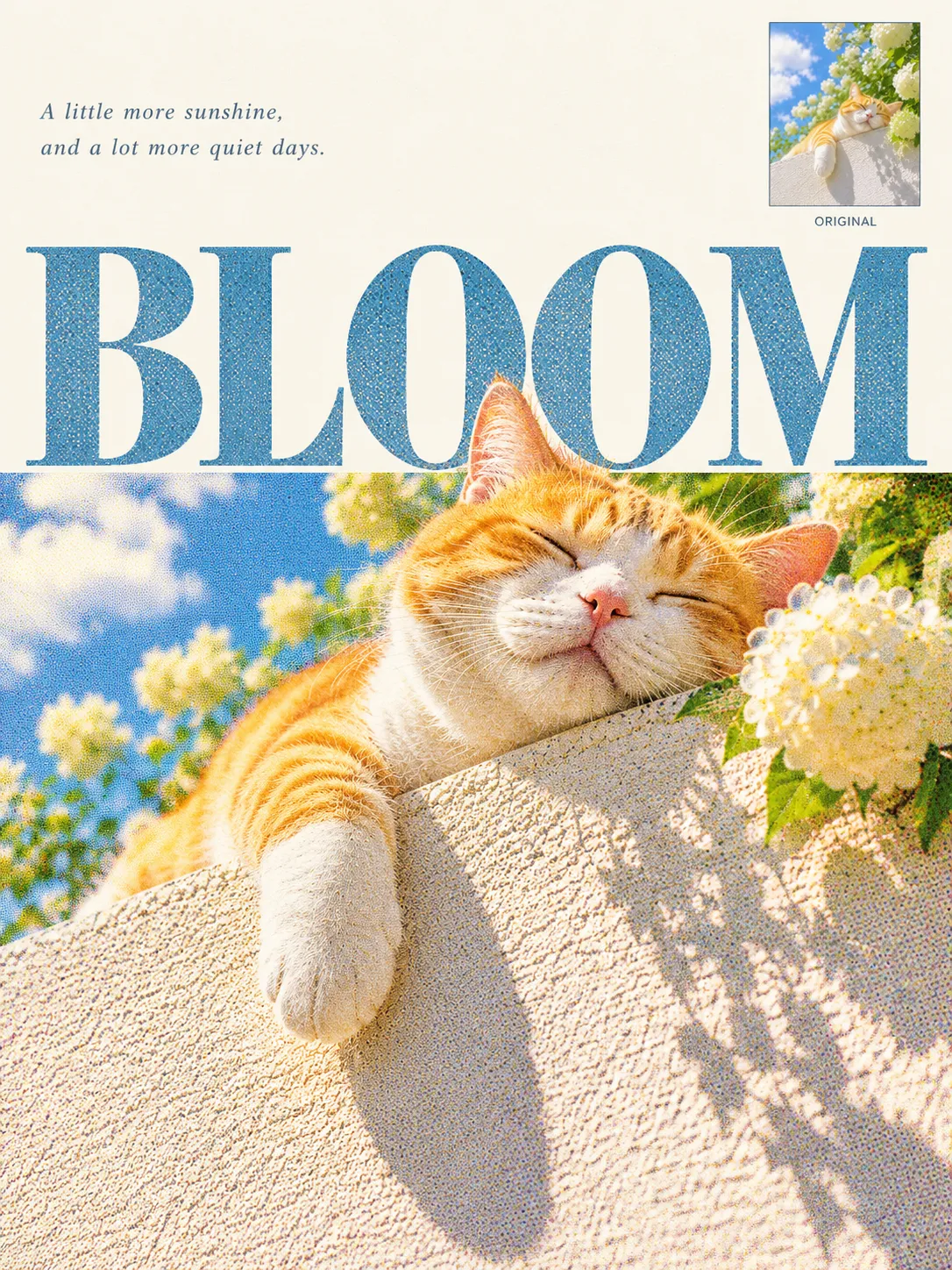
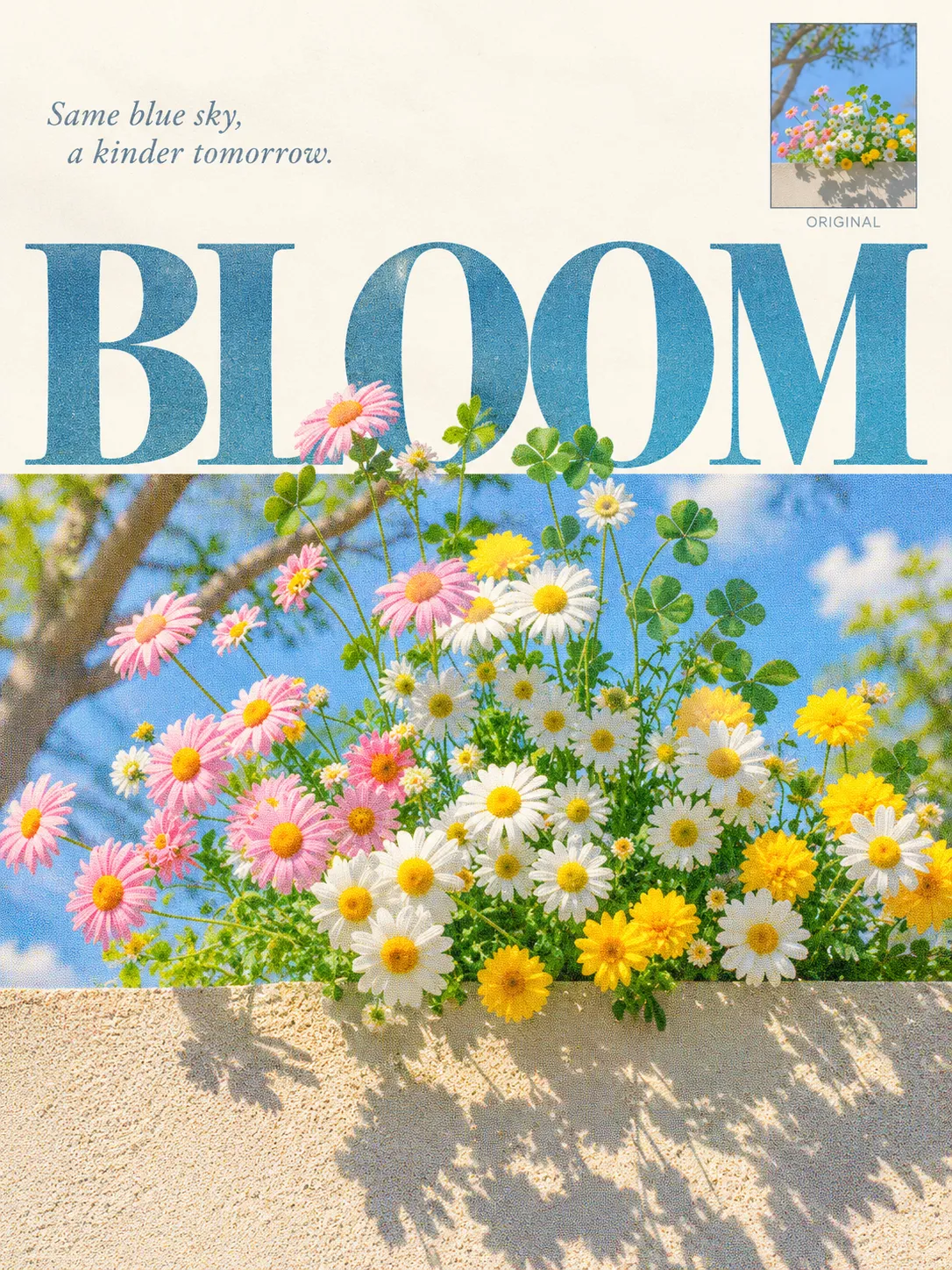
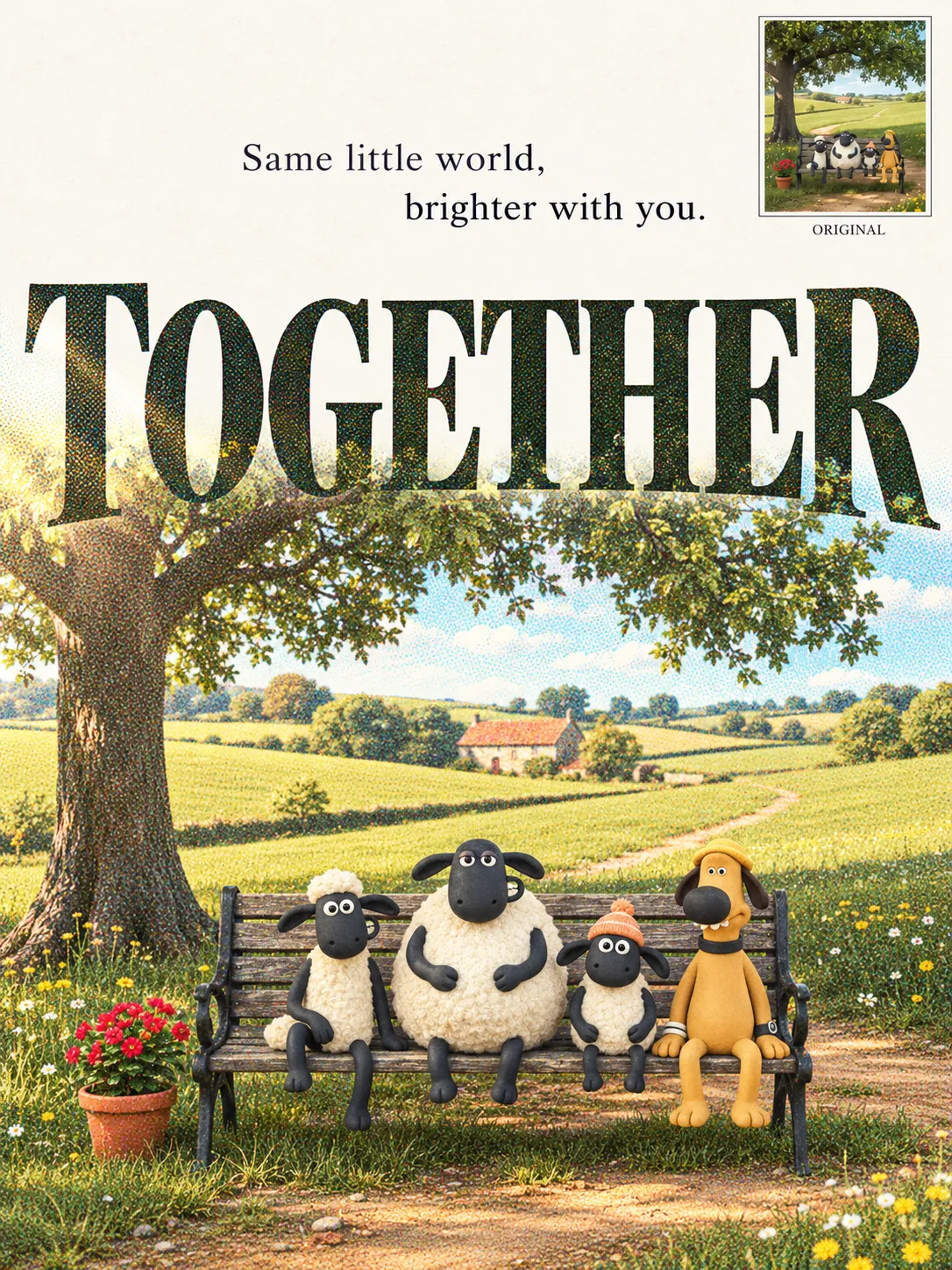
Prompt template
- Format
- Text Parameterized
- Inputs
- reference_photo (image) · Required
- Outputs
- poster (image)
Create a 3:4 vertical, poetic, print-style poster based on the uploaded photo: ${reference-photo}. Begin by analyzing the image to identify its most recognizable elements—such as a flowering branch, the head and neck of an animal, a treetop, or another prominent subject—ensuring that the key scene and the spatial relationships between elements from the original photo are preserved.

Design the poster as a cohesive, continuous composition: the top third should consist of clean, warm-white negative space, featuring two short lines of English verse that resonate with the mood of the photograph. In the center, place a single, evocative English word—relevant to the subject matter—rendered in a large, bold serif typeface that spans the width of the frame. This large text serves as the visual transition between the negative space above and the photograph below.

The subject, extracted from the original image, should retain its authentic photographic appearance as it extends upward from the scene below, crossing the transition line and partially overlapping some of the letters as it enters the white space above. Ensure the subject remains connected to the original scene, with natural-looking overlaps that still allow the word to remain clearly legible. Do not simply stitch two separate images together.

Apply a distinct, atmospheric treatment to the main image. Choose lighting and a color palette—such as a golden sunset, soft spring light, a tranquil twilight, or the luminous quality of water—that enhances the mood while maintaining the recognizability of the original subject. Overlay both the large text and the stylized photograph with a fine, clearly visible pattern of colored halftone dots (cyan, magenta, yellow, and black/blue).

These dots may be slightly offset; they should be denser in the shadows and sparser in the highlights. The subject should retain its photographic texture, while the warm-white space above remains relatively clean. In the upper-right corner, include a thumbnail of the original, unstylized photograph—occupying approximately 15%–18% of the poster's width—framed with a thin border and labeled with the word "ORIGINAL" in a small font.

Ensure this thumbnail does not obstruct the main text or the subject extending across the transition line. The overall aesthetic should be restrained, poetic, and reminiscent of a vintage magazine print. The text must be accurate, with no extraneous titles, watermarks, or unnecessary decorative elements.
Replace the ${…} placeholders with your values
before using this prompt. See parameters
and defaults below
Parameters
Replace each placeholder with your own value, or use its default when one is provided
${reference-photo}
reference-photo
Required
What you'll create
This prompt creates a 3:4 vertical poster that preserves the recognizable subject and spatial relationships of an uploaded photograph. It combines the photo with short English verse, a large serif word, colored halftone dots, and a small framed thumbnail of the original
Usage instructions
Frequently asked questions
How should the subject cross into the white space?
Keep it visibly connected to the original scene, with natural overlaps across the transition line while leaving the large word legible
Can the lighting treatment vary?
Yes. Choose a mood-fitting treatment such as golden sunset, soft spring light, tranquil twilight, or the luminous quality of water





Comments
Tried this prompt? Share what you made, compare results, or ask a question