Kutani Ware Shoza-Style Kimono Portrait
Create a refined, hand-drawn portrait combining Shoza-style Kutani ware ornamentation, Edo-period bijin-ga, and contemporary couture illustration.
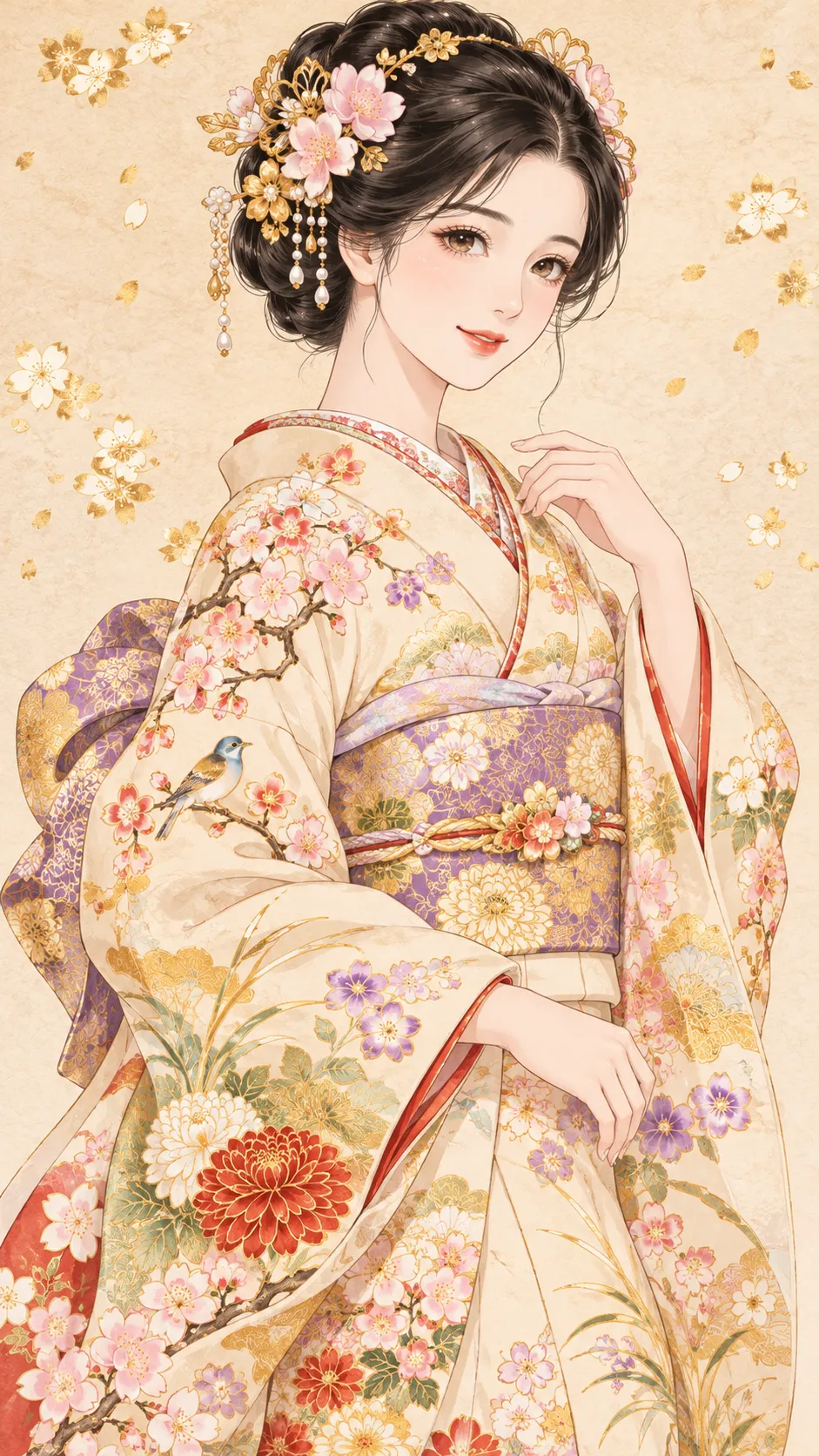
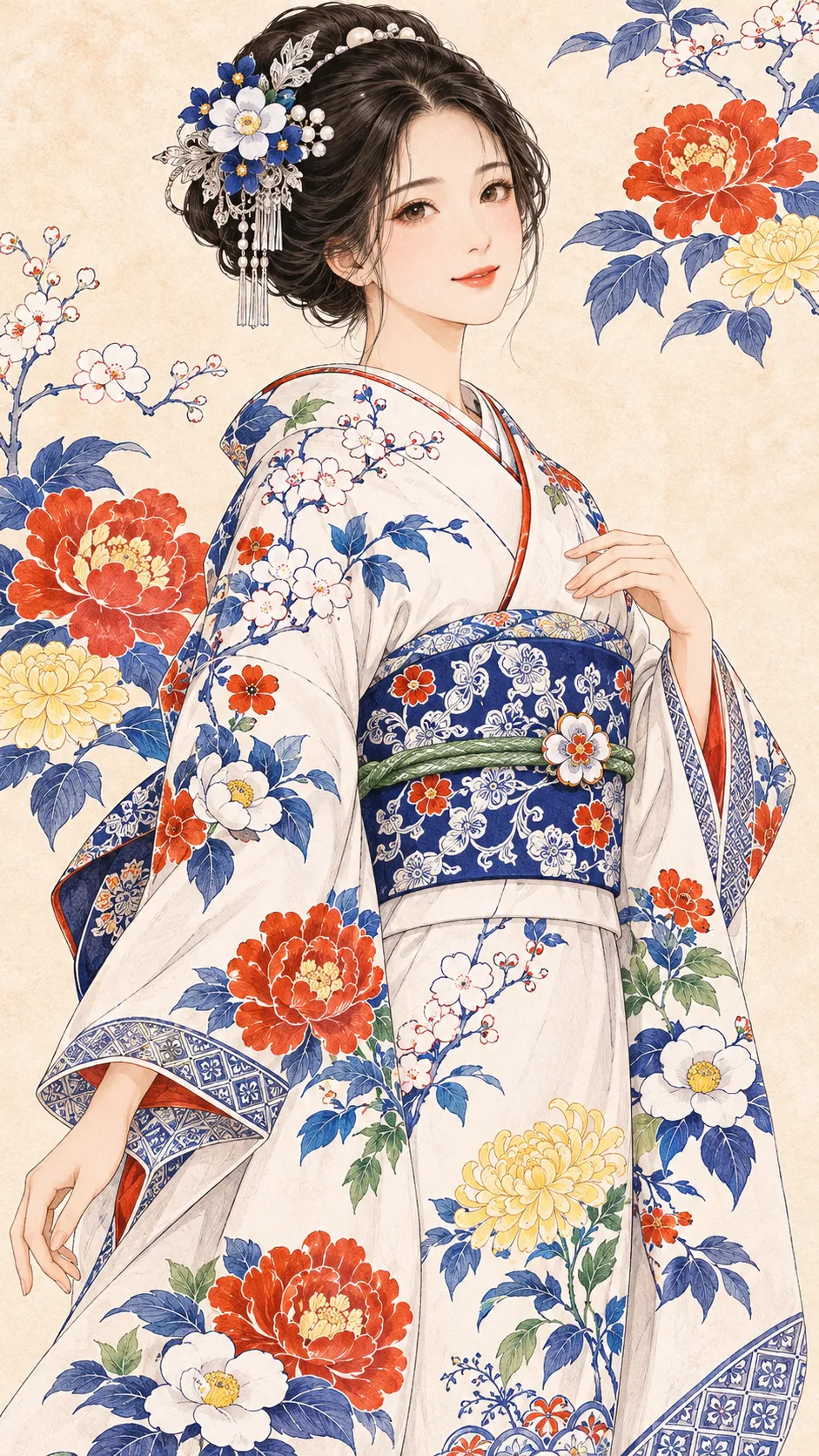
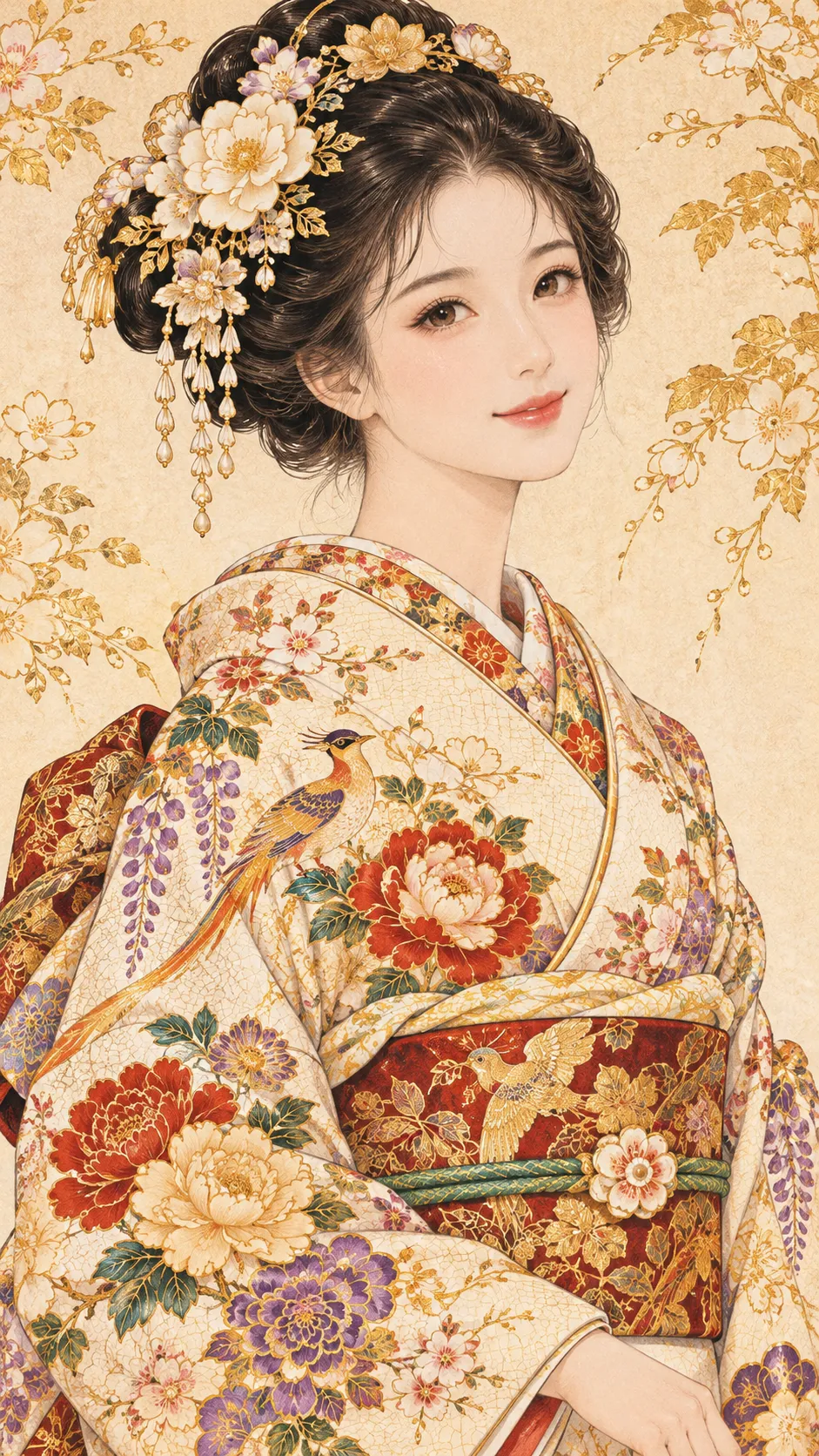
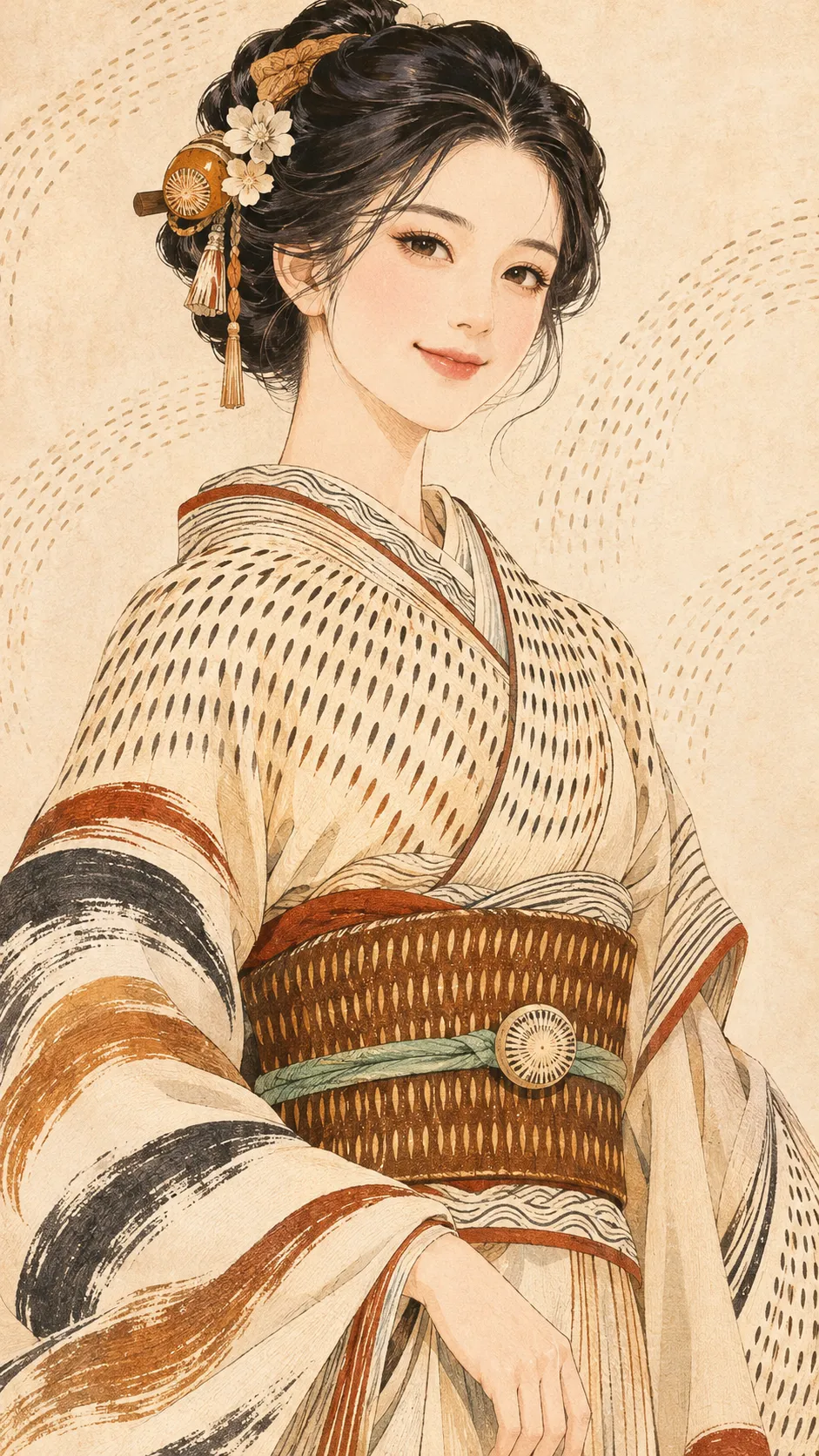
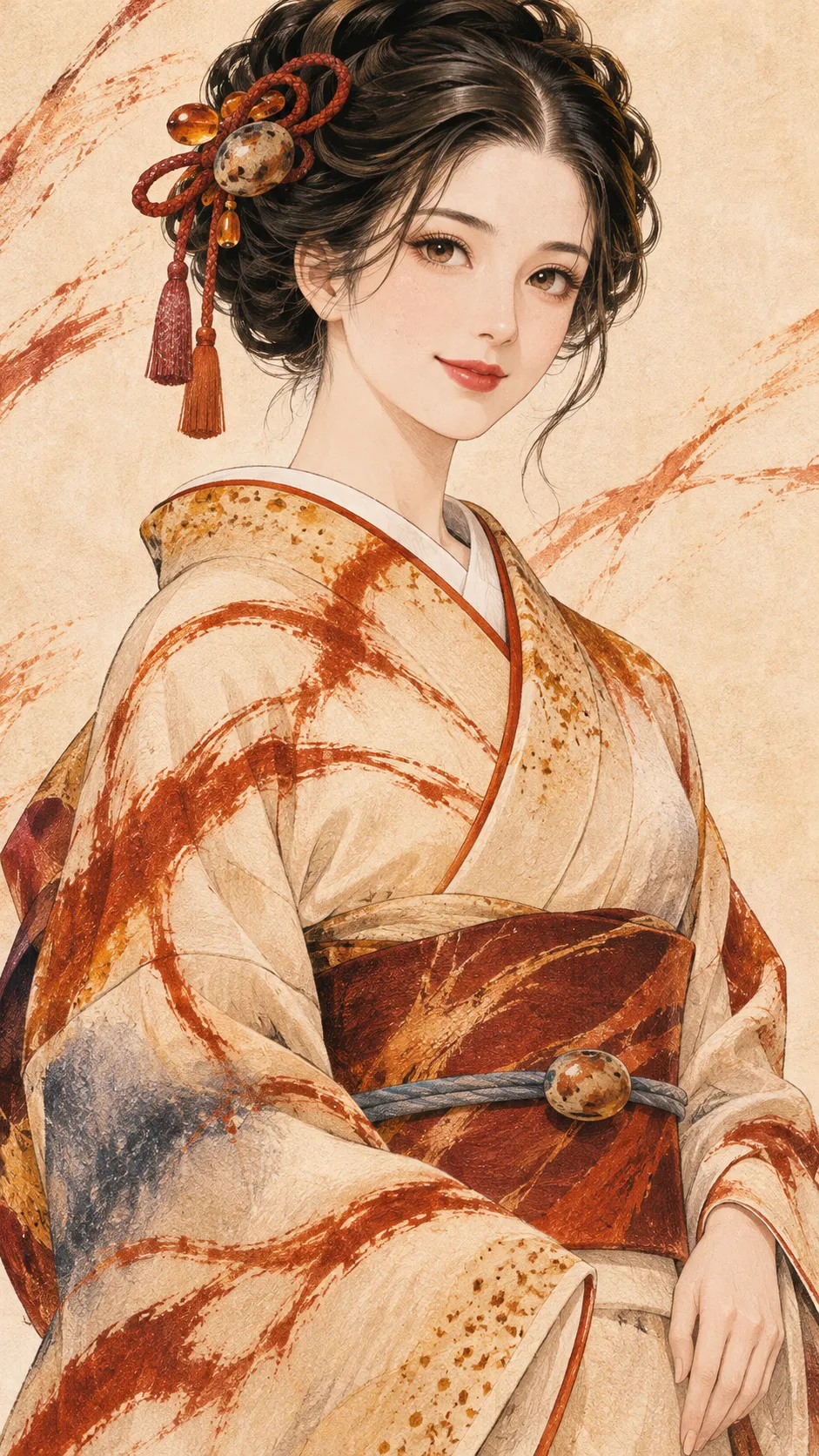
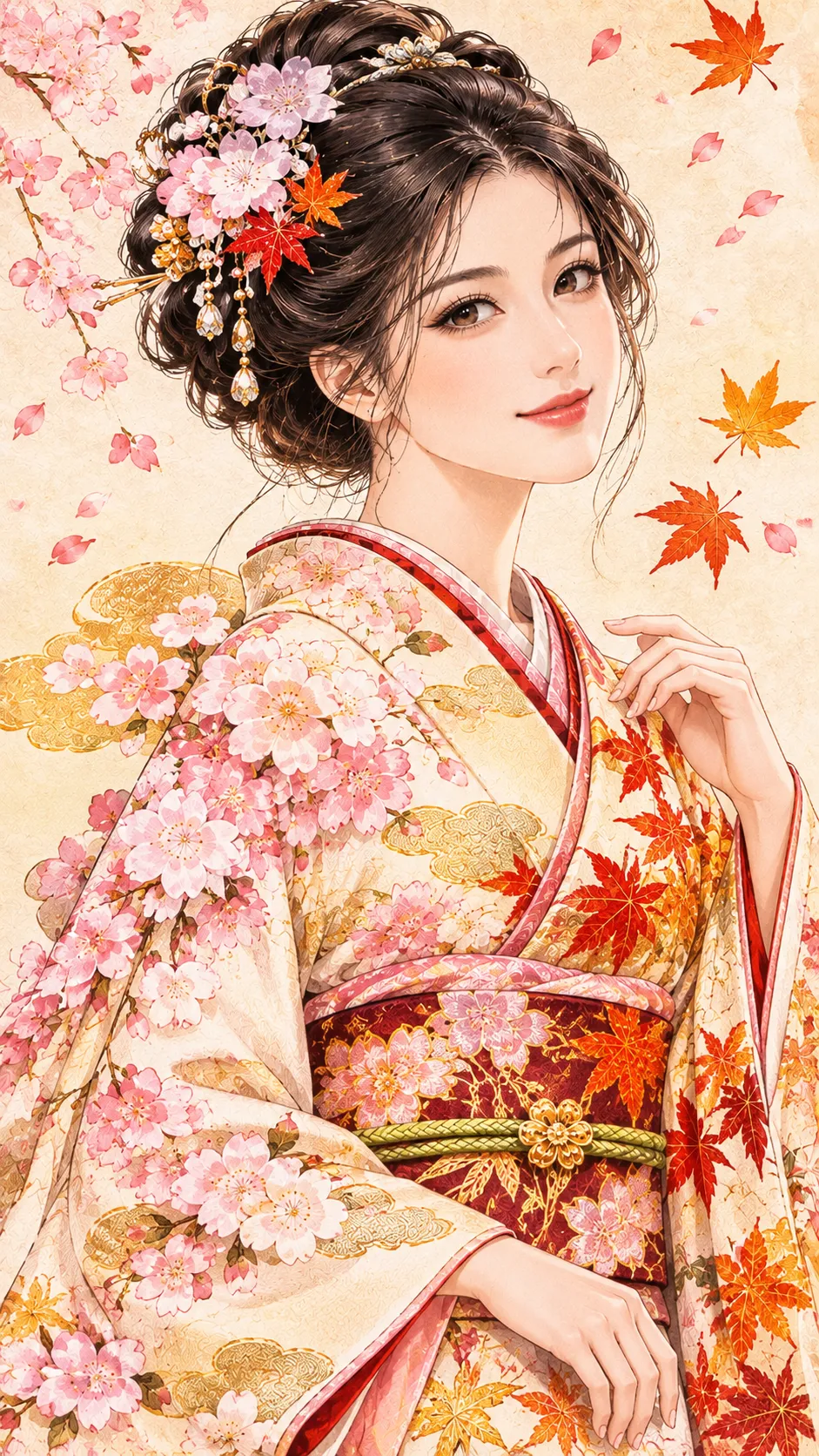
Example outputs
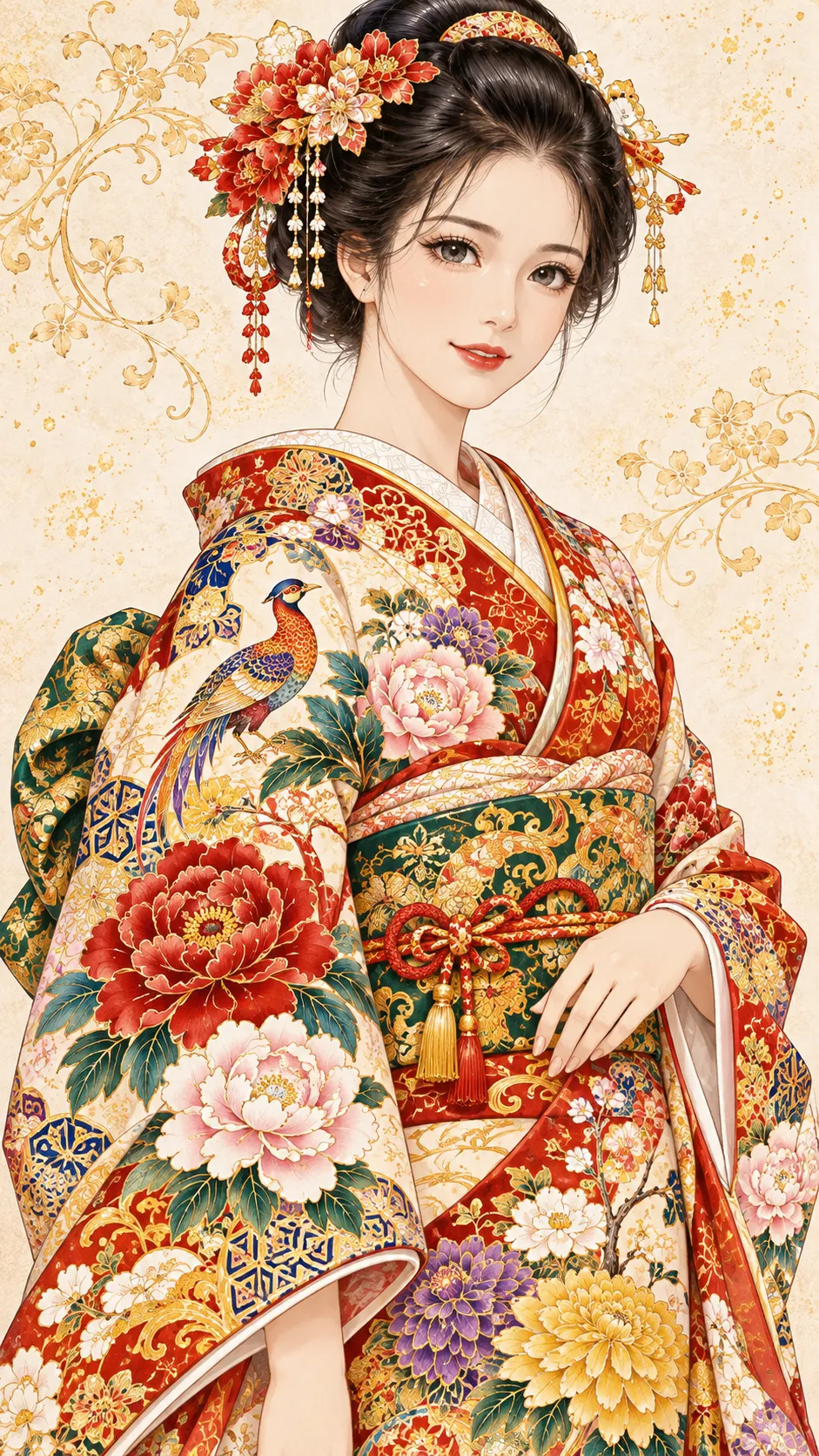
Prompt template
- Format
- Markdown
- Outputs
- Illustrated_portrait (image)
Create a completely 2D, artistic, hand-drawn illustration combining the Shoza style of traditional Japanese Kutani ware, its lavish colored enamels and gold decoration, the bijin-ga beauty portraits of Edo-period ukiyo-e, Japanese kimono culture, and the refinement of contemporary luxury fashion illustration.

The theme is a woman adorned with vivid bird-and-flower motifs and golden ornamentation, radiating lavish elegance and breathtaking beauty. Translate the multicolored enamels, intricate gold decoration, graceful bird-and-flower paintings, and decorative compartmentalized compositions associated with Shoza-style Kutani ware into one magnificent kimono couture design.

Depict one breathtakingly beautiful, youthful adult Japanese woman. Give her refined, polished features reminiscent of a Western doll, combined with the delicate grace of a Japanese beauty portrait: a beautiful oval face, clear large eyes, natural delicate double eyelids, long graceful eyelashes, a straight nose, and elegant, soft lips. Let her eyes have a clear, luminous sparkle, and give her a gentle smile and an intelligent expression. Keep her features naturally and beautifully balanced; avoid exaggerated manga-style features and aim for the beauty of sophisticated luxury fashion illustration. Arrange her glossy black hair in an elegant Japanese updo, adorned with delicate vermilion-red and gold floral hairpins. Make her face and expression the most important visual focal point.

Dress her in luxurious, lavishly decorated pure-silk kimono couture inspired by the colored enamels and gold brocade of Shoza-style Kutani ware. Base the kimono on brilliant vermilion red and warm milky ivory, complemented by vivid jade green, deep indigo, golden yellow, and soft purple. Across the shoulders and sleeves, arrange large peonies, graceful chrysanthemums, delicate blossoms, and vividly colored birds as finely hand-painted bird-and-flower motifs. Give petals and feathers subtle gradations of color, and combine fine gold outlines with arabesque patterns. Apply the decorative compartmentalized compositions characteristic of Shoza style to the kimono, harmonizing the bird-and-flower motifs with intricate geometric patterns. Do not depict vessels or vases on the kimono; incorporate only the beauty of ceramic painting as a clothing design motif.

Make the obi a luxurious gold brocade based on deep jade green, with delicate golden-thread arabesques and vermilion-red accents to balance the kimono’s colors. Render the gold decoration not as flat areas of gold, but as intricate ornamental lines that appear to have been painted with a fine artisan’s brush.

Use a vertical 9:16 composition, showing the woman from the top of her head to around her waist, with emphasis on her upper body. Turn her body naturally at a slight angle while gracefully facing her face toward the viewer. Give her shoulders a subtle difference in height so her pose feels gently dynamic rather than like a static, straight-on stance. Rest one hand naturally near the obi and let the other arm fall comfortably beside her body. Do not cross her arms; render the connections between shoulders, elbows, and wrists accurately. Include one arm on each side and one hand on each side, with a natural number and shape of visible fingers. Do not overlap her hands in front of her face or make an arm disappear unnaturally inside a sleeve. Cross the kimono collar correctly and keep the neckline modest, with no exposed chest or excessive skin. Balance the woman’s beautiful face, ornate shoulders and sleeves, and luxurious obi within the composition.

Set the figure against an elegant, bright washi-paper-style background based on pale ivory. Add only very subtle flecks of gold leaf and delicate ornamentation to complement the Shoza-inspired richness. Do not depict a specific landscape, architecture, vessel, or vase. Keep the background decoration subordinate to the figure so that the woman’s face and the kimono’s brilliant enamel-like patterns remain prominent.

Use a completely 2D, artistic, hand-drawn illustration style. Combine the graceful linework of Edo-period ukiyo-e beauty portraits with the polished figure rendering of contemporary luxury fashion illustration. Use delicate, beautiful contours, careful brushwork, rich colors, and intricate ornamentation. Render the face with exceptional care, emphasizing her appeal through delicate details in the eyes, eyelashes, and lips. Make the kimono’s bird-and-flower motifs vivid and lavish while keeping the colors clear and distinct, never muddy. Do not reproduce the hard texture of ceramic on the woman or her clothing; combine the soft texture of pure silk with the decorative beauty of Kutani ware.

Avoid a photographic or live-action appearance, 3D, CGI, anime style, and excessive caricature. Avoid broken anatomy, unnatural fingers, extra arms or hands, a distorted or asymmetrical face, and an incorrectly overlapping kimono. Do not include any text, logos, signatures, or watermarks in the image.

Finish as a lavish and dignified contemporary Japanese beauty portrait in which the intricate decorative beauty of traditional craftsmanship resonates with the woman’s striking beauty.
What you'll create
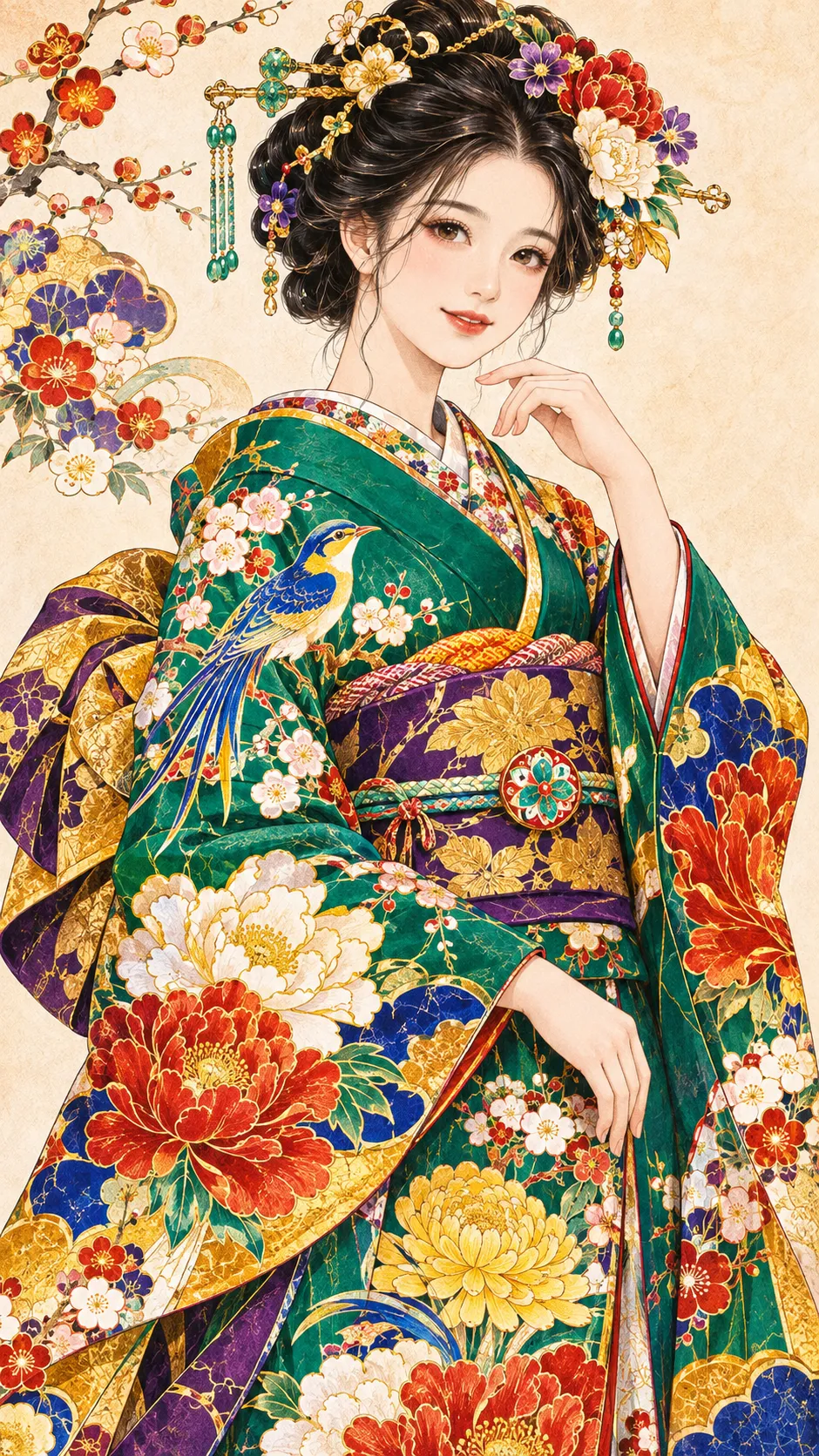
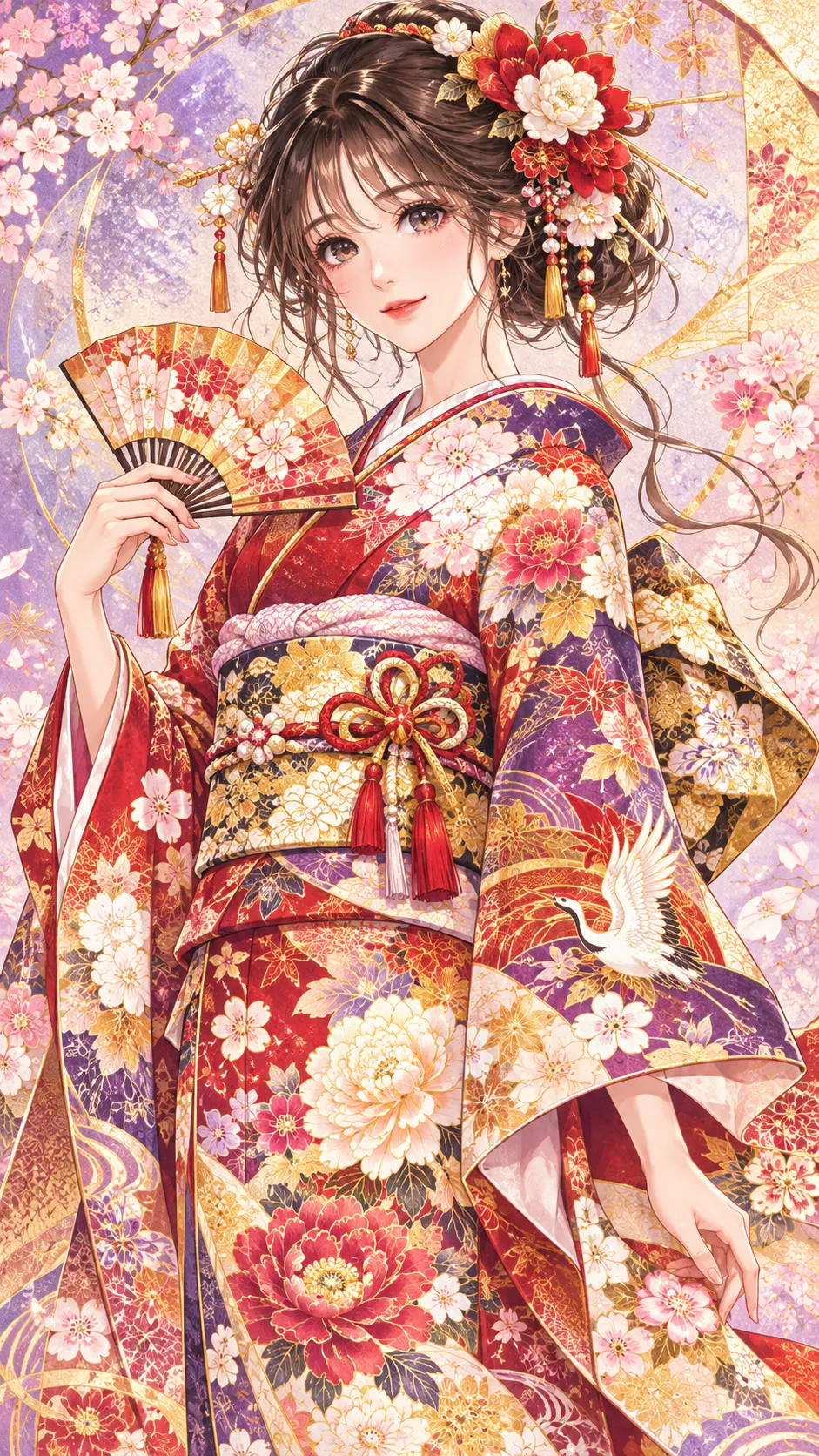
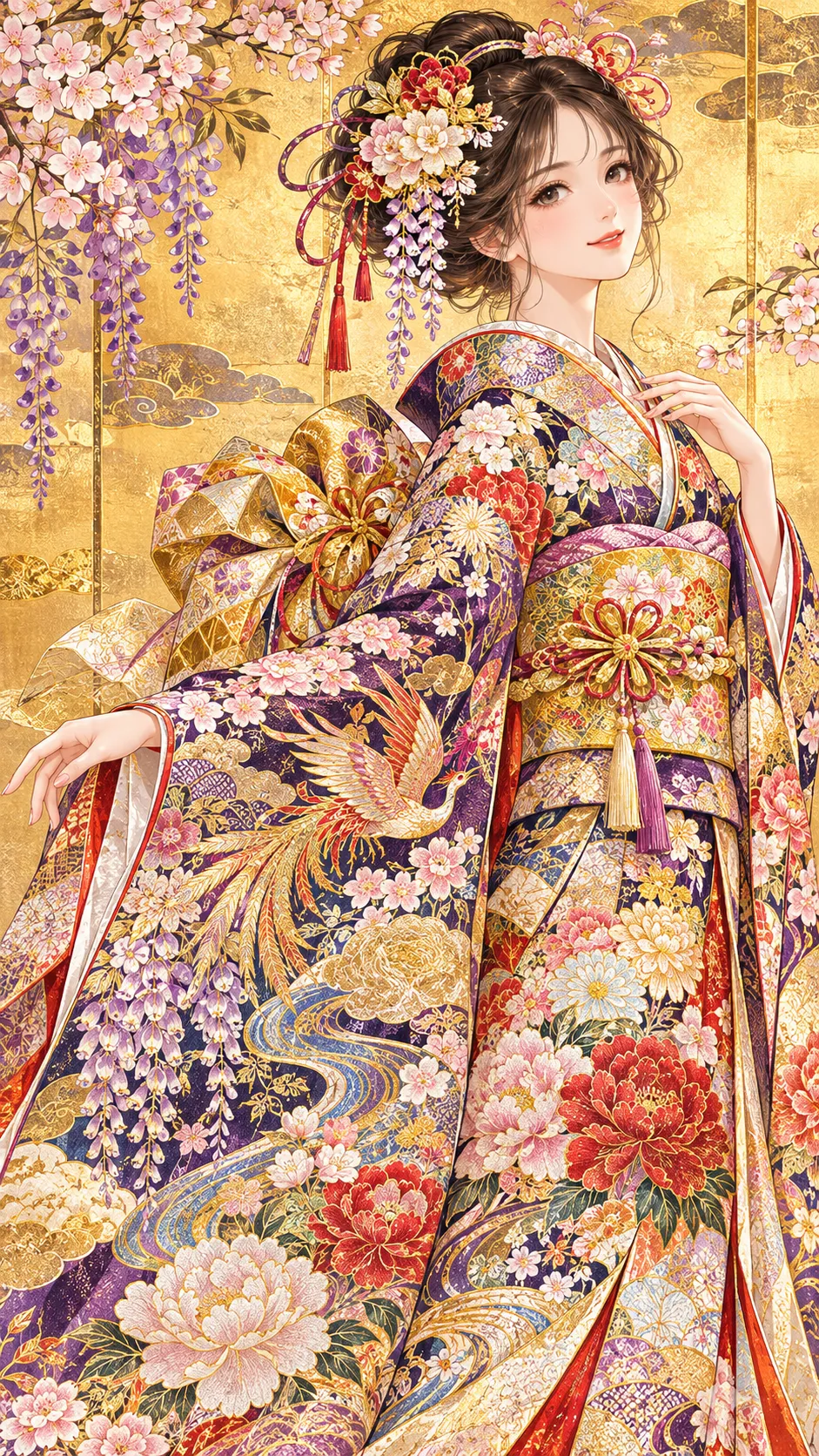
One adult Japanese woman appears in a lavish upper-body composition. Vermilion, jade, indigo and purple textile areas meet fine gold decoration and a naturally rendered face.
Usage instructions
This prompt requires no reference image and specifies a single adult Japanese woman in a vertical, upper-body composition. Its palette is anchored in vermilion, ivory, jade, indigo, purple, and gold; adjust those named colors if you want to change the balance while keeping the Shoza-style ornamentation.
Frequently asked questions
Are the kimono layers allowed to overlap incorrectly?
No. Accurate garment construction is required.
Can additional arms or hands enrich the composition?
No. Those distortions are excluded.

Comments
Tried this prompt? Share what you made, compare results, or ask a question