Real-World Photo × Hand-Drawn Creative Poster
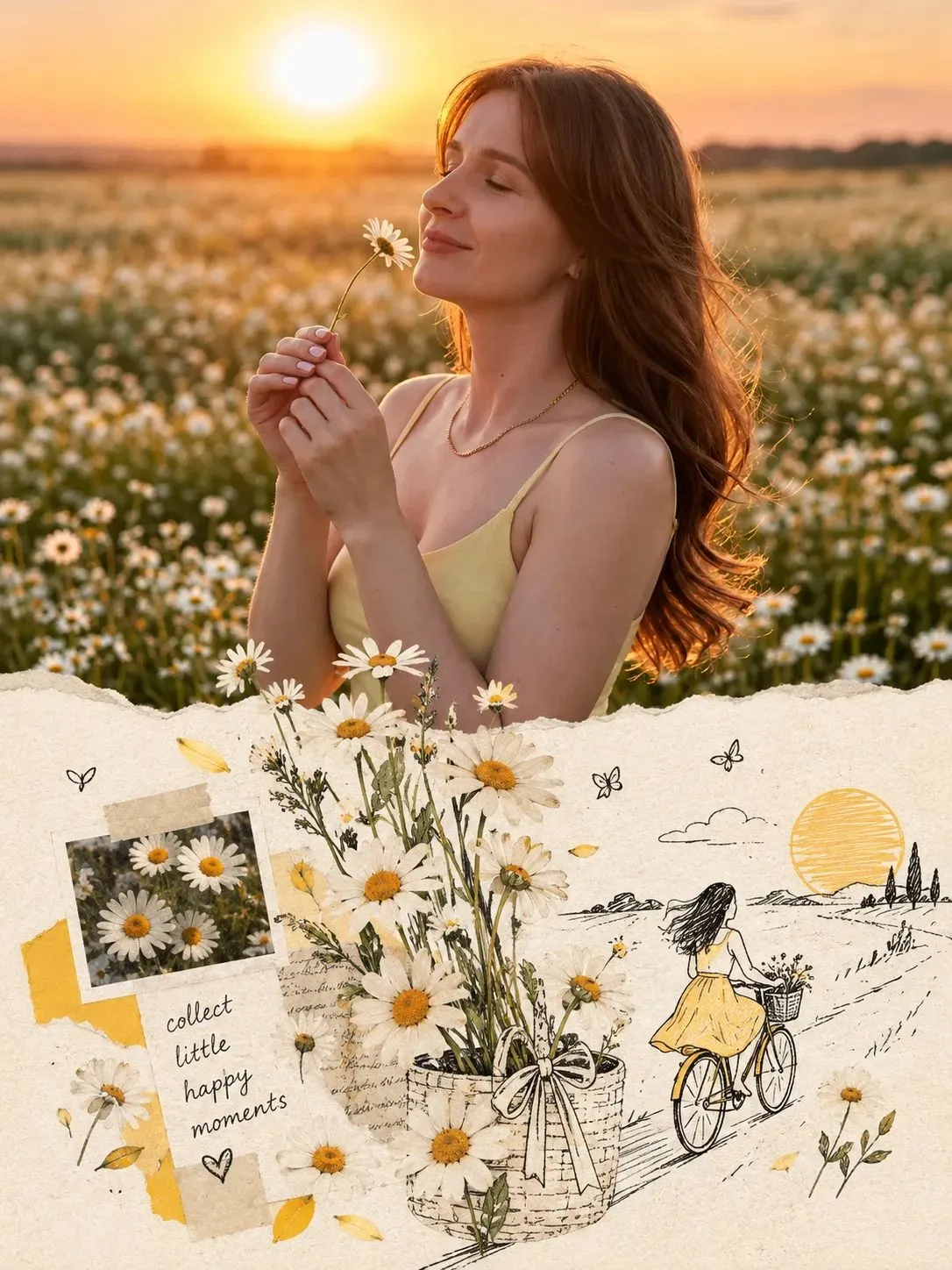
Turn a supplied photo into a creative poster that blends its photographic scene with a hand-drawn miniature story. The composition, story, characters, and short English caption are devised from the image.
Example outputs
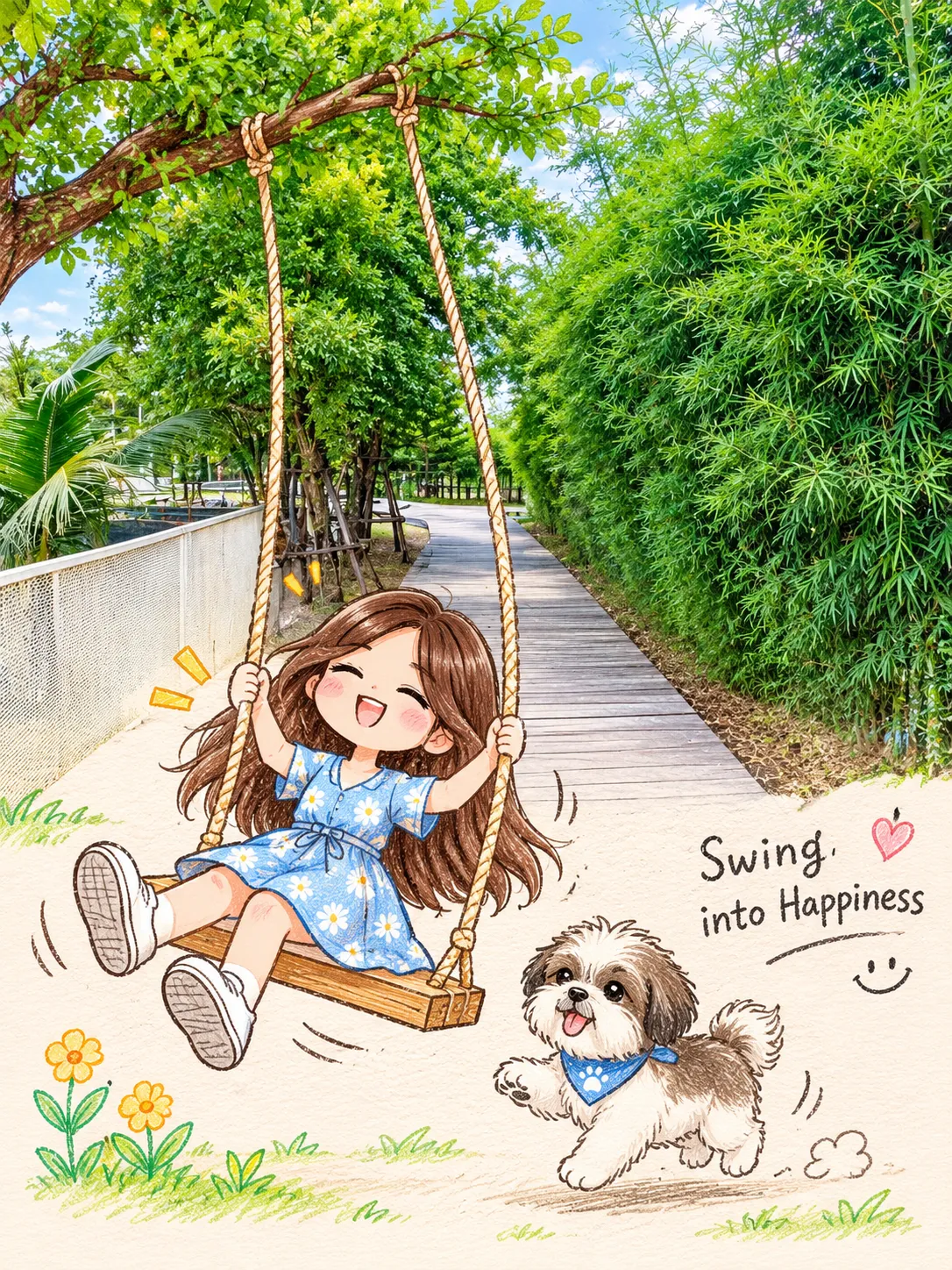
Prompt template
- Format
- Markdown
- Inputs
- InputPhoto (image) · Required
- Outputs
- CreativePoster (image)
Based on the input image, create a 3:4 portrait creative poster blending a real-life photograph with a hand-drawn adventure. Automatically identify the subject, representative objects, colors, and mood, then devise a small story connected to the photo; no additional text input is needed.

## Overall layout

Use the original image for the upper half and a light warm-white paper surface for the lower half, with each occupying approximately 50% of the composition. Preserve the photo subject’s appearance, number, actions, and main surroundings. Allow a small number of objects and drawn elements to cross the boundary for a natural transition. Do not draw a dividing line or use a broad gradient fade. Leave ample open space in the lower half, and arrange the story along a clear visual path.

## Creative connection across the boundary

Choose one distinctive, interactive element from the photo as the link between reality and imagination. Based on its shape and position, choose one interaction: hanging, pulling, catching, climbing, lifting, or riding.

For example, extend a flower stem from the photo into a hanging structure, attach a hand-drawn rope to an object, or let a few real objects travel along a path onto the paper. Adapt the specific idea to the input image; do not default to flowers, fruit, baskets, or balloons.

Design only one main imaginative idea. Make the connection point clear, give ropes visible endpoints, show hands and feet making contact, and make support relationships clear so objects do not appear to float without reason.

## Miniature story

Place 1–3 small hand-drawn characters in the lower half, interacting with the object that crosses the boundary. Prefer translating people or animals from the original photo into cartoon characters while preserving recognizable hairstyles, clothing, patterns, and signature accessories. If the photo has no people or animals, create simple little workers or explorers.

Use playful changes in scale, repetition, and personification so ordinary objects become giant props from the characters’ perspective. Give the characters lively poses and instantly readable actions; suggest expressions with dot eyes and short lines. Use no more than two kinds of supporting props, and make them serve the same story.

## Drawing texture

Use a mix of fine black pen and pencil lines, with natural wobble, broken strokes, and a small amount of cross-hatching. Keep contours loose and retain traces of repeated sketching in places. Render characters and the scene mainly as black-and-white line drawings, with restrained color on key clothing and props.

Keep objects crossing the boundary photographic or render them in more detailed color, contrasting them with the rough linework. Take colors directly from the original image and preserve vivid accent colors. Do not apply a uniform yellow tint or fill the lower background with color.

## Details and text

Use a few short motion lines, scattered fragments, and simple environmental cues to suggest movement. Distribute decorations around the story. Create one lighthearted phrase of 3–7 English words that responds to the interaction rather than repeating what is in the photo. Write it in fine black handwriting and arrange it in two or three lines in an open area at the side; it may include one small smiley face or curved line.

Avoid: repeating the same composition in both halves, making the entire image uniformly cartoon-like, heavy vector outlines, complicated backgrounds, too many characters, dense text, unrelated decoration, heavy aged-paper effects, sticker borders, and watermarks.
What you'll create
This prompt transforms a supplied photo into a 3:4 portrait poster, keeping the original scene in the upper half and creating a hand-drawn miniature story below. A photo-derived object connects the two halves, accompanied by small characters and a short handwritten English phrase.
Usage instructions
Frequently asked questions
How is the story chosen?
The story is devised from the photo’s subject, distinctive objects, colors, and mood, without requiring extra text input
What should the caption say?
Create a lighthearted English phrase of 3–7 words that responds to the characters’ interaction rather than simply describing the photo
How should the original photo appear in the result?
Keep the photo’s subject, number of subjects, actions, and main surroundings intact in the upper half


Comments
Tried this prompt? Share what you made, compare results, or ask a question