- Category
- Photography
Cinematic Dual-Color Luxury Fashion Portrait
Create a photorealistic 9:16 editorial fashion portrait that follows a cinematic scene reference while preserving the recognizable identity and natural anatomy of a separate face reference.
By Threads — Published on — Modified on
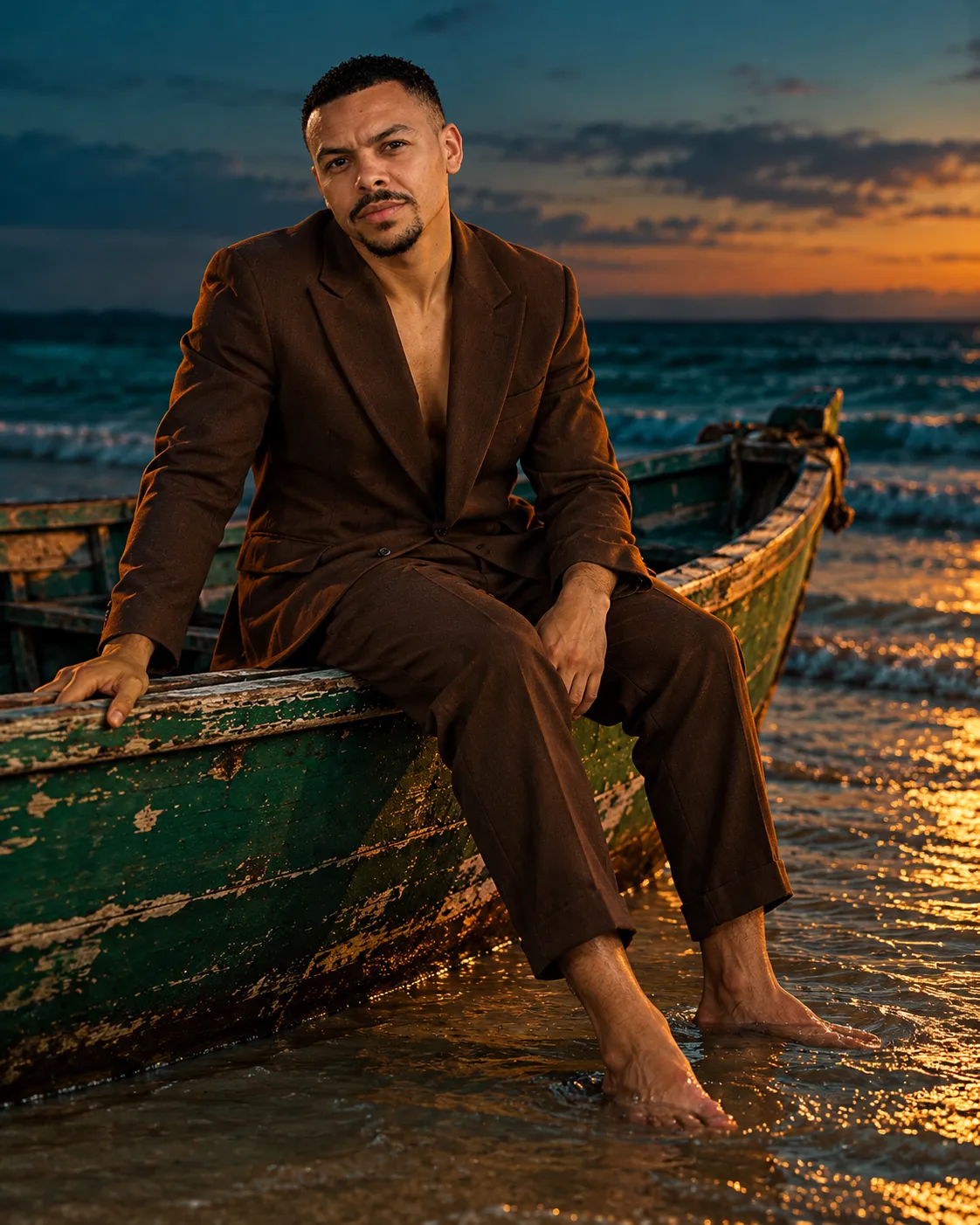
Example images


Prompt template
- Format
- Text
- Inputs
- Scene_composition_reference (image) · Required Face_identity_reference (image) · Required
- Outputs
- Cinematic_fashion_portrait (image)
Create an ultra-photorealistic, vertical 9:16 cinematic luxury editorial fashion portrait of me. Use two reference images:

- Reference image 1 is the scene and composition reference. Use it as the primary guide for composition, camera angle, pose, lighting, clothing, background, color grading, atmosphere, and photographic style.
- Reference image 2 is my face and identity reference. Use it as the sole source of identity for the main subject. Do not copy the identity, facial characteristics, or anatomy of the person in reference image 1. Transfer only that image’s visual concept, pose, camera perspective, lighting design, clothing, environment, and artistic style. Transfer identity only from my face reference.

IDENTITY AND FACE — ABSOLUTE PRIORITY

Keep my face unmistakably recognizable as the same real person. Preserve my actual facial anatomy and natural asymmetry, including my face shape and proportions; forehead and hairline; eyebrows; eyes, spacing, and eyelids; nose bridge, width, tip, and nostrils; cheek structure and volume; mouth and lip proportions; philtrum; jaw, chin, and ears; natural age; and individual facial characteristics. Preserve my natural skin tone and authentic imperfections. Colored light may naturally affect its appearance, but must not change my underlying complexion. Lighting must adapt to my existing anatomy rather than reshape it.

Adapt my existing face naturally to a three-quarter profile and upward-looking pose. If my reference photo is frontal, rotate and reconstruct my existing facial structure according to realistic human perspective: believable head rotation, cheek perspective, nose projection, jawline perspective, ear placement, neck connection, and facial depth. Do not invent a different nose, narrow or widen my jaw, enlarge my eyes, modify my lips, sharpen my cheekbones, alter my skull structure, flatten or stretch my face, or make my face more masculine or feminine. Do not make me look younger or older, or more symmetrical than in the reference. Do not apply beauty-model proportions, beautify my facial anatomy, replace my face with a generic model, mix my identity with another person’s, create celebrity resemblance, or create a generic attractive male face. Do not make this look like a conventional face swap. The face, neck, hair, and clothing must belong naturally to the same person in the same photographic scene, with no pasted-on face, visible masking, seams, or artificial transitions around the jaw, ears, hairline, or neck.

Preserve realistic pores, fine lines, tiny imperfections, natural skin variation, facial texture, and specular highlights. No beauty filter, airbrushing, plastic or waxy skin, excessive smoothing, over-retouching, or artificial HDR. Skin should look like real human skin photographed with a professional cinema camera.

COMPOSITION AND POSE

Follow the reference composition as the primary framing guide. The subject fills most of the frame, framed approximately from the middle of the torso or upper chest to the top of the head, and positioned slightly toward the center. Keep the camera close, with an intimate portrait perspective and subtle cinematic compression. Turn the head approximately 30–45 degrees away from the camera, facing the right side of the frame; raise the chin slightly and tilt the head subtly upward. The eyes look subtly upward and to the right. Keep the subject completely still, with a calm, serious, introspective expression, relaxed facial muscles, and naturally relaxed, slightly parted lips. No smile or exaggerated emotion. Convey quiet confidence, solitude, emotional distance, and restrained intensity without excessively changing my fundamental expression characteristics. Avoid an exaggerated fashion pose or dramatic body movement. The composition should feel like a frame from an expensive European art-house fashion film.

HAIR AND OUTFIT

Adapt my existing hairstyle naturally to the composition and preserve recognizable characteristics of my hair reference wherever possible. Keep the hair physically realistic, with natural strands, density, hairline, and volume. Avoid plastic-looking hair and excessive gloss. Let subtle cyan-blue highlights catch the hair while the opposite side gradually disappears into shadow.

Recreate the clothing concept from the scene reference. Dress the subject in a large, oversized, luxury dark textured coat with a tactile, voluminous appearance, resembling dense dark fur, shaggy wool, textured shearling, or luxurious winter textile. The coat occupies much of the lower frame. Show realistic individual fibers. Let the fabric respond naturally to the colored lighting: cyan highlights on the cooler side, and deep crimson and orange highlights on the warmer side. Allow large portions of the garment to disappear into deep shadow while keeping nearer areas detailed and physically realistic; the coat becomes softer toward the lower edges.

Under the coat, use an understated dark high-collar garment with a subtle embossed or patterned texture in black, charcoal, or very dark blue-green. Include a thin, subtly visible metallic chain around the chest, catching small warm highlights. No logos, branding, or unnecessary accessories.

LIGHTING, COLOR, AND BACKGROUND

Recreate the reference’s dramatic dual-color lighting with two primary light sources and controlled professional studio lighting. A strong cyan-turquoise key light comes from the upper-left/front side and illuminates selected areas of the forehead, temple, eyebrow, cheekbone, nose bridge and tip, upper lip, jaw, ear, neck, and hair. Use it to sculpt my natural facial contours without changing my facial structure to match the lighting.

A warm amber-orange-red light comes from the opposite side and slightly behind the subject. Create a realistic cinematic rim along the right side of the forehead, temple, cheek, nose, lips, jawline, neck, shoulder, and outer coat. Avoid a flat digital color overlay.

Use a minimalist cinematic studio background that transitions from deep muted teal and green on the left to warm burnt orange and red on the right. The cool side may include deep teal, dark green, muted cyan, and black; the warm side may include burnt orange, amber, muted red, and deep crimson. Keep the background soft and uncluttered: no visible room, furniture, architecture, objects, text, logos, or distracting details.

Add extremely subtle cinematic atmospheric haze that catches the cyan and orange light, with a very subtle volumetric glow around the subject. No heavy fog, smoke covering the face, or artificial light beams. Keep the sophisticated palette slightly desaturated: deep black, dark teal, cyan, turquoise, muted green, burnt orange, amber, deep red, and crimson. Avoid exaggerated cyberpunk styling or unrealistic neon.

PHOTOGRAPHIC REALISM AND CAMERA

The final image must look like an authentic, high-end editorial photograph of me in a different photographic environment, pose, and lighting setup—not an illustration, CGI, 3D render, digital painting, or AI-generated fashion model. The subject must physically belong to the environment. Use physically accurate lighting, natural human anatomy, realistic skin, hair, textile fibers, shadows, depth, perspective, color response, and lens characteristics.

Use the look of professional full-frame cinematic fashion photography: an 85 mm portrait lens, full-frame sensor, natural perspective, no wide-angle distortion or fisheye effect, and no unnatural facial compression. Use an aperture of approximately f/1.8–f/2.2, shallow depth of field, precise focus on the face, natural optical falloff, and soft background separation. The face is the primary focal point; keep the eyes, nose, and facial contours naturally detailed, and the hair reasonably sharp. Use natural bokeh, with the background gradually falling into soft cinematic blur. Avoid an artificial cutout effect.

Use authentic cinematic photographic texture: subtle fine organic 35 mm film grain, very subtle halation around the brightest cyan and orange highlights, slightly softened highlight transitions, deep blacks that retain shadow detail, natural sensor noise, very subtle chromatic aberration, natural optical imperfections, realistic lens rendering, subtle highlight bloom, and natural exposure roll-off. No excessive digital sharpening, ultra-clean AI texture, artificial HDR, or over-retouching.

NEGATIVE CONSTRAINTS

Do not change my identity, face shape, facial proportions, nose, eyes, lips, jaw, chin, ears, age, or natural skin tone. Do not create facial seams, a pasted face, distorted features, unnatural eyes, extra or duplicate facial features, distorted ears or teeth, artificial anatomy, unrealistic shadows, or asymmetrical facial errors. Avoid over-sharpened facial detail, over-smoothed skin, excessive beauty retouching, cartoon rendering, illustration, 3D rendering, fantasy styling, exaggerated cyberpunk effects, and unrealistic neon.



Comments — 0