- Category
- Design & Image
- Models
- xai-grok google-imagen
Neon Pop-Art Vector Portrait
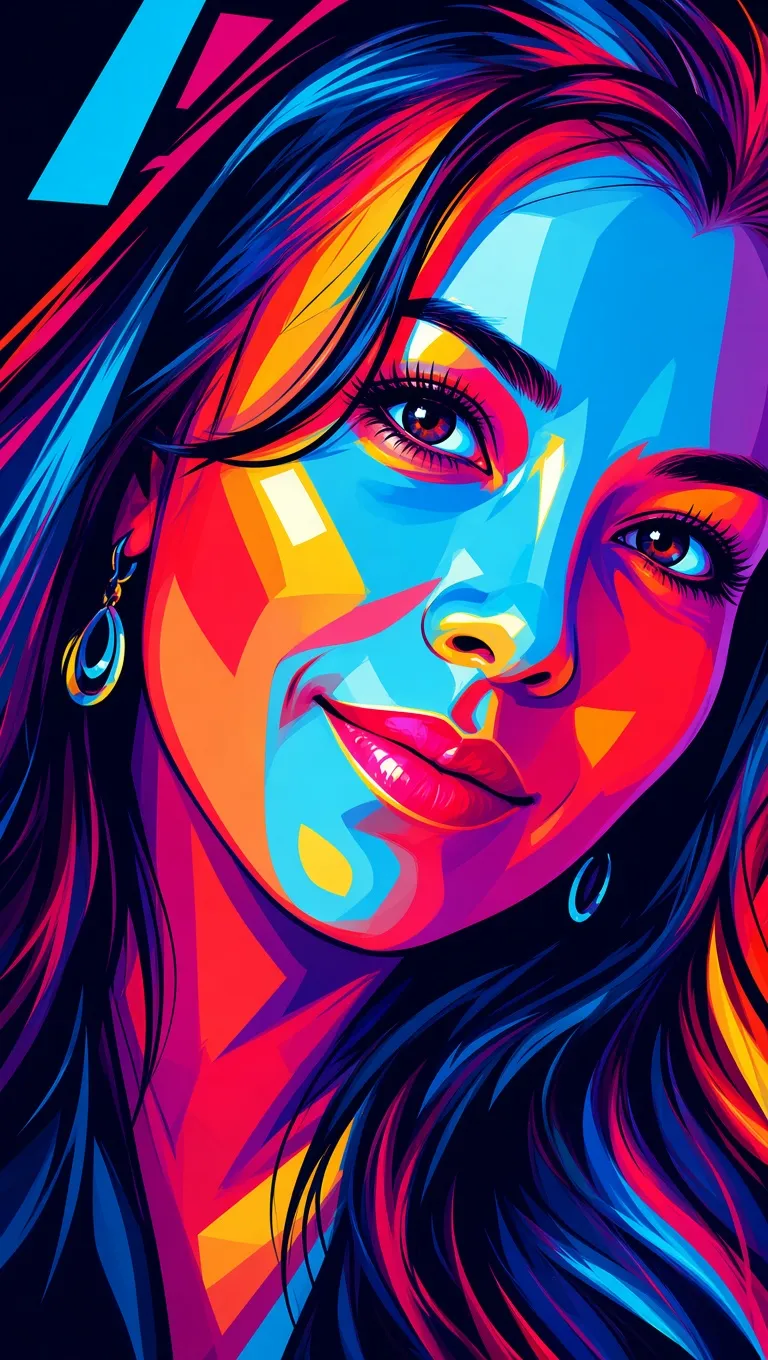
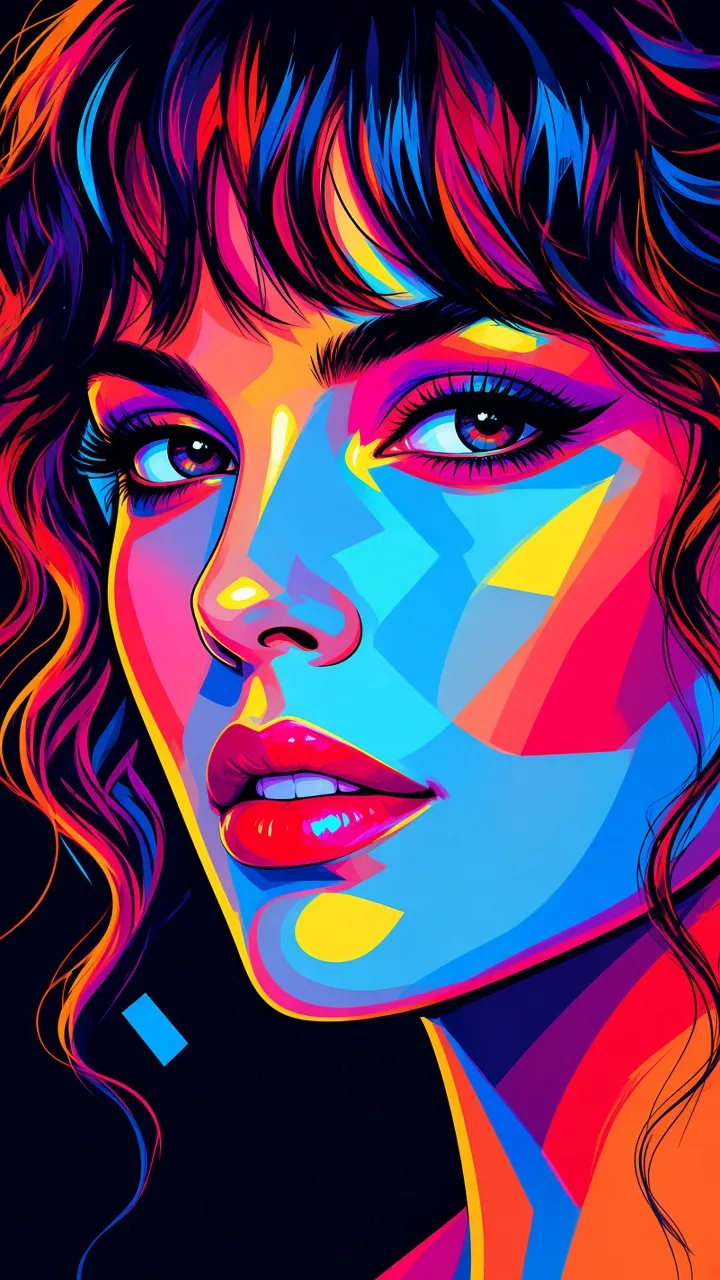
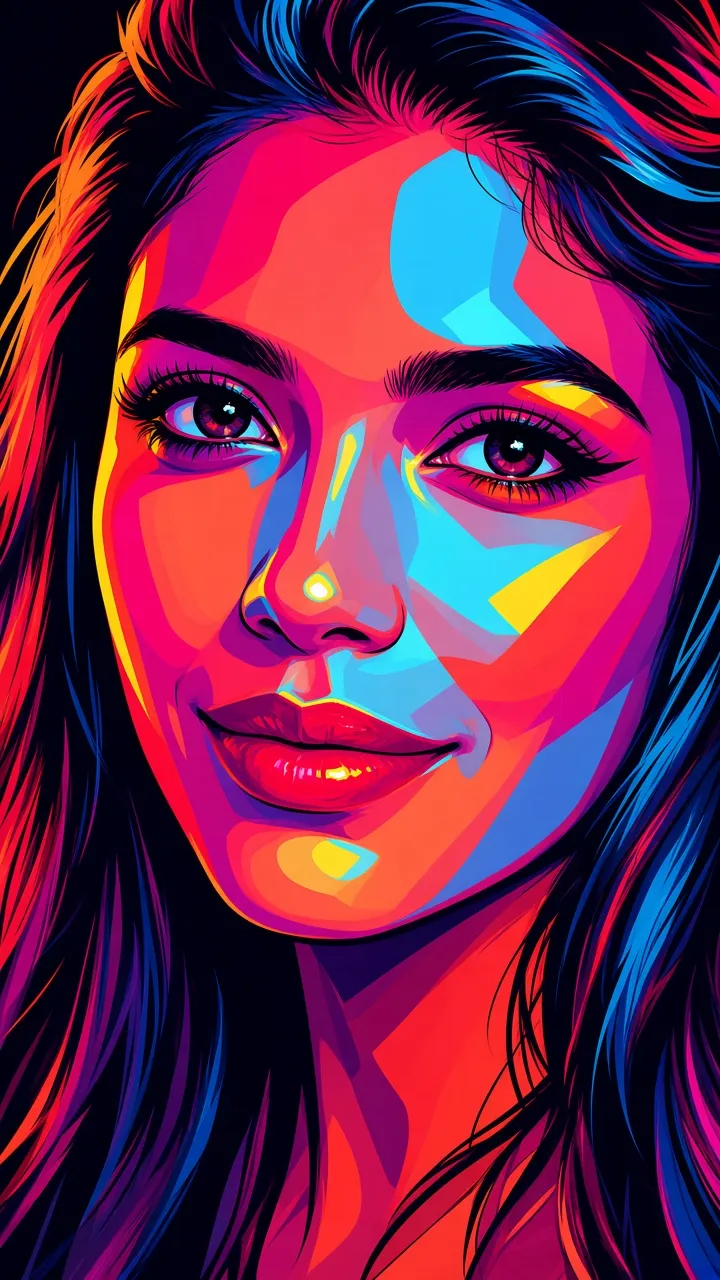
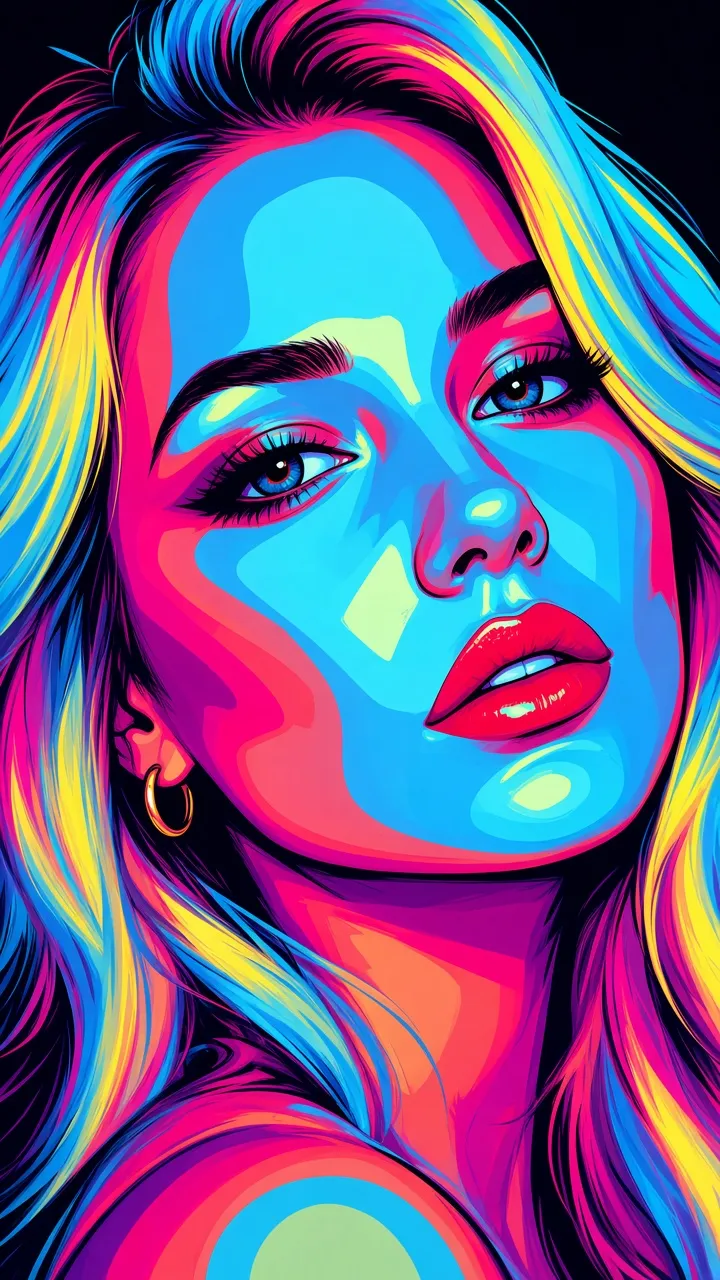
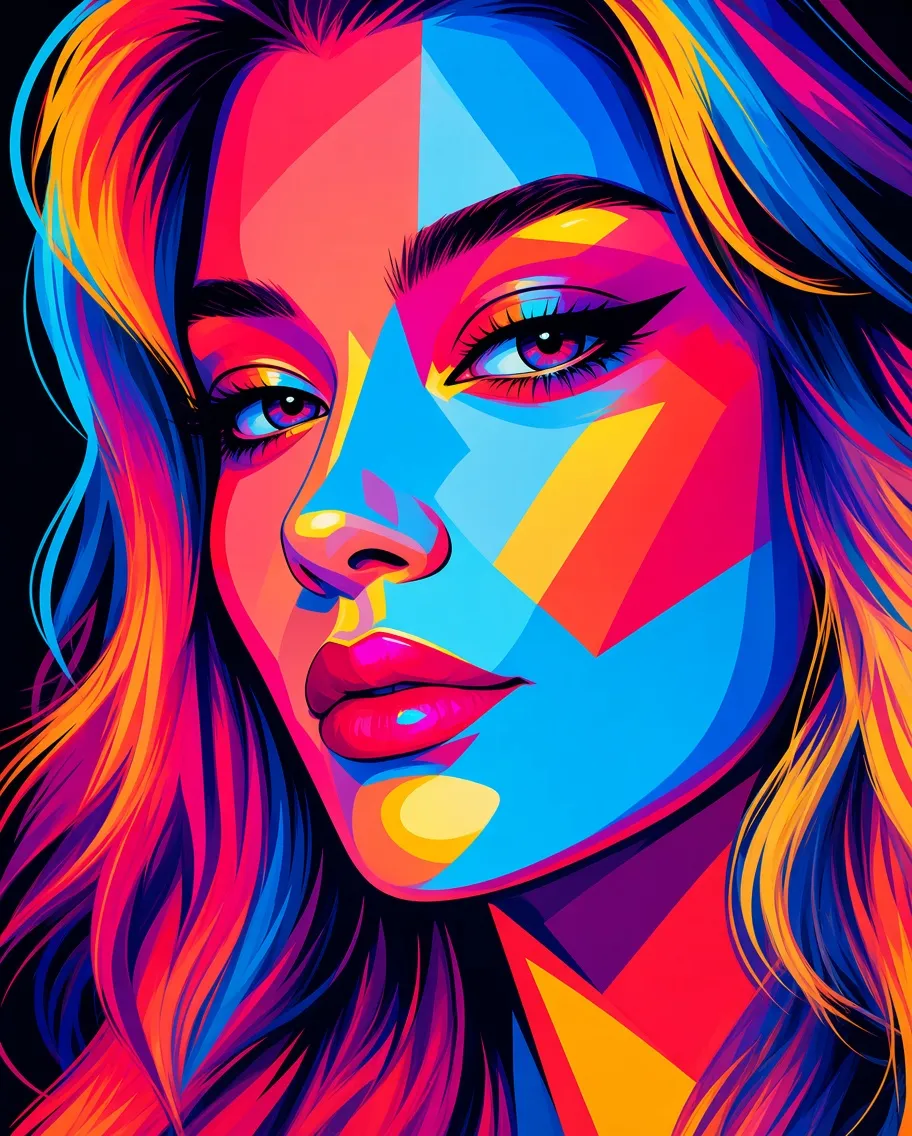
Transform a reference photo into a high-impact, extreme-close-up comic portrait while preserving the subject’s identity and using bold neon vector colors.
By Threads — Published on
Example images
Prompt template
- Format
- Text
- Inputs
- Identity_reference_photo (image) · Required
- Outputs
- Neon_pop_art_vector_portrait (image)
Use the attached photograph as the identity reference and completely transform it into a neon pop-art comic vector illustration, using the graphic style of the provided art references: electric colors, bold black outlines, clearly defined color planes, geometric shadows, inverted lighting, and a high-impact editorial finish.

Do not simply apply a filter to the photograph. COMPLETELY REDRAW AND ILLUSTRATE THE FACE. The result must look like a professional vector illustration created with color shapes, ink strokes, and planes of light and shadow—not a painted photograph or a 3D render.

The original photograph determines the person’s identity and features. The art references determine only the illustration style, color palette, lighting, and graphic treatment.

1. EXTREME ZOOM AND FACIAL COMPOSITION

Zoom in tightly on the face using an extreme close-up.

- The face should occupy approximately 85–95% of the image area.
- Prioritize the eyes, eyebrows, nose, cheeks, and lips.
- Partially crop the forehead, hair, or chin if needed to create a powerful composition.
- Keep the eyes fully visible and clear enough to preserve identity.
- Include only fragments of hair, neck, or clothing when they help frame the face.
- If the person in the photograph wears glasses, preserve their shape, frame, proportions, and position.
- Remove unnecessary distance between the camera and the face.
- Tilt the image and keep a vertical format.

The composition should feel like a bold, intense, immersive close-up from a contemporary comic. Do not show the full body or use a panoramic or distant framing.

2. STRICT IDENTITY PRESERVATION

Keep the real person in the photograph recognizable.

Preserve the facial structure, distance between the eyes, eyebrows, shape of the nose, lips, cheekbones, jaw, chin, hairline, and distinctive features.

Respect the apparent age, expression, direction of gaze, and natural characteristics of the face.

Do not replace the person with a generic model. Do not change their anatomy, artificially enlarge their eyes, alter their lip volume, or make their nose or face thinner.

The transformation must come from the drawing, simplification of shapes, outlines, and colored lighting, without losing the person’s original identity.

3. AUTHENTIC VECTOR ILLUSTRATION

This section is a priority.

Draw the face using solid color planes, clean vector shapes, and expressive black outlines.

Use:

- Clearly defined silhouettes and blocks of color.
- Geometric shadows with sharp edges.
- Thick black outlines combined with fine interior lines.
- Sharp ink strokes around the eyes, eyelashes, eyebrows, nose, and lips.
- Angular and curved shapes that follow the real anatomy.
- Simplified graphic highlights in the eyes, lips, and hair.
- Stylized vector brushstrokes only as accents, without sacrificing the clean drawing.

Minimize soft gradients. Build volume primarily with areas of flat color and abrupt contrasts.

The result should look like a premium editorial comic vector illustration, with an aesthetic close to cel shading, modern pop art, and comic-book cover illustration.

It must not look like a photograph, oil painting, watercolor, pencil drawing, 3D character, or image with a saturation filter.

4. INVERTED LIGHTING COLORS

Deliberately invert the color distribution of the lighting relative to the conventional scheme of a face lit in warm tones and shaded in cool tones.

COOL-ILLUMINATED SIDE:
Use electric cyan, bright turquoise, luminous blue, and small sky-blue accents to illuminate broad areas of the face. Apply these colors to the forehead, one cheek, the bridge of the nose, and parts of the facial contour, according to the chosen light direction.

WARM-SHADOWED SIDE:
Build the shadows and opposing facial planes with intense magenta, fuchsia, coral red, scarlet, and orange. Add bright yellow in selective areas of maximum intensity, especially along the edges of the nose, cheeks, and lips.

The lighting should create a visual clash between electric blues and cyans on one side and reds, magentas, oranges, and yellows on the other.

Do not divide the face with an artificial vertical line. Distribute the colors in irregular planes that follow the anatomical volumes, as in a professional comic illustration.

Alternate cool and warm areas using defined shapes, black outlines, and complementary-color highlights. The skin may use unrealistic colors: graphic force and facial legibility take priority.

5. EYE TREATMENT

The eyes should be among the most detailed elements of the illustration.

Preserve their original shape, spacing, angle, and expression. Draw the eyelashes, eyebrows, and eyelids with sharp, expressive black lines.

Use defined irises, dark pupils, small white or cyan highlights, and high-contrast graphic shadows.

Add magenta, violet, blue, and red accents around the eyelids while respecting the real anatomy.

Do not turn the eyes into anime eyes or alter their proportions to make them larger.

6. GRAPHIC COLOR ON THE NOSE AND LIPS

Represent the nose with geometric planes of cyan, deep blue, magenta, red, and yellow. Define the bridge, tip, and nostrils with clear shapes and selective dark outlines.

Illustrate the lips using areas of magenta, fuchsia, intense red, violet, and cyan or yellow highlights.

Preserve the person’s natural lip outline and volume. Highlights should be graphic, defined, and selective, without a plastic appearance or artificial three-dimensional effect.

7. NEON VECTOR HAIR

Represent the hair with illustrated strands made from long, curved, sharp, dynamic strokes.

Combine deep black, electric blue, cyan, magenta, red, orange, and yellow. Use bands of color to create movement and visually separate the hair from the background.

Preserve the original hairstyle, length, silhouette, and general direction of the hair.

Avoid drawing every hair individually with photographic realism. Prioritize stylized groups of strands, black outlines, and luminous accents.

8. BACKGROUND AND CONTRAST

Use a deep black or almost-black blue background that is simple and high-contrast.

Allow some strands of hair and color accents to extend to the edges of the frame. Add only small abstract cyan, magenta, or red shapes when they strengthen the composition.

The background must not compete with the face. Do not add lettering, typography, symbols, logos, decorative objects, or watermarks.

9. FINAL VISUAL FINISH

Neon pop-art comic vector illustration, extreme facial close-up, highly saturated electric colors, sharp-edged shadows, defined black outlines, solid color planes, extreme contrast, dynamic graphic hair, and a premium editorial composition.

The image should convey the visual energy of a contemporary comic-book cover, with a clean, bold, recognizable illustrated aesthetic.

ABSOLUTE RESTRICTIONS

- Do not retain the original photograph underneath the illustration.
- Do not only apply photographic filters.
- Do not use a realistic painted finish or diffuse painterly brushstrokes.
- Do not use 3D rendering.
- Do not create plastic-looking skin.
- Do not overuse soft gradients.
- Do not deform the face or change the person’s identity.
- Do not alter the original facial features.
- Do not move the framing away from the face.
- Do not show the full body.
- Do not add text, symbols, signatures, or watermarks.

EXPECTED RESULT

Transform the original photograph into a neon pop-art comic vector facial portrait with an extreme zoom, clean color planes, bold black outlines, and inverted colored lighting: electric cyan and blue as the main colors in illuminated areas, contrasted with magenta, red, orange, and yellow in the warm planes and shadows.

The result must be a high-impact graphic illustration, clearly drawn, faithful to the person’s identity, and visually close to the provided references.




Comments — 0