Ribbed-Glass Art Diptych Poster
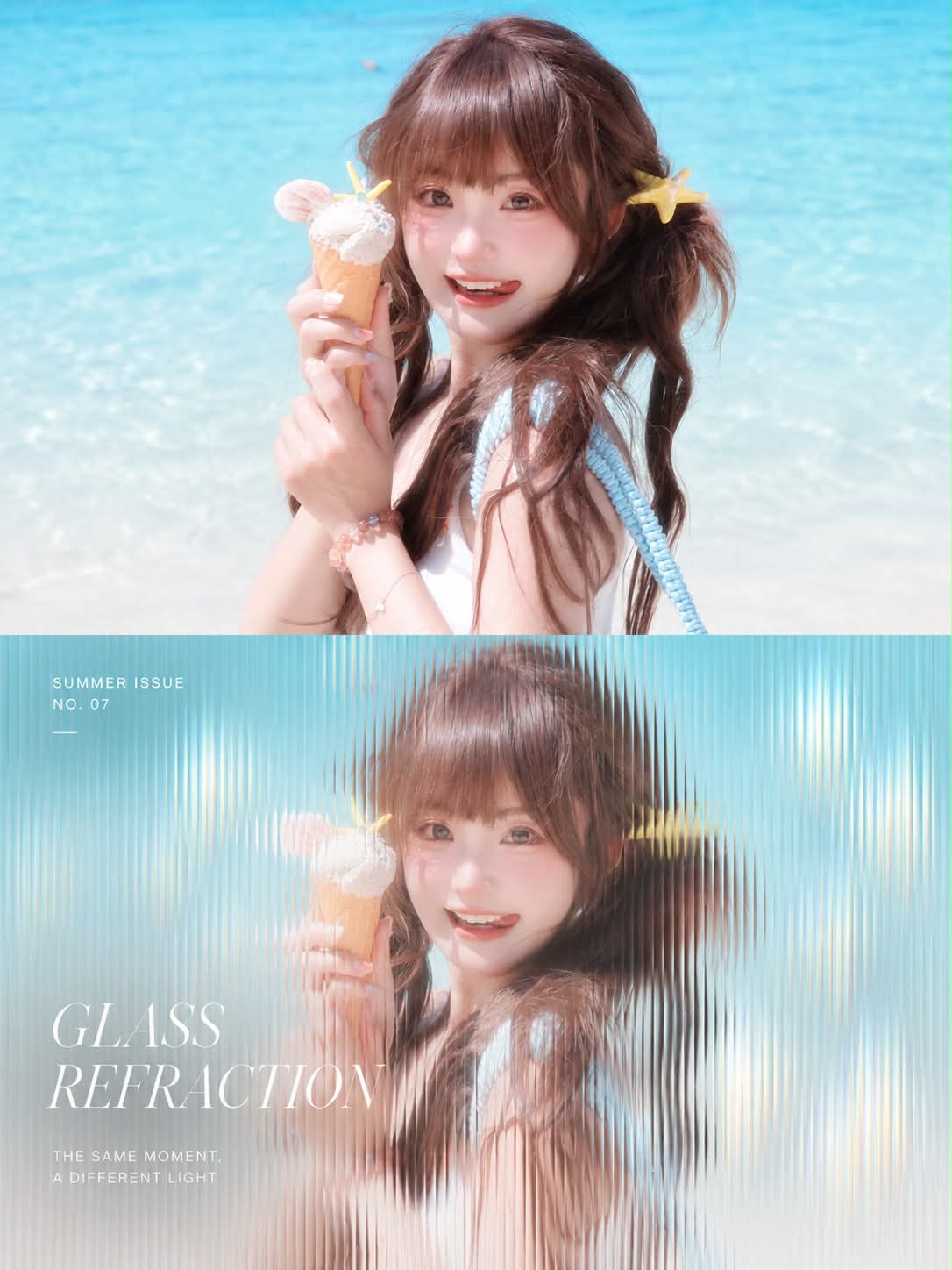
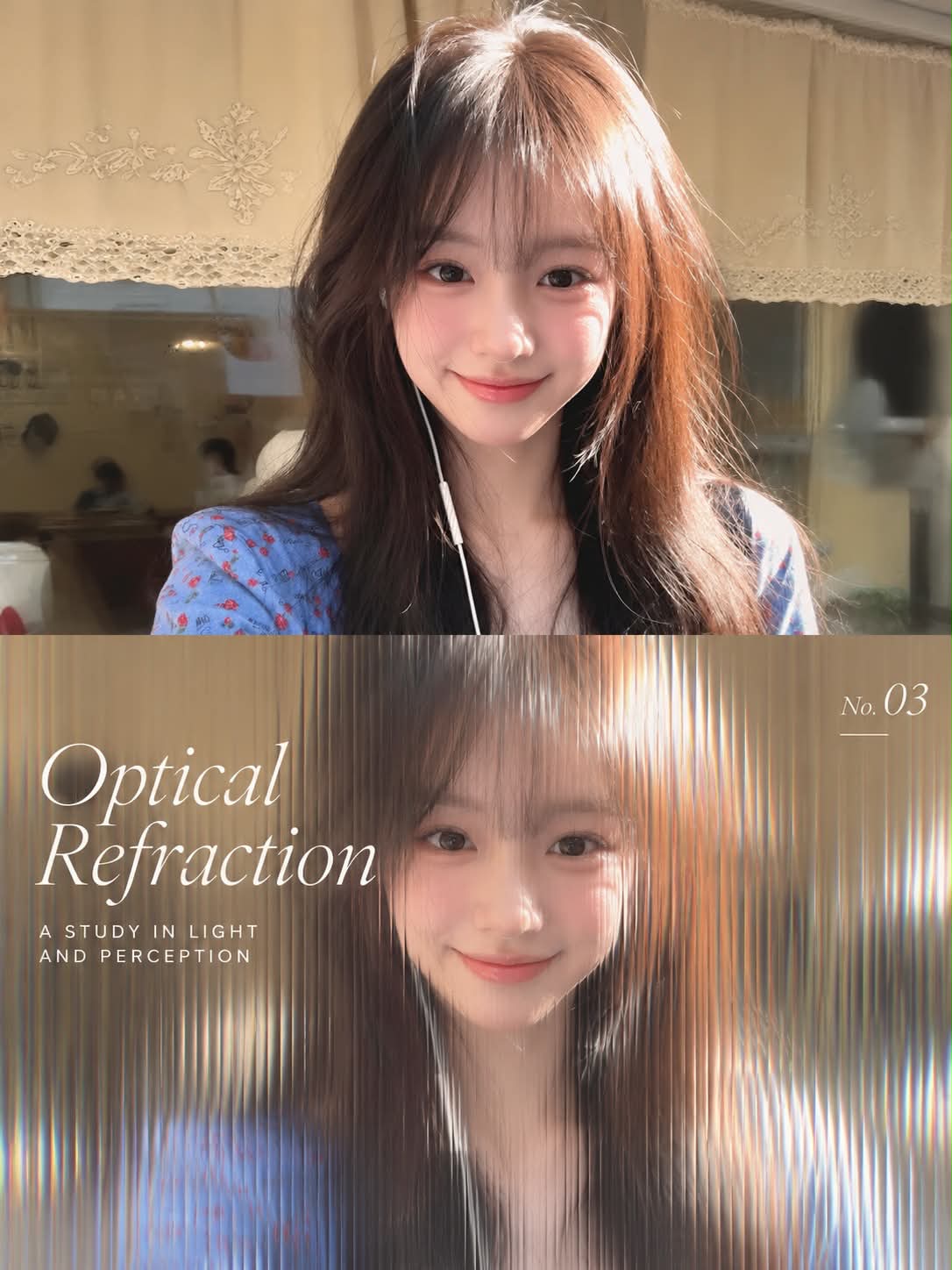
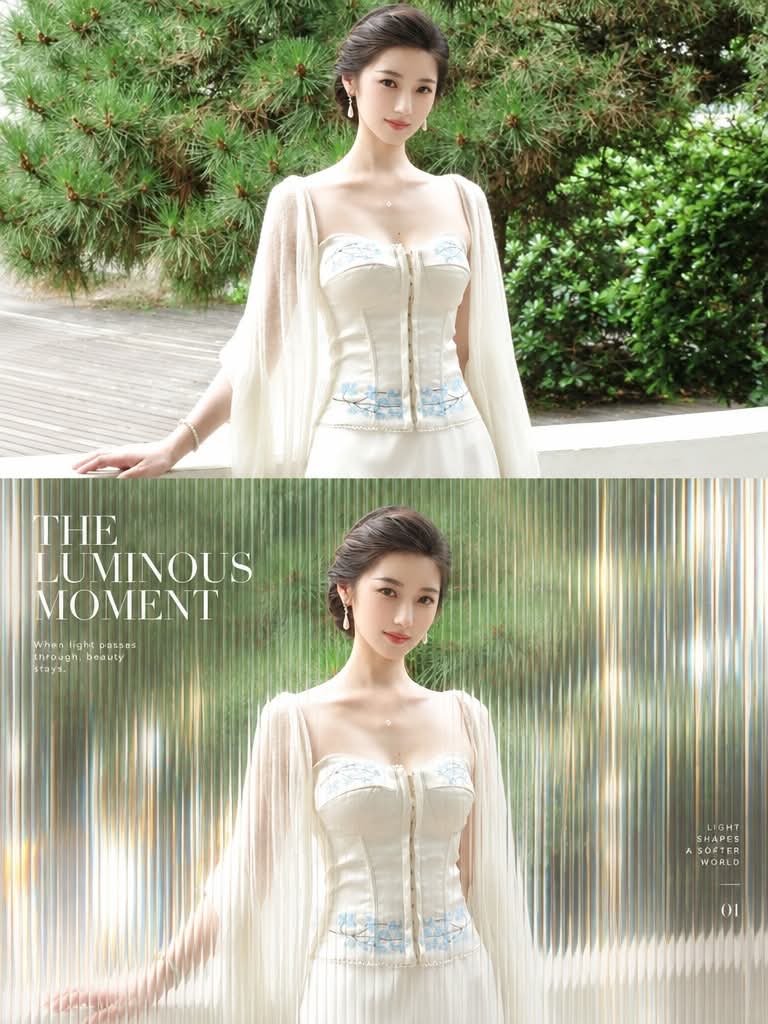
Transform each uploaded photo into a vertical editorial diptych, pairing an unchanged photograph with a refracted, fluted-glass treatment.
Example outputs
Prompt template
- Format
- Text
- Inputs
- Source_photo (image) · Required
- Outputs
- Diptych_poster (image)
For each uploaded photo, generate one separate premium art diptych poster. Do not combine, blend, or merge different photos. The canvas must be strictly vertical 3:4, with two equal-height sections, each occupying 50% of the canvas, naturally divided by a clean, straight horizontal line. Do not use frames, cards, tape, torn paper, curled edges, collage shadows, or decorative borders. Blend realistic photography, luxury advertising, experimental photography, modern optical art, minimalism, and premium editorial design.

In the upper section, preserve the corresponding original photo in full. Keep the identity, facial features, eyes, expression, hair or fur, clothing, action, and pose of any person or animal unchanged. For flowers, plants, architecture, landscapes, vehicles, and still-life objects, do not alter their contours, structure, position, materials, perspective, environment, depth of field, natural light and shadows, or color relationships. Only subtle premium color grading, exposure optimization, and natural background extension are allowed. Do not stretch or distort the subject, replace it, or add unrelated elements. Fill the entire upper section with the original photo, extending to the top, left and right edges, and central dividing line, with the authentic, refined quality of art-magazine photography.

In the lower section, use the same original photo as the sole visual reference. Preserve the subject’s identity, key structure, pose, spatial relationships, and original colors. Cover the entire section with a continuous, ultra-dense, ultra-fine field of vertical fluted glass, extending from the top to the bottom and across both side edges. The texture must run strictly vertically, at approximately 3–5 times the density of ordinary fluted glass, creating an extremely fine, continuous micro-optical grating. The glass must show realistic variations in transparency, soft highlights, edge reflections, and layers of light transmission and refraction. It must not look like striped stickers, ordinary blinds, rain-covered glass, motion blur, or a simple digital filter. Refract the subject and background through vertical wave distortion, displacement, stretching, prism splitting, and slender bands of color, but do not incorrectly alter the subject’s physical structure.

Automatically identify the visual center of the original photo: a person’s or animal’s eyes and face, a flower’s center, an architectural landmark structure, the focal point of a landscape, or the key detail of a still-life object. Keep the glass present over the center, but maintain approximately 85–95% visual transparency and weaker refraction there so key identifying features remain legible. Smoothly increase refraction from the center toward the edges, without a circular or rectangular mask or a hard boundary. Toward the periphery, create dense vertical light bands, shape splitting, and abstract light and shadow at approximately 75–95% intensity, while preserving the overall composition and color memory of the original photo. Do not make the subject disappear, duplicate it, break it apart, misalign facial features, or deform limbs.

Derive background and refracted colors from the original photo. You may use low-contrast environmental cream white, warm beige, light gray, or a soft gradient. Use soft commercial-photography lighting to emphasize the realistic glass texture. Avoid blown-out reflections, neon colors, chaotic light spots, and cheap-looking effects. Add a small amount of meaningful English headline text, a short subtitle, or a number. Use a thin, high-contrast serif typeface with simple small sans-serif text in a freely arranged asymmetrical layout. Do not obscure the subject’s focal point. Do not include garbled text, fake English, or watermarks.
What you'll create
One photo occupies the upper half unchanged while a lower fluted-glass treatment bends its recognizable details. A clean equal-height split and minimal editorial typography create an experimental art poster.
Usage instructions
Provide each source photo as a required image input; the prompt calls for a separate poster for every photo. The lower half applies a refractive fluted-glass effect while preserving recognizable details, so adjust the balance between center clarity and stronger edge refraction if a key feature needs to remain more legible.
Frequently asked questions
Can different source photos be merged?
No. Each source receives its own separate poster.
Are torn-paper or framed collage effects included?
No. Frames, tape, torn paper and decorative borders are excluded.


Comments
Tried this prompt? Share what you made, compare results, or ask a question