Surreal Solid-Volume Expansion Diptych Poster
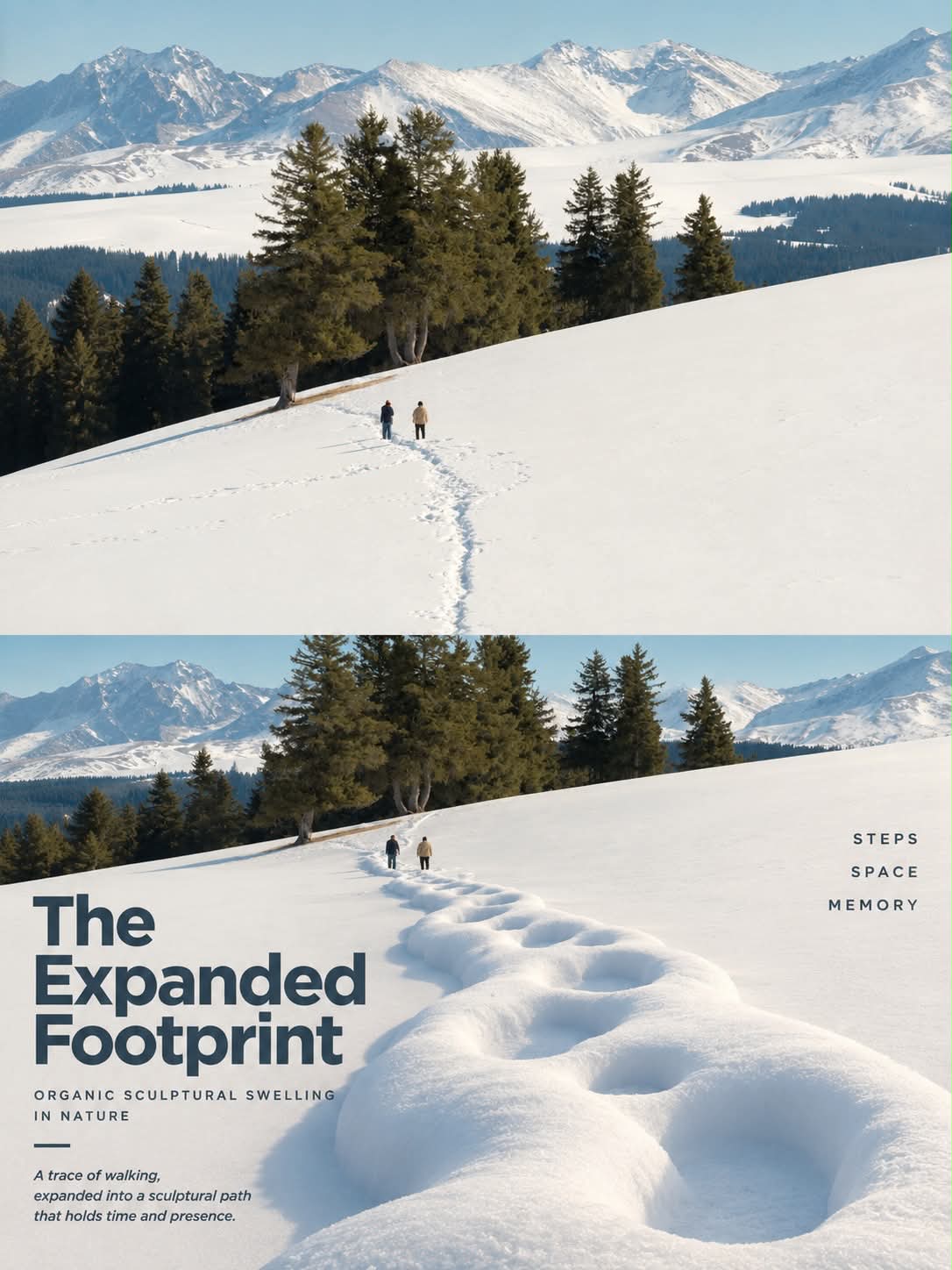
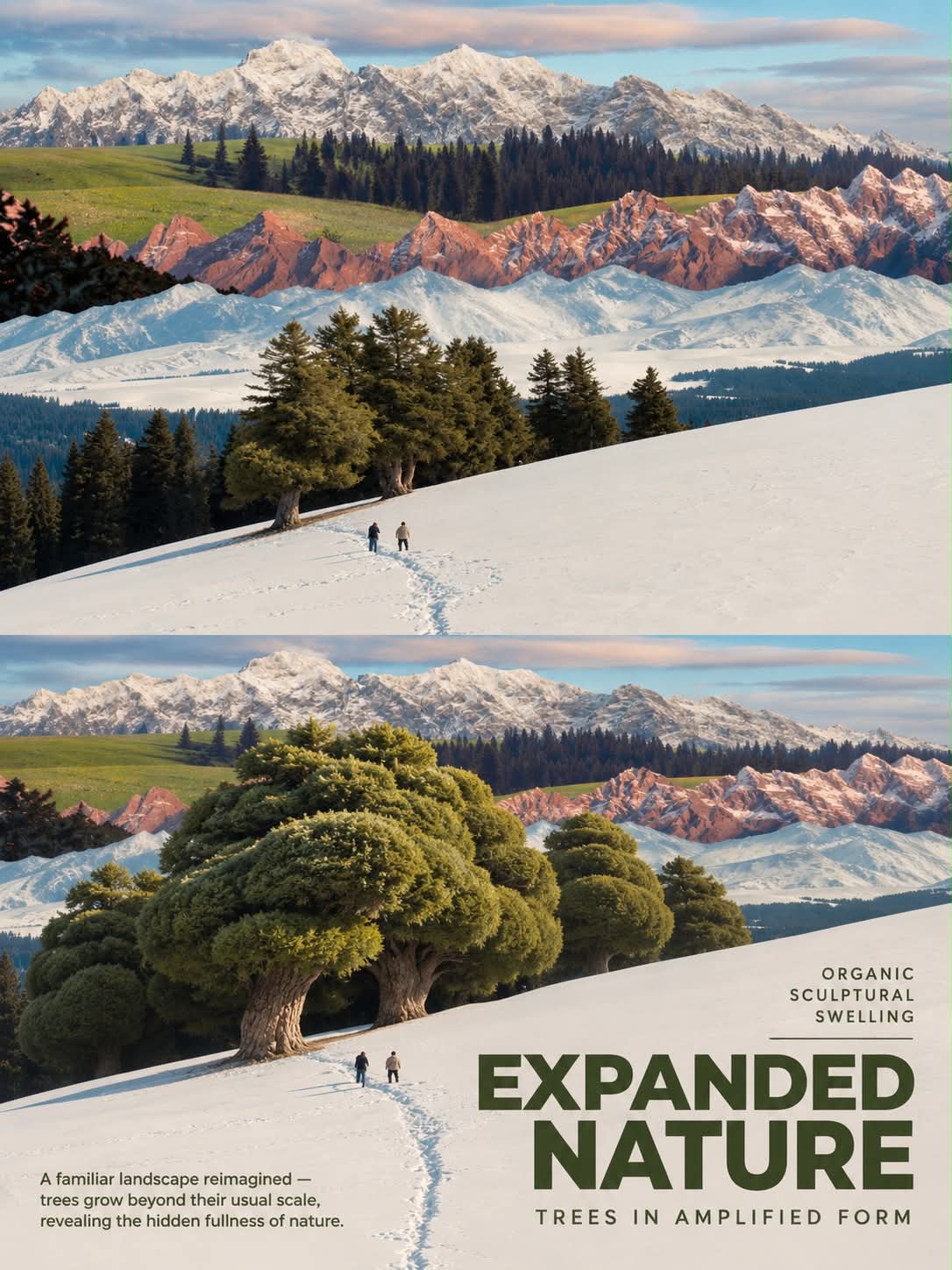
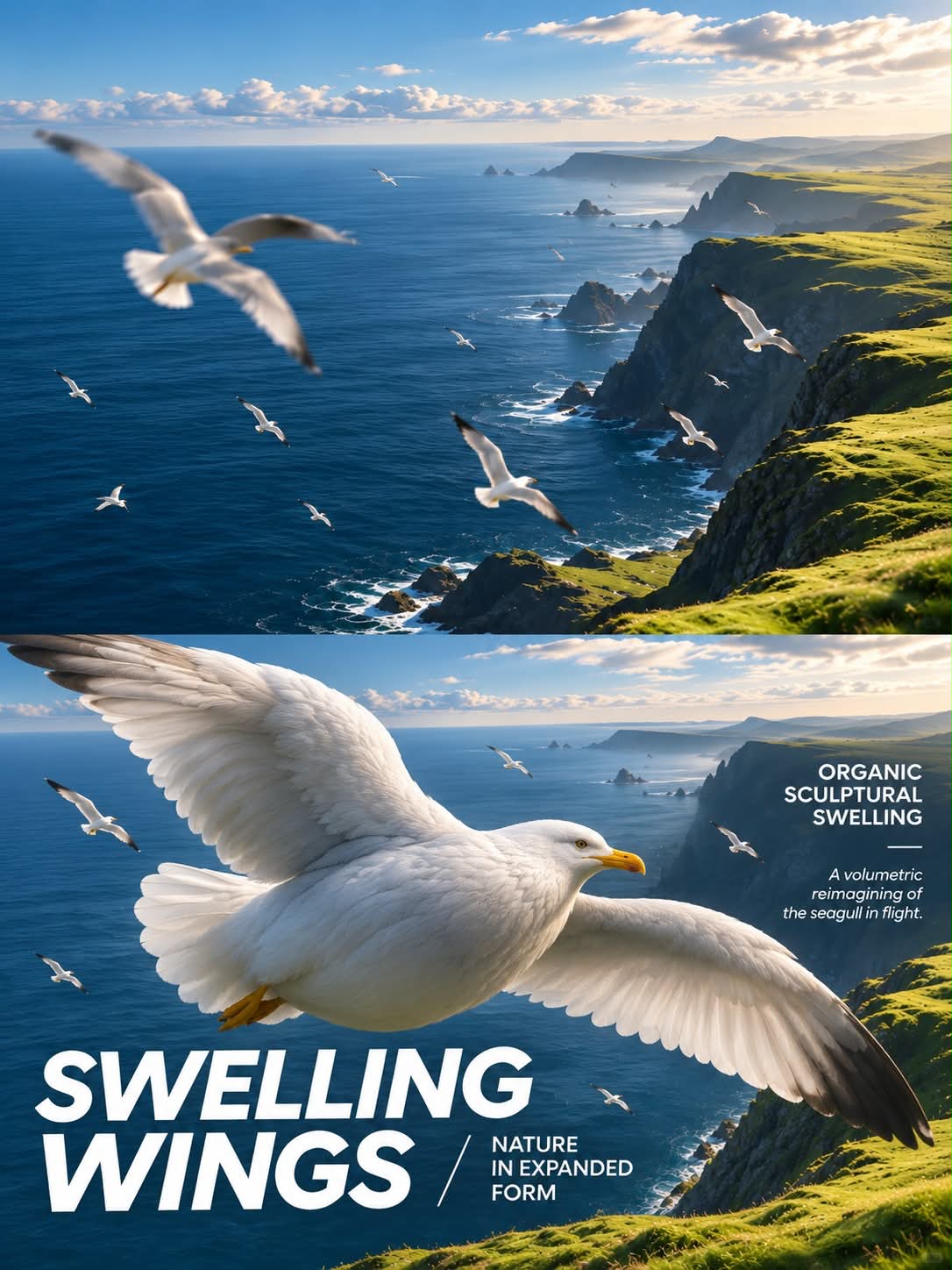
Create a vertical poster that preserves the uploaded photograph in its upper half and transforms a related object into a surreal, solid expanded form in the lower half.
Example outputs
Prompt template
- Format
- Text
- Inputs
- Real_photo (image) · Required
- Outputs
- Experimental_diptych_poster (image)
For each uploaded real photograph, create a separate, independent 3:4 vertical experimental art diptych poster. Never combine or mix different photographs.

Divide the canvas exactly at its horizontal midpoint into two equal-height regions, each occupying 50% of the image. All swelling effects, text, graphics, and layout must remain in the lower half. Do not cross the dividing line, change the proportions, or add a transition band, frame, collage, card, or shadow.

UPPER HALF — ORIGINAL PHOTOGRAPH
Use the original photograph, preserving the identity, appearance, number, clothing and accessories, pose and action, position, colors, materials, composition, perspective, lighting, and relationships of its people, animals, plants, objects, architecture, and environment. Only subtle photographic color grading and natural extension of the original background to fit the canvas are allowed. Do not stretch, redraw, replace, move, duplicate, or crop any key subject. The real photograph must fill the upper half, extending to the top, left and right edges, and central dividing line. The upper half must contain no text, symbols, graphics, or stylized effects.

LOWER HALF — EXPERIMENTAL POSTER
Base the lower half only on the same original photograph. Analyze its subjects, spatial arrangement, and actions. If people are present, choose one object most closely connected to them through holding, riding, leaning on, embracing, sitting or lying on, or using it; favor an object with a clear silhouette. If no people are present, choose the most distinctive non-human subject or detail suitable for expansion. Develop an original art concept, composition, colors, typography, negative space, and layout specifically for the current photograph. Do not apply a generic template.

Transform the chosen object or a part of it using Organic Sculptural Swelling and Solid Volume Expansion. Exaggerate its solid, rounded, full, substantial volume in accordance with its original geometry, direction of force, and functional components. The result may be clearly surreal, but must preserve the object's purpose, brand markings, original colors, key structure, and continuous connections. Make thin structures thicker, soften hard edges, and turn flat surfaces into continuous curves. Do not replace every object with a sphere. If a person is present, preserve that person's identity, facial features, skeleton, proportions, clothing, and pose; expand only the interacted-with object. Fingers, limbs, contact, occlusion, weight-bearing, perspective, and contact shadows must remain natural and believable.

The expansion must appear to be a change in the object's native solid material: leather remains leather, fabric retains its fibers, metal retains its reflections, ceramic retains its glaze, plants retain their veins, and fruit retains its skin. Show realistic density, thickness, weight, curved-surface shading, and environmental reflections. Absolutely avoid balloons, inflatable toys, air bladders, PVC, latex, thin rubber films, inflation valves, nozzles, heat-sealed edges, seams, hollow appearance, balloon highlights, and inflation wrinkles.

Use an art-directed environment suited to the original image's mood, realistic photographic lighting, and an independent experimental layout. Automatically create a relevant English title and a small amount of supporting copy. The typography may be arranged creatively along the object's curves, direction of movement, or negative space, but must not obscure people's faces, key structures of the expanded object, or the relationships between interacting subjects. Avoid floating objects, intersections or clipping errors, implausible contact, contact with unrelated subjects, garbled text, fabricated brand logos, and watermarks.

The final poster must show a real moment above and, below it, a surreal art poster depicting the original object expanded in solid form within the same scene.
What you'll create
A vertical diptych keeps the original photograph in its upper half while a related object swells into a solid surreal form below. Typography, graphics and the expansion remain confined to the lower fifty percent.
Usage instructions
Provide the real photo or photos to transform. The prompt preserves each photo in the upper half and builds an experimental poster around an expanded object in the lower half; the selected object and poster concept depend on the photo. For a different lower-half treatment, the prompt’s existing selection rule prioritizes an object most closely connected to a person, or the most distinctive suitable subject when there is no person.
Frequently asked questions
Can the expansion cross the central divider?
No; all swelling and graphic effects stay entirely within the lower half.


Comments
Tried this prompt? Share what you made, compare results, or ask a question